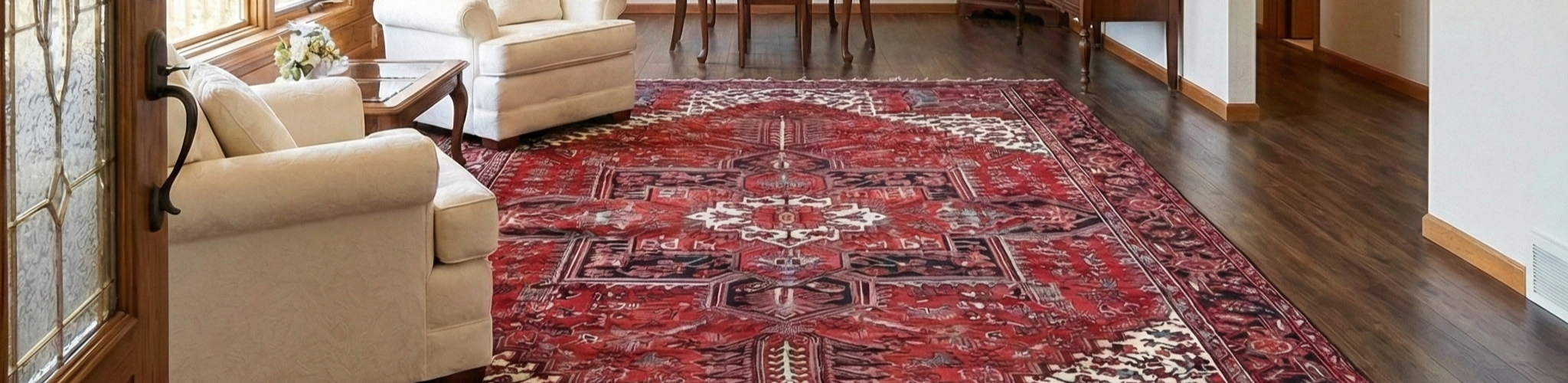
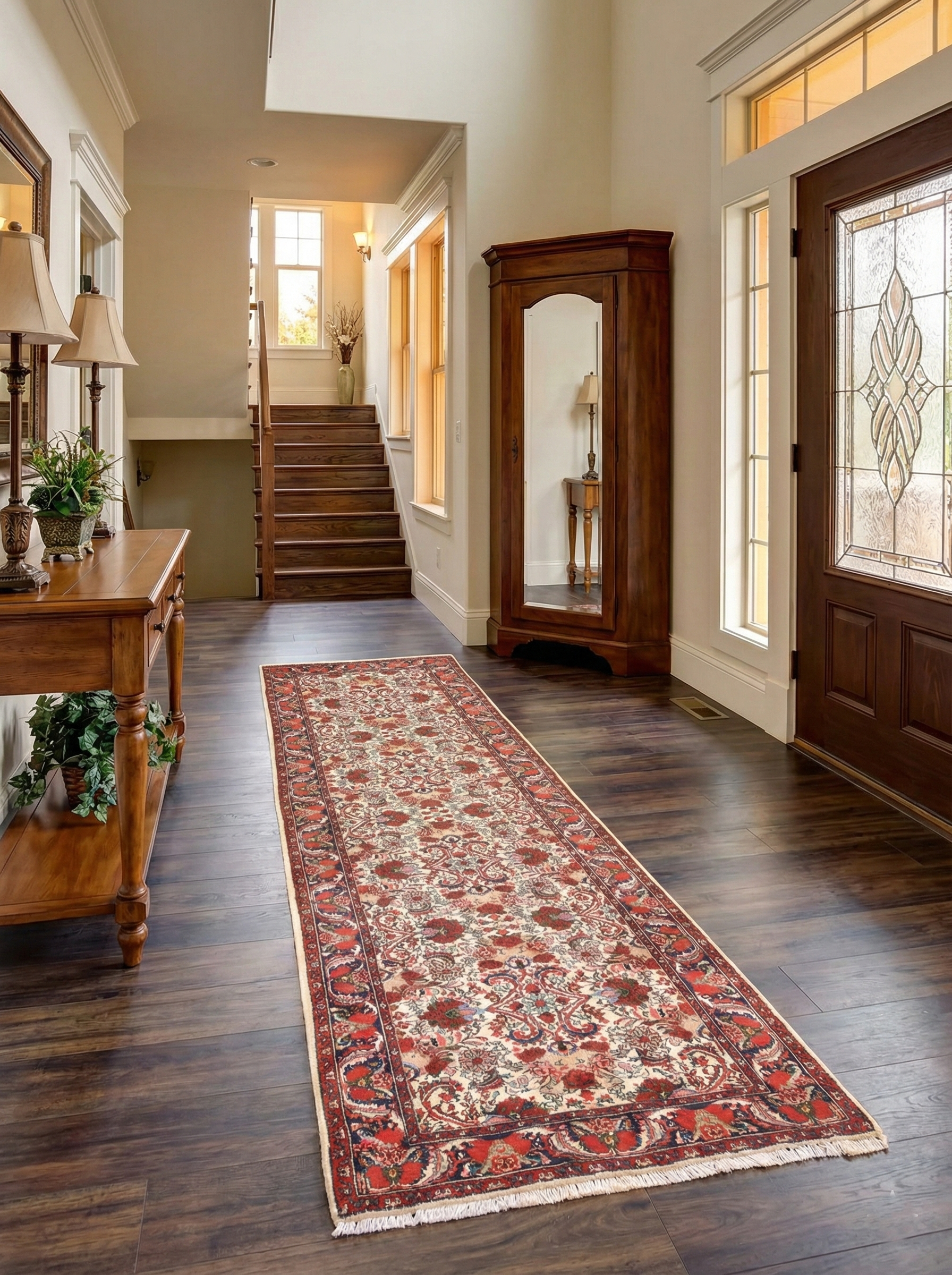
Mixing traditional Persian rugs with contemporary design or new Persian rugs with traditional decor is a key way to create an interesting and compelling interior design. Persian rugs are also very affordable if you choose from the hand-knotted range of vintage and contemporary Persian rugs in our large inventory at © 1800getarug.com .
Persian rugs are consistently the rug of choice for the homes of influential designers. Husband and wife designers Charles and Ray Eames became famous for their mid-20th century designs. They used a selection of Persian rugs to decorate a cute reading nook in their contemporary California home. Even the celebrated 20th century architect known as Le Corbusier – the man credited with creating “white box” Modernism – placed Persian rugs in the living rooms of his all-white masterpieces.
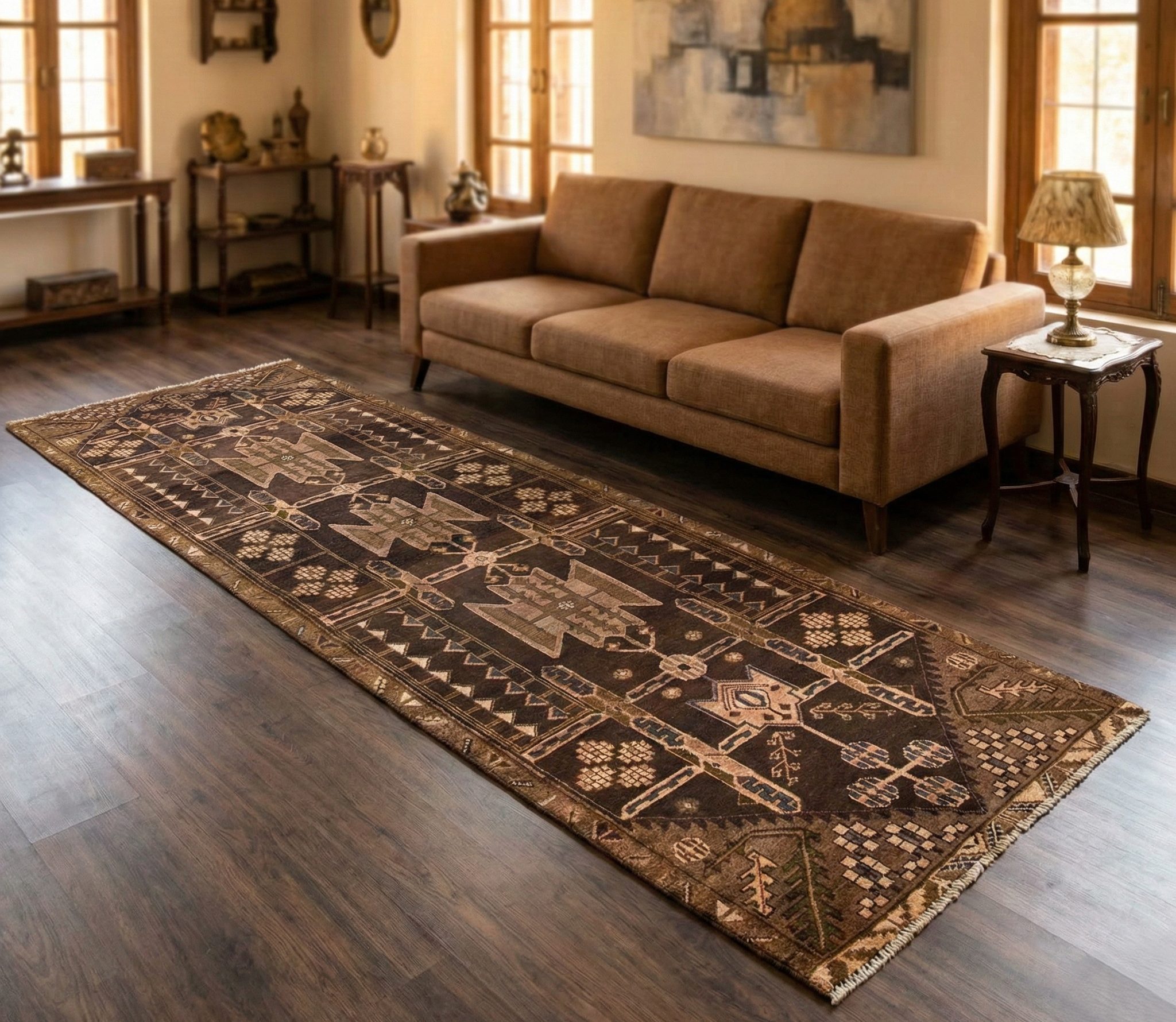
These statement rug choices by the Eames’ and Le Corbusier are all the more relevant in the 21st century when many interior designers know the secret to great interior design – whether traditional, modern, contemporary, eclectic, jungalow, or maximalism – is a Persian rug. Read on to discover why the beauty, tradition, and handmade narrative pleasure of these rugs is just right for your home no matter what your decorating style.
Persian Rugs versus Oriental Rugs
In the 21st century, the terms Persian rug and Oriental rug refer broadly to the same type of rug. The two terms became interchangeable in the 19th century when exports of these rugs to the US and Europe took off and found new, appreciative customers. To make things easy we’ll use the term Persian rug in this post.
Antique, Vintage, or New?
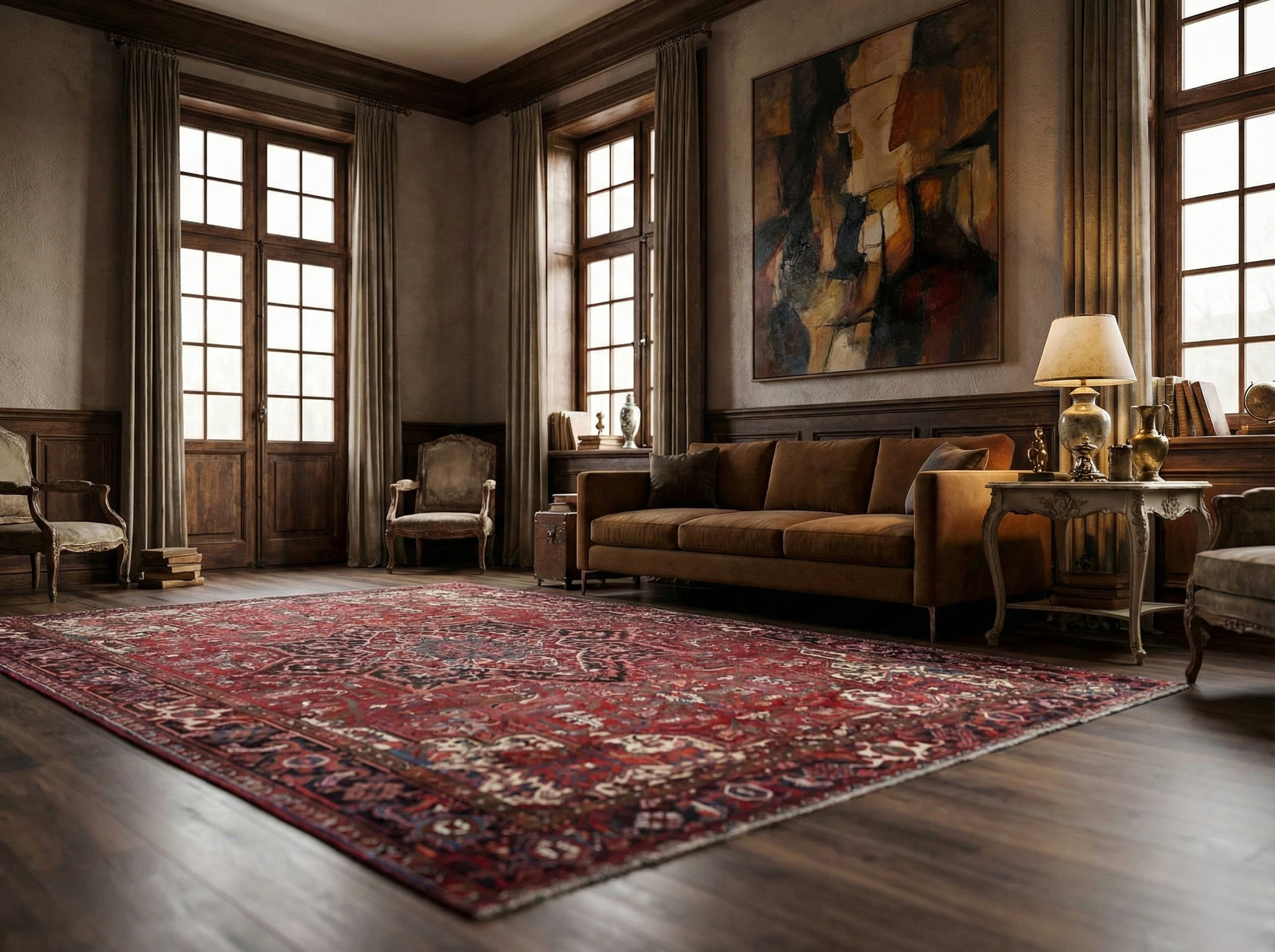
Persian rugs are still made today using traditional patterns that are often updated with colors that appeal to 21st century consumers. Antique Persian rugs are generally accepted to be older than 100 years, although some rug dealers choose 80 years as the cut-off. Vintage means older than twenty years but less than 100 years. We stock mainly vintage and new Persian rugs. Often we overdye our vintage rugs to change a colorful, busy pattern into a single color rug where the original pattern is still visible.
here Were Traditional Persian Rugs Made?
Traditional Persian rugs don’t represent a single culture or style. They were hand-knotted or loom woven by many tribes, nomads, urban imperial cultures (for example the Mughal Empire) in many regions and countries using different techniques, colors, patterns and fibers.
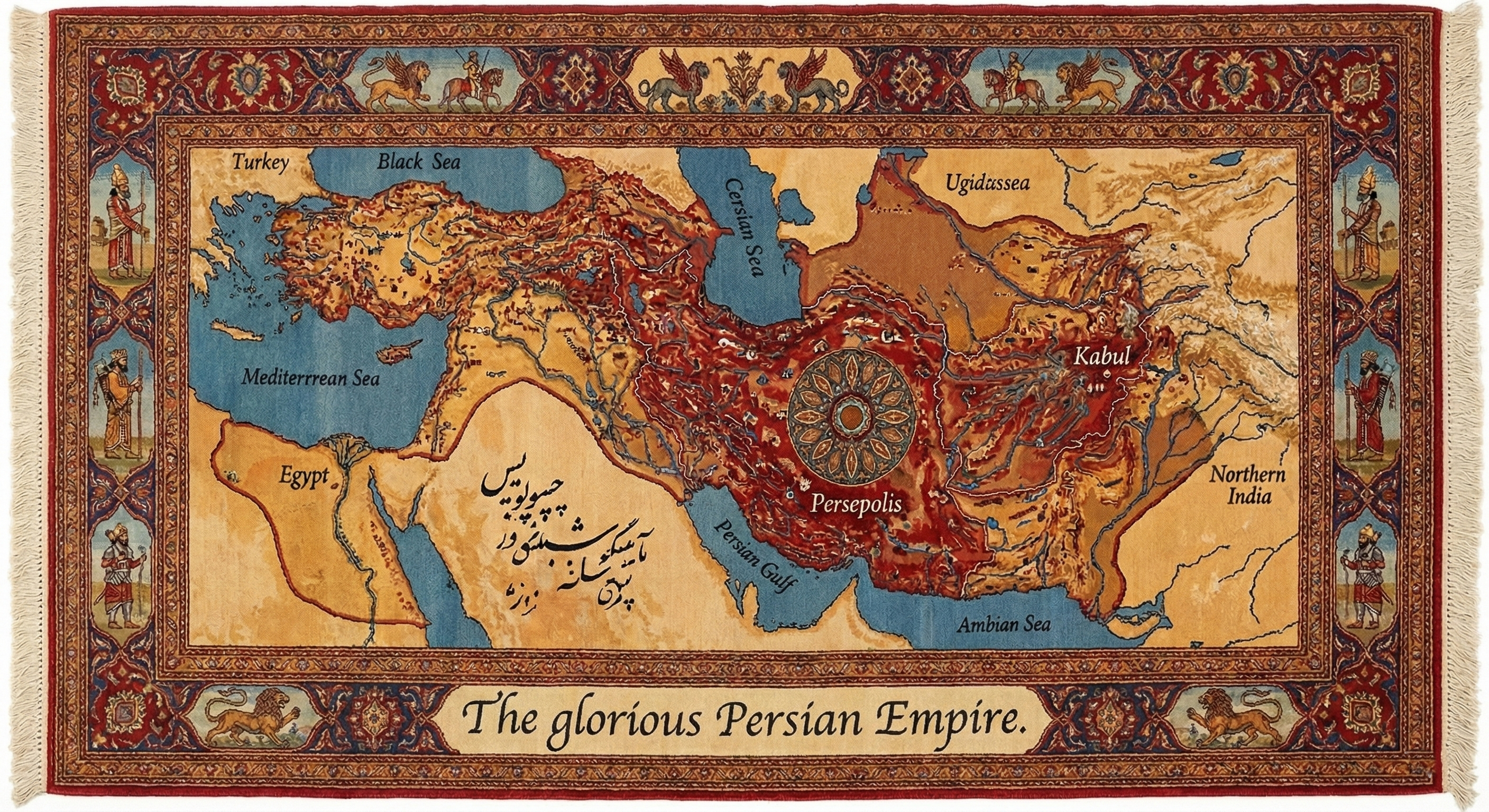
The epicenter of Persian rug weaving was the country we now know as Iran. At the height of Persia’s power its empire spread from its “heart” (the capital of Persepolis in present-day Iran) west to Egypt, east to Kabul and northern India, north to Turkey, and south to the Persian Gulf.
The largest and best-known centers for rug production were in Persia. These centers include Tabriz (1500-1550), Herat (1525-1650), Kashan (1525-1650) and Kerman (1600-1650). Rugs made in these locations are usually referred to by the locations.
There’s a surprising twist to the tale of Persian rugs. When exports of Persian rugs to Europe and the United States took off in the 19th century it soon became apparent western taste didn’t always match the rugs being imported. Entrepreneurs reacted by creating a style of Persian rugs known as Zieglers. The name Ziegler isn’t a location or a tribe, but is the name of a German company that commissioned their own rug style to match the desires of Western customers.
What Types of Designs Are Found in Persian Rugs?
Many Persian designs feature plants, gardens, and animals, often interlaced or bordered with geometric patterns or featuring central medallions. Popular motifs from the past to the present include the Tree of Life and the Four Seasons. These lush botanical patterns represent a mix of reality and the magical realm of faith and imagination. Many weaving centers were located in arid, desert-like regions that despite the adverse climate had areas of lush growth due to ingenious canals and aqueduct systems that made deserts bloom.
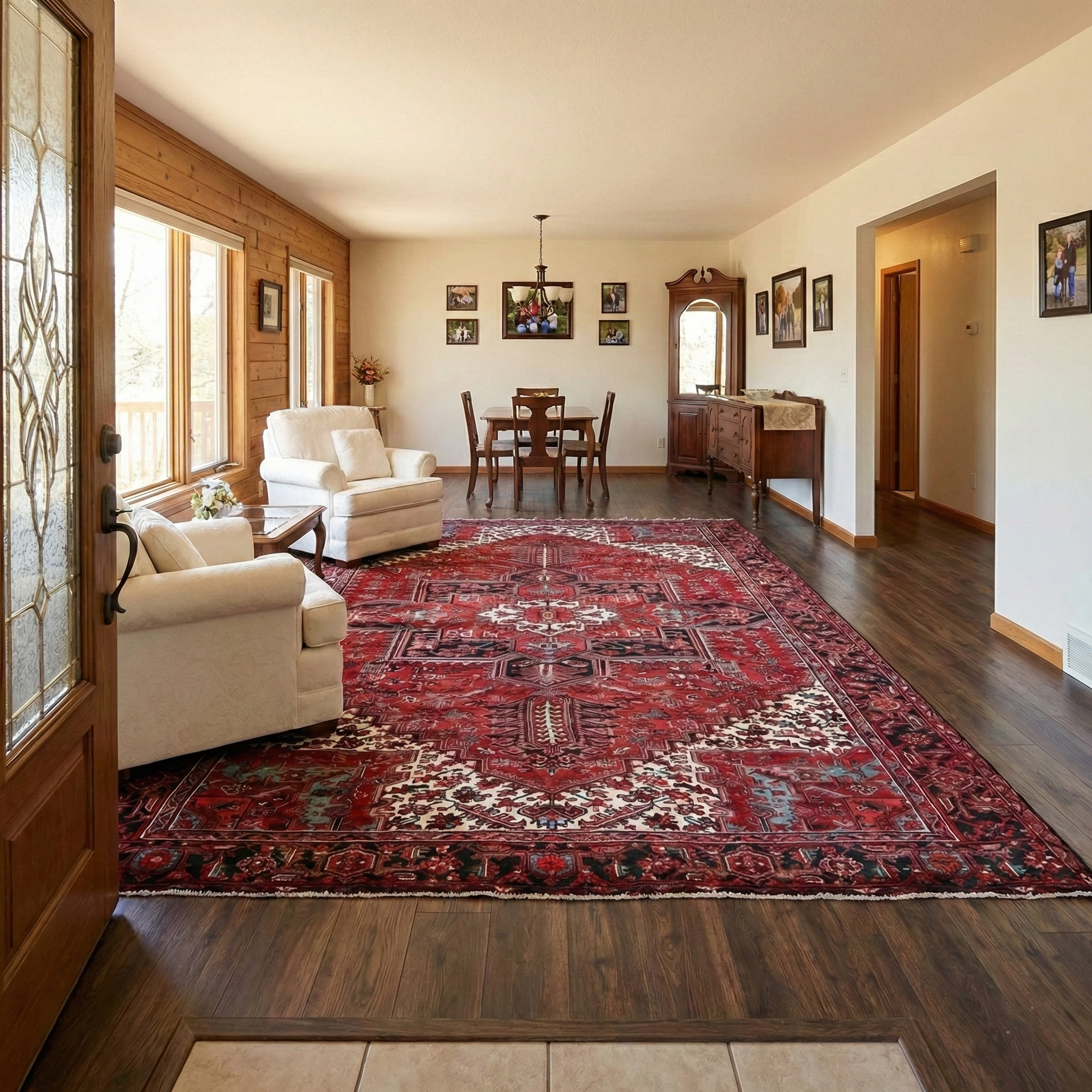
There’s so much more to know about Persian rugs – knotting techniques, density (knots per square inch), dye processes – which is why we warmly invite you to visit with one of our rug specialists at our showroom just six miles from the greater New York metro area. Or if you live further away, please schedule a video call so we can show you a range of our hand-knotted and affordable Persian rugs. Call Now.