The simple beauty of Kilim Flatweave rugs


Sometimes things can be uncomplicated, sometimes they can be understated. Sometimes the beauty comes from the simplicity of the design and execution. Look no further than Kilim hand-woven rugs, classic flatweave carpets known for their unique contained look and versatility.
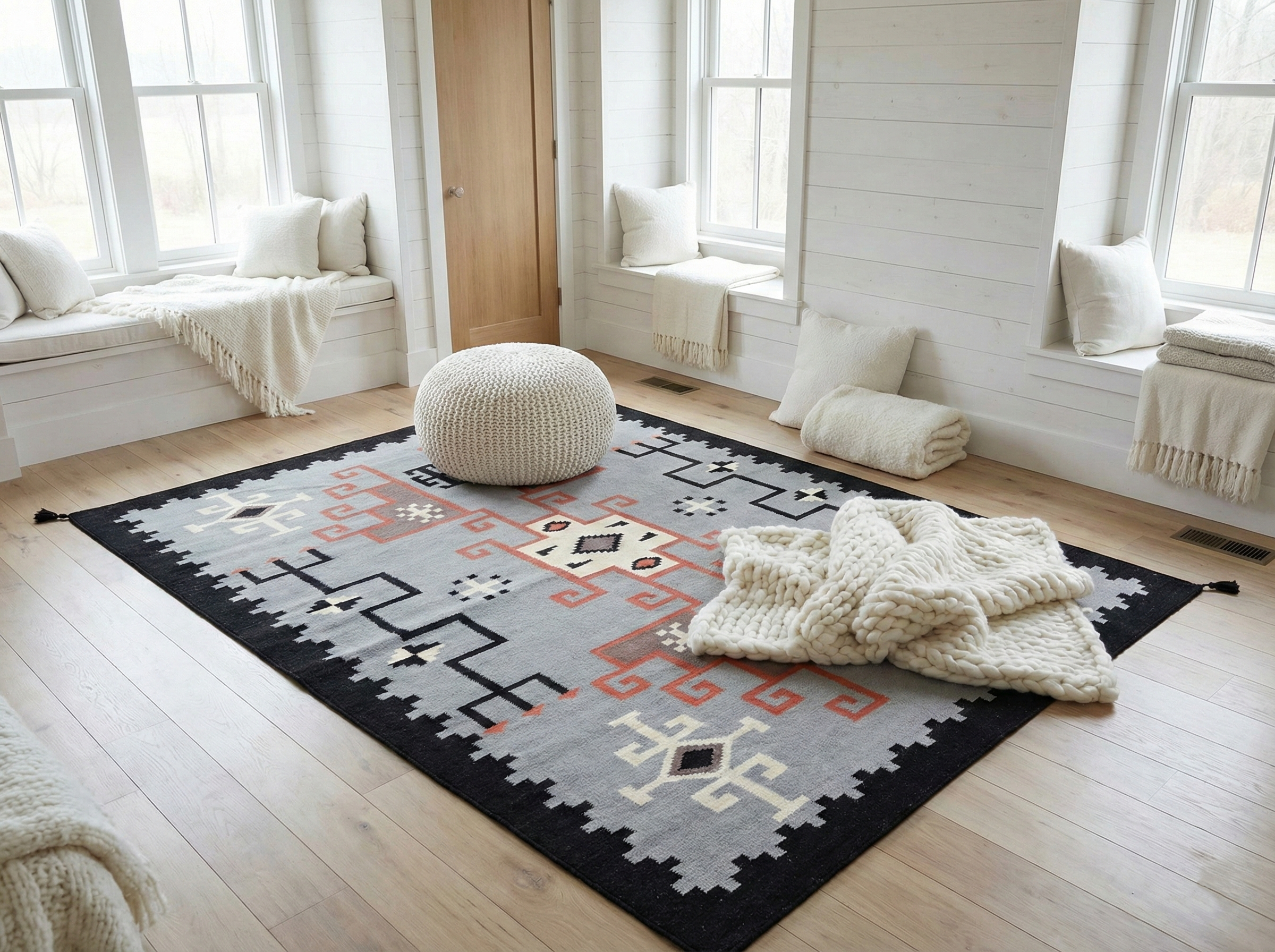
Medium Gray, Flat Weave, American Indian Southwest Geometric Design, Hand Woven, 100% Wool, Oriental Rug
This handcrafted American Indian Southwest Geometric Design is an authentic Pure Wool oriental rug. © 1800getarug.com


One of the most consistent technique to go back centuries, Kilim rugs were most likely first used by nomadic peoples of Middle East and Central Asia. The earliest examples were found around Khotan, present day Xinjiang, China, one of the centers of trade along the Silk Roads, and go back centuries. The name is derived from Turkish “gelim”, which means, “to spread” (as in, to spread a rug). Its pure geometrical designs are believed to have mystical, inspirational powers.
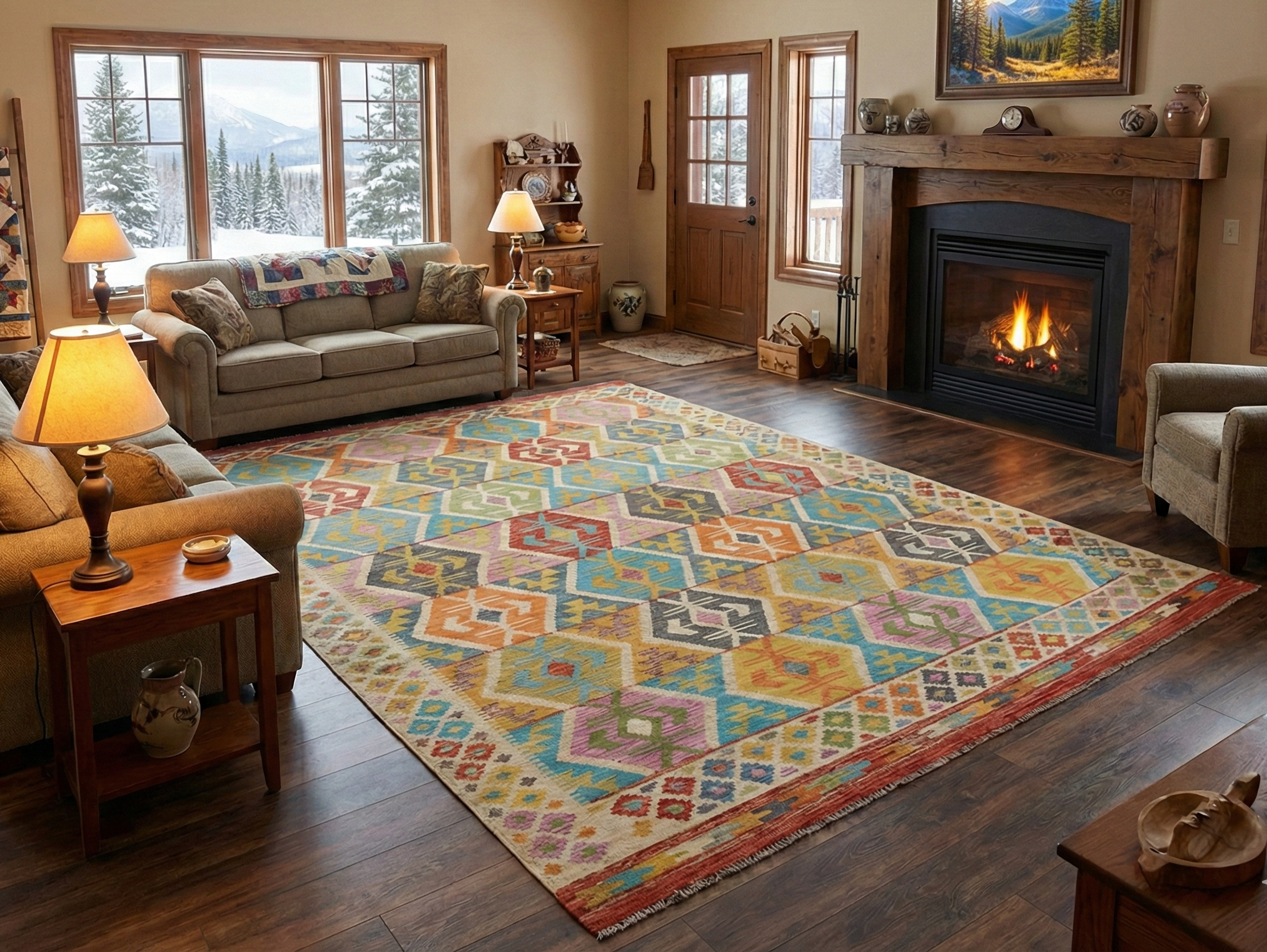
Bone White, Afghan Kilim with All Over Colorful Geometric Pattern, 100% Wool, Natural Dyes, Flat Weave, Hand Woven, Reversible, Oriental Rug
This handcrafted Afghan Kilim is an original Pure Wool oriental rug. © 1800getarug.com


To us, the most fascinating thing about the hand-woven Kilim rugs is the unique weaving technique, called slit weave. These rugs don’t have a pile, and are created by simply weaving the woolen wefts and the cotton or wool warps (thread ratio is 16 of weft, 14 of warp). Two different-colored weft blocks are tightly packed into the warp by a special comb and returned to original side once they reach each other, leaving a slight “gap” in between – the slit! This is the origin of the traditional Kilim motif: diagonal and horizontal lines, a pattern designed for durability.
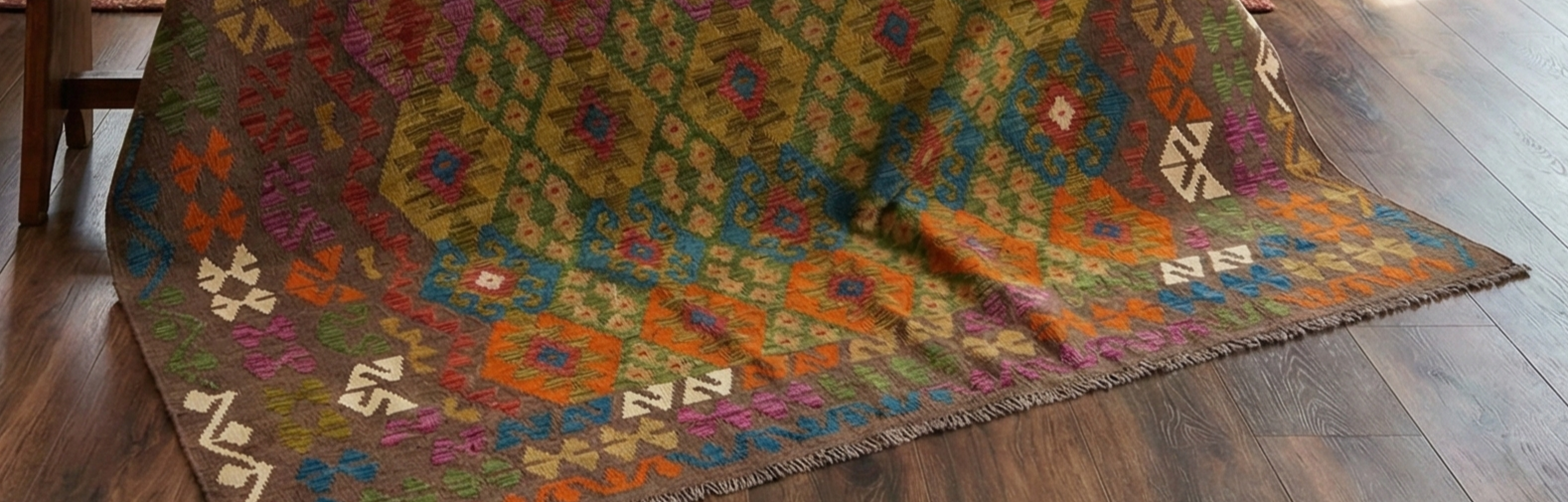
Coconut Brown, Hand Woven, Flat Weave, American Indian Southwest Geometric Design, 100% Wool, Oriental Rug
This handcrafted American Indian Southwest Geometric Design is an authentic Pure Wool oriental rug.© 1800getarug.com


While the traditional colors for these magical Kilim hand-woven rugs are blue, green, red, and yellow, the modern take on the carpets includes a variety of dyes and designs. Still these works of art are as versatile and affordable as they were centuries ago: they are easy to spread or fold, don’t crease; are great at being a centerpiece decoration, hanging on a wall or serving as a door step rug, or for saddling your mule, if the occasion truly calls for it!
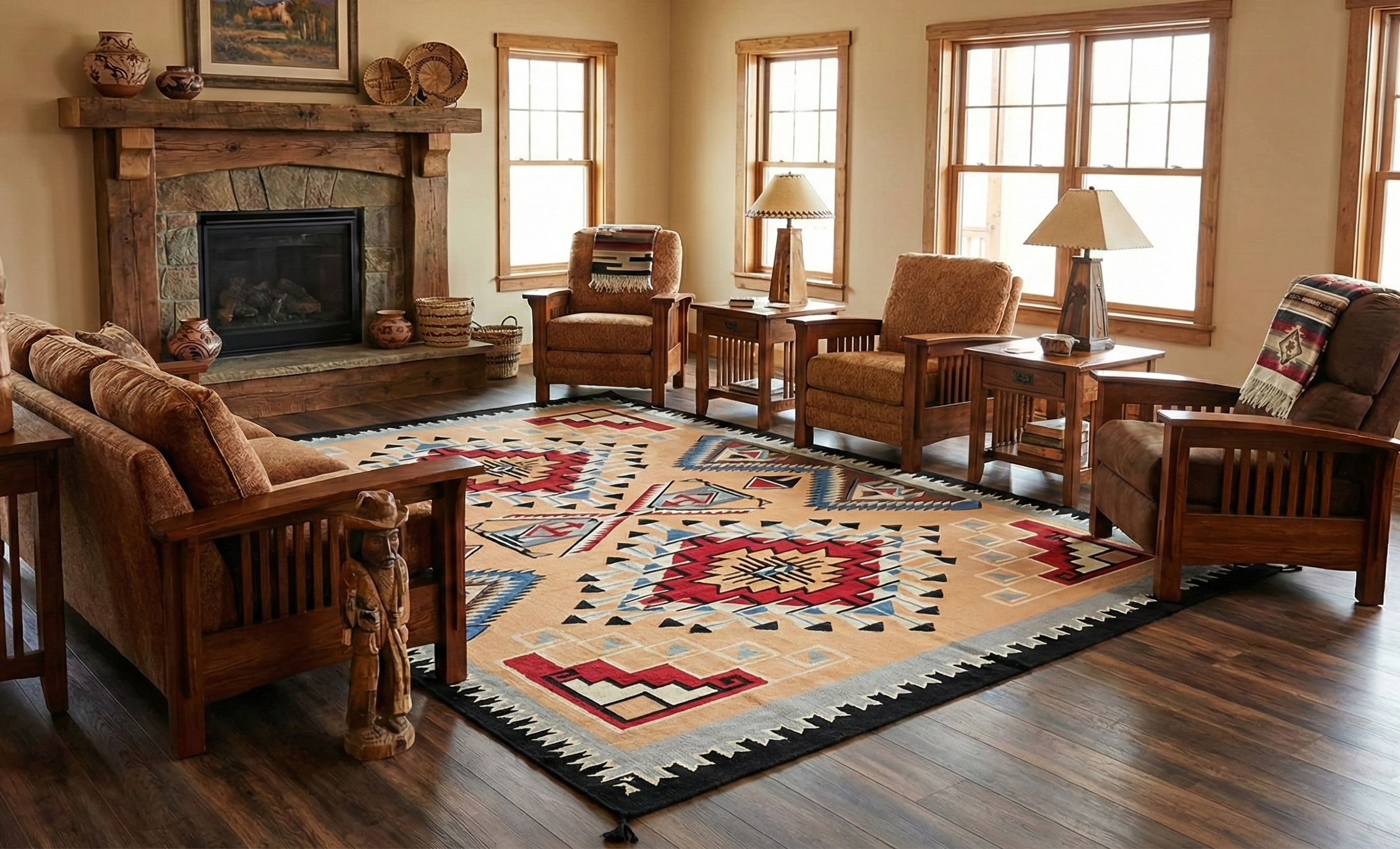
Peach Color, Flat Weave, American Indian Southwest Geometric Design, 100% Wool, Hand Woven, Oriental Rug
This handcrafted American Indian Southwest Geometric Design is an authentic Pure Wool oriental rug. © 1800getarug.com


What are Peshawar Hand-Woven rugs?


Looking into our rugs is sometimes like looking into the depths of history. The Peshawar rugs take us to one of the greatest depths. One of the epicenters of the great Silk Roads, the city of Peshawar was, quite literally on the map since the 5th century B.C. From the ancient Persians and the Hellenistic descendants of Alexander the Great, to the medieval Mongols and finally the Muslim empires. Peshawar commanded authority throughout the region, housing millions of citizens and invariably creating and absorbing culture for centuries. Some may argue the Mughal era of rule over the region was one of the most successful in last few centuries and has inspired some of the most fascinating and impressive works of art.

Beige, Afghan Peshawar with All Over Mahal Design, Clean, Full Pile, Long and Narrow, 100% Wool, Hand Knotted, Oriental Rug
This handcrafted Afghan Peshawar is an authentic Wool oriental rug. ©1800getarug.com


Perhaps the best time capsule of this Mughal artistry is the hand-woven Peshawar rug, whose designs evolved through the centuries but with mastery that never dwindled. In the 16th century, emperor Akbar had ordered the construction of rug weaving workshops and fostered the knowledge exchange with the Persian artisans to reinforce the local style. In the 20th, after the crumbling of British colonialism the existing industry simply needed a push from the newly independent government to survive and to flourish.

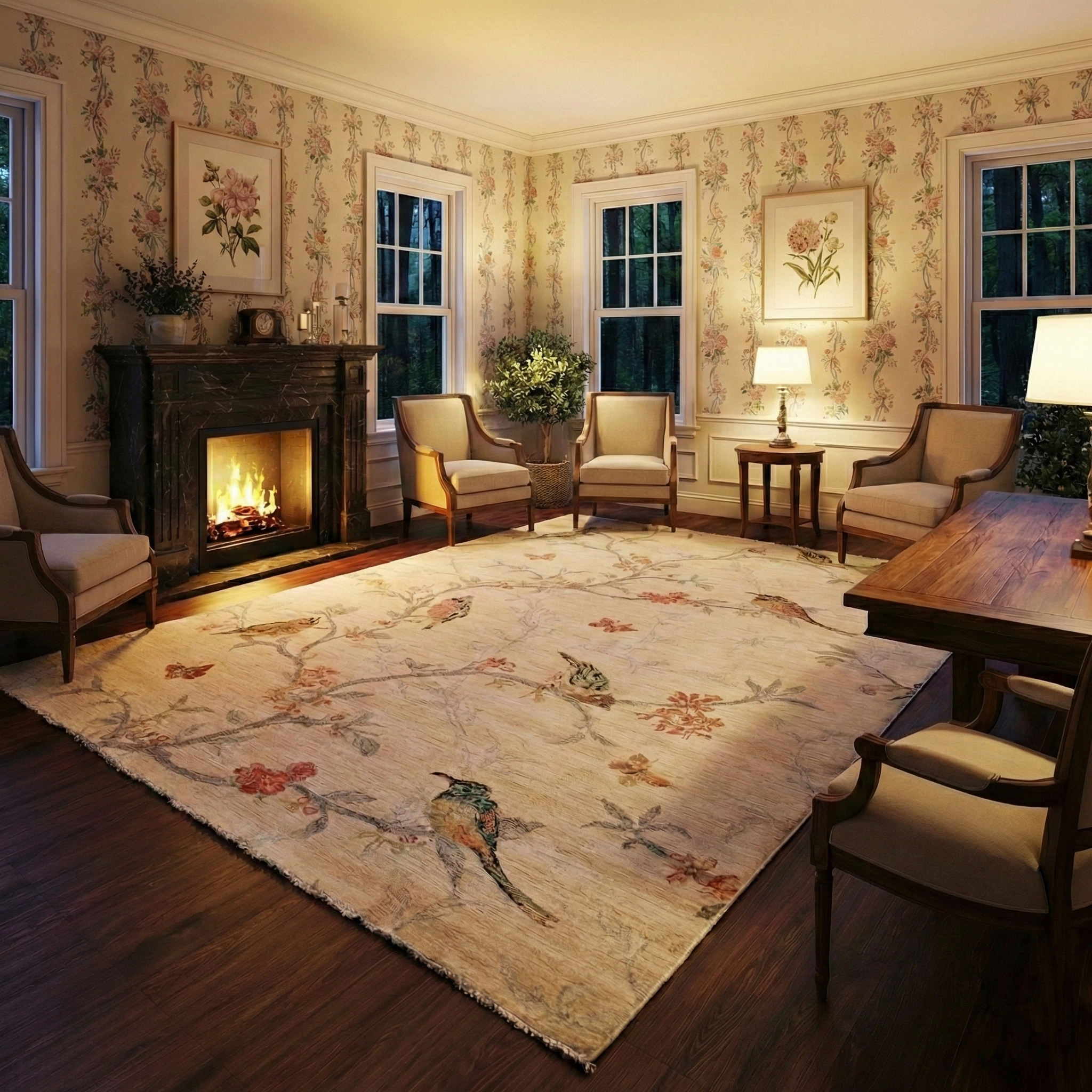
Chiffon White, Sparrows on the Tree, Peshawar, High Mountain Wool, Hand Knotted, Soft to the Touch, Densely Woven, Oriental Rug
Chiffon White, Sparrows on the Tree, Peshawar, High Mountain Wool, Hand Knotted, Soft to the Touch, Densely Woven, Oriental Rug  ©1800getarug.com


Traditional Peshawar rugs are always hand-woven, and feature a pure high mountain hand-spun wool pile, although sometimes, in select rugs, fine merino wool is blended in – that makes the rugs look slicker. Occasionally silk is woven in as well, especially if the artist wants to highlight a motif. The weft and warp are cotton, for the strongest support. The resulting rugs are durable and reliable, but are luxurious and extremely soft to the touch.

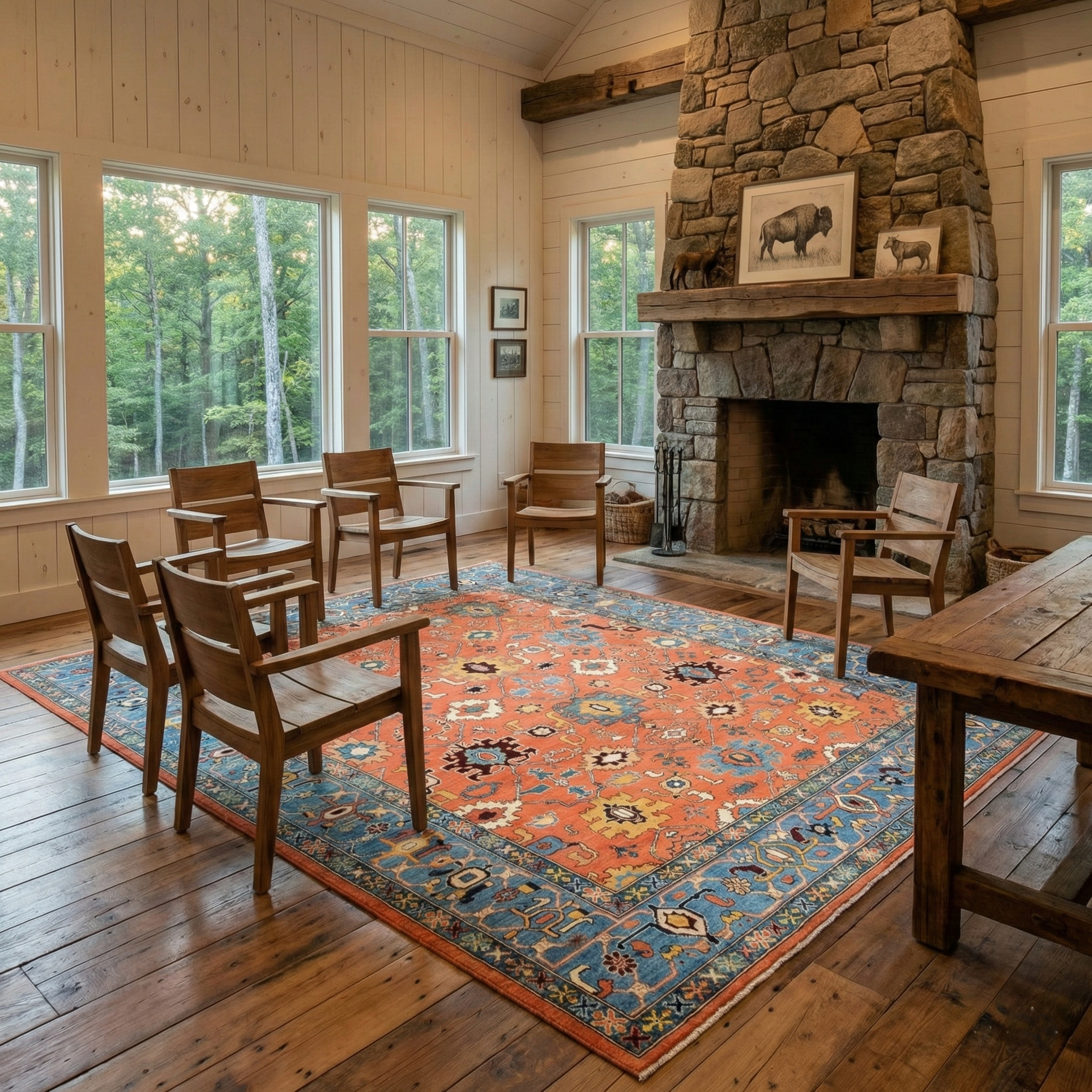
Rust Orange, Afghan Peshawar with Heriz All Over Design, Hand Knotted, Soft 100% Wool, Densely Woven, Oriental Rug
This handcrafted Heriz All Over Design is an original Pure Wool oriental rug. ©1800getarug.com


The design of the rugs, as chronicled in history, is heavily influenced by ancient Persian rug motifs. The colors, usually light and earthy and derived from sun-dried vegetable dyes, give the rugs its characteristic antique and washed-out look. But whether they are stonewashed and have their piles cut shorter, or the modernist take will have the colors pop, you are sure to be mesmerized by the deep richness and artistry that are the Peshawar rugs.

Maya Blue, Afghan Peshawar with Heriz All Over Design, Hand Knotted, 100% Wool, Densely Woven, Oriental Rug
This handcrafted Heriz All Over Design is an original Pure Wool oriental rug. © 1800getarug.com


Oriental Rugs and Persian Rugs: What’s the Difference?

If you’re shopping for area rugs, you probably have the type of rug you want in mind, but you don’t know what it’s called. Often times, rugs get grouped under the “oriental rugs” category, but they have slight distinctions that make them Persian rugs. Here is a little further information on the differences between oriental and Persian rugs.

First off, the term “oriental rugs” actually refers to an overarching category. In the Oriental rug category you can find the subcategories like Persian rugs, Kashmir rugs, War and Azerbaijani rugs, to name a few.

Persian rugs are typically easy to identify because of their motifs used in most designs. There is usually an outer border, a thicker inner border, and a thinner inner border. In the center, there is typically a medallion in the center and the corners of the inner design have some sort of embellishment. All in all, Persian rugs are highly decorative, and often times are colored with rich reds, blues, and golds.

No matter what type of rug is your favorite though, having a one of a kind rug in your home is something that you will cherish for generations.

The Secret Language of Area Rugs

To the untrained shopper, one area rug is like all of the rest. But there is actually a lot to area rugs that the average consumer doesn’t realize. Like, for instance, that there is virtually an area rug glossary, full of terms used to describe the intricacies of the beautiful carpets. Really! There are so many terms describing the aspects of area rugs, and here are a few that you probably don’t already know:

-Abrash: A change or variation in the color of a rug die to the difference in the wool or dye bath. The effect is subtle shading differences, and in older and antique rugs, abrash occurs naturally as a part of the aging process. In new rugs that are designed to look vintage, the abrash effect is created by changing the color of the yarns.

-Overtuft: This term refers to the tufting process done by hand or mechanically in which an already tufted rug has another yarn system tufted through the back of the fabric to develop a pattern on the surface.

-Hand: Tactile qualities of a fabric that includes softness, stiffness, texture, etc.

More Area Rugs Terms

Taking with last week’s theme of area rugs terminology, we’ve found a few more interesting terms specifically regarding the materials and fibers used in the construction of area rugs. By educating yourself on the intricacies of area rugs, you can be a more aware consumer, and end up purchasing the perfect rugs.

Acrylic: This is a man-made fiber with a wool-like appearance. It doesn’t dye as well as nylon, and is said to be slightly less durable.

BCF: This stands for bulked continuous filament. Filament yarns are processed by mechanical methods to fluff them out before the weaving process commences.

Continuous Filament: This refers to nylon or polypropelene yarn made in one long strand that can be woven without further processing.

Polypropelene: synthetic fiber that gets a pigment added to it. It is used specifically in machine made rugs.

Polyester: This synthetic fiber is most often used in staple spun yarns.

Solution Dyed: This way of dying synthetic fiber is special because the pigment is added to the polypropelene/nylon chip before it’s extruded as a filament yarn.

Worsted: Refers to an extra step in wool processing that combs out shorter fibers. It produces durable and lustrous yarns.

Space Dyed: Yarn colored in sections of different colors before being tufted or woven into a rug.

An Area Rugs Conversation

When I first thought about getting a rug, it seemed easy. All of these rugs are the same, besides differences in color, style, and texture. Then one cool winter evening, in the library of my friend Matthew’s home, we began to discuss my decision to choose new area rugs, and he offered a new perspective.

“Oriental rugs and Persian rugs make a marked difference in the way your area rug feels,” he said. “In fact, some area rugs are so precious, they are better hung on the wall as a decorative piece of art.”

“Really?” I inquired. I had thought they were all akin to the carpet I tread to get to my office at work- scratchy, bland, and eventually worn and faded.

“Yes, Oriental rugs have been treasured for thousands of years. A nice one can last for a long time, too, if you take care of it, of course.”

“How do I take care of it, Matt, old boy?”

“Well,” said he, “Be careful not to let the sun hit your rugs. That is one of the biggest ways to dampen the color of your rugs almost immediately. And if you want, take off your shoes before walking on your area rugs.”

“Matt,” I said, “I don’t know what I’d do without you.” We drank to that.

How To Choose a Rug

Picking out rugs can be a pain if you don’t know what you’re doing. And so, from all of us at 1-800 Get-a-Rug, here is our very own Rug-Buying for Dummies guide.

First, figure out what size rug you want. A large rug that takes up most of the floor can make the room seem bigger than it really is.

Next, figure out what shape you want. Round? Oval? Square? Rectangular? Round and square rugs usually don’t work, because rooms are so rarely equilateral and it looks strange to have so much more bare floor on one side of a rug than on the others. (However, if the rug is meant to be used just under a piece of furniture, a round or square rug could work nicely to match the shape of the furniture. Oval and rectangular are better for area rugs, and you could easily draw out a few sketches of the room and see how different shapes would look in it.

Then, decide what color and/or pattern you want. If you have lots of patterned furniture, you might want to stick to a simpler design for the rug, maybe with just 2 or 3 of the colors prominent in the room.

Finally, choose a weave. Do you want a hand-knotted rug? Needlepoint? Remember to take durability and cleanability into account.

1800-Can-I-Get-a-Witness?

If you’re in the market for Oriental, Persian or area rugs, check out 1 800 Get a Rug. They have great products and the best customer service around. Not convinced? Take a look at a few testimonials from some of their satisfied customers.

“If you are considering the purchase of a rug, DO NOT DEPRIVE YOURSELF OF THE OPPORTUNITY OF BUYING FROM 1800getarug.com. You will love their service and your rug!” says Susan.

“The carpet that we bought from you was just unrolled, and I want to thank you for sending us a beautiful, quality carpet. This carpet has is a perfect enhancement to our room. You have been very helpful, communicative, and prompt with this transaction. We look forward to buying more carpets from you in the future,” says Sarah.

And says Gureet, “I can’t believe the level of service I received from 1800getarug.com. During my first call, you made me feel comfortable and confident in making such big purchase online. You gave me all the possible details about the rugs and made this process a piece of cake. My rugs arrived on time and they look gorgeous in my rooms! I can’t thank you enough for the experience. I will come back soon for more.”

Need more proof? Check out any of the other dozens of testimonials from 1 800 Get a Rug’s customers.

The Rules for Persian Rugs

Area rugs can really make a big difference in the feeling of your home. If you have wooden floors, it is a great idea to add some texture to a room by placing oriental rugs in it. This added splash of color can enhance any gathering you have by allowing people to think about how your furniture interacts with your rugs.

And don’t think that Persian rugs won’t go with your current decor – they are so classic that they can go anywhere and look good. A great way to make your interior design more interesting is by combining different elements (modern with antique, leather and wool) for a unique room that offers options.

Silk or wool is a good choice if you are thinking about area rugs, though the former, I must warn you, is typically more expensive. It does attract light better, however, and also may function as a piece of decorative artwork. Should you buy a 5×8, you can hang it on the wall to appreciate its multitudinous colors and superb craftsmanship.

Persian rugs are excellent investments, appreciating dramatically once they become antiques. Remember to keep your Oriental rugs out of the sun, and if they’re underneath furniture, rotate them annually so they don’t become worn in one specific area.

Persian Rugs and the Achaemenid Empire

Persia, also known as Iran, was once the political center of the world. The Achaemenid Empire (550-33 B.C.E) held a huge expanse of land, stretching from the Indus Valley to Thrace and Macedon in the north, all the way to present day Liberia in the east. It was the Persian Empire that freed the Jewish people from Babylon, that warred with the Greek city states and that instituted an official language (Aramaic).

Eventually, the empire weakened when the king delegated power to local governors, undermining his own status and causing difficulty in the quelling of local rebellions. This eventually led to Alexander the Great’s reign over the empire. Alexander greatly respected Cyrus the Great, and adopted the Persian technique of proskynesis, or lying prostrate before royalty, into Macedonian culture. Cyrus the Great had huge area rugs, which are said to have dazzled Alexander.

During these peaceful times, the arts flourished, and stone-cutting and carpet weaving became important aspects of Persian cultural heritage. This is when the Pazyryk carpet and others of the world’s oldest area rugs were created. These hand knotted rugs evolved to become world renowned throughout the Ancient and Modern Eras. Today, Persian rugs are still widely known to be the best.