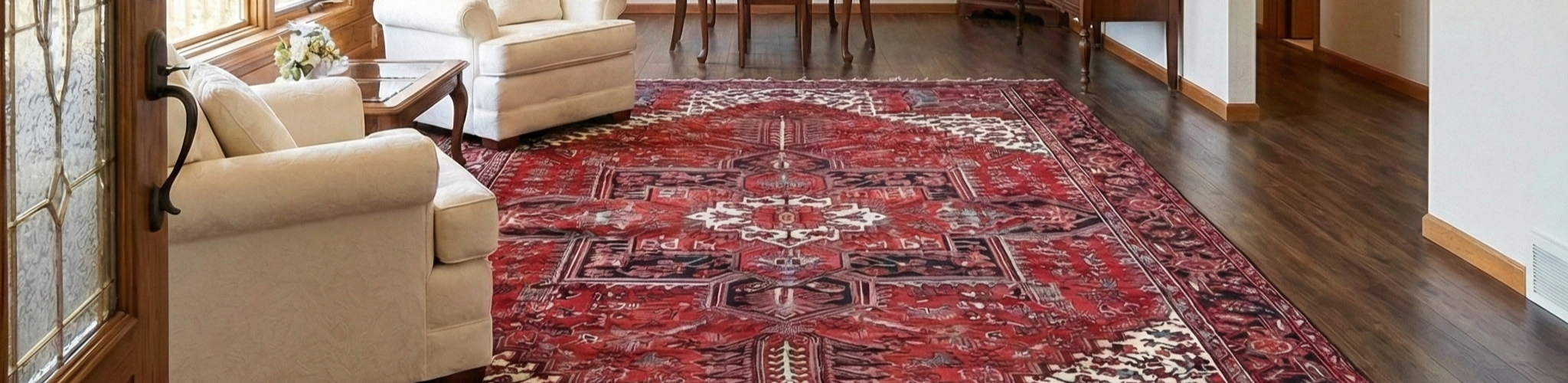
Persian Rugs – The Perfect Choice for Traditional, Modern, and Contemporary Homes

Mixing traditional Persian rugs with contemporary design or new Persian rugs with traditional decor is a key way to create an interesting and compelling interior design. Persian rugs are also very affordable if you choose from the hand-knotted range of vintage and contemporary Persian rugs in our large inventory at © 1800getarug.com .


Persian rugs are consistently the rug of choice for the homes of influential designers. Husband and wife designers Charles and Ray Eames became famous for their mid-20th century designs. They used a selection of Persian rugs to decorate a cute reading nook in their contemporary California home. Even the celebrated 20th century architect known as Le Corbusier – the man credited with creating “white box” Modernism – placed Persian rugs in the living rooms of his all-white masterpieces.
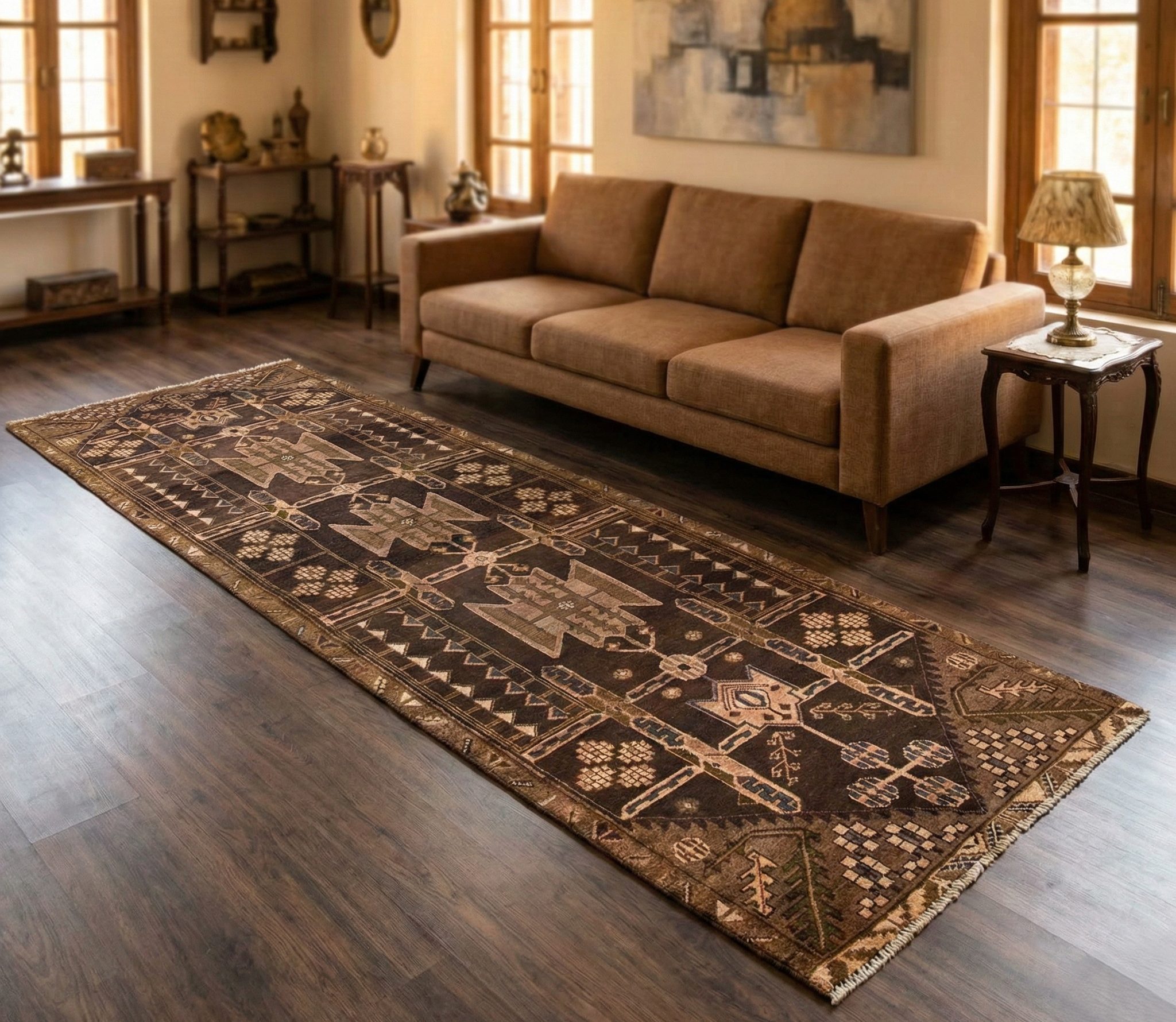
Chocolate Brown, Vintage Persian Bakhtiar, Hand Knotted, 100% Wool, Worn and Distressed, Sheared Low, Zero Pile, Sides and Ends Professionally Secured, Wide Runner, Oriental Rug
This handcrafted Vintage Persian Bakhtiar is an authentic Pure Wool oriental rug. © 1800getarug.com


These statement rug choices by the Eames’ and Le Corbusier are all the more relevant in the 21st century when many interior designers know the secret to great interior design – whether traditional, modern, contemporary, eclectic, jungalow, or maximalism – is a Persian rug. Read on to discover why the beauty, tradition, and handmade narrative pleasure of these rugs is just right for your home no matter what your decorating style.


Persian Rugs versus Oriental Rugs

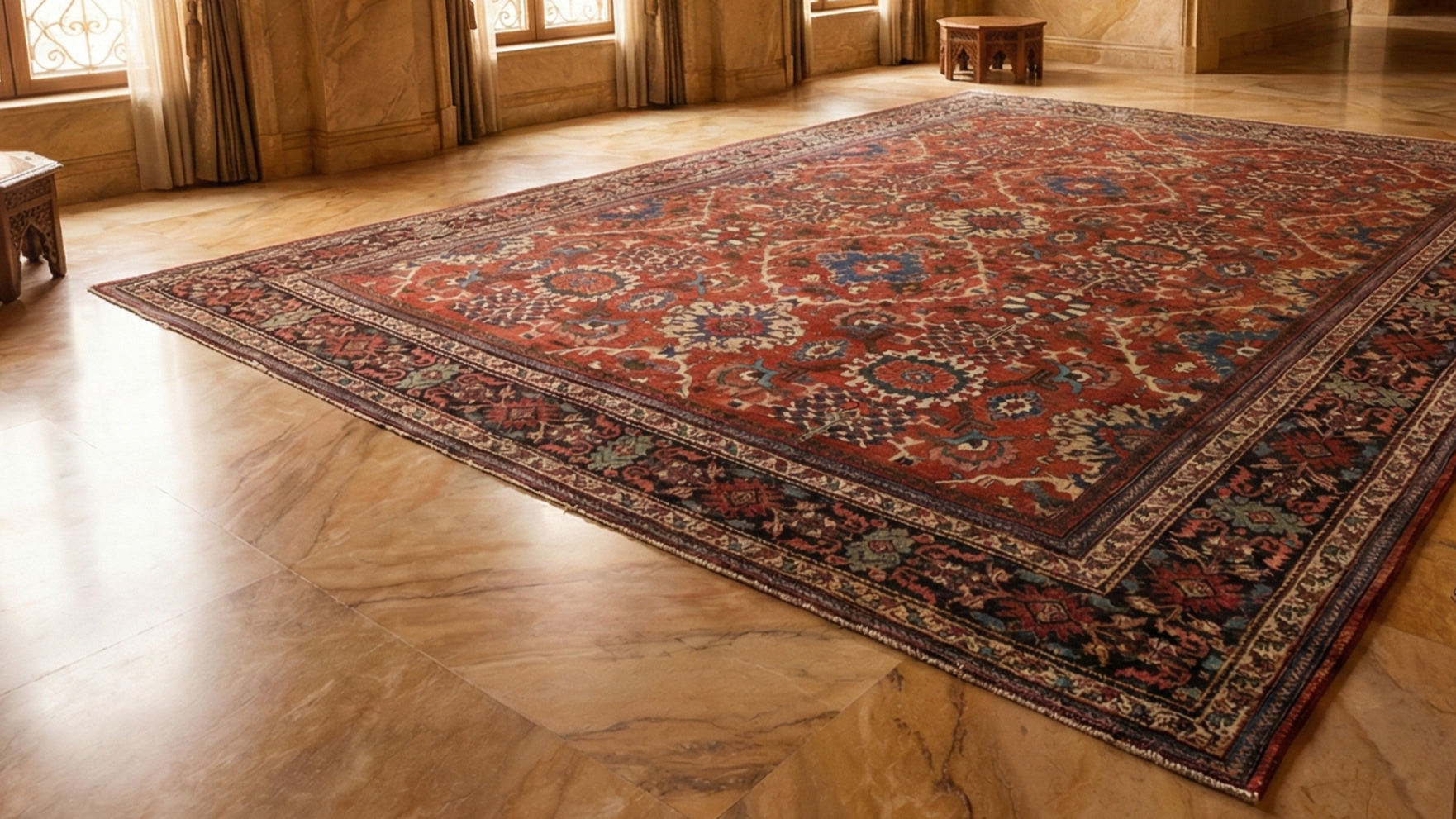
In the 21st century, the terms Persian rug and Oriental rug refer broadly to the same type of rug. The two terms became interchangeable in the 19th century when exports of these rugs to the US and Europe took off and found new, appreciative customers. To make things easy we’ll use the term Persian rug in this post.
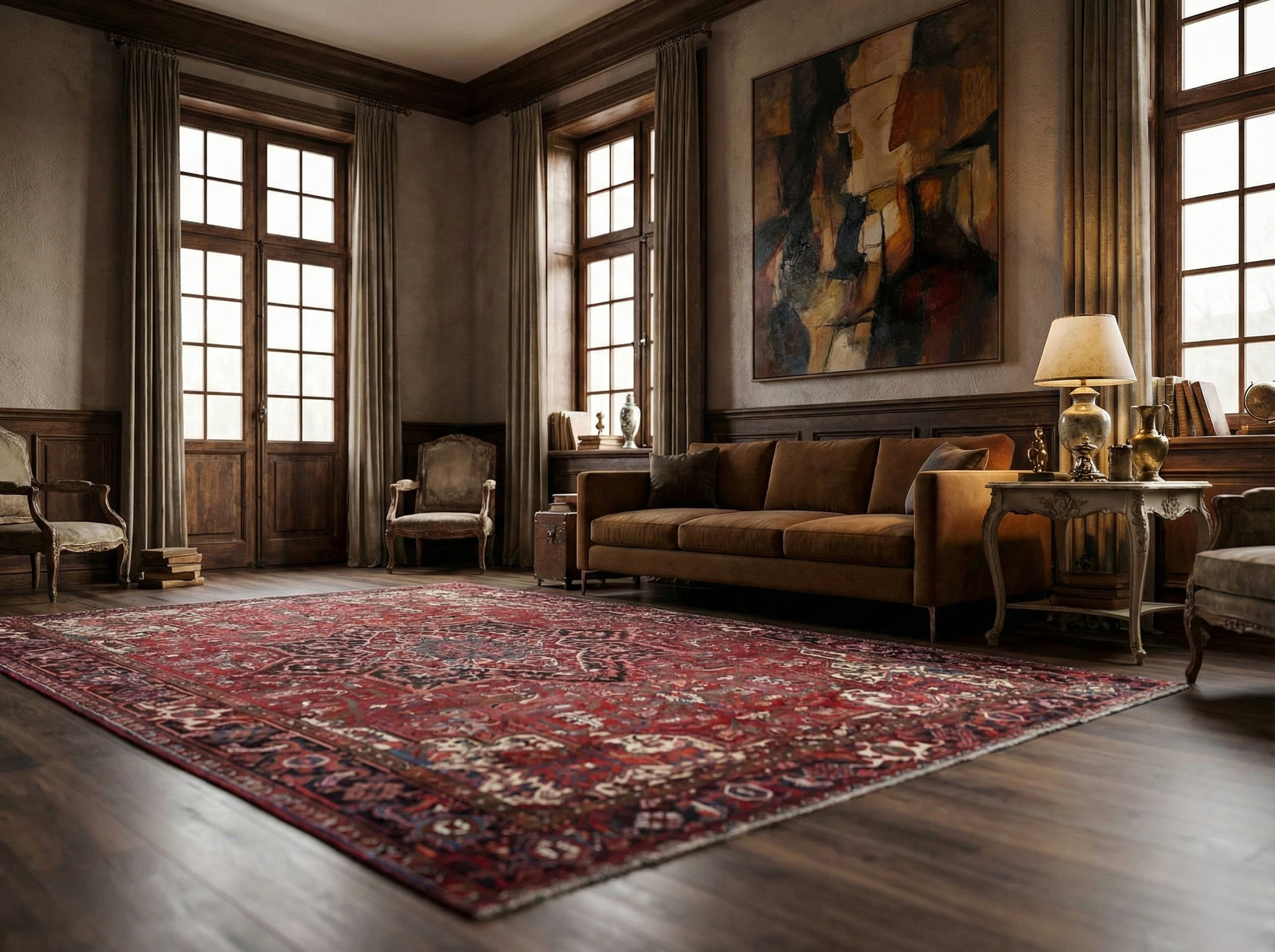
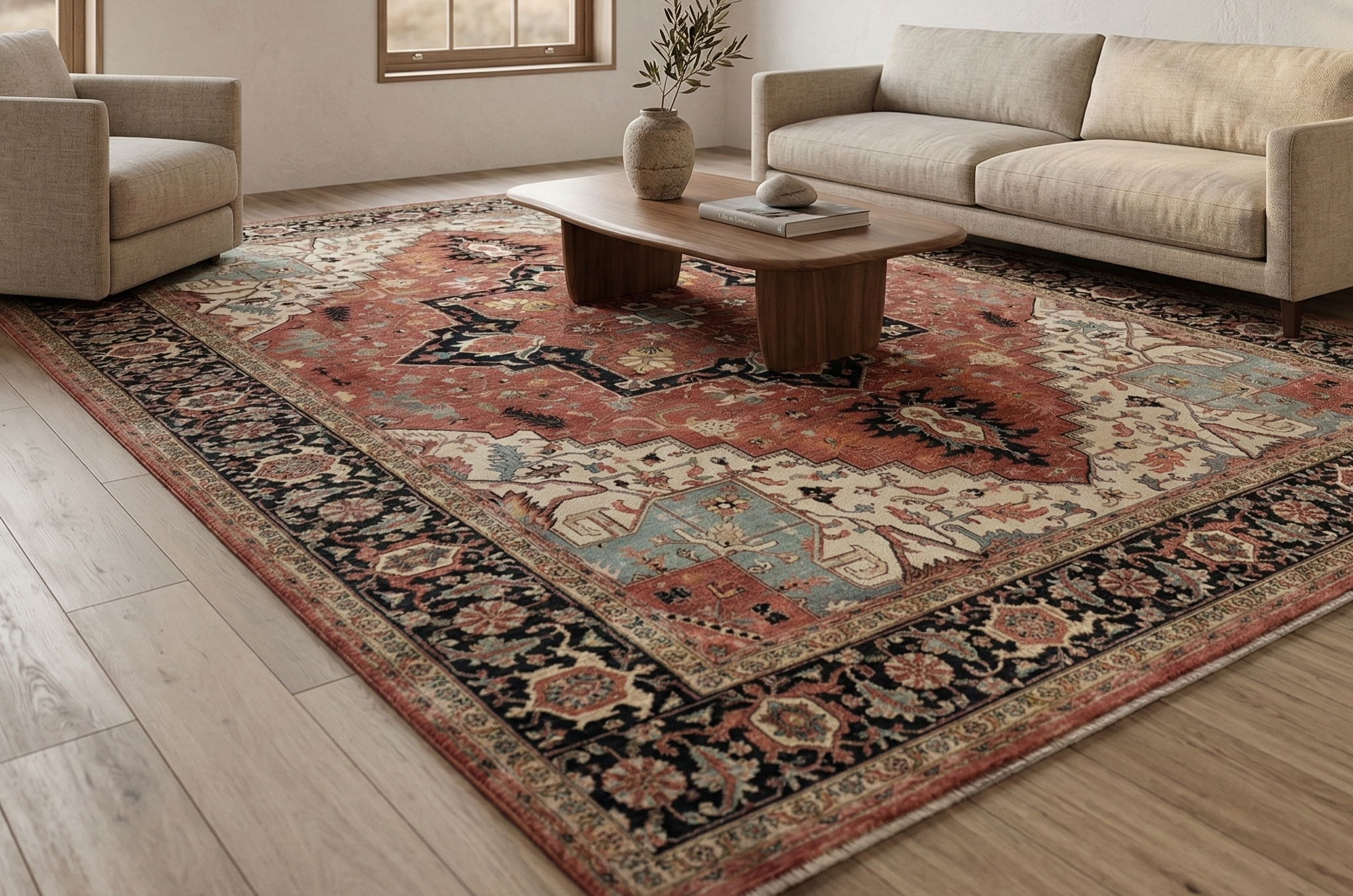
Blush Red, Vintage Persian Heriz with Flower Medallion Design, 100% Wool, Hand Knotted, Even Wear, Sheared Low, Good Condition, Sides and Ends Professionally Secured, Oriental Rug
This handcrafted Vintage Persian Heriz is an authentic Pure Wool oriental rug. © 1800getarug.com


Antique, Vintage, or New?

Persian rugs are still made today using traditional patterns that are often updated with colors that appeal to 21st century consumers. Antique Persian rugs are generally accepted to be older than 100 years, although some rug dealers choose 80 years as the cut-off. Vintage means older than twenty years but less than 100 years. We stock mainly vintage and new Persian rugs. Often we overdye our vintage rugs to change a colorful, busy pattern into a single color rug where the original pattern is still visible.
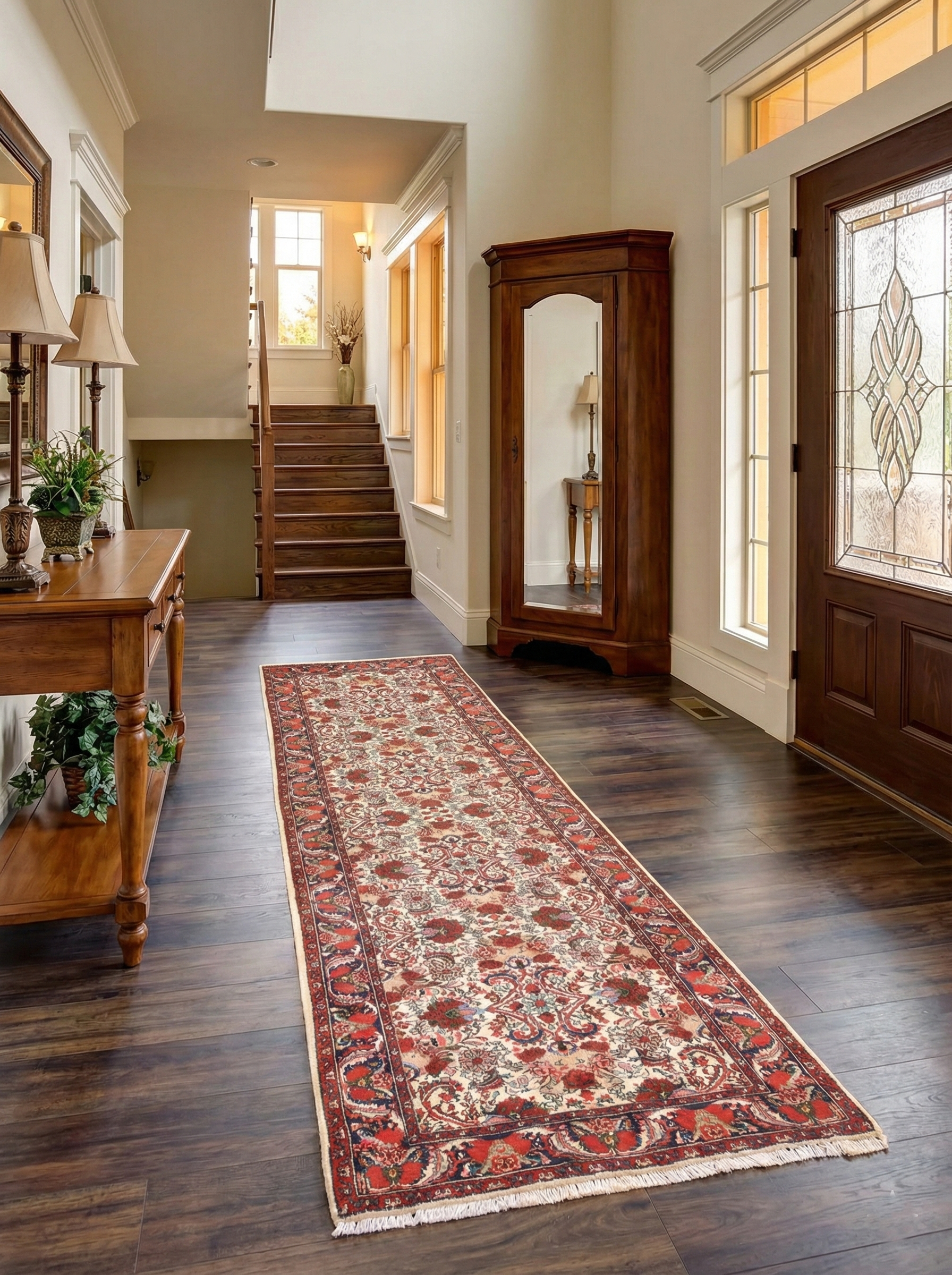
Swan White, Vintage Persian Bijar, Flower Design, Pure Wool, Hand Knotted, Thick and Plush, Good Condition, Clean, Wide Runner, Oriental Rug
This handcrafted Vintage Persian Bijar is an original Pure Wool oriental rug. © 1800getarug.com


here Were Traditional Persian Rugs Made?

Traditional Persian rugs don’t represent a single culture or style. They were hand-knotted or loom woven by many tribes, nomads, urban imperial cultures (for example the Mughal Empire) in many regions and countries using different techniques, colors, patterns and fibers.

The epicenter of Persian rug weaving was the country we now know as Iran. At the height of Persia’s power its empire spread from its “heart” (the capital of Persepolis in present-day Iran) west to Egypt, east to Kabul and northern India, north to Turkey, and south to the Persian Gulf.
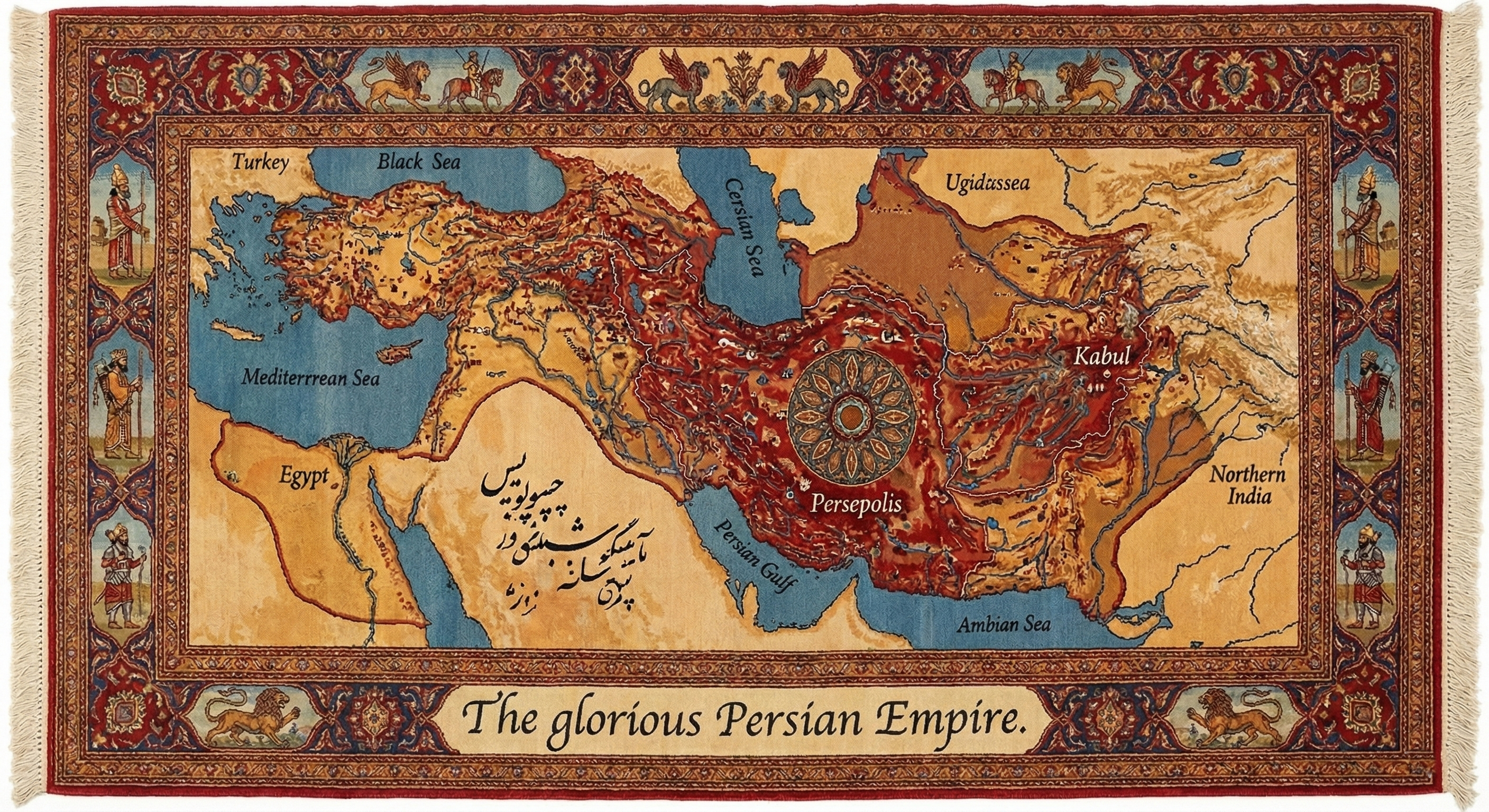
Persian Rugs
This is an illustration of the height of the Persian Empire.. © 1800getarug.com

The largest and best-known centers for rug production were in Persia. These centers include Tabriz (1500-1550), Herat (1525-1650), Kashan (1525-1650) and Kerman (1600-1650). Rugs made in these locations are usually referred to by the locations.

There’s a surprising twist to the tale of Persian rugs. When exports of Persian rugs to Europe and the United States took off in the 19th century it soon became apparent western taste didn’t always match the rugs being imported. Entrepreneurs reacted by creating a style of Persian rugs known as Zieglers. The name Ziegler isn’t a location or a tribe, but is the name of a German company that commissioned their own rug style to match the desires of Western customers.


What Types of Designs Are Found in Persian Rugs?

Many Persian designs feature plants, gardens, and animals, often interlaced or bordered with geometric patterns or featuring central medallions. Popular motifs from the past to the present include the Tree of Life and the Four Seasons. These lush botanical patterns represent a mix of reality and the magical realm of faith and imagination. Many weaving centers were located in arid, desert-like regions that despite the adverse climate had areas of lush growth due to ingenious canals and aqueduct systems that made deserts bloom.
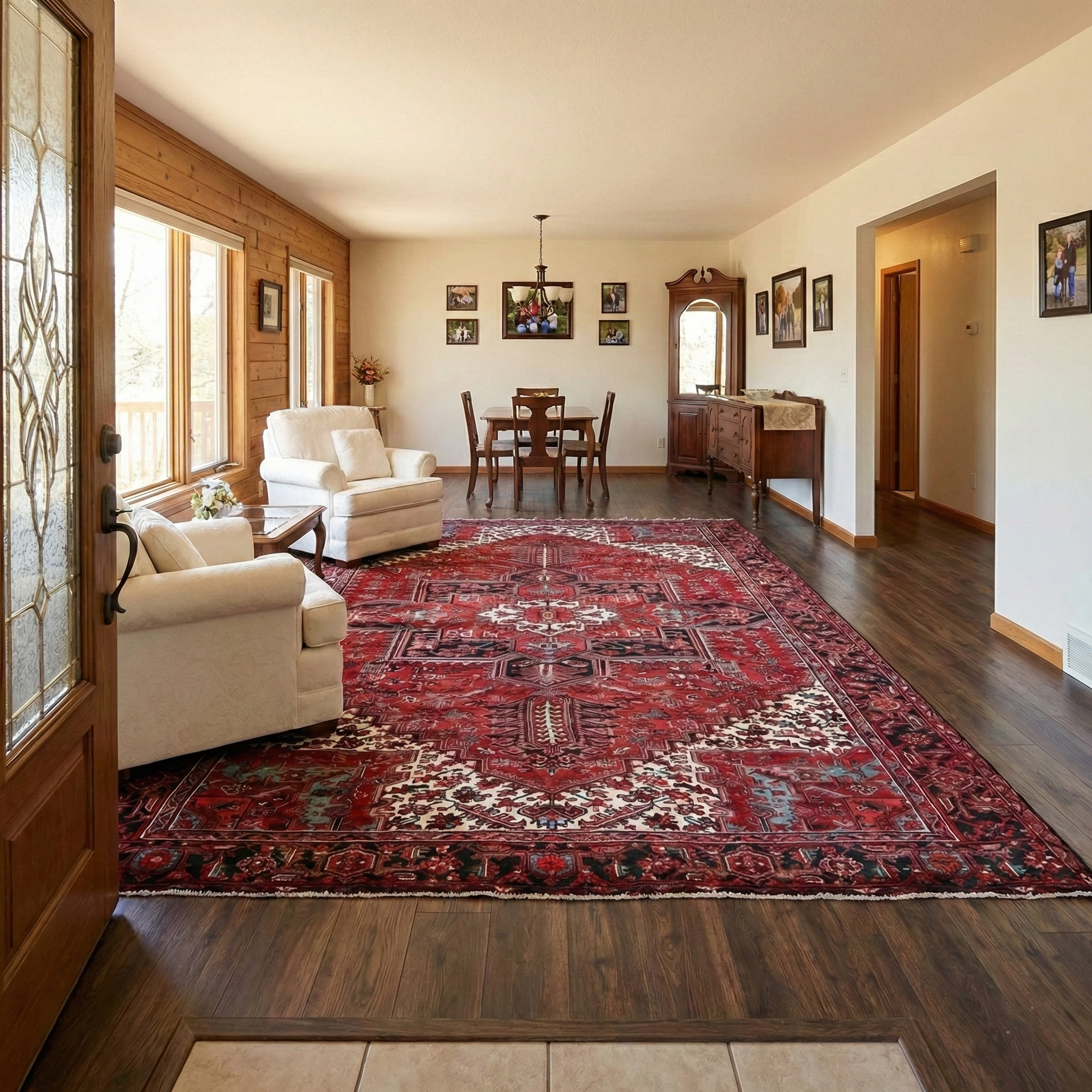
Scarlet Red, Vintage Persian Heriz with Geometric Medallion Design, 100% Wool, Hand Knotted, Even Wear, Sheared Low, Good Condition, Sides and Ends Professionally Secured, Oriental Rug
This handcrafted Vintage Persian Heriz is an authentic Pure Wool oriental rug. © 1800getarug.com


There’s so much more to know about Persian rugs –  knotting techniques, density (knots per square inch), dye processes  – which is why we warmly invite you to visit with one of our rug specialists at our showroom just six miles from the greater New York metro area. Or if you live further away, please schedule a video call so we can show you a range of our hand-knotted and affordable Persian rugs.  Call Now.


The Essence: Rug Knots


Before we think about technology and machinery, coloring and design, hand skill and passed-on knowledge, there is one single, elemental component to rug weaving: the knot. Rug knot is such a simple concept that one might overlook its central position in rug structure, look and durability.

nomad or a village hand-woven rug
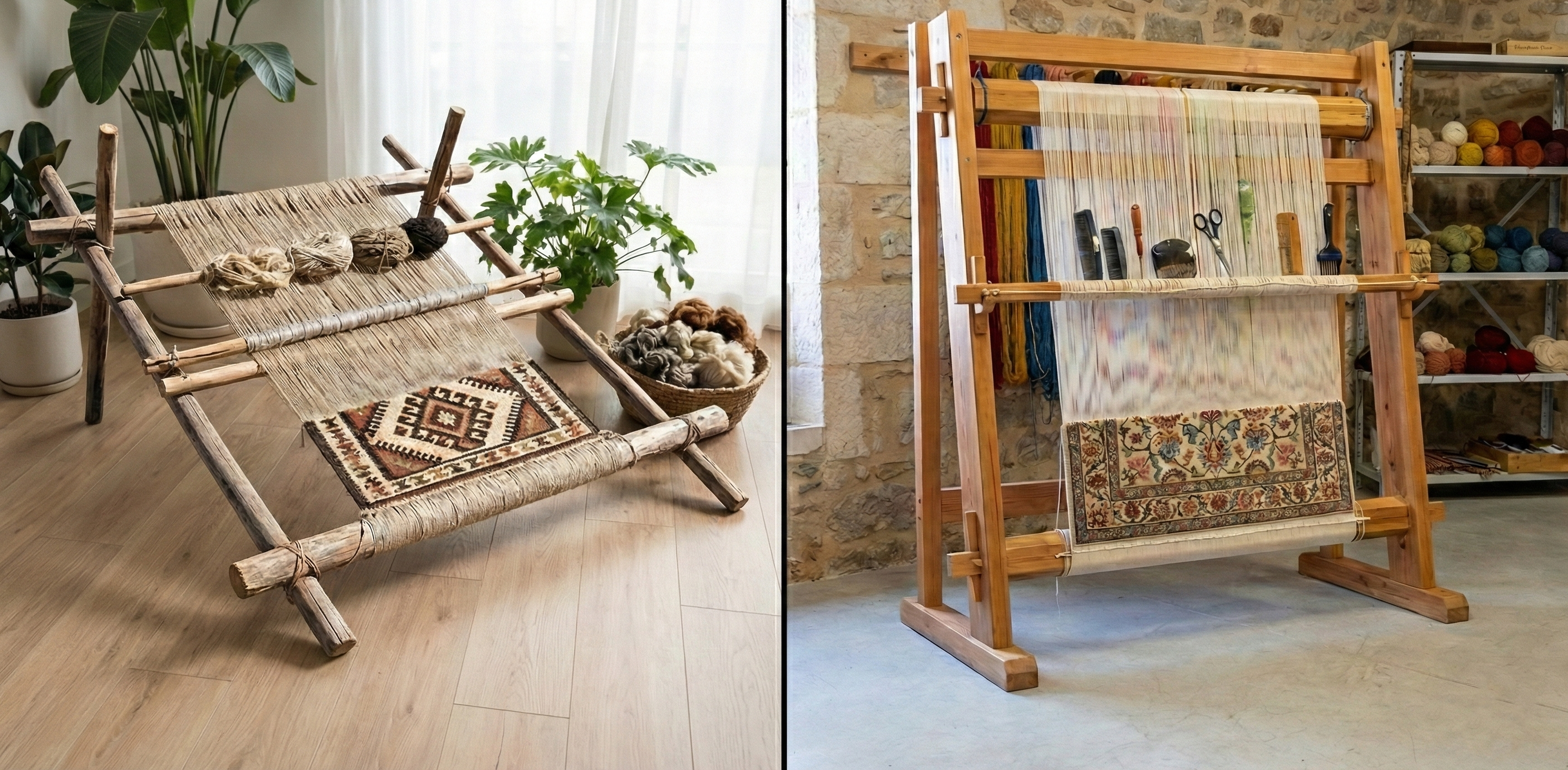
Nomadic Loom.  –  Village / workshop Loom.  ©1800getarug.com


There are two ways a rug knot is defined: density and type. When choosing a nomad or a village hand-woven rug, one might not consider the density of the knot a major factor. These traditional articles are made either within a season – and therefore fast – or with simple looms, and usually contain about 25-100 knots per square inch. Other factors are at play here: originality of the individual artist’s design (from memory), natural local dyes, manual labor, and plenty of love.

Sun Baked Orange, Serapi Heriz with Large Medallion Design, Vegetable Dyes, Hand Knotted, Aryana Grade, High Mountain Wool, Soft Pile, Densely Woven, Oriental Rug
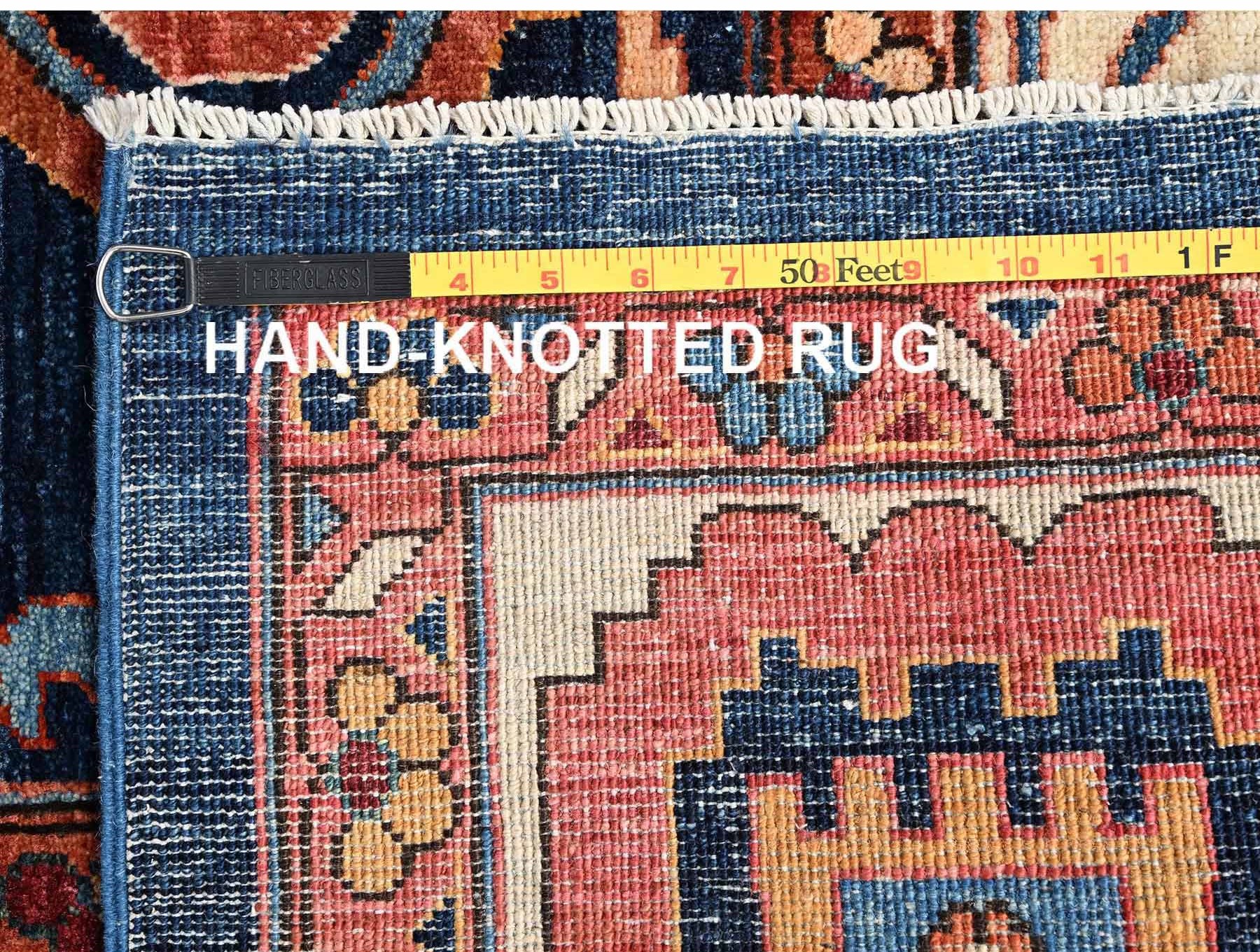
Close-up of a Kazak rug. Notice the rather closely woven rug knots. ©1800getarug.com


The workshop hand-made rugs, however, are woven on a much more sophisticated machinery. Precision is therefore a major factor- on par with design and authenticity. The knot density ranges between 100-1000 knots per square inch. If you consider that each knot takes about 10 seconds to complete, it is astounding how long finishing a large enough rug may take, keeping in mind a rather high knot density.

Terracotta Antique Persian Mahal Good Condition with Some Wear Clean Hand Knotted Oriental Rug
This Handcrafted Antique Persian , is an original Pure Wool oriental rug. ©1800getarug.com


The other way of thinking of a rug knot is its method, with two predominant ones being symmetrical and asymmetrical. Popular in most of Iran, India, Egypt, China, and parts of Turkey, the asymmetrical, or Persian Senneh, have their knot loops tied around two warps and come up on the same sides to make the rug tufts. The Turkish Ghiordes knot (the symmetrical one) goes around two warp threads on opposite sides and comes up in the middle. The most commonly used knots are slight variations on the Persian one. The Tibetan knot is perhaps the most interesting one, wrapping around warps in a complex fashion and reminiscent of Indic script.

Fire Whirl Red, Antique Persian Heriz, Good Condition, Clean, Sides and Ends Professionally Secured, 100% Wool, Hand Knotted, Oriental Rug
An Illustration of a Persian Knot. ©1800getarug.com


The study of rug knots is not necessarily complex, but it certainly is full of grace and style, which is necessary for understanding the structure, design, and feel of these wonderful hand-woven rugs that we cherish throughout our lives.


Savonnerie Rugs

Savonnerie Carpets


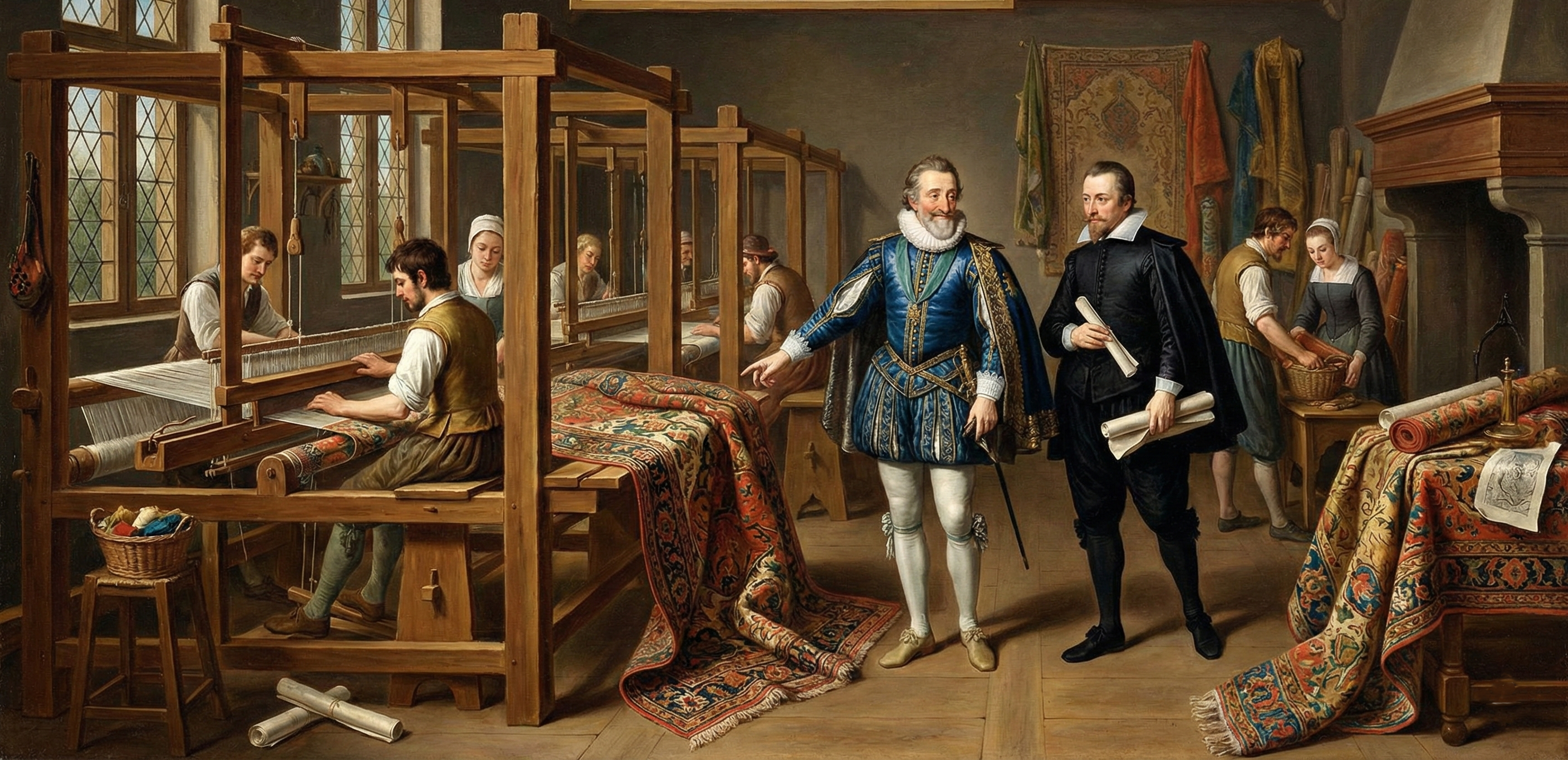
France was faced with a very modern problem in the early 17th century. A crippling trade deficit, partly due to luxury goods coming from Turkey and India, namely ortiental carpets. So King Henry IV (d.1610) and his finance minister Maximillian de Bethune decided to establish workshops for carpets ‘de Turquie et facon de levant’, meaning symmetrically piled rugs, to be woven in France.

de Turquie et facon de levant
de Turquie et facon de levant (d.1610). © 1800getarug.com


Beginning in 1608 directly beneath the Grand Gallery in the Louvre, carpets were woven mainly for the Royal household, and as precious gifts, under the supervision of Monsieur Piere Dupont. In 1615, Henry’s widow, Marie de Medici, established another workshop at Chaillot, just outside Paris, in a former soap (French: savon) factory that at the time housed orphans and provided cheap labour for weaving rugs. This weaving workshop was run by another family of weavers, the Lourdets, resulting in a sometimes bitter rivalry between the two weaving concerns.
Marie’s son Louis XIII (r.1610-1643) gave his name to the style of first period Savonnerie carpets. It is characterised by an exuberance of flowers in baskets, in vases, flowing out of cornucopia, and in bouquets. They are all very naturalistic in their drawing, and are related to contemporary Dutch embroidered and tapestry woven table covers and other smaller domestic textiles, which were much in demand throughout Europe.

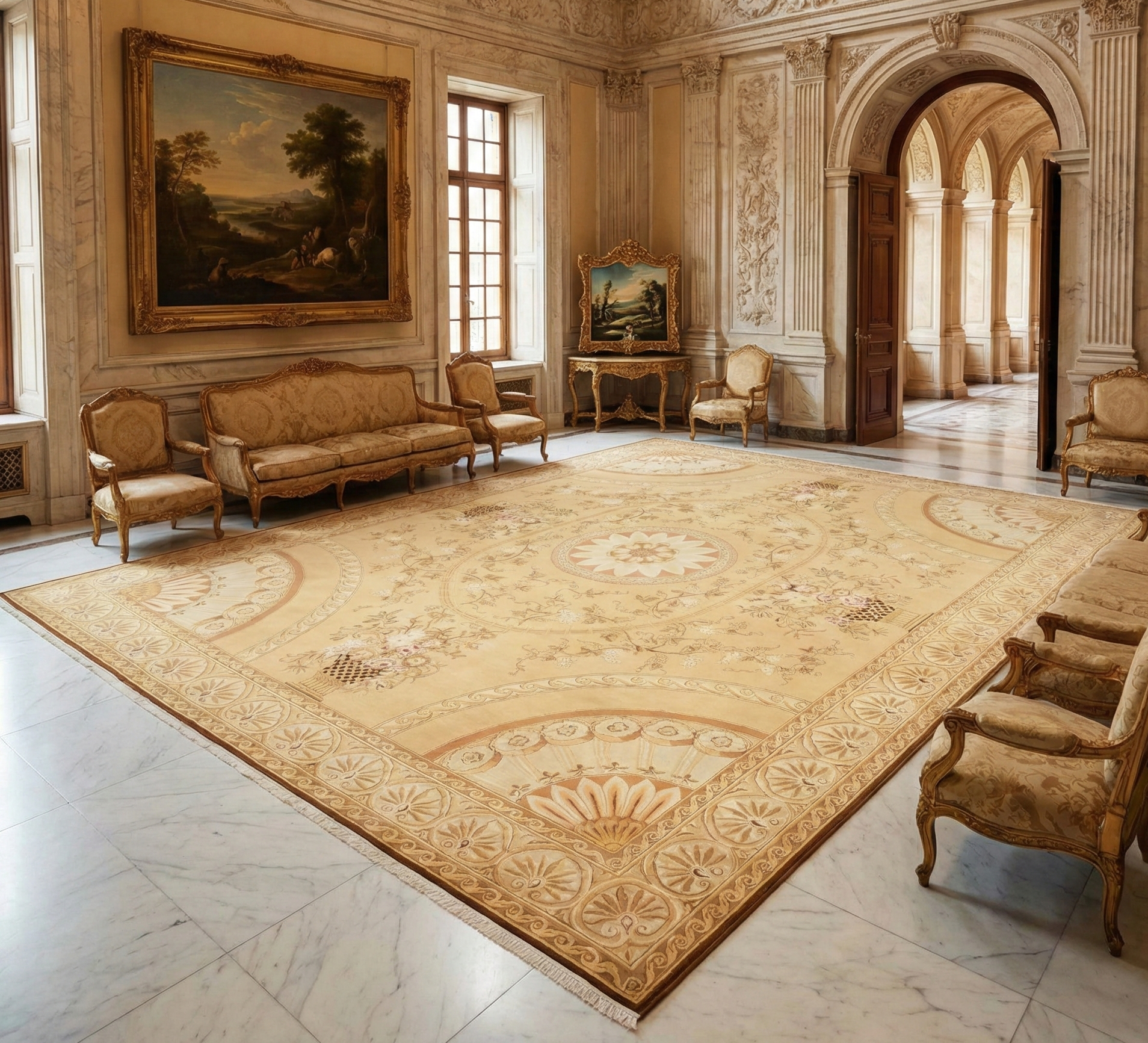
Beige, Savonnerie Weave and Design, Pure Wool, Hand Knotted, Plush Pile, XL, Oversized, Oriental Rug with European Aubusson Design, New
This handcrafted European Aubusson Design is an original Pure Wool oriental rug. © 1800getarug.com


By the 1660s. the Savonnerie production had developed a very specific weaving structure that sets it apart from other/later French and European carpets with the symmetrical knot. Two wefts shoots, one sinuous one taut, keep two warps, of which is one fully depressed, apart. The back of a real Savonnerie is therefore strongly ribbed, unlike a later Beauvais rug which shows a flat surface on the reverse. The other distinct feature is the coloured warps in the otherwise natural coloured foundation. Every tenth warp is dyed (brown, blue or green) to help the weaver to follow the cartoon more exactly. Hemp is used for the foundation (some later examples have wool wefts) and the pile is nearly always wool.
Under Louis XIV (r.1643-1715) the style shows a significant change towards the baroque. Louis XIV and his minister Colbert renovated the Louvre, and their modernisation included carpets for all state rooms, which was previously unheard of. What immediately springs to mind when seeing the carpets are baroque ceiling decorations: their general layout, the borders, scrolls, acanthus leaves and even the ‘pictures’ within the carpets. From the second half of the 16th century onwards all Savonnerie carpets were designed by painters, prominent among them Charles le Brun, first painter to the King.

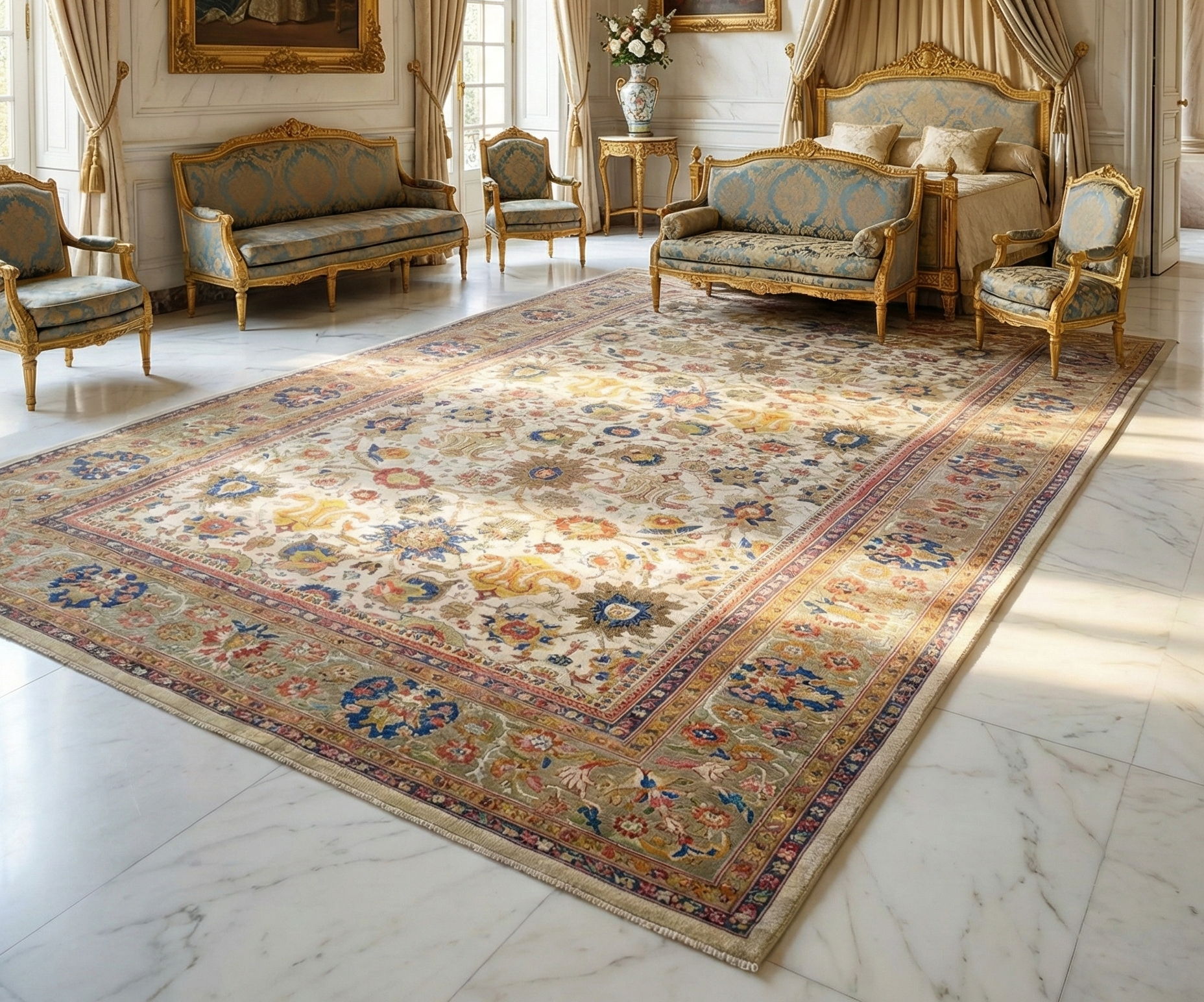
Ivory Antique Persian Sultanabad Good Condition, Extra Long Clean Pure Wool Hand Knotted Oriental Rug
This Handcrafted Persian, is an original Pure Wool oriental rug. © 1800getarug.com


Producing such a significant number of huge carpets proved difficult to achieve in a short period. To speed up production, several of the Louvre carpets were woven on short warps, meaning the rug was woven horizontally, at right angles to the design in the manner of French and Flemish tapestry weaving, which allowed more weavers to work simultaneously on one piece. Production began in 1665 and during the next twenty years almost one hundred carpets in sizes up to 9 metres long and 5 metres wide were woven. Not all were installed in the Louvre, however, as Louis XIV had abandoned the ‘old’ palace for the even newer Versailles.

In the 18th century under Louis XV, carpet designs took a more playful turn, less stately, more domestic, late baroque in transition to towards early rococo. They are still relatable to stucco ceilings of the same period. The most prominent designer of the time was Pierre-Joseph Perrot.  Neoclassical designs start to appear in the second half of the 18th century with carpets designed by Francois-Joseph Belanger, whose work was continued by Michel -Bruno Bellengé, Louis XVI’s principal designer and ‘Peintre du Roi’. First in the Louvre but later directly in the Savonnerie workshop he designed, among many others, a carpet for Marie Antoinette’s palace in Fontainebleau. His carpets were copied in Beauvais.

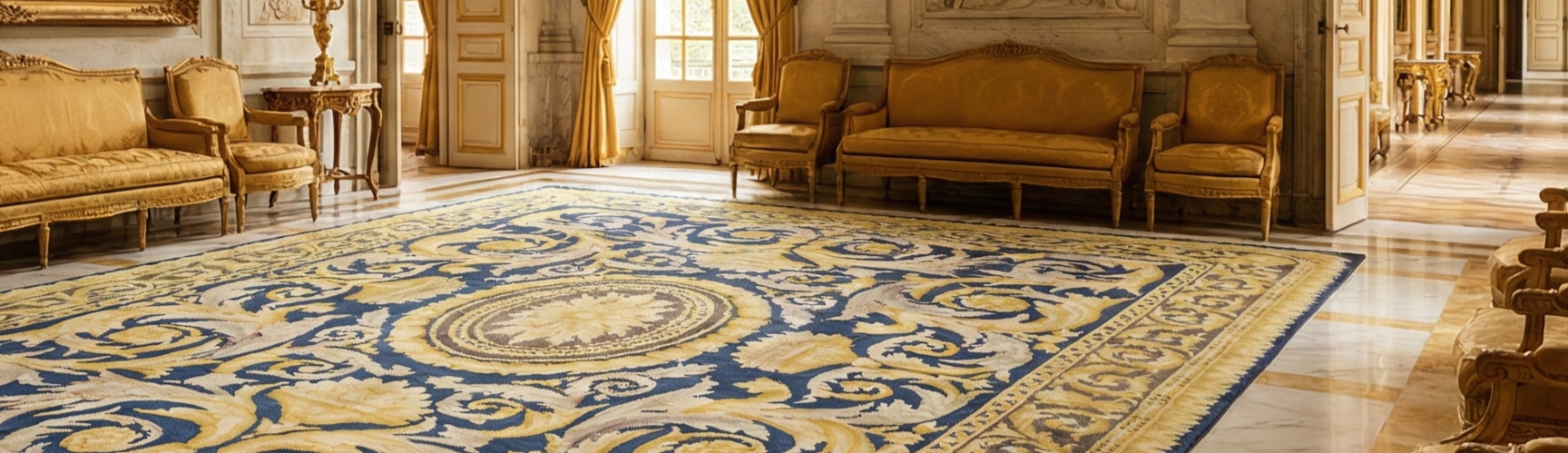
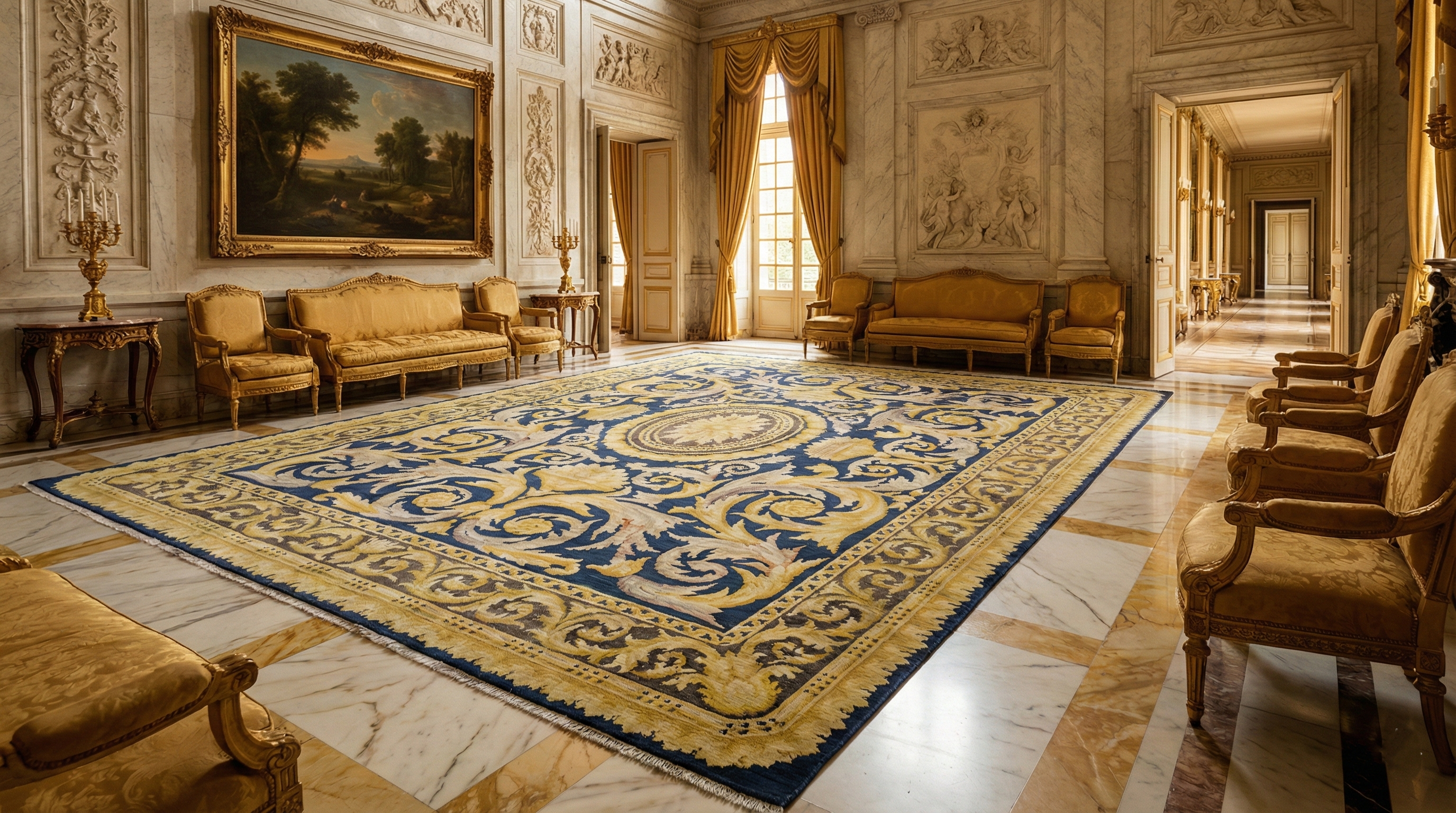
Navy Blue Old Spanish Savonnerie Exc Cond Hand-Knotted Oversize Rug
This handcrafted spanish Savonnerie, is an authentic excellent condition hand-knotted oversize oriental rug. © 1800getarug.com


The French Revolution bought a brief interruption at the Savonnerie workshops, but under Napoleon Neoclassical designs turned into a fully developed imperial, ‘Empire’, style. The most important designer was Jacques-Louis de La Hamayde de Saint-Ange-Desmaisons, known as Saint-Ange. He continued to design carpets, as well as porcelain and tapestries, well into the Bourbon restoration. Pile carpet production was moved to the Gobelins manufacturory in 1826, and the use of coloured warp pairs was discontinued.


Other European carpets are often erroneously called Savonnerie, but only those ones with the structural characteristics mentioned above can be called real Savonneries.


What’s the deal with antique Persian carpets?

With everything that’s been going on in Iran lately, we tend to forget that the Middle Eastern country is known as the original home of the oriental carpet. Iran (Persia) is the oldest and once the most powerful empire in the Middle East. Many of the finest antique Persian carpets have originated from Iran over the last hundred years or longer.


Persia stood at the crossroads of Eastern and Western civilizations. Under the Safavid dynasty, Iran attained its artistic height. Court weaving, together with the art of calligraphy, miniature painting, and tile work, flourished to exceptional heights during this dynasty. It is during this dynasty that many of the fine antique Persian carpets from today were made.

Midnight Black, Vintage Persian Nehevand, Cropped Thin, 100% Wool, Hand Knotted, Zero Pile, Sides and Ends Professionally Secured, Mat, Oriental Rug
This handcrafted Vintage Persian Nehevand is an authentic Pure Wool oriental rug. © 1800getarug.com


The brilliant era witnessed the development of highly qualified carpet factories in cities including Kerman, Isfahan, Kashan, Tabriz, and Herat (now a part of Afghanistan). Iran is the genesis of most motifs, patterns, and traditional coloration, that are produced in rugs throughout the world today. Over the centuries, antique Persian carpets have become treasured heirlooms, passed on from one generation to the next. It is a true testament to the people who made the carpet originally that they are able to hold up over the course of time and still be in a condition that would be acceptable for use year after year.

Auburn Red, Hand Spun New Zealand Wool, Hand Knotted, Antiqued Fine Heriz Re-Creation with Geometric Medallion, Vegetable Dyes, Denser Weave, Oriental Rug
This handcrafted Antiqued Fine Heriz Re-Creation is an original Pure Wool oriental rug. © 1800getarug.com


So whether you’re looking for a Persian Antique Carpet or Semi-Antique, Fine New Oriental Rugs, 19th century European designs or modern area rugs, log on to www.1800getarug.com where you will find a unique collection of beautiful hand-knotted rugs which is always up to date with new colors and designs. Our showroom is open Monday through Saturday for you to view our vast selection of fine Persian rugs, and for you to find that special rug that you can pass on in your family for generations to come! Please stop by today or visit our website to find the rug for you.

Beaver Brown, Hand Knotted, Modern Variegated Design, Natural Undyed Wool, Piled Flat Weave, Tone on Tone, Textured, Oriental Rug
This handcrafted modern design is an authentic wool oriental rug. © 1800getarug.com


Should I get the largest sand rug in the world or just go for the largest Persian rug in the world?

You probably know about many things that happen in Iran these days. But did you ever think that one of them is creating the largest rug in the world?


At astonishing 60,546 square feet and 38 tons of wool, the largest Persian rug was made by 1,200 weavers, in 3 different villages, over almost two years. The carpet will not stay in Iran; it is destined to fly over to the United Arab Emirates.


Meanwhile in Island of Hormuz, we see that Iranians also love the beach, and they love building stuff out of sand. But if it’s castles for us, guess what they are building? You guessed right… a carpet. Group of Iranian artists created the world’s biggest sand carpet that spreads over amazing 400 square feet and created with 70 different types of send:


Think you are ready for your own Persian rug? Well we can’t offer you a sand rug or a 60,000 square feet rug, but we can offer Persian Antique or Semi-Antique, Fine New Oriental Rugs, 19th century European designs or modern area rugs. Just log on to www.1800getarug.com where you will find a unique collection of beautiful handknotted rugs which is always up to date with color and design.


How Persian Rugs are made?

The Persian Rug is more than just a decorative piece. Rugs and carpets are a vital part of the Iranian culture. It’s also interesting to know that rug weaving is an honorable occupation in the Persian culture – only last year Iran exported more than 400 million dollars worth of hand made rugs and it’s Iran’s largest export after… oil!

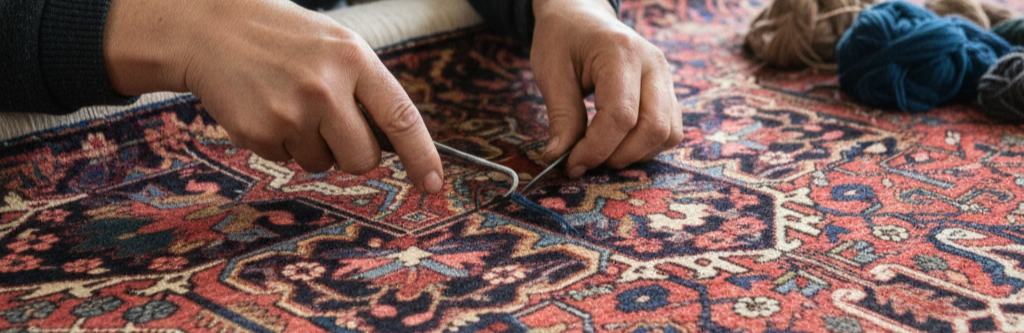
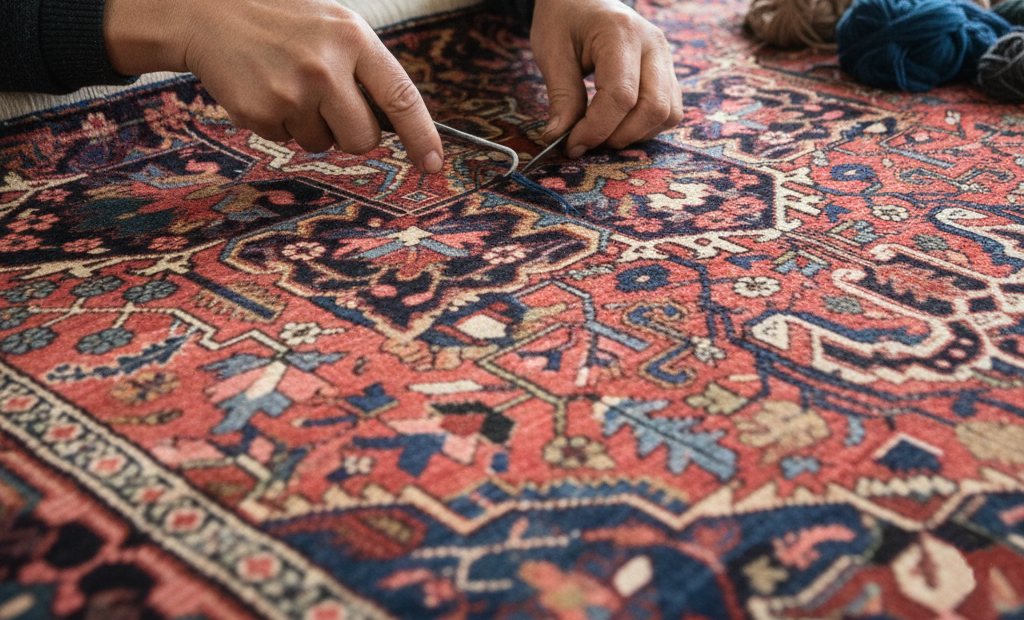
You can imagine that rug weaving is pretty complicated. Depending on size, quality and the pattern of the carpet, it can take up to a few years to make a rug. When knotting a rug, the weaver creates detailed and complicated patterns; as rug weavers can create thousands of patterned knots in each day.

Sounds like much of a hassle over something that a machine can do in a matter of minutes. Well, there are machine rugs which might look like Persian rugs but there is no real knotting involved and as in most of machine made products – these rugs are made from industrial materials and synthetic fibers that can not match the true beauty and quality of a handmade rug.

If you’re interested in seeing the magic of weaving – it’s fairly simple. All you have to do is visit Tabriz – the center of carpet production in Persia. Here is a glimpse at the process of weaving an Oriental rug in Turkey:

[youtube=http://www.youtube.com/watch?v=SzyUYl64Pg8]

For more information about Persian Antique or Semi-Antique, Fine New Oriental Rugs, 19th century European designs or modern area rugs, log on to www.1800getarug.com where you will find a unique collection of beautiful hand-knotted rugs which is always up to date with color and design.

The Louvre Museum

My family, since before I can remember, has a long standing history of collecting antique Persian and oriental rugs. The care and time spent creating and weaving a hand knotted rug represents not only a rich history, but also beauty as well. On a recent trip to Paris, France, I visited the Louvre Museum that houses a Persian rug from the 16th century. The gift was given in 1914 buy Joanny Peytel and is titled “Carpet with animals”. The small rug is made entirely of silk and is said to have come from Kashan, Iran. This Persian rug features a rare indigo blue color and various pictures of animals frolicking on a field.

It was by luck that I came across this particular Persian rug while on holiday. The accentuated beauty, interesting motifs and designs, and rich colors of a rug from so many years ago before my eyes made me love Persian rugs even more. Now, nearly four centuries later, I was able to witness evidence that expert weavers knew what they were really doing since they continue to be in such good condition even today for myself. I’ve always purchased my Persian rugs from 1800GetARug.com because of their great prices and authenticity. With their help, I can bring what I love the most into my own home.

The Origins of Persian Rugs

Persian rugs origins have been around for a long time, nearly 2500 years. The oldest surviving carpet in the world is from the 5th century BC and is called the Pazyryk Carpet (above). Found in the grave of a Scythian prince from the Achaemenid period,  this carpet is a phenomenal example of Persian rugs, and it is especially interesting that it has withstood time so well since silk and wool  decay eventually.

The Achaemenid period was a time of magnificent carpet weaving. Cyrus the Great was the ruler of the court and Persia was allianced with Alexander the Great. The empire was the largest of Ancient times and is noted in history for being the foe of the Greeks; for freeing the Jews from slavery in Babylon; for having official languages throughout their territories; and for having magnificent hand knotted rugs.

The empire fell, but the making of hand knotted rugs never stopped. In the 6th century, the Persian carpets were globally famed for being the best. A carpet in the imperial hall of Khorsow I was 450 feet long and 90 feet wide. It depicted a formal garden. A hundred years later, the Sasanian capital Tuspawn (modern Iraq) fell and the Arab invaders cut the rug into fragmented rugs for booty.

Persian Rugs Care

Persian rugs are the finest in the world. Nothing grabs my attention like hand knotted rugs, made with fine silk or wool. It is another form of art, but one of the few kinds that can be executed with more than one pair of hands. Hand knotted rugs are worthy of being hung on your wall. That way you can admire them and preserve them for a longer time than if they were on the floor. Here are some more rug care tips:

Keep it away from the sun. This can fade your beautiful Persian rugs. If it is in the sun, rotate it monthly. If it is on the ground, rotate it four times a year, seasonally. This will help the rug to fade uniformly. Move furniture accordingly.

Straighten any gnarled fringe. Don’t comb the fringes, but fold one end of the rug to the other. This will straighten the fringe. Shake the rug if there are still some tangles.
Vacuum and keep clean your Persian rugs. It will also help the fibers look fluffy. Be careful, though. If your rug is expensive or antique and has threadbare spots, beater bars can make them worse. It’s best to turn off the beater bar.

Lastly, if you have a spill, clean it thoroughly and immediately. Absorb the spill with paper towel and then dampen it with water. If the spill remains, take it to a professional rugs cleaning service.

The Rules for Persian Rugs

Area rugs can really make a big difference in the feeling of your home. If you have wooden floors, it is a great idea to add some texture to a room by placing oriental rugs in it. This added splash of color can enhance any gathering you have by allowing people to think about how your furniture interacts with your rugs.

And don’t think that Persian rugs won’t go with your current decor – they are so classic that they can go anywhere and look good. A great way to make your interior design more interesting is by combining different elements (modern with antique, leather and wool) for a unique room that offers options.

Silk or wool is a good choice if you are thinking about area rugs, though the former, I must warn you, is typically more expensive. It does attract light better, however, and also may function as a piece of decorative artwork. Should you buy a 5×8, you can hang it on the wall to appreciate its multitudinous colors and superb craftsmanship.

Persian rugs are excellent investments, appreciating dramatically once they become antiques. Remember to keep your Oriental rugs out of the sun, and if they’re underneath furniture, rotate them annually so they don’t become worn in one specific area.