The Essence: Rug Knots


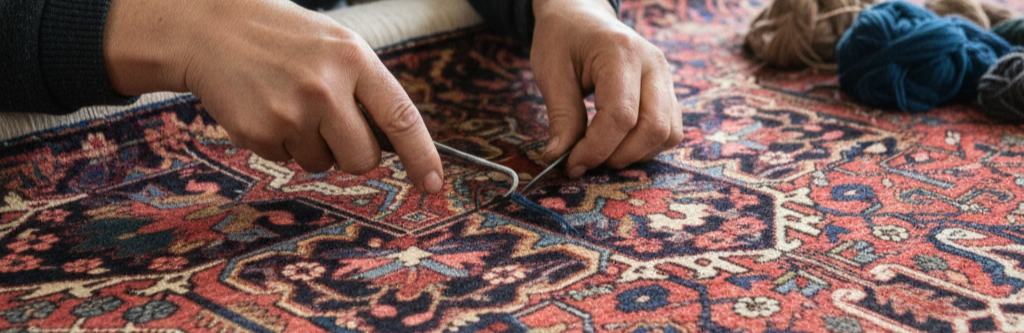
Before we think about technology and machinery, coloring and design, hand skill and passed-on knowledge, there is one single, elemental component to rug weaving: the knot. Rug knot is such a simple concept that one might overlook its central position in rug structure, look and durability.
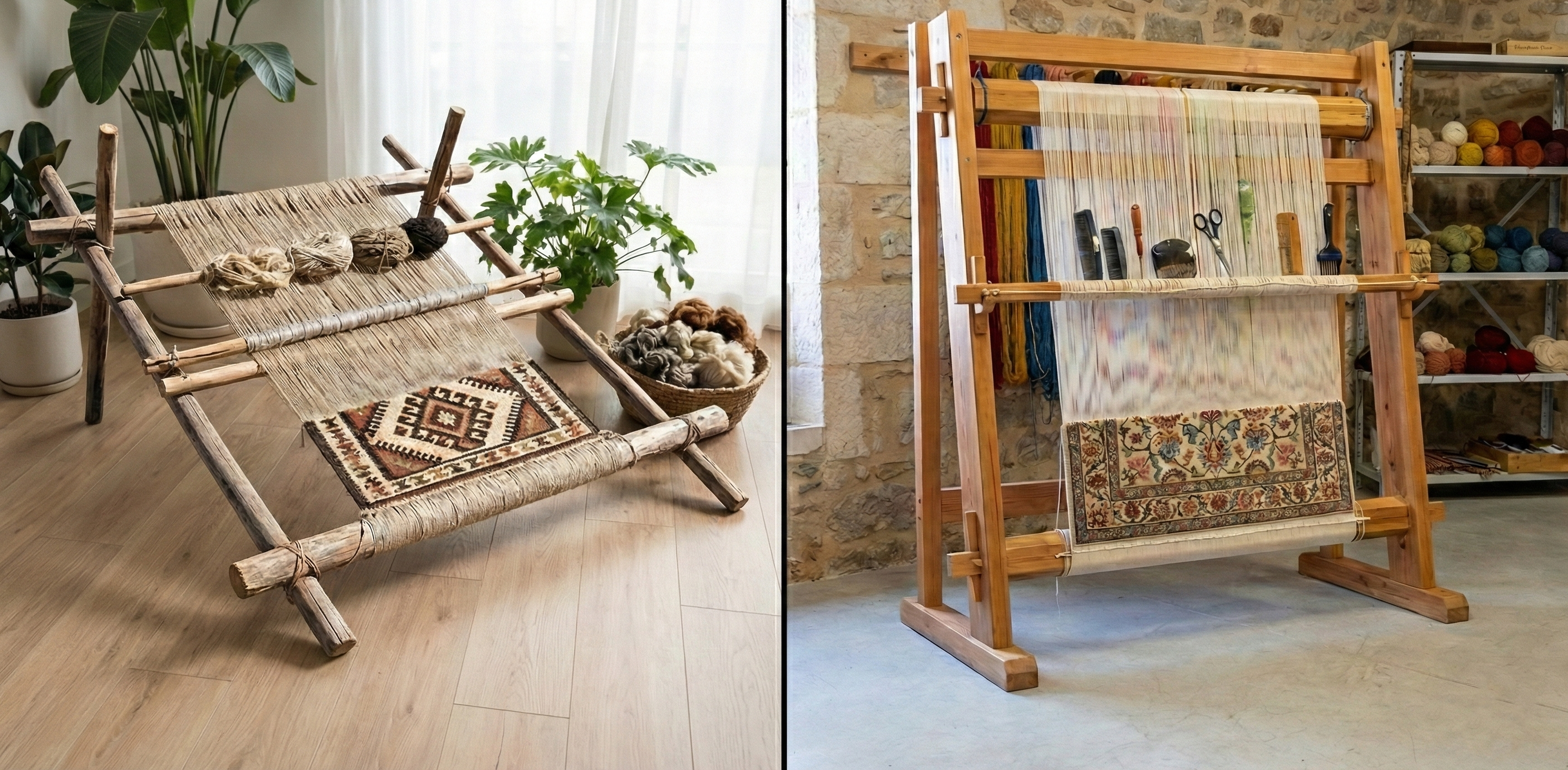
nomad or a village hand-woven rug
Nomadic Loom.  –  Village / workshop Loom.  ©1800getarug.com


There are two ways a rug knot is defined: density and type. When choosing a nomad or a village hand-woven rug, one might not consider the density of the knot a major factor. These traditional articles are made either within a season – and therefore fast – or with simple looms, and usually contain about 25-100 knots per square inch. Other factors are at play here: originality of the individual artist’s design (from memory), natural local dyes, manual labor, and plenty of love.
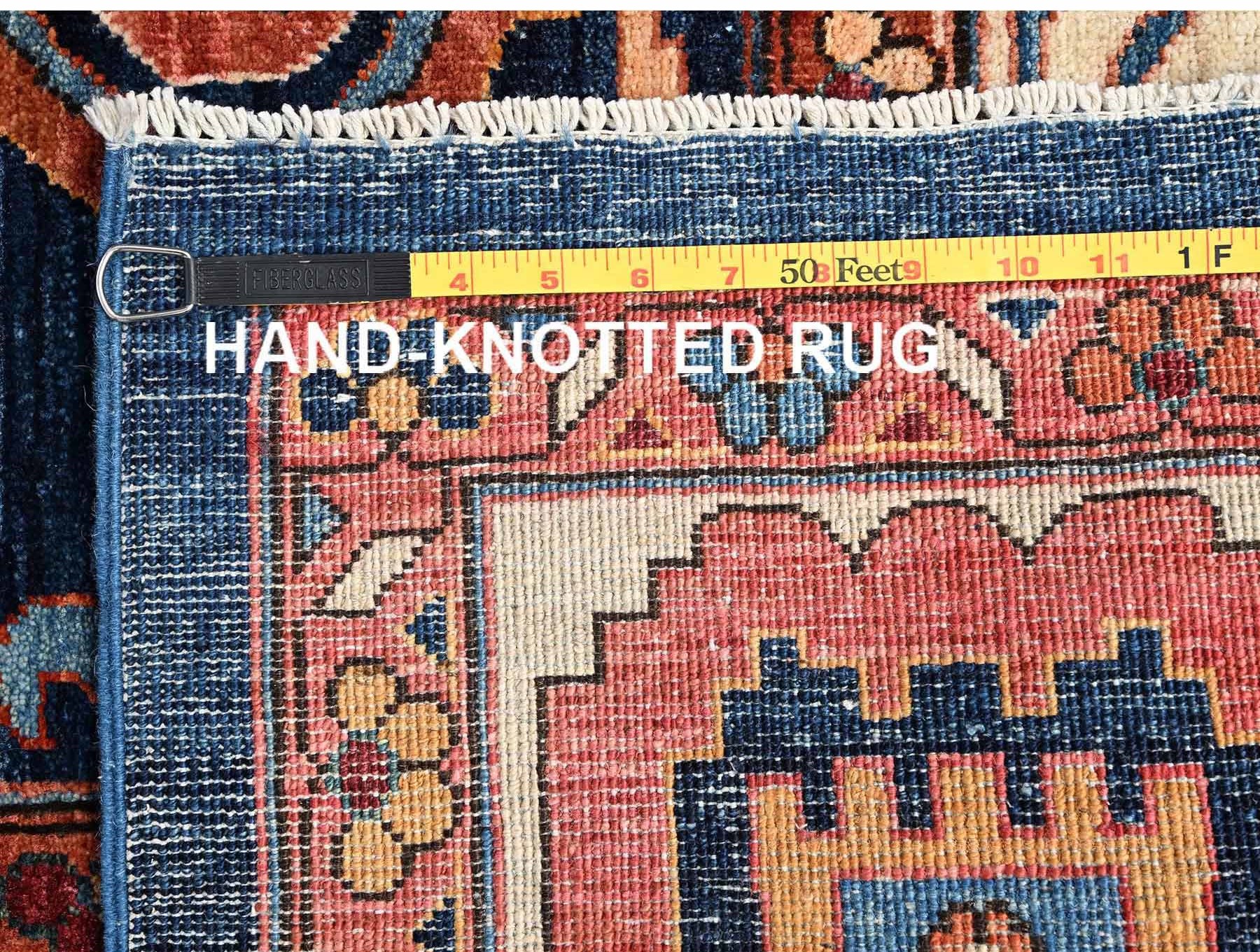
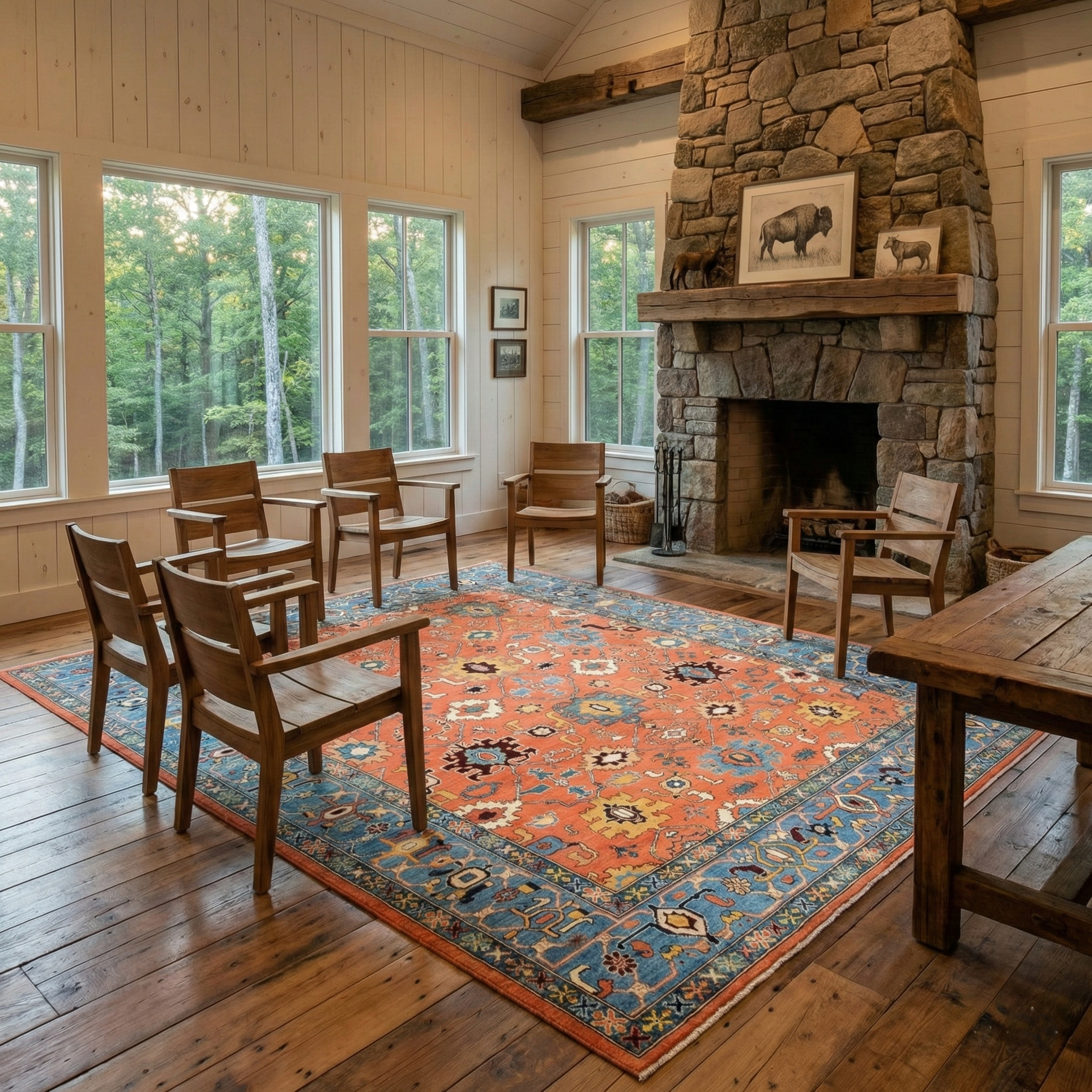
Sun Baked Orange, Serapi Heriz with Large Medallion Design, Vegetable Dyes, Hand Knotted, Aryana Grade, High Mountain Wool, Soft Pile, Densely Woven, Oriental Rug
Close-up of a Kazak rug. Notice the rather closely woven rug knots. ©1800getarug.com


The workshop hand-made rugs, however, are woven on a much more sophisticated machinery. Precision is therefore a major factor- on par with design and authenticity. The knot density ranges between 100-1000 knots per square inch. If you consider that each knot takes about 10 seconds to complete, it is astounding how long finishing a large enough rug may take, keeping in mind a rather high knot density.
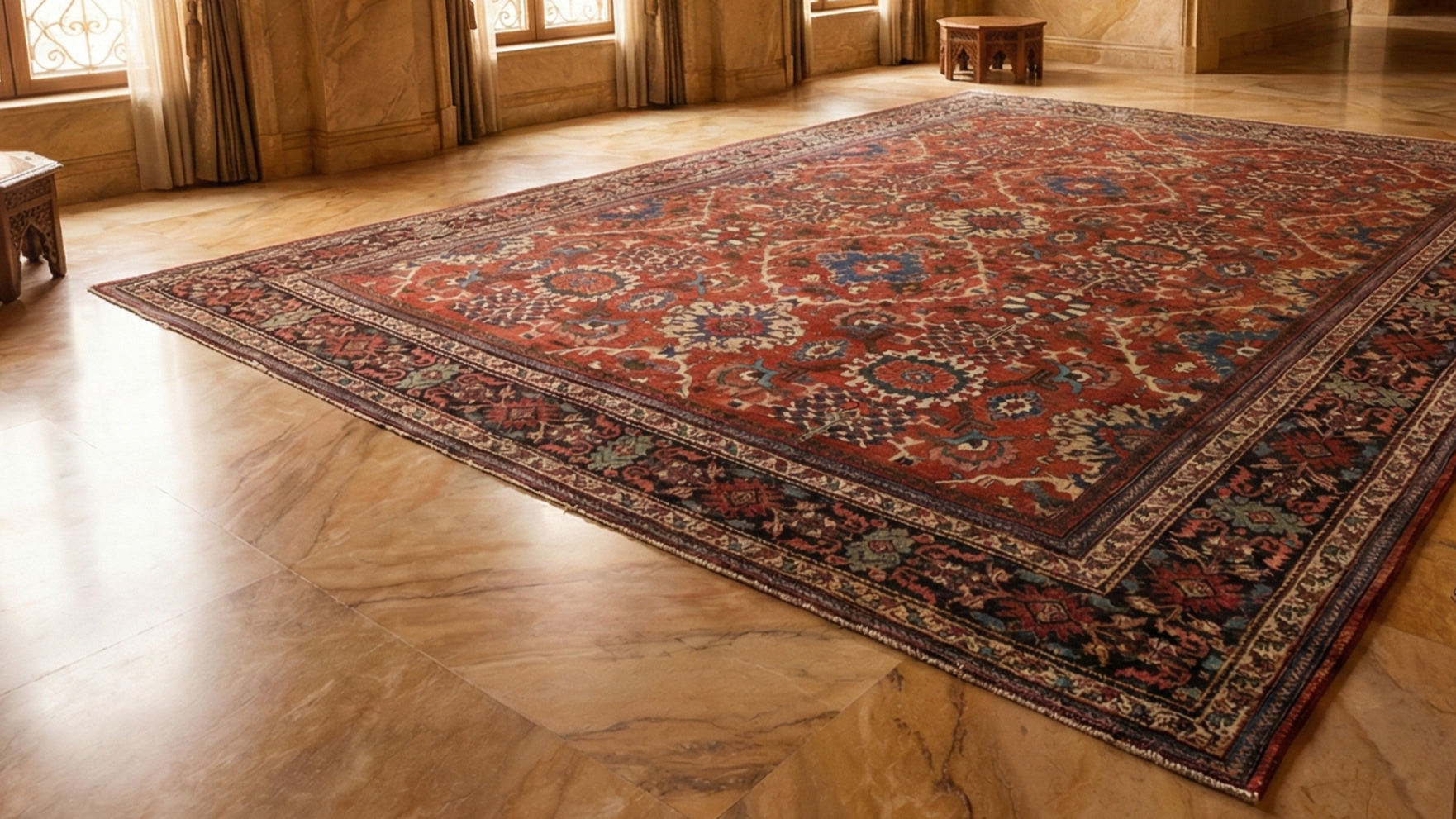
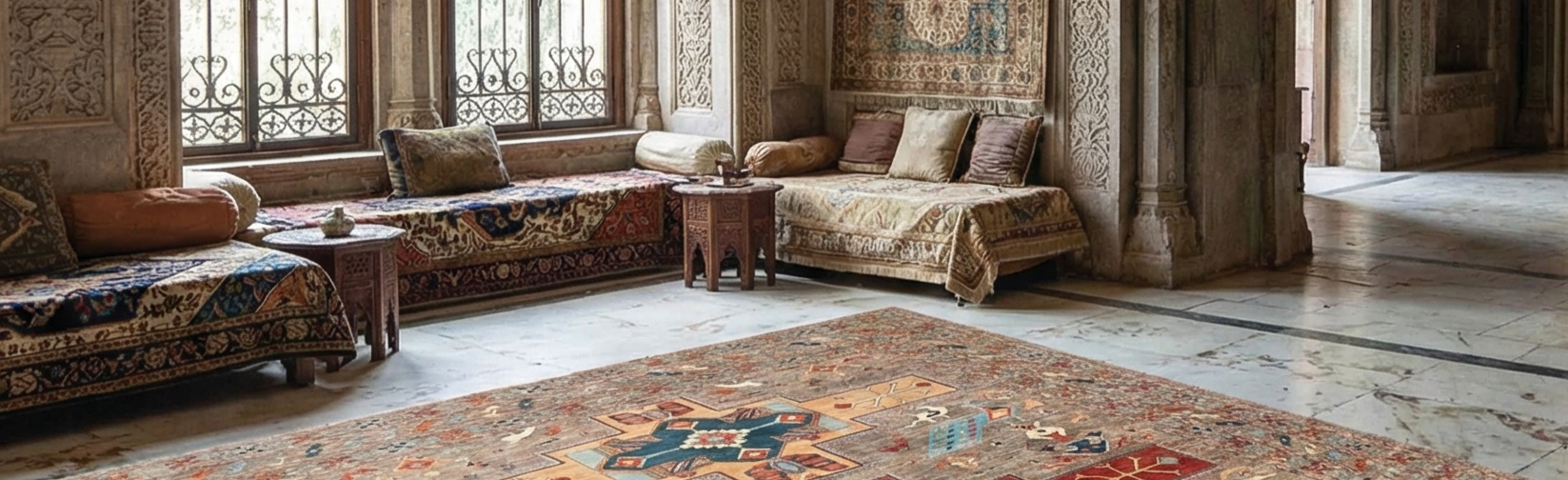
Terracotta Antique Persian Mahal Good Condition with Some Wear Clean Hand Knotted Oriental Rug
This Handcrafted Antique Persian , is an original Pure Wool oriental rug. ©1800getarug.com


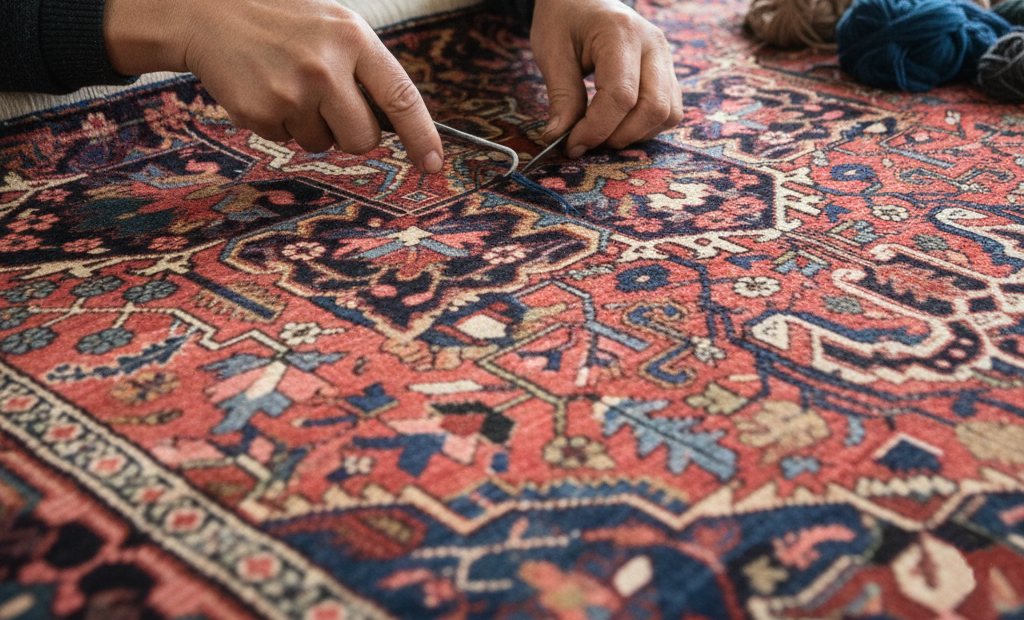
The other way of thinking of a rug knot is its method, with two predominant ones being symmetrical and asymmetrical. Popular in most of Iran, India, Egypt, China, and parts of Turkey, the asymmetrical, or Persian Senneh, have their knot loops tied around two warps and come up on the same sides to make the rug tufts. The Turkish Ghiordes knot (the symmetrical one) goes around two warp threads on opposite sides and comes up in the middle. The most commonly used knots are slight variations on the Persian one. The Tibetan knot is perhaps the most interesting one, wrapping around warps in a complex fashion and reminiscent of Indic script.
Fire Whirl Red, Antique Persian Heriz, Good Condition, Clean, Sides and Ends Professionally Secured, 100% Wool, Hand Knotted, Oriental Rug
An Illustration of a Persian Knot. ©1800getarug.com


The study of rug knots is not necessarily complex, but it certainly is full of grace and style, which is necessary for understanding the structure, design, and feel of these wonderful hand-woven rugs that we cherish throughout our lives.



Evolution of The Loom


From the most basic designs to sophisticated machinery, the venerable loom is at the heart of rug making and is a key invention that heralded each of the eras of human technical advances, bringing people together.

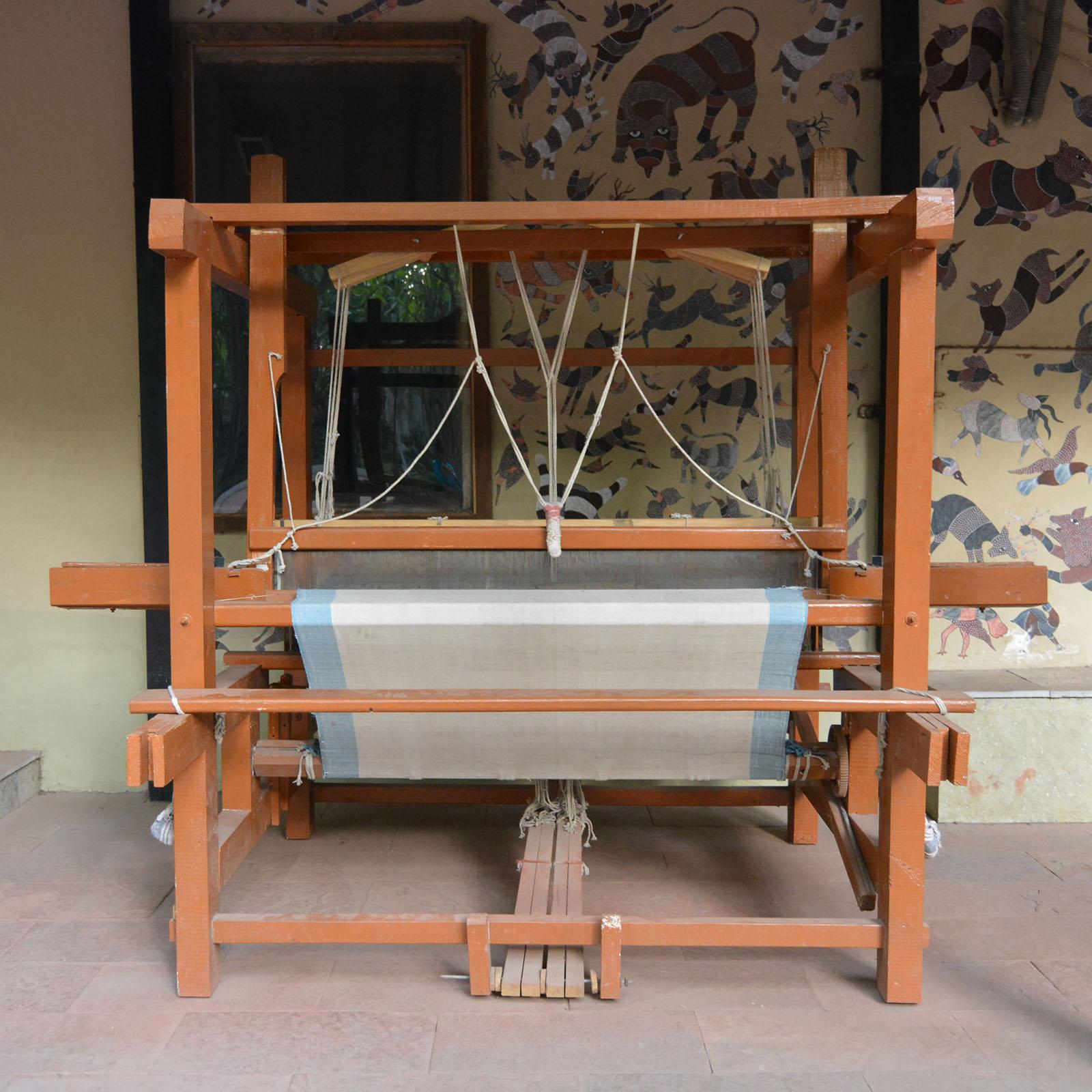
Another Look the Classic Loom. At the Handloom and Crafts Museum in Delhi
Take. At the Handloom and Crafts Museum in Delhi. © 1800getarug.com 


While it may look a bit intimidating, the loom is a rather simple construction, at its core. An interlocking structure of moving wooden beam frames is strung tightly together by yarn (warp) to create the rug foundation while a second yarn (weft) is passed through perpendicularly to hold the rug together. The pile yarn would then be woven into the rug base to create the visual patterns and texture of hand-woven carpets.

Another Look the Classic Loom. At the Handloom and Crafts Museum in Delhi.
Another Look the Classic Loom. At the Handloom and Crafts Museum in Delhi by ajay surya. © 1800getarug.com 


The process of weaving is traced back to the Neolithic age when its invention helped herald the agricultural revolution by both utilizing the newly mastered control over crops and techniques of extracting yarn from wool, and by helping make a home. Regular settlements and the nomads could use comfortable and beautiful rugs on their floors and walls, warming their abodes both literally and figuratively. Many rituals evolved to include rugs in them ever since.


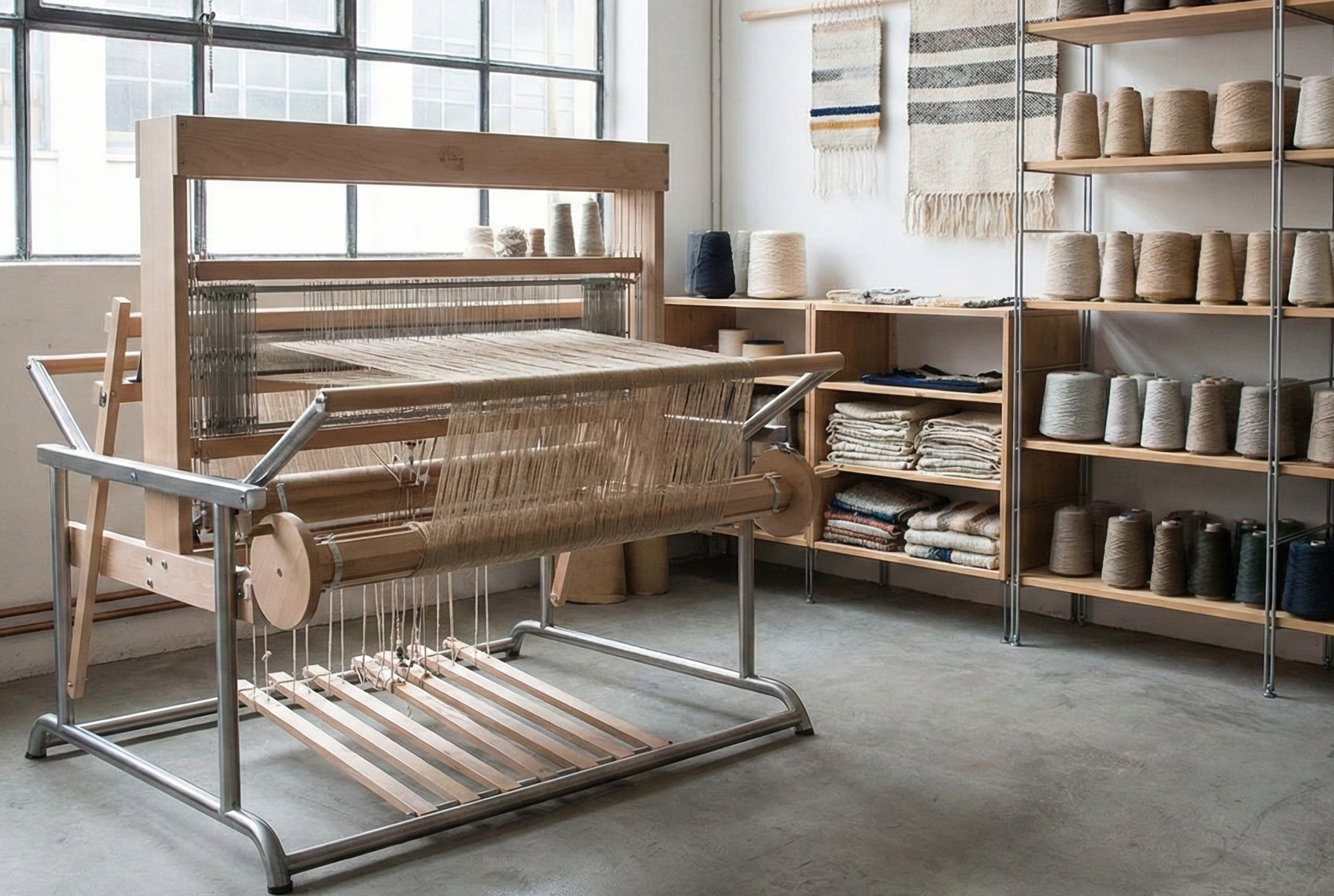
A Modern Simple Loom at Our Rug Facility in Jaipur.
A Modern Simple Loom at Our Rug Facility in Jaipur. © 1800getarug.com 


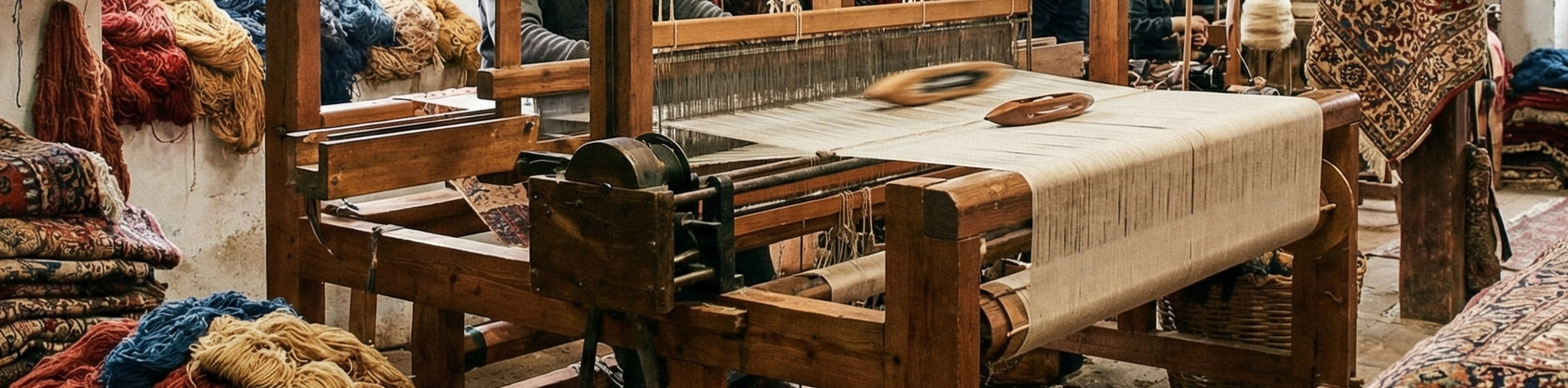
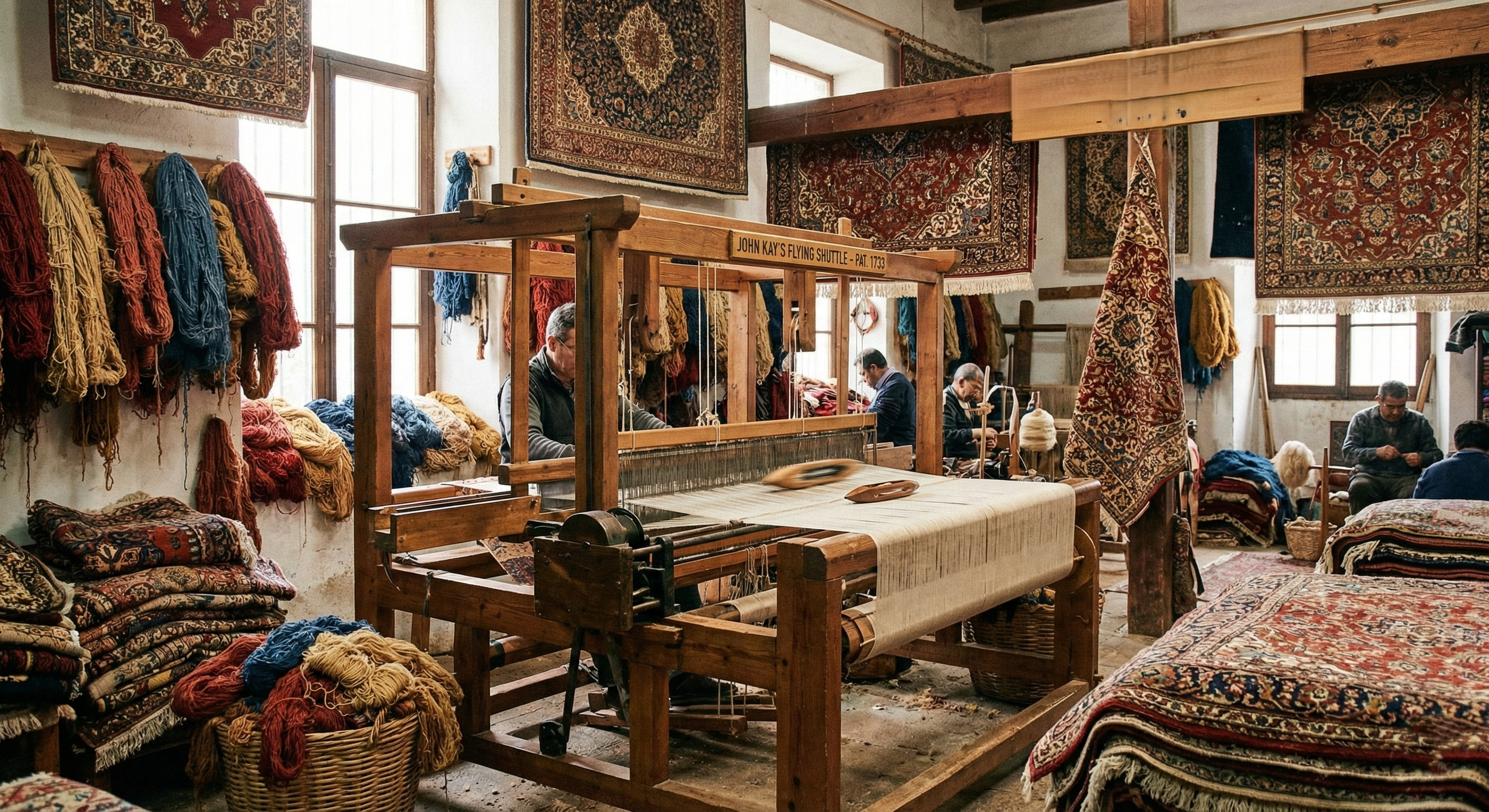
For all these millennia and all this prehistoric art, the basic loin loom was utilized, until later advances in the Middle Ages. The weavers used a very simple construction and their own body tension needed to make a rug for a perfect purpose. Later evolutions of the loom included stationary, heavier looms where separate heddles could be lifted to create complex designs, administered by a second weaver if the rug is too big. In 1773, a British weaver John Kay invented the flying shuttle, which could be flung across and around the loom, eliminating the need for the second person.

John Kay invented the flying shuttle
 John Kay invented the flying shuttle. © 1800getarug.com 


By twentieth century the looms became fully mechanized and powered electrically. This final stage has dramatically reduced the labor and increased production. That being said, the automated looms will of course never achieve the artistry, attention, and skill of experienced master weaver hands.


The simple beauty of Kilim Flatweave rugs


Sometimes things can be uncomplicated, sometimes they can be understated. Sometimes the beauty comes from the simplicity of the design and execution. Look no further than Kilim hand-woven rugs, classic flatweave carpets known for their unique contained look and versatility.

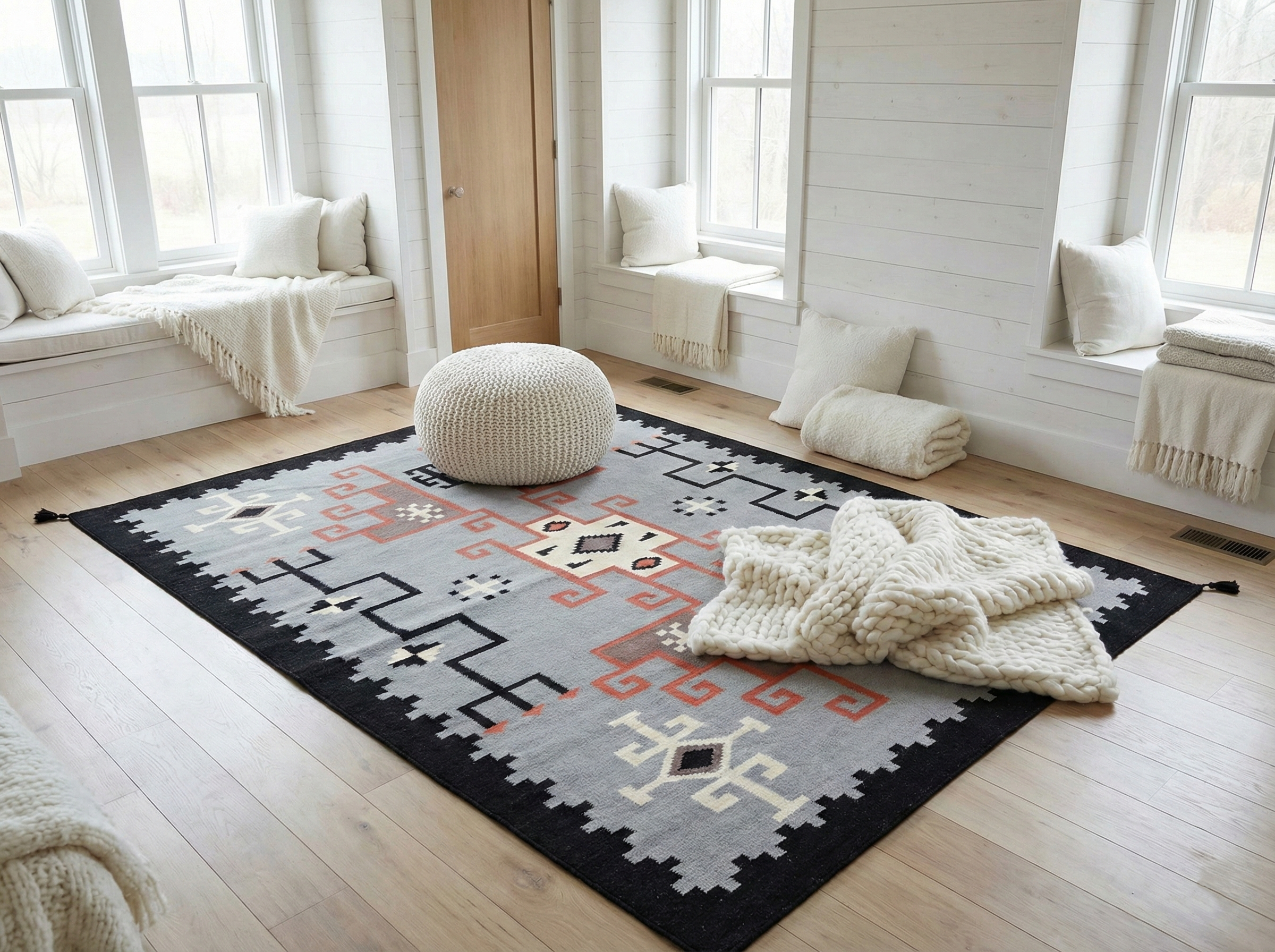
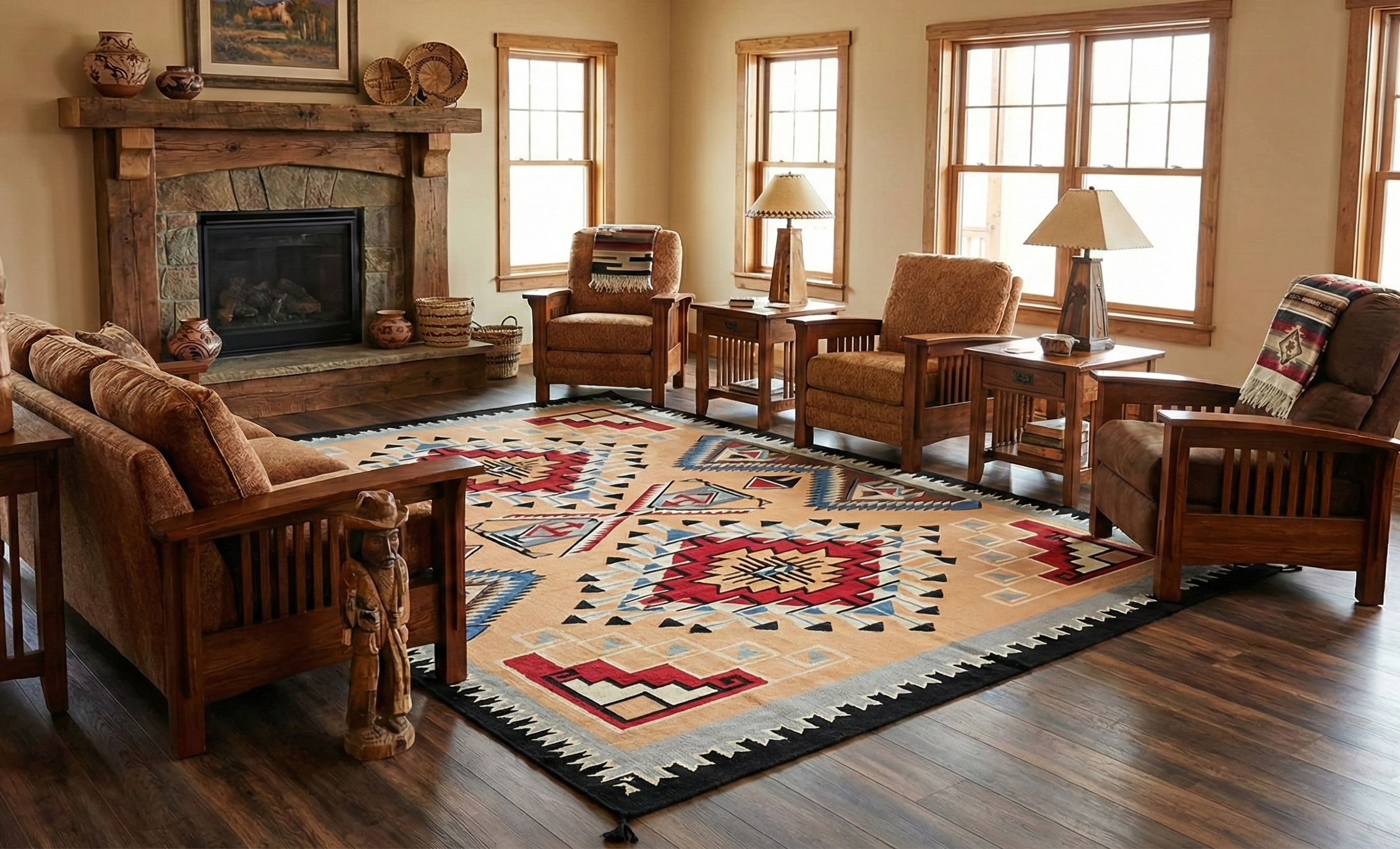
Medium Gray, Flat Weave, American Indian Southwest Geometric Design, Hand Woven, 100% Wool, Oriental Rug
This handcrafted American Indian Southwest Geometric Design is an authentic Pure Wool oriental rug. © 1800getarug.com


One of the most consistent technique to go back centuries, Kilim rugs were most likely first used by nomadic peoples of Middle East and Central Asia. The earliest examples were found around Khotan, present day Xinjiang, China, one of the centers of trade along the Silk Roads, and go back centuries. The name is derived from Turkish “gelim”, which means, “to spread” (as in, to spread a rug). Its pure geometrical designs are believed to have mystical, inspirational powers.

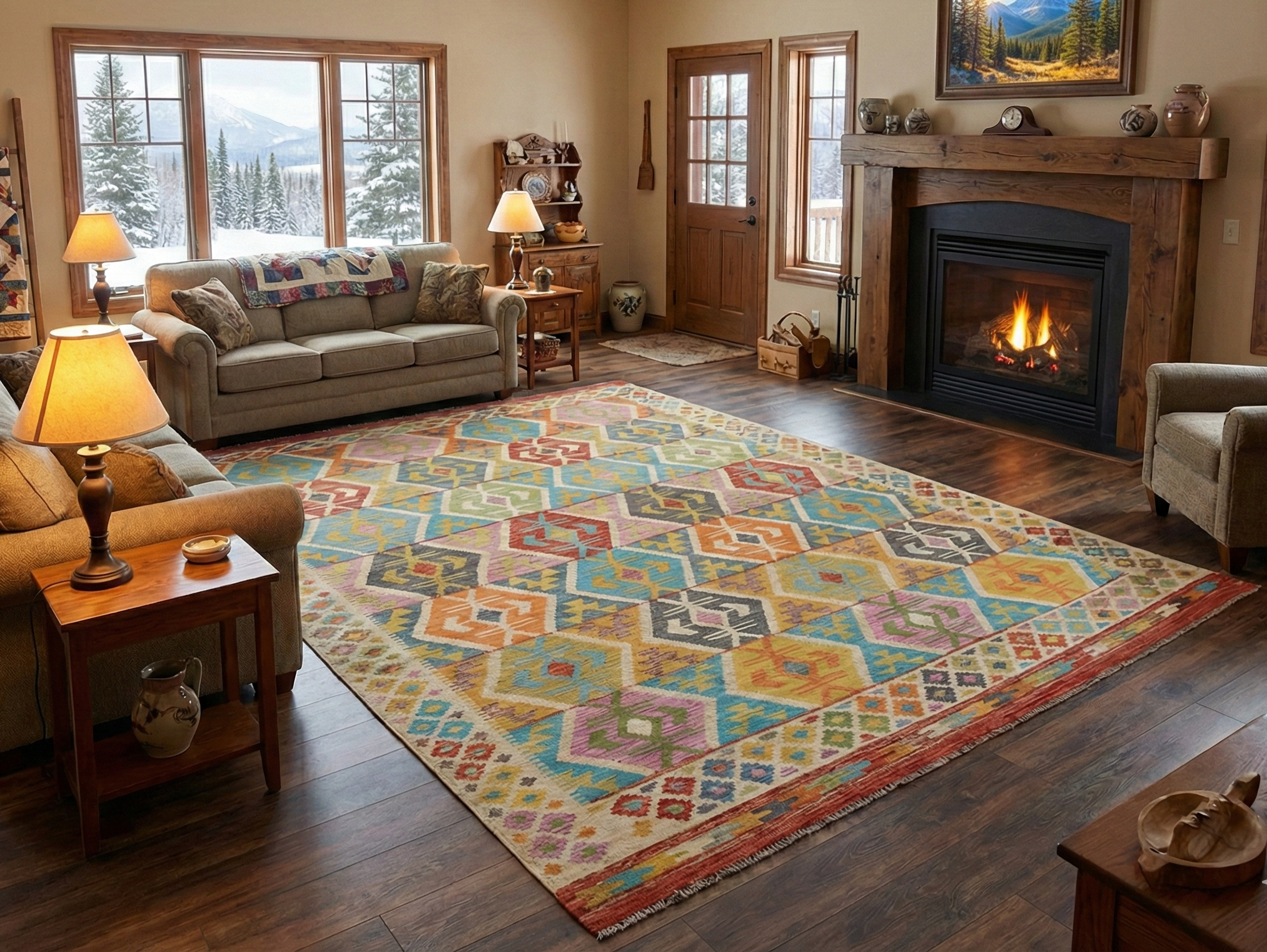
Bone White, Afghan Kilim with All Over Colorful Geometric Pattern, 100% Wool, Natural Dyes, Flat Weave, Hand Woven, Reversible, Oriental Rug
This handcrafted Afghan Kilim is an original Pure Wool oriental rug. © 1800getarug.com


To us, the most fascinating thing about the hand-woven Kilim rugs is the unique weaving technique, called slit weave. These rugs don’t have a pile, and are created by simply weaving the woolen wefts and the cotton or wool warps (thread ratio is 16 of weft, 14 of warp). Two different-colored weft blocks are tightly packed into the warp by a special comb and returned to original side once they reach each other, leaving a slight “gap” in between – the slit! This is the origin of the traditional Kilim motif: diagonal and horizontal lines, a pattern designed for durability.

Coconut Brown, Hand Woven, Flat Weave, American Indian Southwest Geometric Design, 100% Wool, Oriental Rug
This handcrafted American Indian Southwest Geometric Design is an authentic Pure Wool oriental rug.© 1800getarug.com


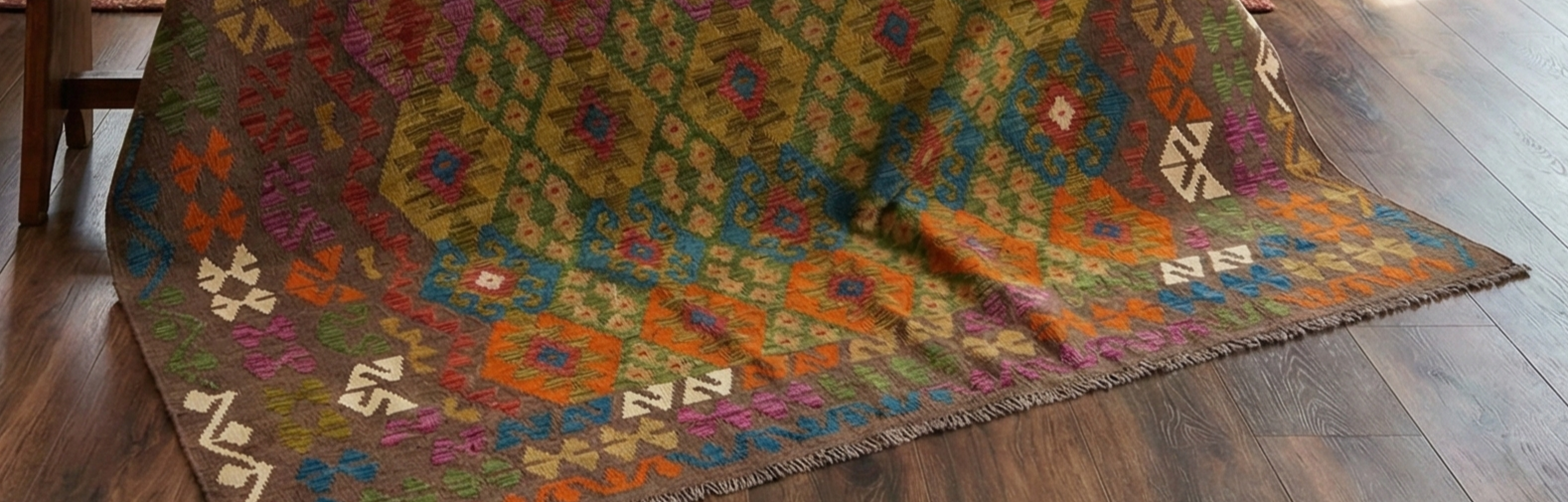
While the traditional colors for these magical Kilim hand-woven rugs are blue, green, red, and yellow, the modern take on the carpets includes a variety of dyes and designs. Still these works of art are as versatile and affordable as they were centuries ago: they are easy to spread or fold, don’t crease; are great at being a centerpiece decoration, hanging on a wall or serving as a door step rug, or for saddling your mule, if the occasion truly calls for it!

Peach Color, Flat Weave, American Indian Southwest Geometric Design, 100% Wool, Hand Woven, Oriental Rug
This handcrafted American Indian Southwest Geometric Design is an authentic Pure Wool oriental rug. © 1800getarug.com


What are Peshawar Hand-Woven rugs?


Looking into our rugs is sometimes like looking into the depths of history. The Peshawar rugs take us to one of the greatest depths. One of the epicenters of the great Silk Roads, the city of Peshawar was, quite literally on the map since the 5th century B.C. From the ancient Persians and the Hellenistic descendants of Alexander the Great, to the medieval Mongols and finally the Muslim empires. Peshawar commanded authority throughout the region, housing millions of citizens and invariably creating and absorbing culture for centuries. Some may argue the Mughal era of rule over the region was one of the most successful in last few centuries and has inspired some of the most fascinating and impressive works of art.

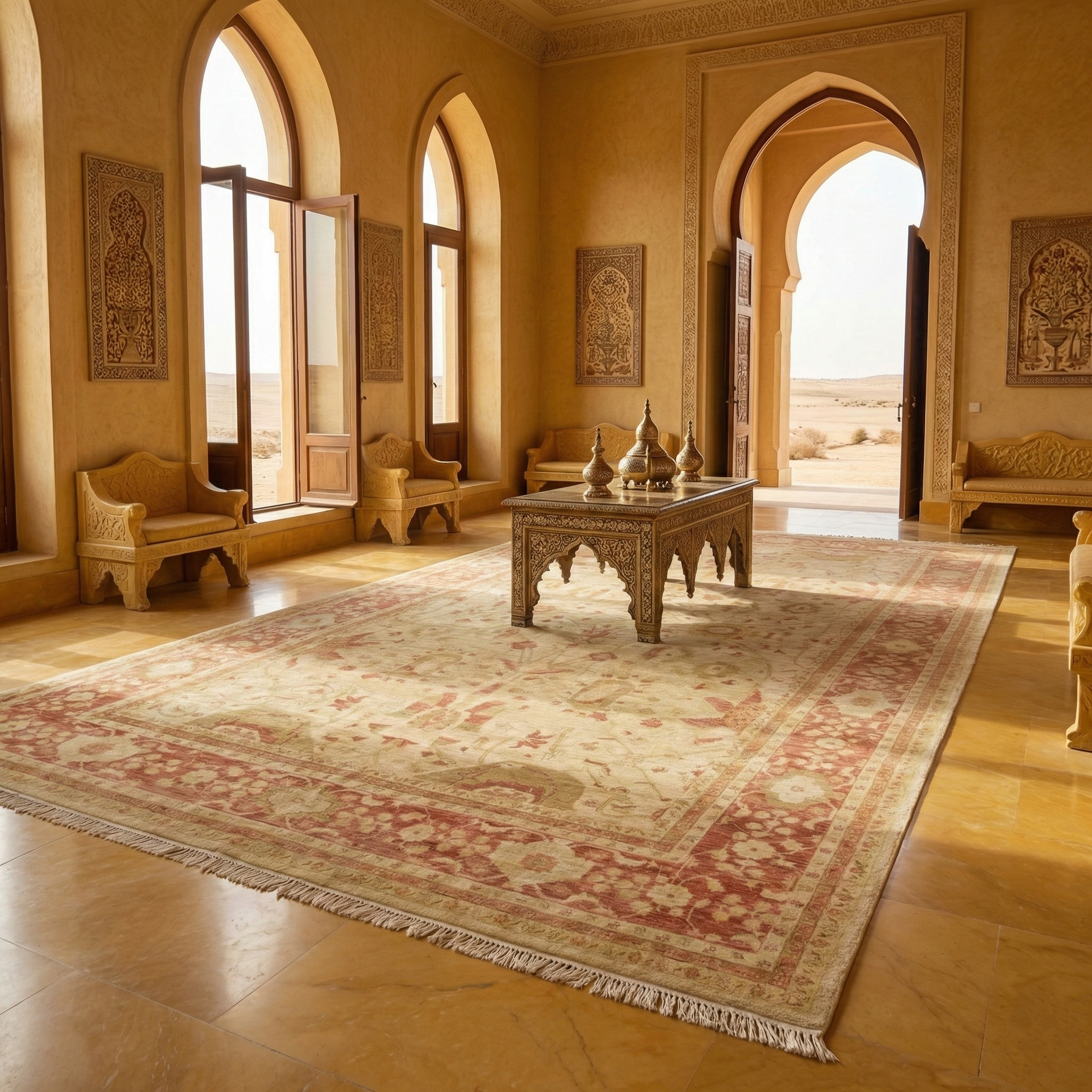
Beige, Afghan Peshawar with All Over Mahal Design, Clean, Full Pile, Long and Narrow, 100% Wool, Hand Knotted, Oriental Rug
This handcrafted Afghan Peshawar is an authentic Wool oriental rug. ©1800getarug.com


Perhaps the best time capsule of this Mughal artistry is the hand-woven Peshawar rug, whose designs evolved through the centuries but with mastery that never dwindled. In the 16th century, emperor Akbar had ordered the construction of rug weaving workshops and fostered the knowledge exchange with the Persian artisans to reinforce the local style. In the 20th, after the crumbling of British colonialism the existing industry simply needed a push from the newly independent government to survive and to flourish.

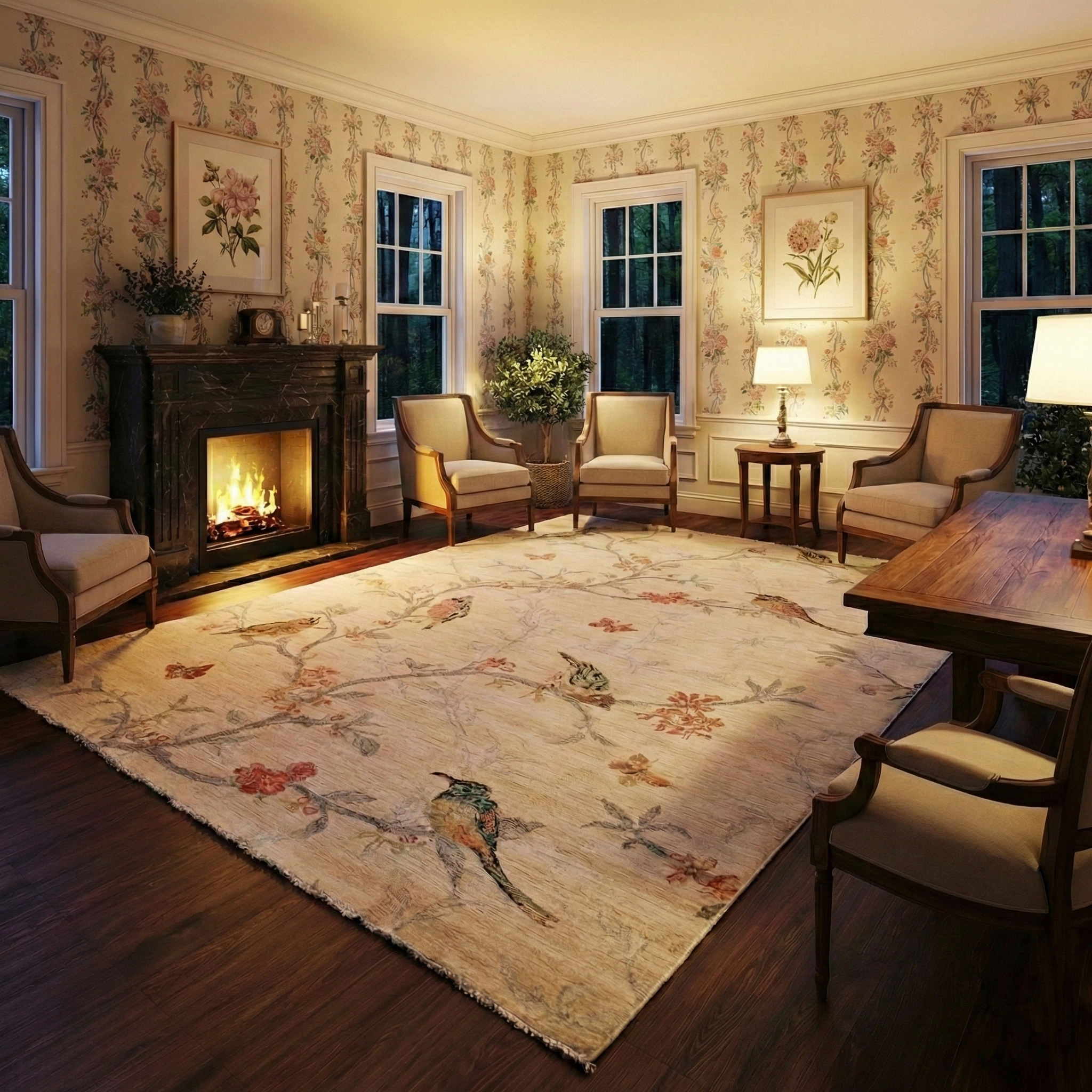
Chiffon White, Sparrows on the Tree, Peshawar, High Mountain Wool, Hand Knotted, Soft to the Touch, Densely Woven, Oriental Rug
Chiffon White, Sparrows on the Tree, Peshawar, High Mountain Wool, Hand Knotted, Soft to the Touch, Densely Woven, Oriental Rug  ©1800getarug.com


Traditional Peshawar rugs are always hand-woven, and feature a pure high mountain hand-spun wool pile, although sometimes, in select rugs, fine merino wool is blended in – that makes the rugs look slicker. Occasionally silk is woven in as well, especially if the artist wants to highlight a motif. The weft and warp are cotton, for the strongest support. The resulting rugs are durable and reliable, but are luxurious and extremely soft to the touch.

Rust Orange, Afghan Peshawar with Heriz All Over Design, Hand Knotted, Soft 100% Wool, Densely Woven, Oriental Rug
This handcrafted Heriz All Over Design is an original Pure Wool oriental rug. ©1800getarug.com


The design of the rugs, as chronicled in history, is heavily influenced by ancient Persian rug motifs. The colors, usually light and earthy and derived from sun-dried vegetable dyes, give the rugs its characteristic antique and washed-out look. But whether they are stonewashed and have their piles cut shorter, or the modernist take will have the colors pop, you are sure to be mesmerized by the deep richness and artistry that are the Peshawar rugs.

Maya Blue, Afghan Peshawar with Heriz All Over Design, Hand Knotted, 100% Wool, Densely Woven, Oriental Rug
This handcrafted Heriz All Over Design is an original Pure Wool oriental rug. © 1800getarug.com


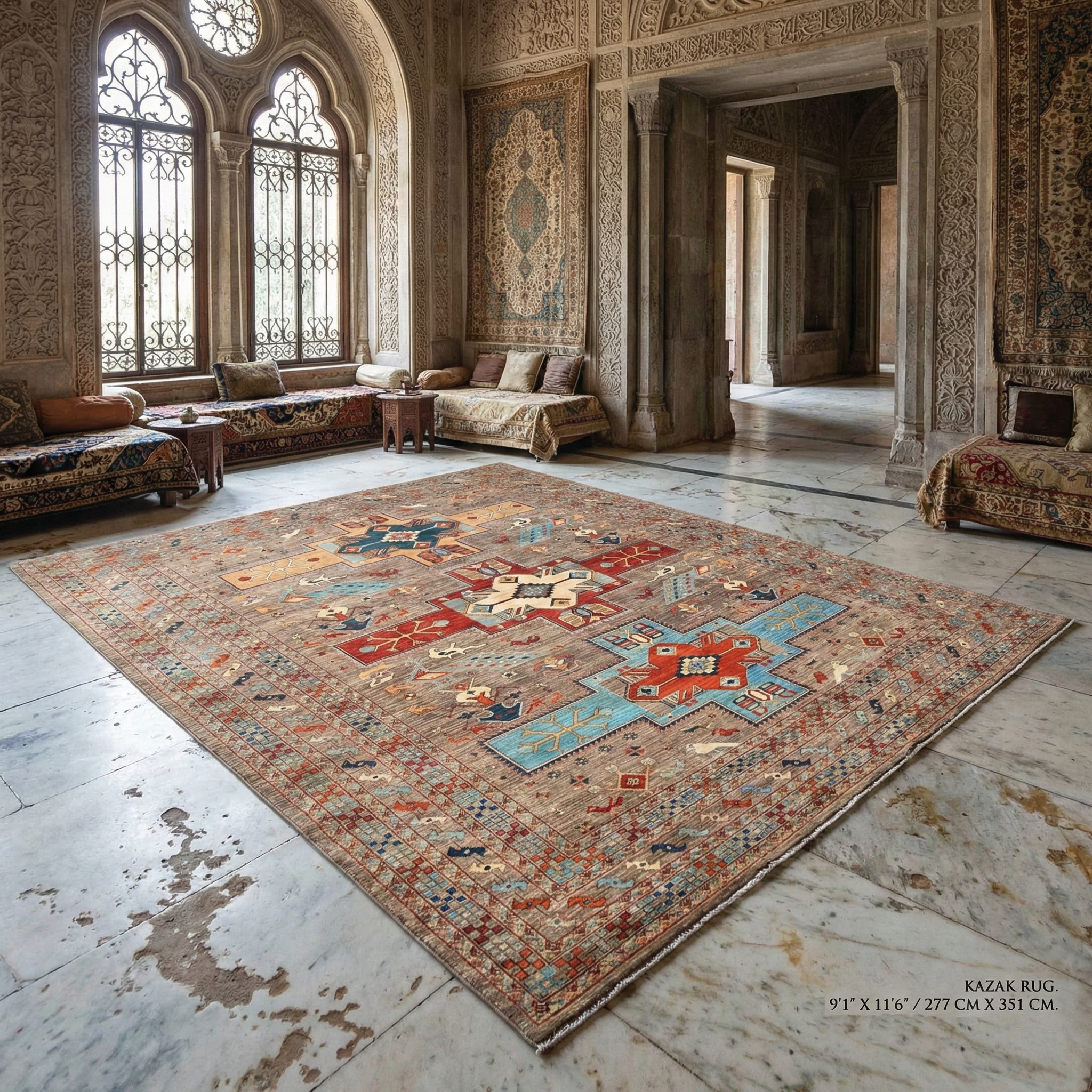
Hand-Knotted Kazak Pure Wool Oriental Rug

Kazaks (Kazakhs), the majestic carpets from de Caucasus


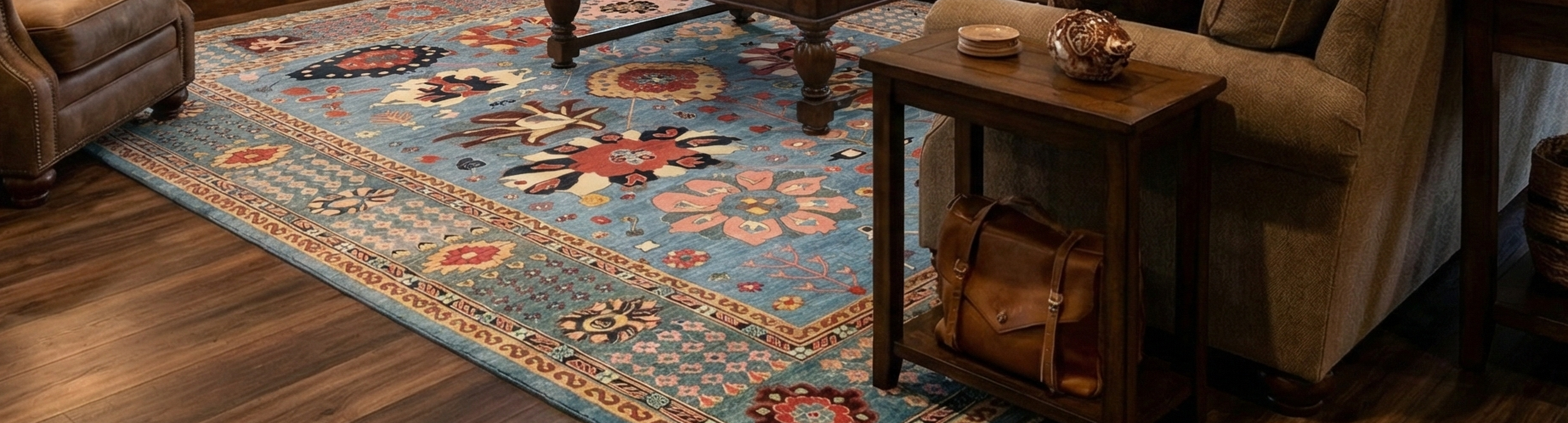
Luxurious, spectacular, magnificent are good adjectives to describe the geometrically designed Kazak or Kazakh rug. Centuries of Armenian craftsmanship carried down to our days, the best natural dyes, unique patterns, the finest wool, are among the characteristics that guarantees carpets of the best quality. Large-scale designs, numerous medallions, and contrasting colors such as blue, red and ivory, gives this type of carpets a superb appearance.

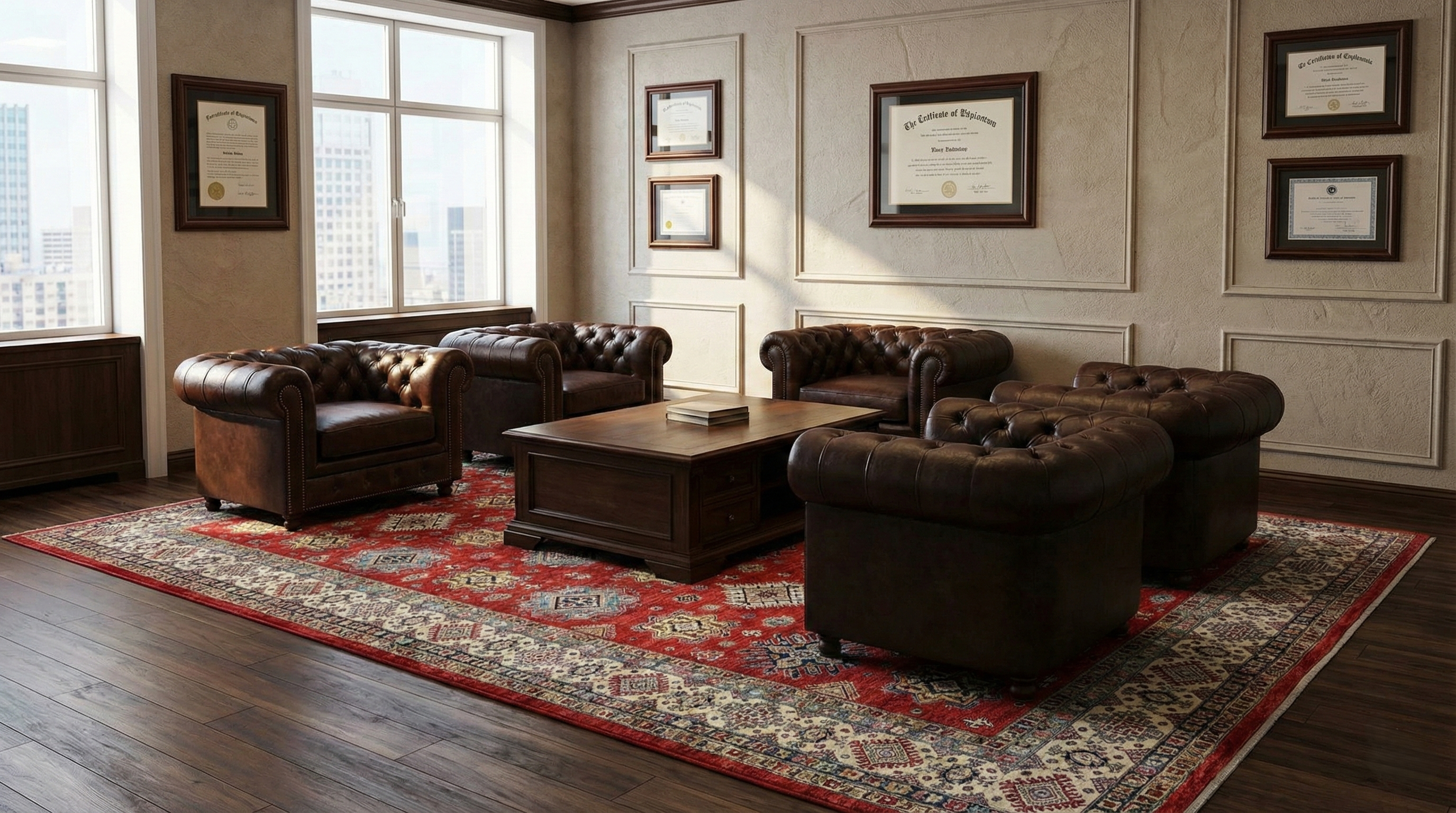
Rich Red, Densely Woven Extra Soft Wool, Hand Knotted Afghan Super Kazak with Tribal Medallions, Natural Dyes, Oversized Oriental Rug
This handcrafted Afghan Super Kazak, is an authentic Pure Wool oriental rug. © 1800getarug.com


Its origin dates back to the 18th and 19th centuries in the Kazak area of the Caucasus, probably the most famous area in weaving terms. Kazak rugs were hand-knotted by the women of the Tiflis and Erevan. Within the Kazakh rugs, other categories are considered depending on the geographical area were they were woven, for example carpets from the south of the Tiflis, Bordajalou Kazak rugs, coarsely woven with simple designs. Carpets from the North of the Erevans, with shorter pile and more formal designs. Other categories includes carpets made before 1925, known as: Karabach, Sjirvan, Kuba and Dagestan carpets. Each one with variation in the patterns and predominance of the traditional colors.

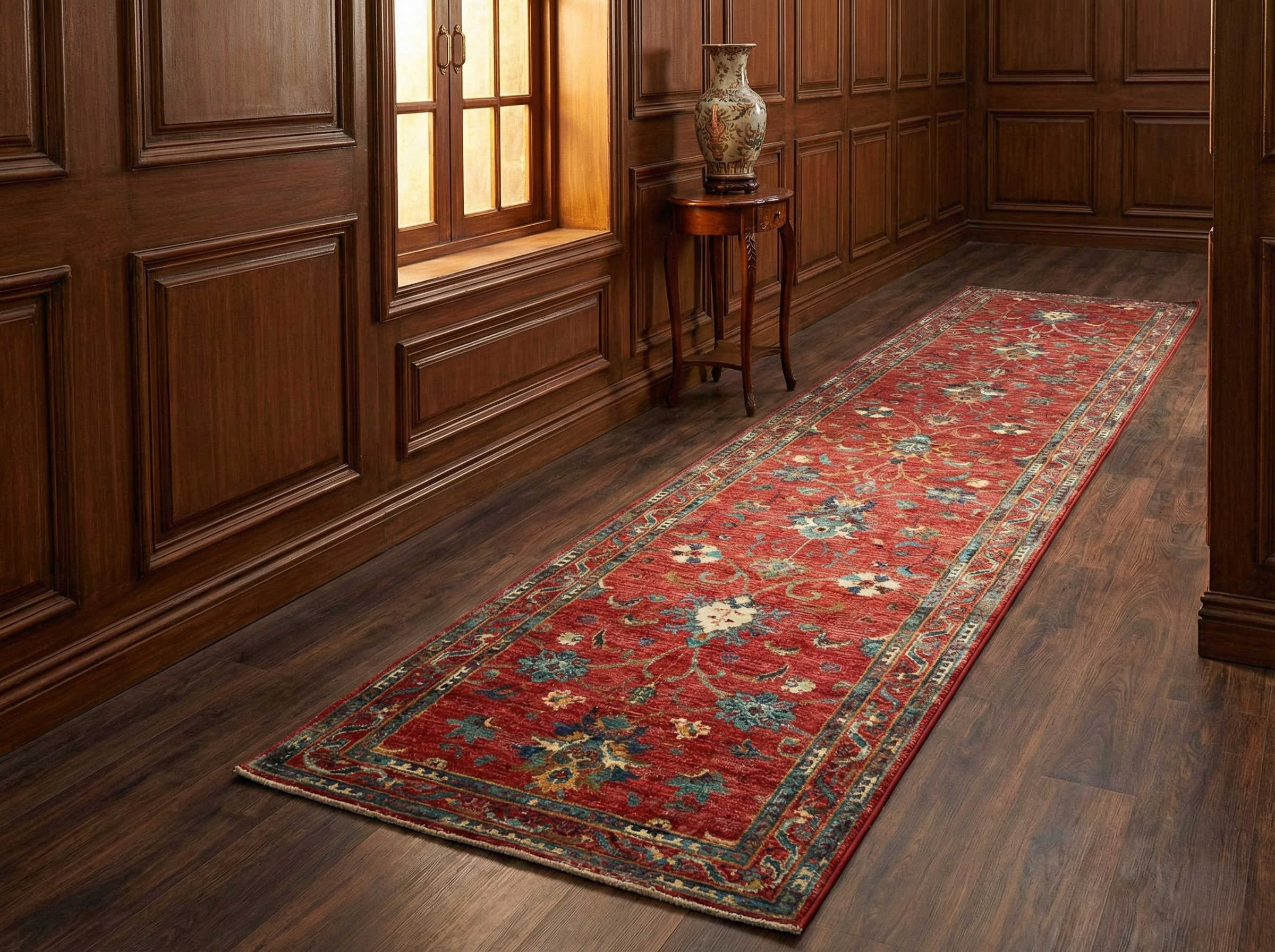
Crimson Red, Fine Afghan Sultani with All Over Design, Vegetable Dyes, Hand Knotted, 100% Wool, Runner, Oriental Rug
This handcrafted Sultani All Over Design is an authentic Pure Wool oriental rug. © 1800getarug.com


Considered a sign of status, Kazakh rugs and other Armenian carpets were an important possession in the wealthy houses, in palaces, and in churches. They could be used as tapestries, or to cover the king`s throne. They were also used for day to day activities like dining.  Kazakhs were frequently woven with threads of silver and gold, making them precious enough to be demanded as part of the tax owed to the nobility that ruled over the Armenians.

Taupe Gray, Armenian Inspired Caucasian Design, Small Bird Figurines, Velvety Wool, Densely Woven, 200 KPSI, Hand Knotted, Natural Dyes, Oriental Rug
Taupe Gray, Armenian Inspired Caucasian Design, Small Bird Figurines, Velvety Wool, Densely Woven, 200 KPSI, Hand Knotted, Natural Dyes, Oriental Rug © 1800getarug.com


Just like kings and princes prized the Kazakh carpets, Caucasian rugs connoisseur`s highly esteem their robust aesthetic and saturated natural color tones, large motifs and majestic proportions that explain the appeal of these iconic designs.


Call 1 800 Get a Rug for the Best Rugs Around!

Before spending your money on anything — electronics, homewares, clothing, etc. — you should know about the company you’re paying. The folks at 1 800 Get a Rug live by this idea, so we’re going to tell you a little about them.

1 800 Get a Rug has been selling the finest oriental and Persian rugs for over two decades now. They’re in constant contact with rug providers in the Far East and have access to the the most exciting new colors and designs in traditional, transitional and modern oriental rugs and carpets. Though they deal mainly with the interior design community as well as other rug vendors, they sell to everyone.

1 800 Get a Rug’s collection of rugs ranges from Persian antique and semi-antique to fine new oriental rugs, including vegetable dye rugs, silk, formal and informal, through European designs from 18th and 19th centuries to beautiful floral motifs that add grace and style to any setting. 1800 Get a Rug has a unique collection of beautiful handknotted rugs which is always up to date with color and design.

Don’t take our word for it; go check out 1 800 Get a Rug’s huge assortment of rugs. Their web site make it super easy to find exactly what you want, whether by color, size, foundation. It won’t be long before you find something you love!

DIY Braided Rugs

You can always find great braided rugs at 1 800 Get a Rug, but if you’re ever feeling crafty and want a fun project, try making your own braided rug. Check out the video below for instructions.

You can use whatever kind of fabric you want, but for a fun, colorful rug, alternate the colors within each individual strip. If you really want to get fancy with it, you can use textured fabrics, like satin or faux fur. You could make a bunch of rugs, or just see how big of one you can make!

How to Haggle for Persian Rugs

You were in the market for fine oriental rugs. You searched all over your town and found a place on the east side. When you arrived at the warehouse you knew that you would find something worth buying, how could you not.

Inside a swarthy man with thick eyebrows and an aquiline nose greeted you. Do you have any fine Persian rugs you asked. He nodded obviously. He took you upstairs to the good stuff, the silk Persian rugs. I am looking for an 8 by 10 you said, silk. He walked away from you with his forefinger beckoning. There was a beautiful red rug, one of three silk Persian rugs you decided would look best in your living room beneath your brown leather couch.

The price of this rug is seven thousand dollars he said when you asked how much. That’s too much, you shook your head. I’ll give you three thousand cash you said. He scoffed and said I can do six thousand cash. You said I’ll pay you five thousand on credit and four in cash. He looked at you warily. Forty five hundred – cash, he said. You shook and knew that a deal on these fine Oriental rugs such as this is hard to come by.

Or you could just skip all the frustration and get an inexpensive rug at 1 800 Get A Rug.

Area Rugs Made With Care

So much of what we have in our homes is mass produced. Our furniture and appliances, the food many of us eat, our reading materials and clothing, it has all been made in huge factories by machines. It seems like our society just doesn’t have room for hand crafted goods anymore. Sad to think about all of the work that used to be done by hand just disappearing. All those years of humans developing skillful ways to craft tools, furniture, clothing, could be lost to time.

All this advancement makes the easy availability of handknotted area rugs all the more special and surprising. Crafting gorgeous Persian rugs from hand is tradition and it is an art form but it is also super easy to take home.  Handcrafted rugs are available at most online rug shops. In fact our friends over at 1 800 Get A Rug have a  fantastic selection.

I love to stand on my hand knotted rugs and think about the life of the people who made them. I consider what it was like developing the skills required to knot an area rug that can fill up a dinning room. I wonder where they learned and if knotting rugs is a family tradition. I wonder if I could do that.