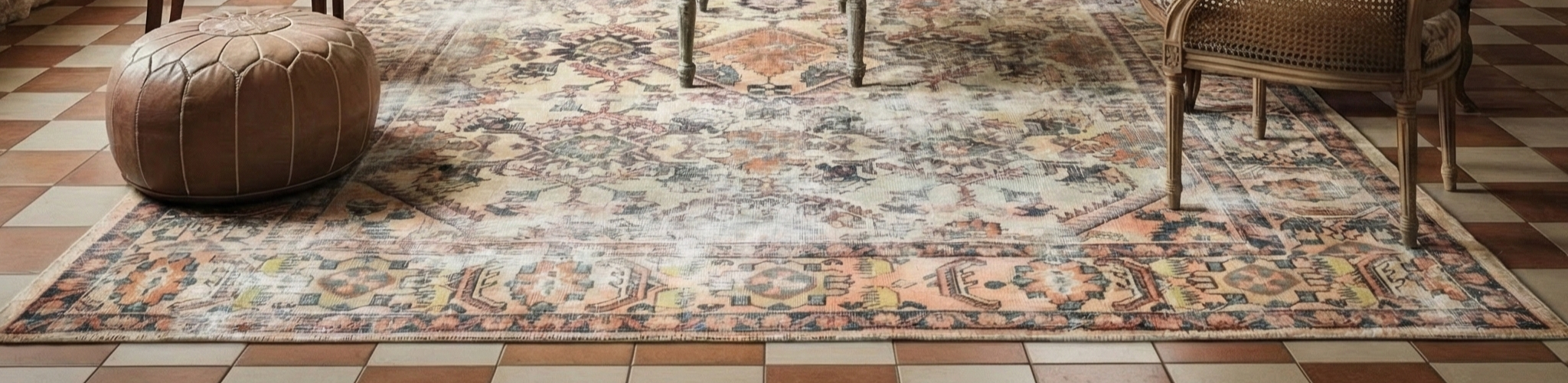
Size, Color, Pattern, Size or Lifestyle? What is the best way to choose a rug for your home? Our tips to guide you:
Size:
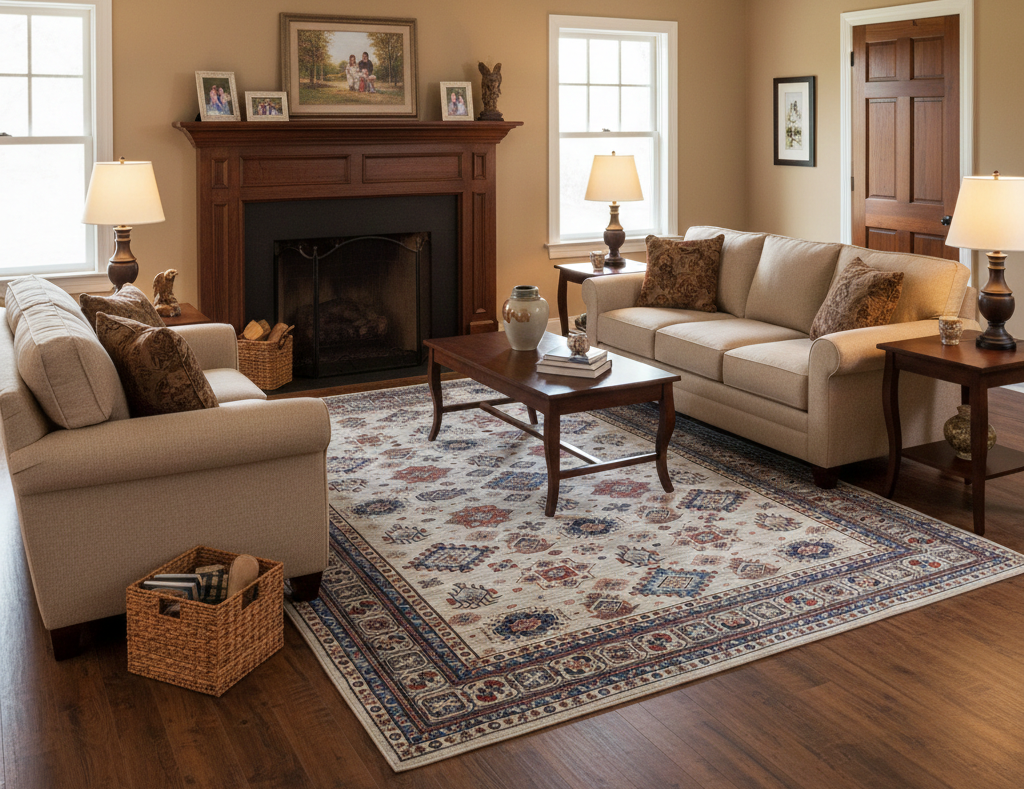
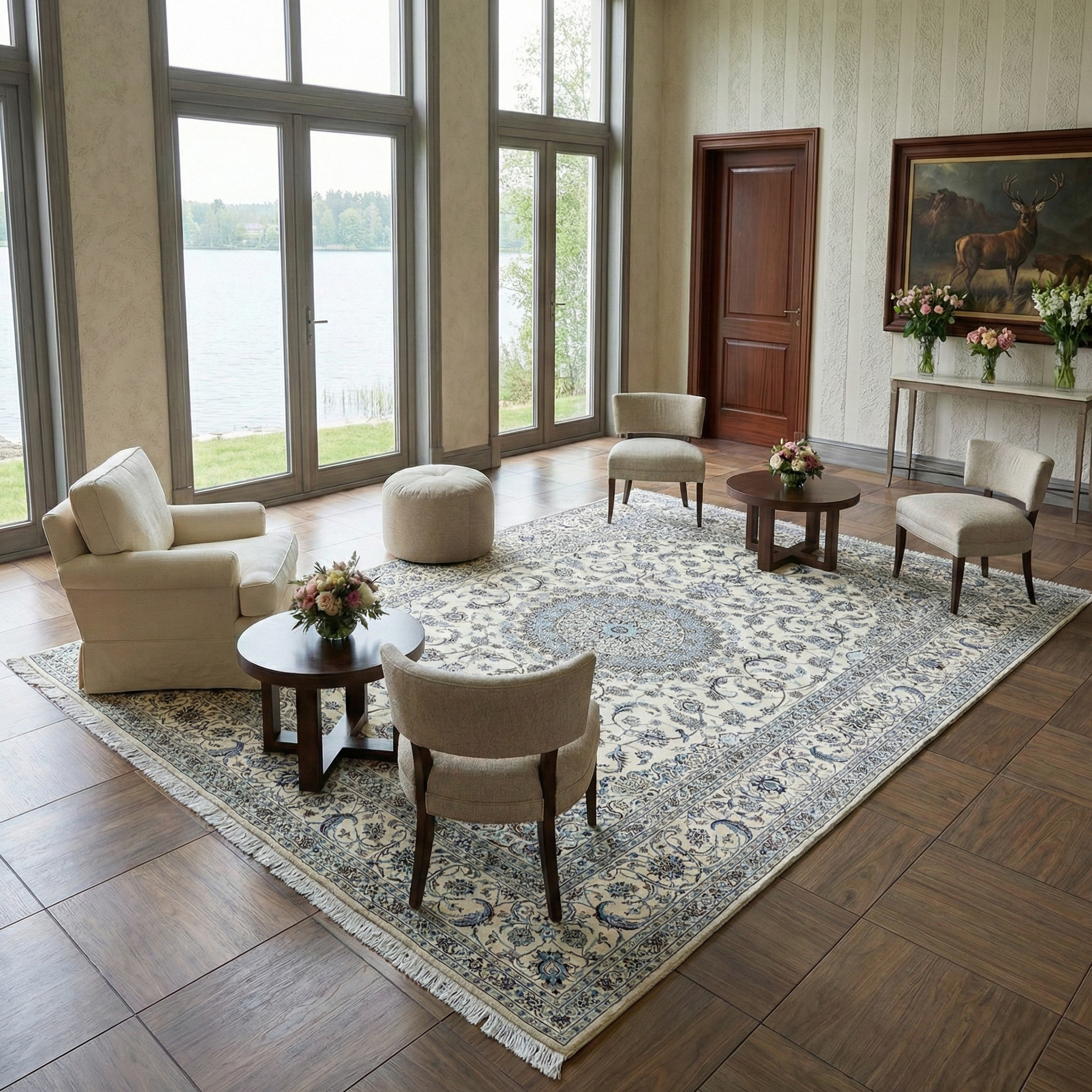
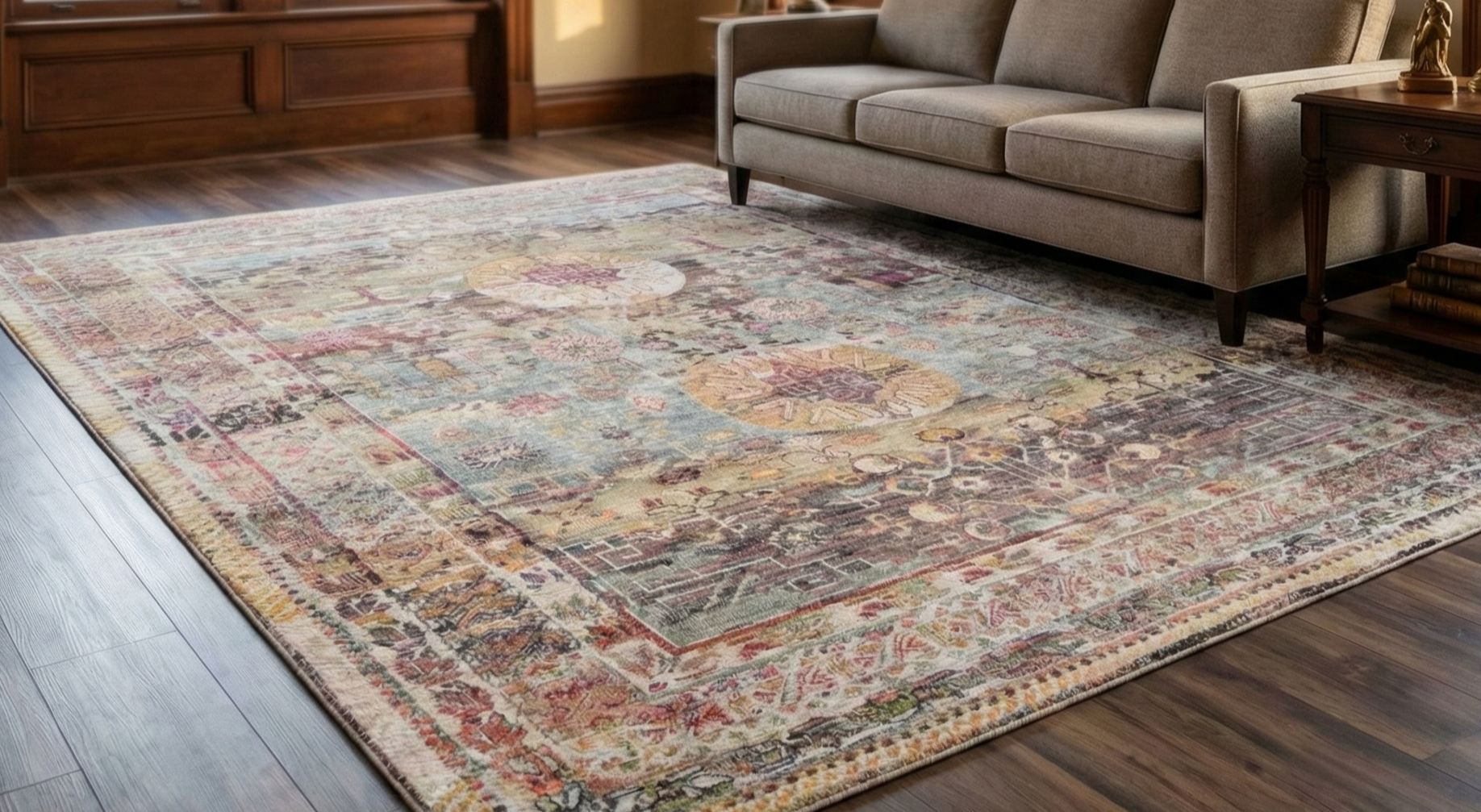
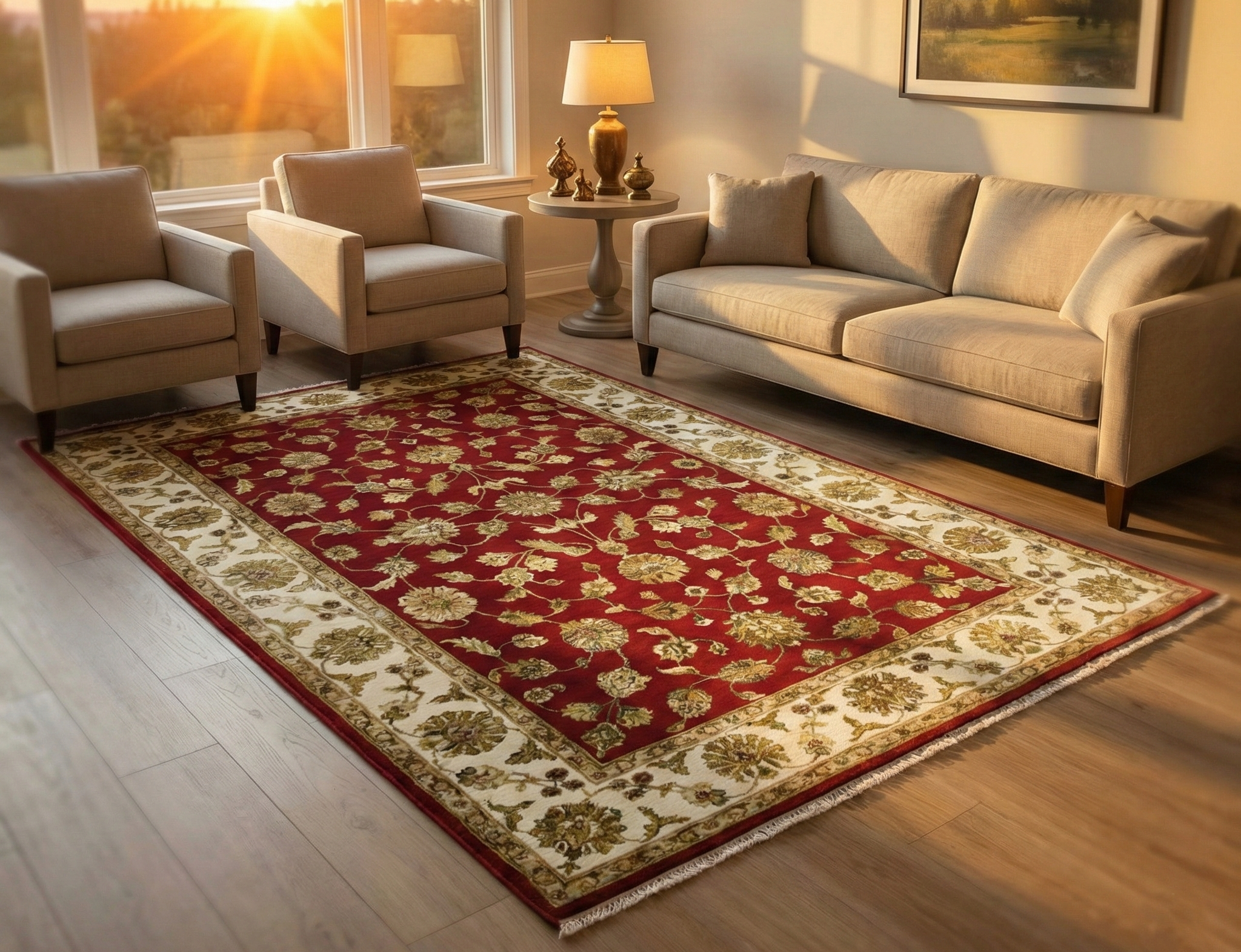
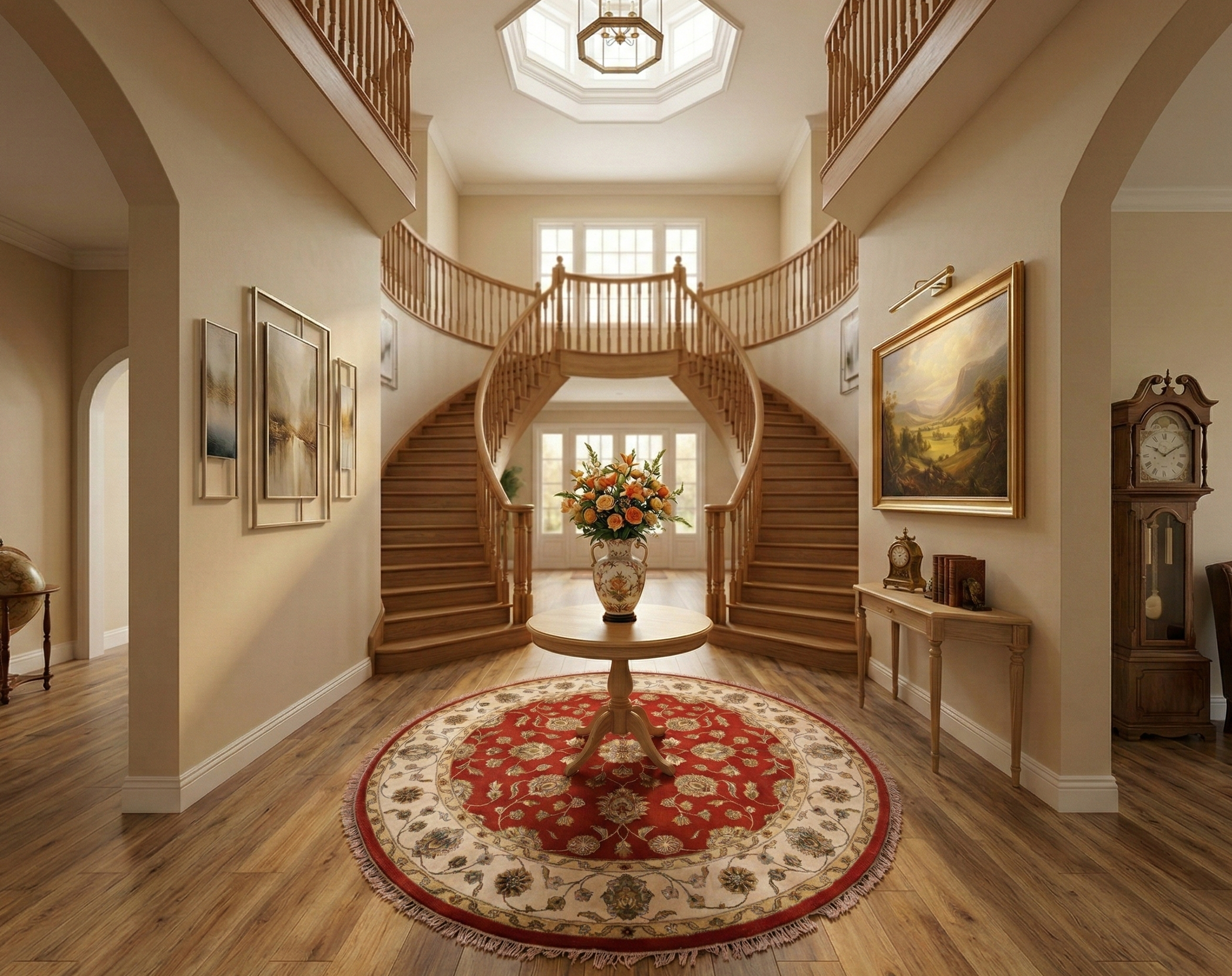
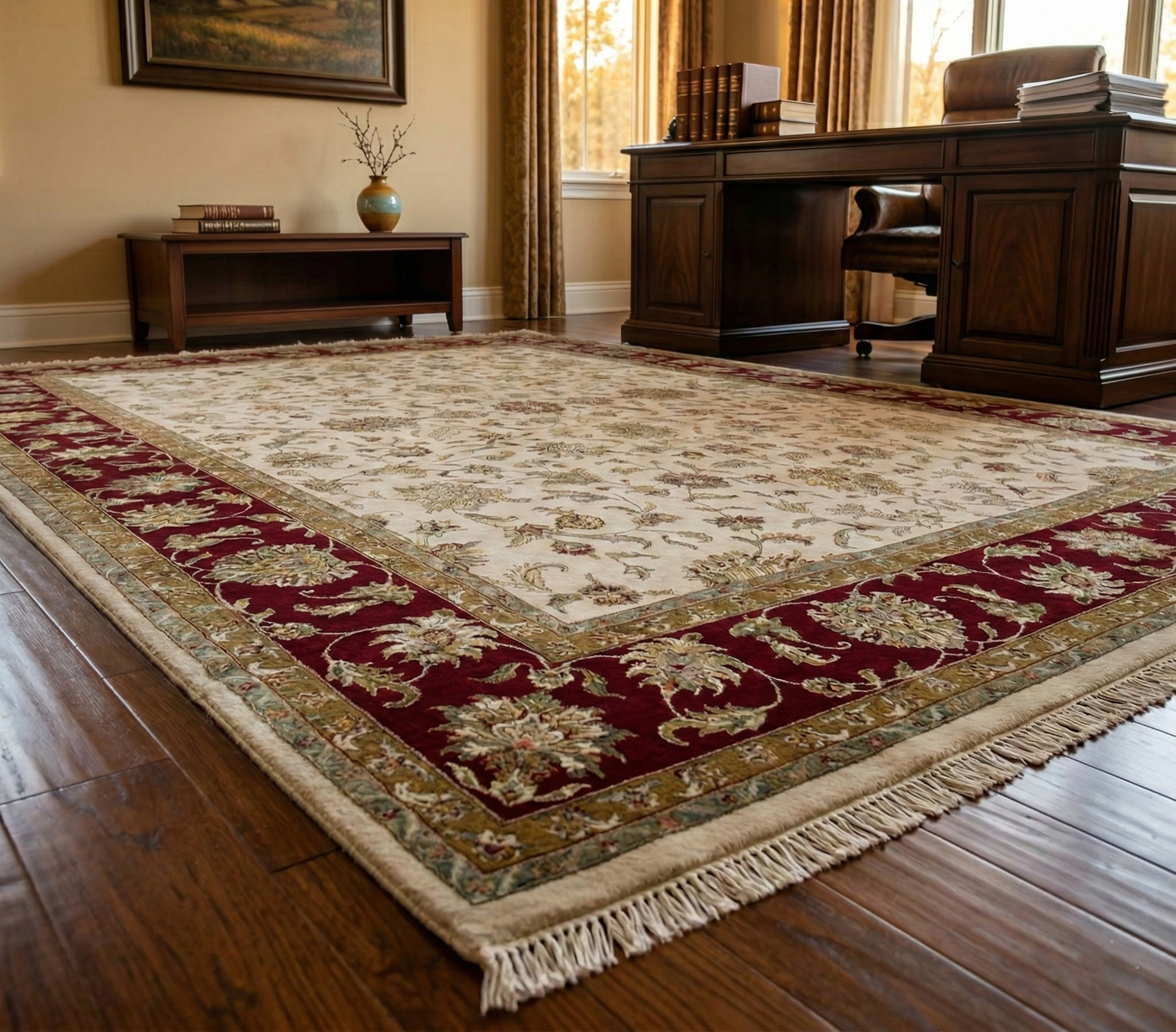
Your room will look larger with a generously sized rug. Don’t compromise on size for the sake of price. Rugs create boundaries and zones and anchor furniture arrangements. Furniture should sit comfortably on the rug to create visual harmony, but also as a safety precaution so furniture is balanced and stable. An exception to this rule is sofas. The long, low design of most sofas creates inherent stability meaning that sofas can sit comfortably and safely with just their front legs on the rug while the visual look remains harmonious.
Create a folder of rooms you love. Do this in real life with magazine clippings or online with a Pinterest board or by tracking your likes on Instagram. After you’ve gathered a reasonable amount, look for similarities. Do your rooms feature a particular color? Do they trend to one look like Farmhouse Style made popular by Magnolia Homes, or perhaps Scandi, Retro, Mid-century or Traditional? Is your decorating style inspired by the interior design found in movies or popular television series like OUAT – Once Upon A Time or Downton Abbey? Or maybe the rooms you love are a mix of styles – what many people call Maximalism?
Once you’ve narrowed down your style look at the rug choices in the rooms you love. What color are they? What style or pattern? Once you’re confident you’ve found your style and color, don’t forget you can switch it up by choosing a rug in a complementary color to the room’s general color scheme. Or keep the color true to your first love and switch up the rug’s pattern. Did you know stripes look great with florals if the colors are complementary?
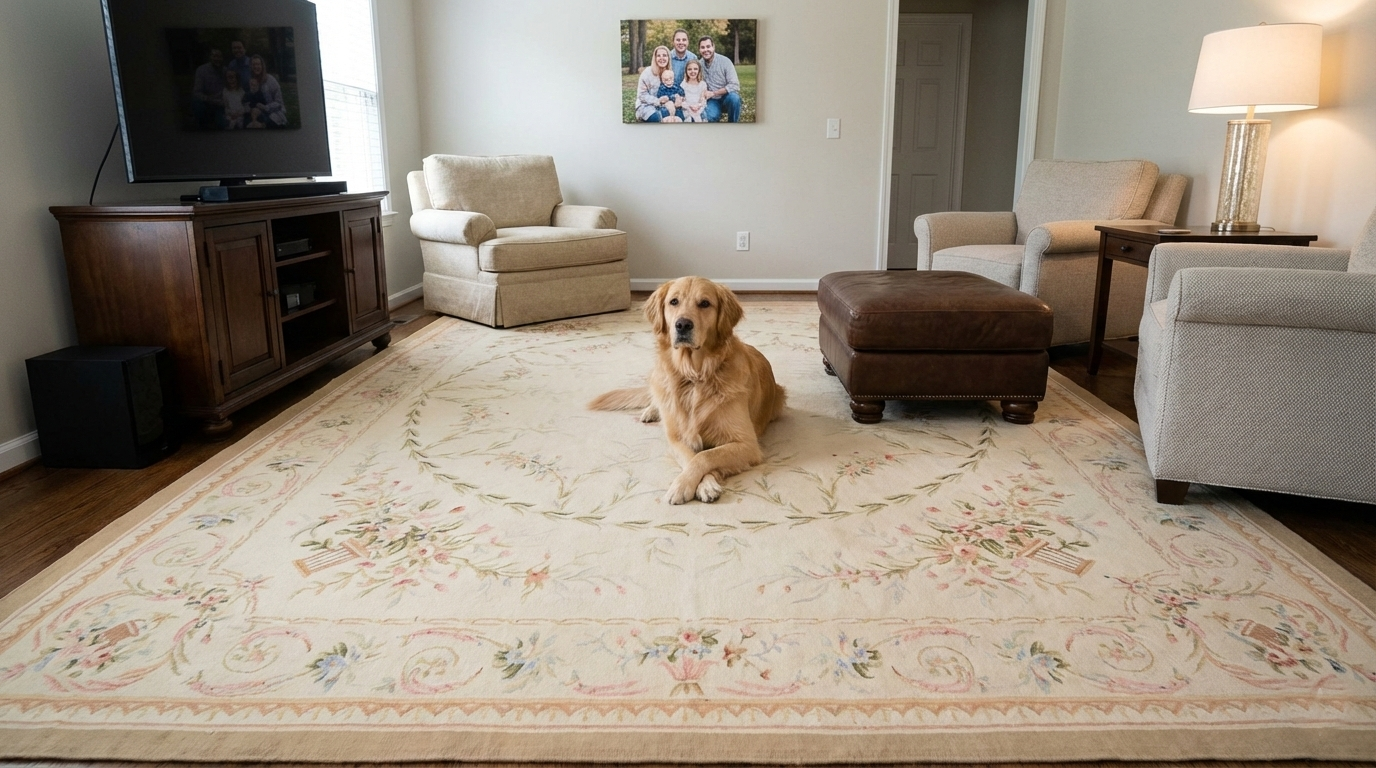
In addition to size and style, your lifestyle plays an important role. Do you have children? Pets? What ages are the children? What type of pets (hamsters in cages don’t count, but dogs with muddy paws or who shed hair do!)? What about your lifestyle? Do you entertain a lot? Is your style formal or relaxed or somewhere in between?
For homes with children and pets or where entertaining is important, a patterned rug will help hide stains from kids, pets, and food or drink until you have time to spot clean. Probably best to avoid white or light colored rugs and high pile rugs that can harbor pet hair or food unless you are an obsessive cleaner!
Low pile and flat weave rugs anchored to the floor with an anti-skid rubber underlay for safety are great for families. Low pile is easier to clean and there are reversible options so the rug can be flipped to hide minor spills or marks until you have time to spot clean.
Wool rugs are a great choice for most homes. Wool is durable and hard wearing – great for children and pets – with the added bonus that wool Is inherently fire resistant with antibacterial and antimicrobial properties. Wool also repels water that can cause mildew and mold growth.
We specialize in hand-knotted rugs made from wool, silk, and wool and silk mixes. Some of our rugs feature more affordable “Bamboo Silk”, a luxurious fiber made from the bamboo plant rather than the silk spun from silkworms.
We’ve also developed a highly successful oxidation process for a collection of wool and silk rugs. Our process creates a subtle high and low pile 3D surface to create the on-trend “vintage” look so desired by our customers. Silk fibers absorb and reflect light to create different looks and moods while the oxidized wool absorbs light to create an amazing contrast.
Silk as we know is a loved fabric, considered to be regal and very high in demand. It sure is a very expensive fabric but the softness and cool texture is like nothing it can be compared to. Silk is a weaving fabric used for many things such as dresses, scarfs, ribbons and carpets etc. the best thing about Silk is the texture of it as is just fabulous. Silk is the fabric that is used since the old ages by people. It has been known to date back to B.C. and it was used by the human civilization then.
Natural Silk Production:
Silk is considered to be a quite tough fiber and has many different types based on the worms that produce them and also how they are intertwined. Silk is basically produced from the worm cocoon. The natural Silk fiber is really expensive because of the great deal of handling and the amount of care and time that it requires. Natural Silk is no doubt the most loved of the textile fabrics based upon the fact that other fibers like wool and hair can be obtain from the mammals that produce them over and over again. But when it comes to Silk, the worm that produces it is killed while getting the fiber. This means that regeneration of silk from same worm is impossible. This all contributes to having a very strong, but yet very soft feel making it the queen of fabrics. There are many countries that are producing wonderful silk fabric and one of them has always been. Also India, Japan, Italy and Iran are taking over the silk textile industry with great pace.
Techniques Involved In Silk Production:
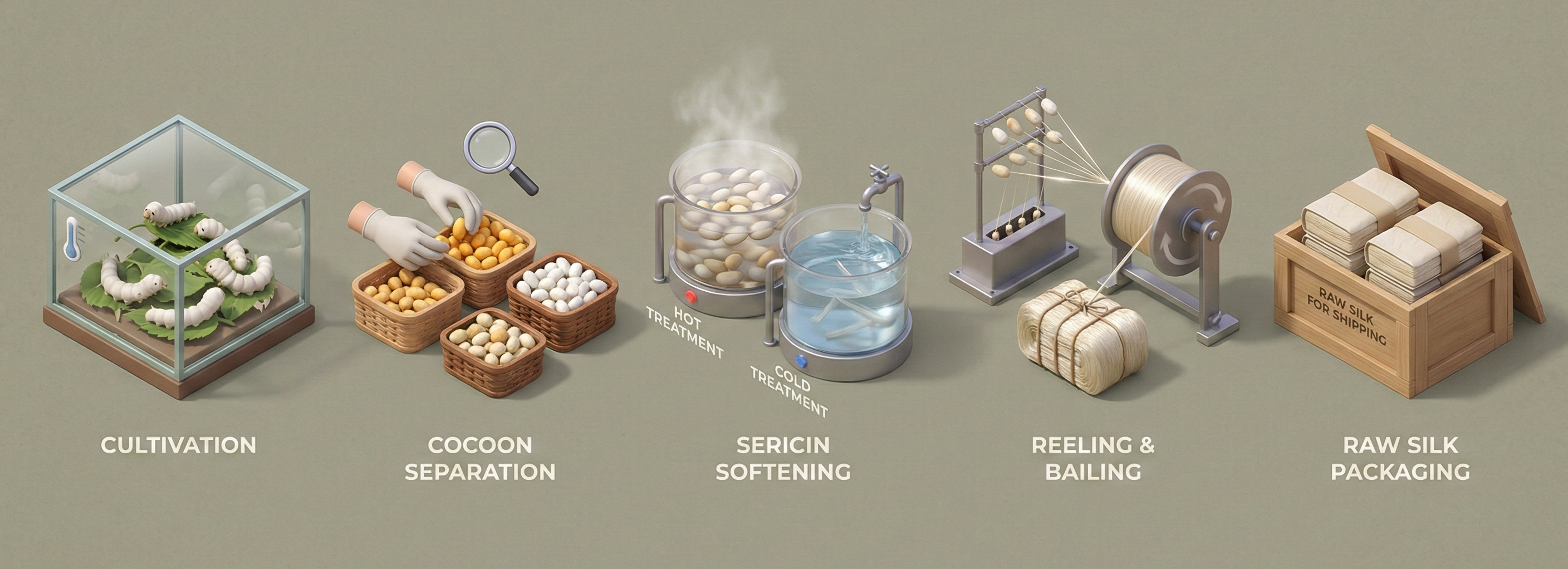
The Silk production is the very rare form of industry. It has to be specialized and the industries around the world follow the mastered techniques of getting the silk from the silk worm.
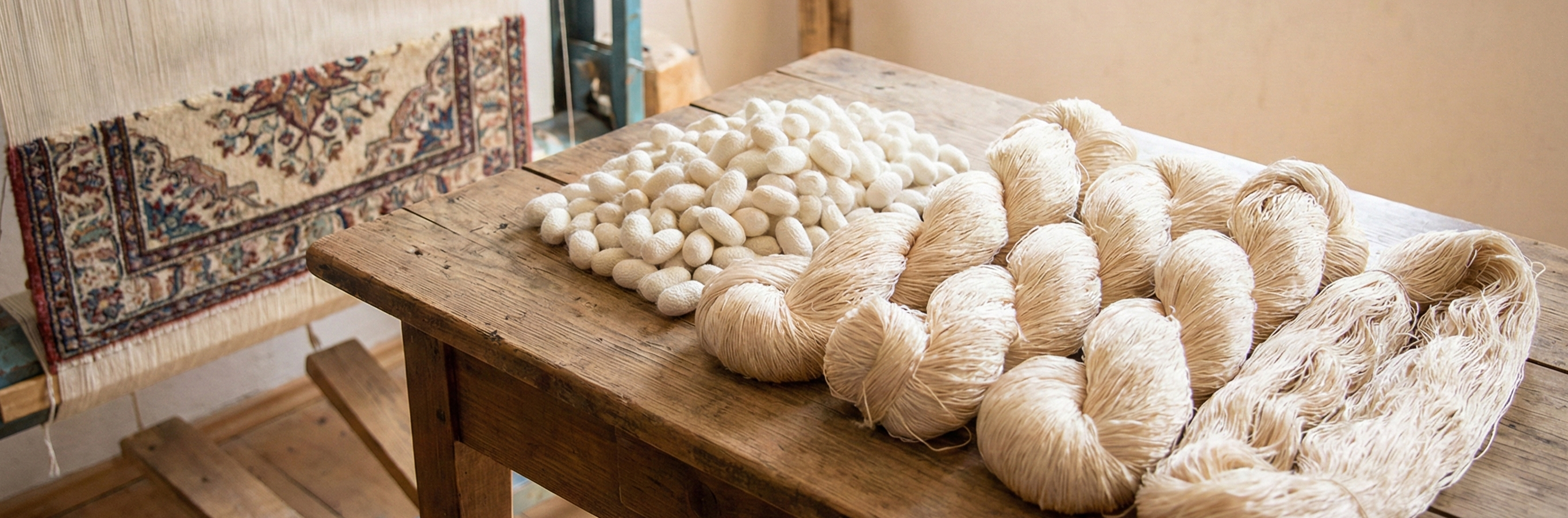
• First of all, the species of worm called as Bombyx Mori, are cultivated by the industrialists and then, the next step comes to the production of the Cocoon.
• Once it is done, every Cocoon is hand separated according to their color, size and shape. This process is very important since it really determines the quality of the silk fabric that is produced.
• The next step is rather technical one that is named as “Softening of the Sericin”. Sericin is substance that sticks the silk fibers intact that makes up the shape of the cocoon, it is gummy in nature. Every Cocoon is projected to the hot treatments in order to melt this gummy substance and then cold treatment to wash it off the fiber.
• Once the fiber is cleaned up, the next step comes of reeling and bailing of the Silk thread. The Silk thread is very thin and delicate, so as to get the desired diameter of one Silk thread for commercial use, it is necessary that 8-10 strands of the Silk strands be joined together. Once done, the time for bailing comes up. This means that the silk that is reeled up on the skeins and then packed in the forms of books and it is considered ready for the shipping. The material that is now shipped is called as Silk in the raw form.
Along with the real silk in market, silken emerged in 1855; it was for those who couldn’t afford the natural silk. The need of artificial silk rose, due to the high demand for the pure fiber and also low supply of real silk. This all cumulated to raise the idea in the minds of scientists that they should try to produce the this fabric synthetically, so that everyone can benefit from it. For the first time, Georges Audemars who was a Swiss chemist, prepared the artificial Silk from the mulberry bark pulp and another ingredient that gave it a sticky effect. At that time the production of Silk with these two products was very slow but it was the first step towards the synthesis of silken.
Another attempt of formulating silken, was done by Hilaire de Charbonnet. He was a French chemist and the base he used for the silken production was cellulose. This product is used up until today. With the newest technology at hand now, the artificial silk industry is progressing by leaps and bounds every day and night. In fact in this niche, America is coming as one of the top of other countries in being very successful.
Differentiating Between The Natural And Faux Silk:
Artificial silk that is produced in the industries has really taken a form in such a way that it is quite difficult to differentiate it from the natural silk. In the strength, beauty and color, artificial silk has made its place just near the quality of natural silk. But of course one thing that is natural, can never be replaced by anything that is artificial. It is the case between the natural and Faux silk. Artificial silk can get better and better but it will never be able to beat the standards of the natural Silk.
As for now it is really very hard to differentiate between natural and artificial silk, but the truth is that to an eye of an expert even a 1% of flaw in artificial silk cannot hide ever. One thing that can cent percent differentiate between the natural and artificial silk cloth, is the light. The natural silk looks wonderful with the daylight, it gives the luster that feels soothing to the eyes, but if you have the artificial silk in the same light, it will give the pinching luster and will not adjust to it very elegantly as natural silk does.
When it is a contest between the natural silk and the artificial silk, it is very sure that the natural silk will win for sure. Even though the natural silk is very expensive, the beauty that it has cannot be contained in any artificial silk. The faux silks that are altered with the technology, may give great softness due to high use of softeners but it can never be compared to the natural silk as it has the feel to it that is undeniably out of this world. There is no doubt about the natural silk that it is considered to be a Queen of textile, it sure has no other match to it.
The Silk fabric is used to weave the carpets and rugs. Since the 16th century, these Silk rugs became part of the Persian crown and were considered to be the luxury carpets. These carpets were commercialized to the European market in the 18th century and since then, they have become very highly popular. They become the great export content of Persia over time and the most popular hub of silk carpet declared by the English merchant Cartwright was Kashan. Since then Kashan has raised as the most important area of the Persia where the silk carpets are woven and they are considered to be of great value than the other ones.
In Persia whenever the British merchants step their foot, the first thing that caught their eye was the Persian silk. It was of fine quality and especially the silk carpets woven were of premium quality. This made many of the investors and traders to come into Persia and trade raw silk and silk rugs in exchange of clocks, watches and other technology. As for now, modern Iran still has kept its roots and the silk rugs and carpets are the biggest non-oil trade pivot of it. This is contributing majorly in the economy of Iran continuously.
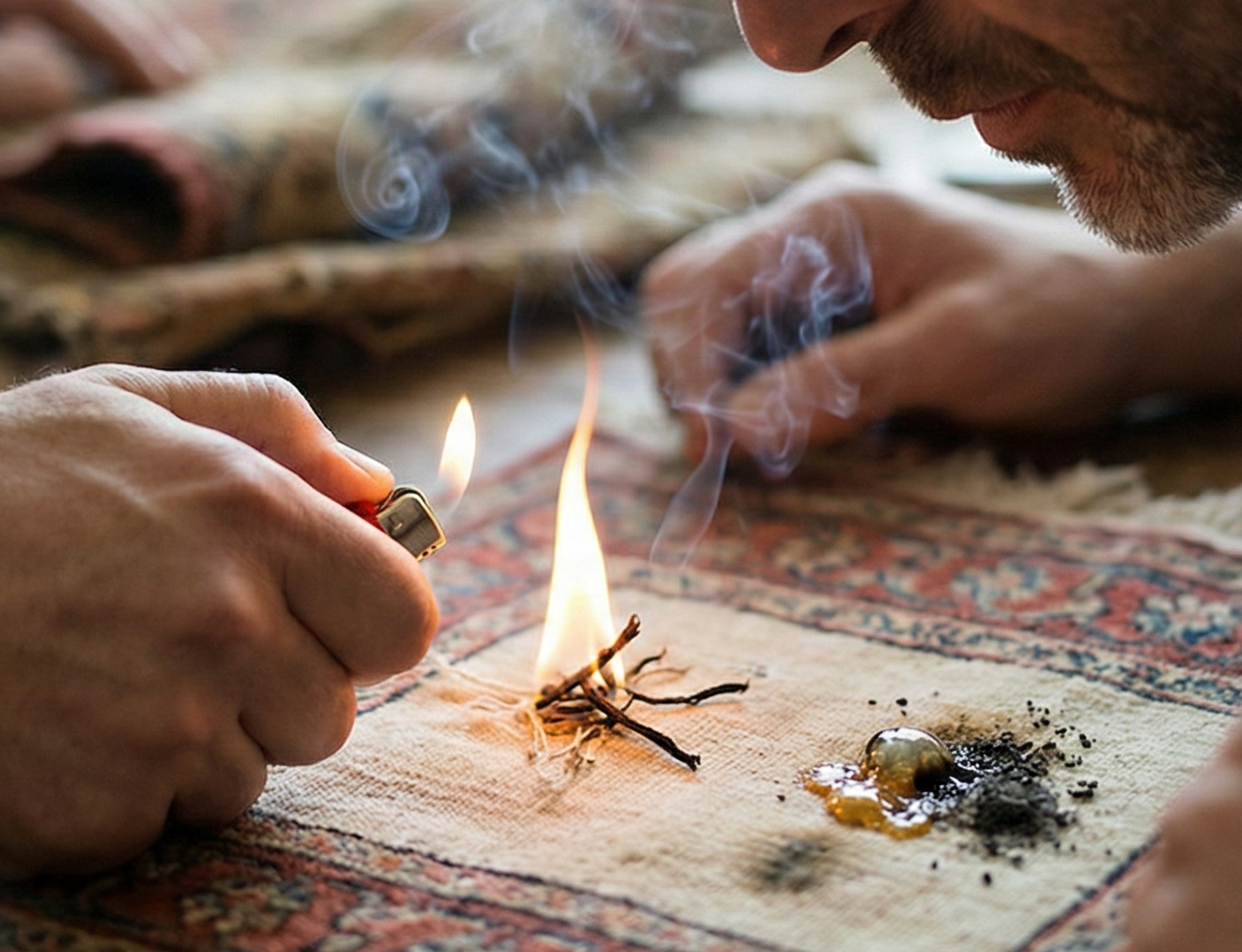
To identify that the silk rug you are buying is natural Silk there are two tests:
1. Burning test is the one that will need you to have very sharp smelling sense. Once you are on the shop of rugs, what you need to do is that; take a strand of the rug and burn it. Now there are two possibilities, one that it will give you a smell like burning paper and also the ash will be like crumbled up dusty stuff, this means that the silk is artificial one. Paper burning smell is due to the presence of cellulose used in manufacturing of faux silk.
The other possibility is the determination of true silk, when you burn the strand, the resultant will be the ball of ash and the smell will be like burning of hair. This means that you have true silk in your hands.
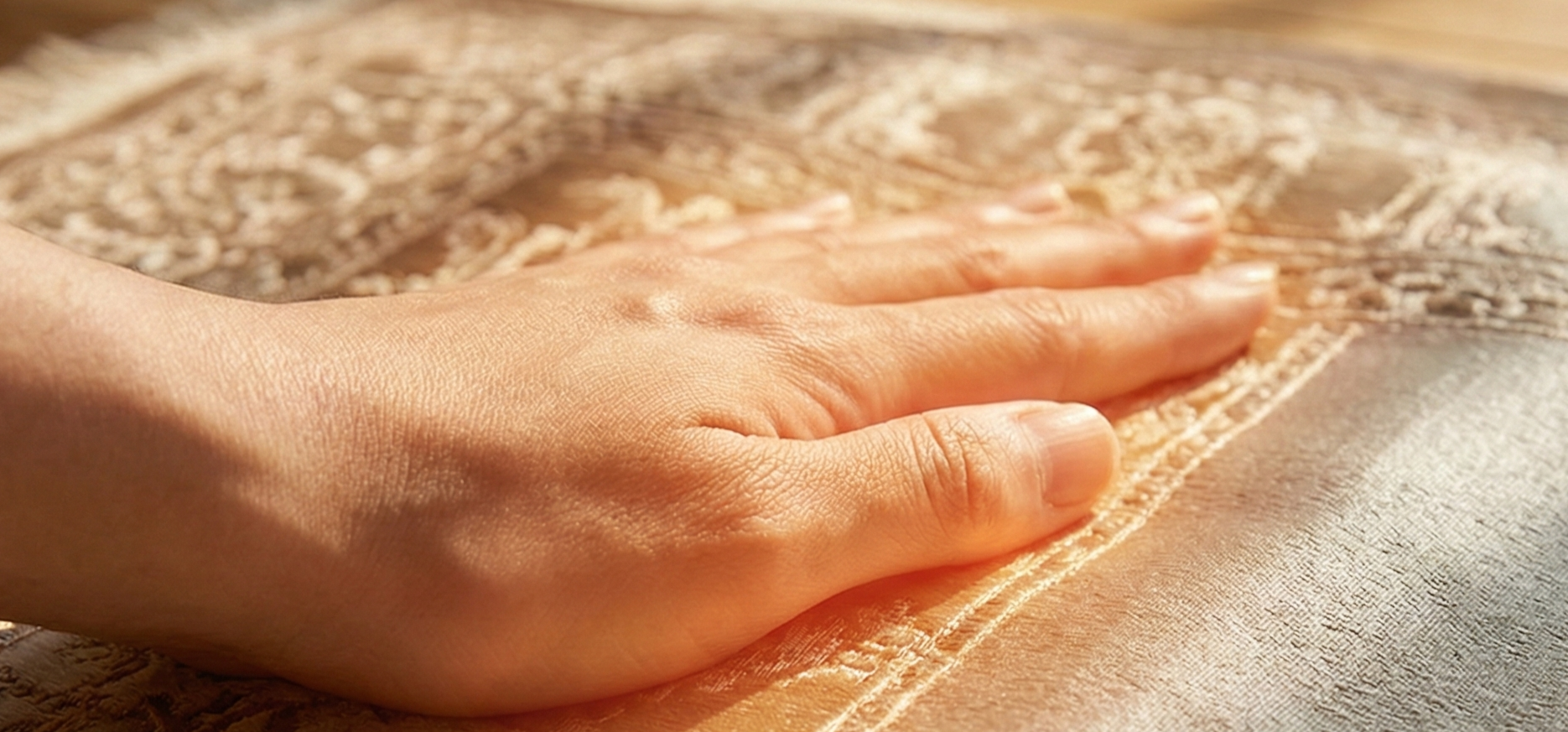
2. The second test is rubbing of the silk rug. All you have to do is rub the rug with your palm, if it feels warmer rapidly then it is true silk otherwise it would be the faux silk.
3. With all this valuable information about silk and silk rugs identification, it is impossible that you will bring back home the faux silk rug due to inexperience. All the tests will surely help you determine the right rug right away. To know more about silk rugs visit www.1800getarug.com and select silk rug of your choice for your rooms.
For all the rug and carpet lovers, Rajasthan rugs may captivate their aesthetic and artistic sense. Rug and carpets are one of the largest industries of Rajasthan, India, where thousands of people, both men and women are related to this industry.
Rajasthan rugs are known for the thick and wooly structures which come in a number of different colors and motives. The rug industry of Rajasthan has started experiencing a boom in 1950,s. Since then Rajasthan rugs compose a major portion of exports of India. These rugs are exported to a number of different countries around the globe. The Rajasthan rugs have become a formal export of the country because of the efforts of a young entrepreneur named Nand Kishore Chaudhary, who being fascinated by the business of carpets, set out new standards for Rajasthan Rugs. He was of the belief that the artisan, both men and women, who perform the tiresome task of weaving these rugs and carpets must be paid according to their hard work. He started his work with 9 artisans and two looms in 1978. This network has now extended to abut forty thousand artisans who make fabulous Rajasthan rugs to be exported all over the world. So Kishore is regarded as a great leader because of his unprecedented efforts for uplifting of Rajasthan rugs.
The most commonly used materials in Rajasthan rugs include jute, silk, wool and cotton. These rugs are made both on hand operated and automated looms. In Rajasthan the carpet weaving has become the major source of income for almost half of the population. Greater than men, women form a major workforce for the Rajasthan rugs.
You can get the maximum information about all the history related to rugs and carpets and the major types at www.1800getarug.com. Visit the page and get the most authentic information about eye catching rugs and carpets and get the one for your rooms.
Persian Rugs, Silk Rugs, Needlepoint Rugs, Vegetable Dyes Rugs, Antique rugs and the list goes on and on. How can you choose a rug if you don’t know the difference? So before you head on to the store, here is a Rug Dictionary or a Rug Glossary, weaved by the specialists of:
Aubusson is actually a town in the French region of Creuse. An Aubusson rug is a flat weave, pile less rug, mostly featuring a floral medallion with curvilinear floral borders and soft pastel colors. Aubusson rugs have been famous throughout the world since the 14th Century for their graceful and elegant designs. Our collection consists of the finest handwoven Aubussons, which are made with 100% highest quality lambs wool.
Silk Rugs: Silk fabric was first developed in ancient China and was originally reserved for the Kings for their own use and gifts to others. Today it’s accessible by all and in great demand because of its texture, luster and durability. A silk rug is the most intricate type of handknotted oriental carpet with very fine weave, copious detail and a rich color combination.
In our collection, you will find stunning examples of classic Persian Tabriz, Kashan, Qum, Isfahan and Turkish Hereke patterns at unbeatable prices: These rugs have been the most prestigious European style knotted-pile carpets since early 17th century (Louis XIII). They are made with wool and sometimes silk in the small details, knotted using the Ghiordes knot in purely French designs with the occasional addition of Rococo elements. Our collection consists of the most meticulously woven plush area rugs in all sizes at wholesale prices. So whether you’re looking for a Persian Antique or Semi-Antique, Fine New Oriental Rugs, 19th century European designs or modern area rugs, log on to www.1800getarug.com where you will find a unique collection of beautiful handknotted rugs which is always up to date with color and design.
Persian rugs have been around for hundreds of years. One of the oldest on record, the Pazyryk Carpet of Iran, is roughly 2500 years old, dating back to 500 B.C. Archaeologists are rarely able to garner any useful information from pieces of Persian rugs they’ve found, as over time the fibers (usually wool, silk and cotton) decay, rendering them void of any real news. The Pazyryk Carpet is considered the oldest and one of the best-preserved Persian rugs found, and, as you can see below, even it is in withering condition.
The Pazyryk Carpet was discovered in 1949 in the Siberian Altai Mountains, specifically in the grave of a Scythian prince. Extensive research on the rug suggests that by the time it was made the rug-making process had already undergone a long and elegant evolution. There is some debate about which time period the rug actually belongs to; some believe it is not a nomadic product as first assumed, but one of the Achaemenid period. Its timeline matches that of Cyrus the Great at Pasargade, whose court is said to have been decorated with luxurious rugs and carpeting. It’s plausible that citizens of an opposing country could have stolen the rugs from the court, in effect scattering them across the continent.
Before spending your money on anything — electronics, homewares, clothing, etc. — you should know about the company you’re paying. The folks at 1 800 Get a Rug live by this idea, so we’re going to tell you a little about them.
1 800 Get a Rug has been selling the finest oriental and Persian rugs for over two decades now. They’re in constant contact with rug providers in the Far East and have access to the the most exciting new colors and designs in traditional, transitional and modern oriental rugs and carpets. Though they deal mainly with the interior design community as well as other rug vendors, they sell to everyone.
1 800 Get a Rug’s collection of rugs ranges from Persian antique and semi-antique to fine new oriental rugs, including vegetable dye rugs, silk, formal and informal, through European designs from 18th and 19th centuries to beautiful floral motifs that add grace and style to any setting. 1800 Get a Rug has a unique collection of beautiful handknotted rugs which is always up to date with color and design.
Don’t take our word for it; go check out 1 800 Get a Rug’s huge assortment of rugs. Their web site make it super easy to find exactly what you want, whether by color, size, foundation. It won’t be long before you find something you love!
Which rug styles are the best I wondered as I browsed the rug shop? There are Persian wool rugs, silk Persian rugs and other Oriental rugs for sale.
Persian wool rugs are less shiny than silk. They are more practical because they are hardier and less about aesthetics due to the lack of sheen. Silk rugs should not get heavy foot traffic because they can wear and lose their luster.
After learning this I decided that it would behoove me to have one of each. Since I like to think of myself as a connoisseur, that is, a purveyor of the fine, good and beautiful, it seemed the right choice to choose one of the silk Persian rugs, perhaps to have in my library or maybe even to display on a wall.
But because I am also a rugged man, a man who understands the importance of getting his hands dirty, it seemed that Persian wool rugs are the choice for everyday use. The splash of color and proprietary warmth that comes from these area rugs is too pleasing to hide in an obscure corner of my home. And with that settled, I walked away with two fine, different rug styles.
Traditionally it is thought that a fine all silk pile rugs are meant for the wall only and an all wool rug is meant for the floor only. The finest wool rugs for both the floor and the wall often incorporate silk. Silk is used primarily in two ways in a fine wool rug.
The first way one normally finds silk in a rug is as a “highlight” or “silk touch”. This will be seen in very high knot count traditional rugs typically. The silk is used in very small amounts throughout the design to highlight, add an extra dimension, and/or pop to the design. When looking at the rug in certain light the small silk highlighted areas will shimmer and usually when used like this the touches of silk are white silk making them stick out in the design to a greater degree.
The second way silk is incorporated into a wool rug sometimes is when an entire element of a rug or color is done in silk. This is seen in both modern as well as traditional rugs. A design element, for instance a flower or bird, could be entirely carved out in silk within the rug. This design sometimes will also be depressed or raised (have a higher and lower pile) besides being done in silk so it will stand out even more within the rug. Besides entire design elements being done in silk certain colors used throughout a rug maybe silk as well. So a color appearing again and again throughout a rug maybe only done in silk creating and adding contrast throughout the entire rug, instead of just to certain elements.
Whether used as touches or in large swaths, when incorporated into a wool rug, silk can further elevate the originality and complexity already existing within all genuine hand knotted rugs.