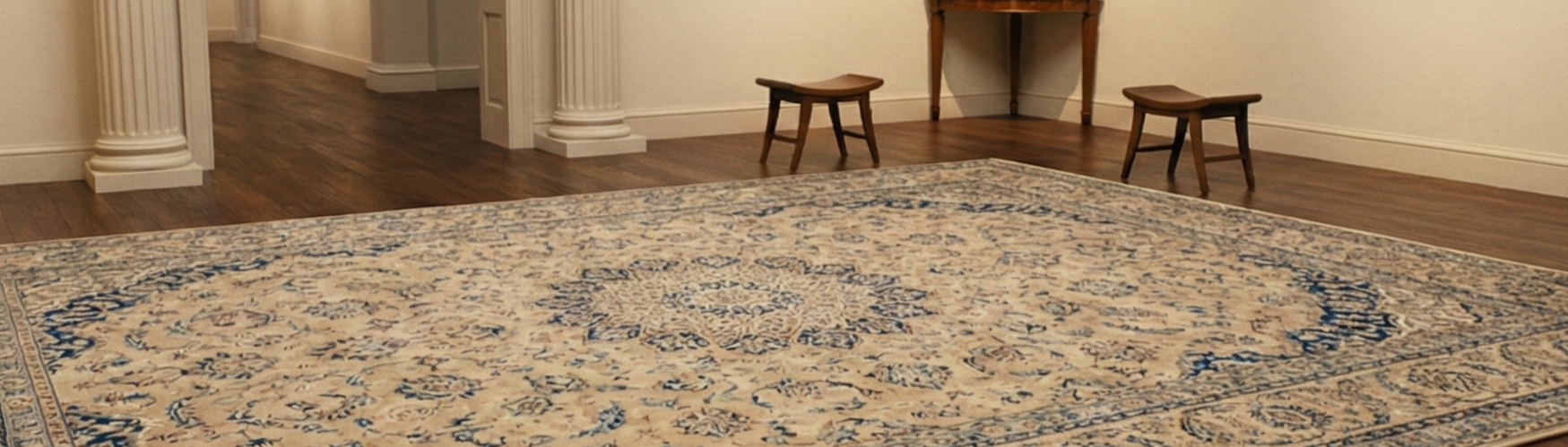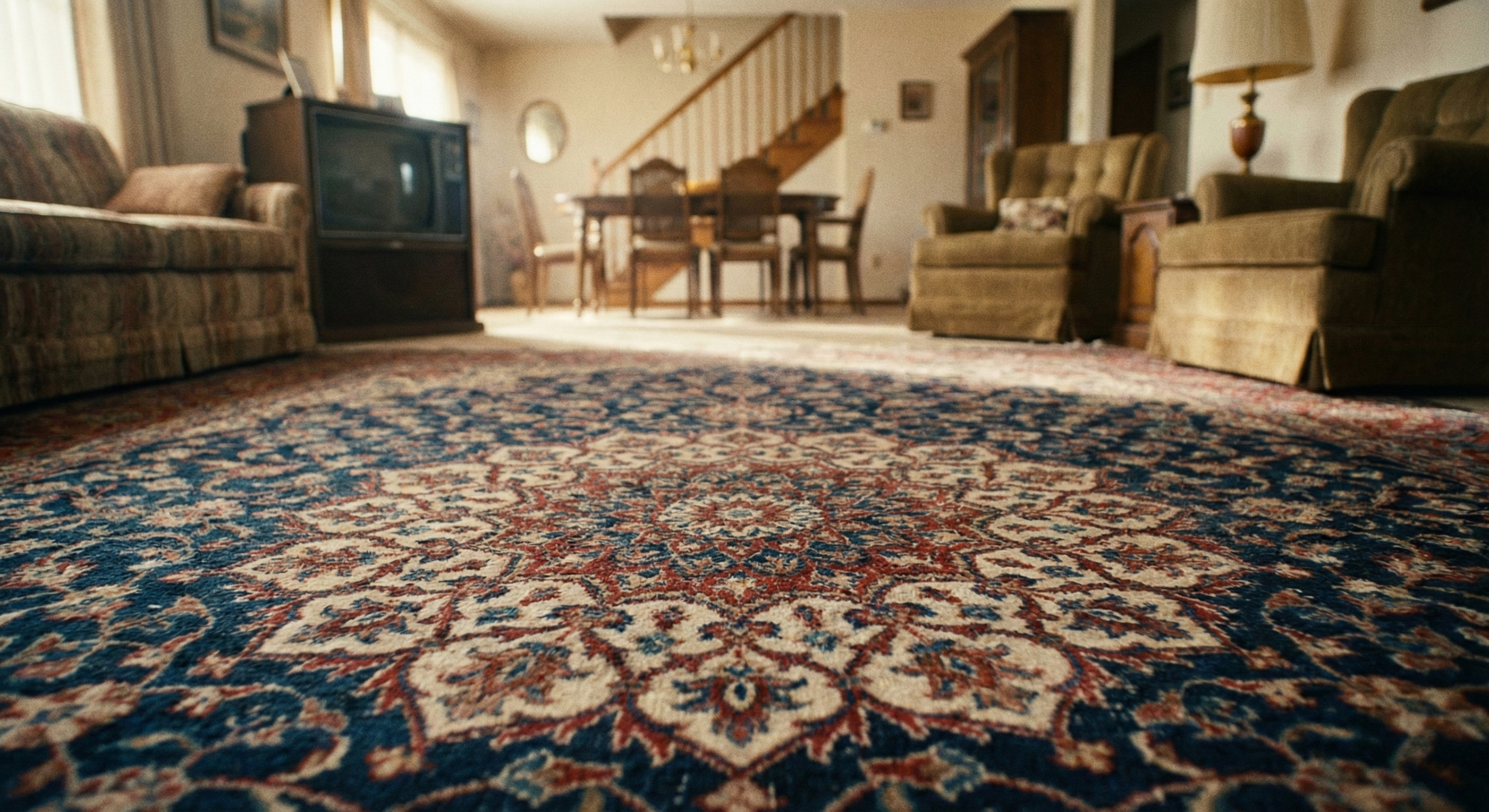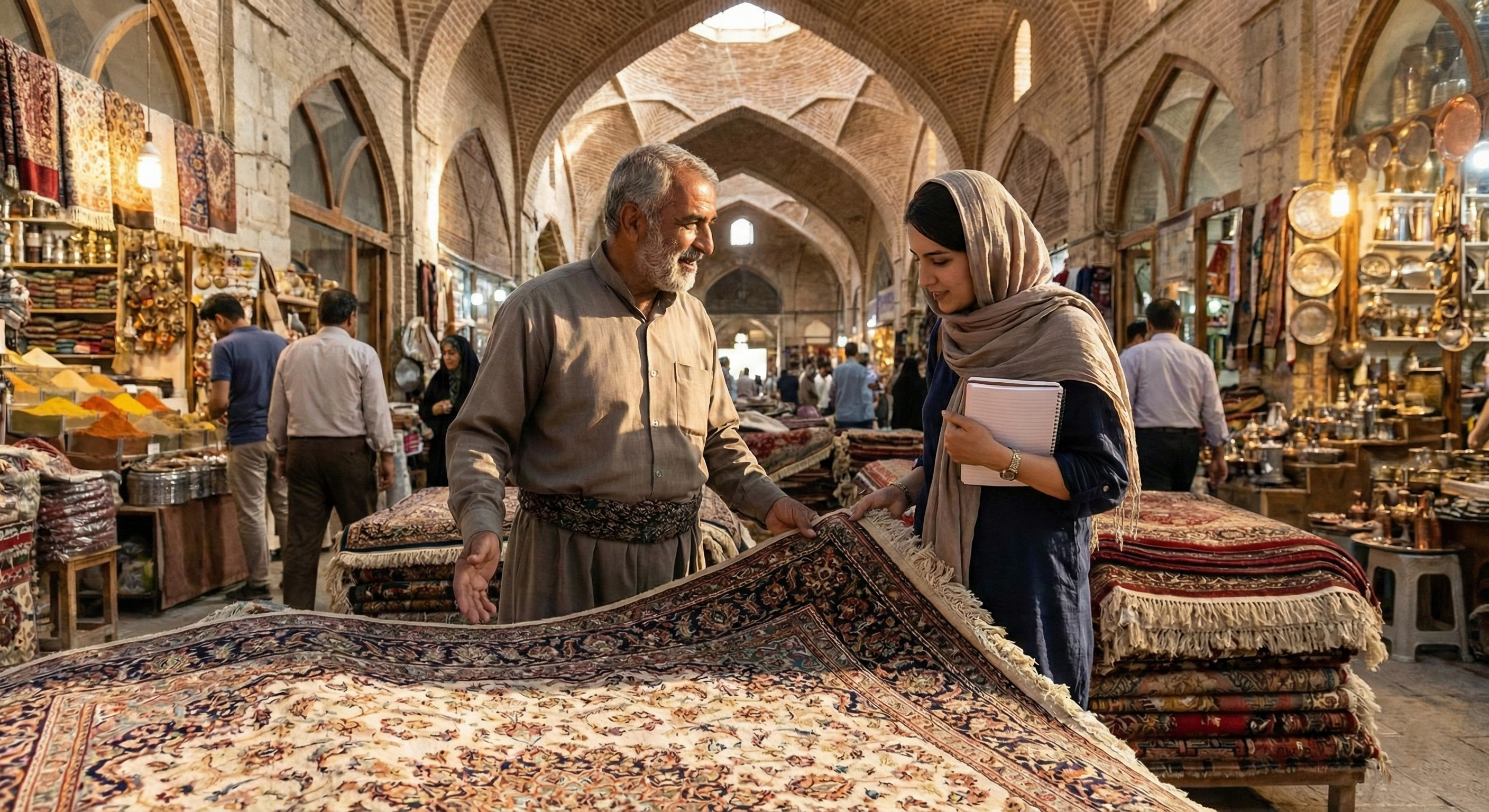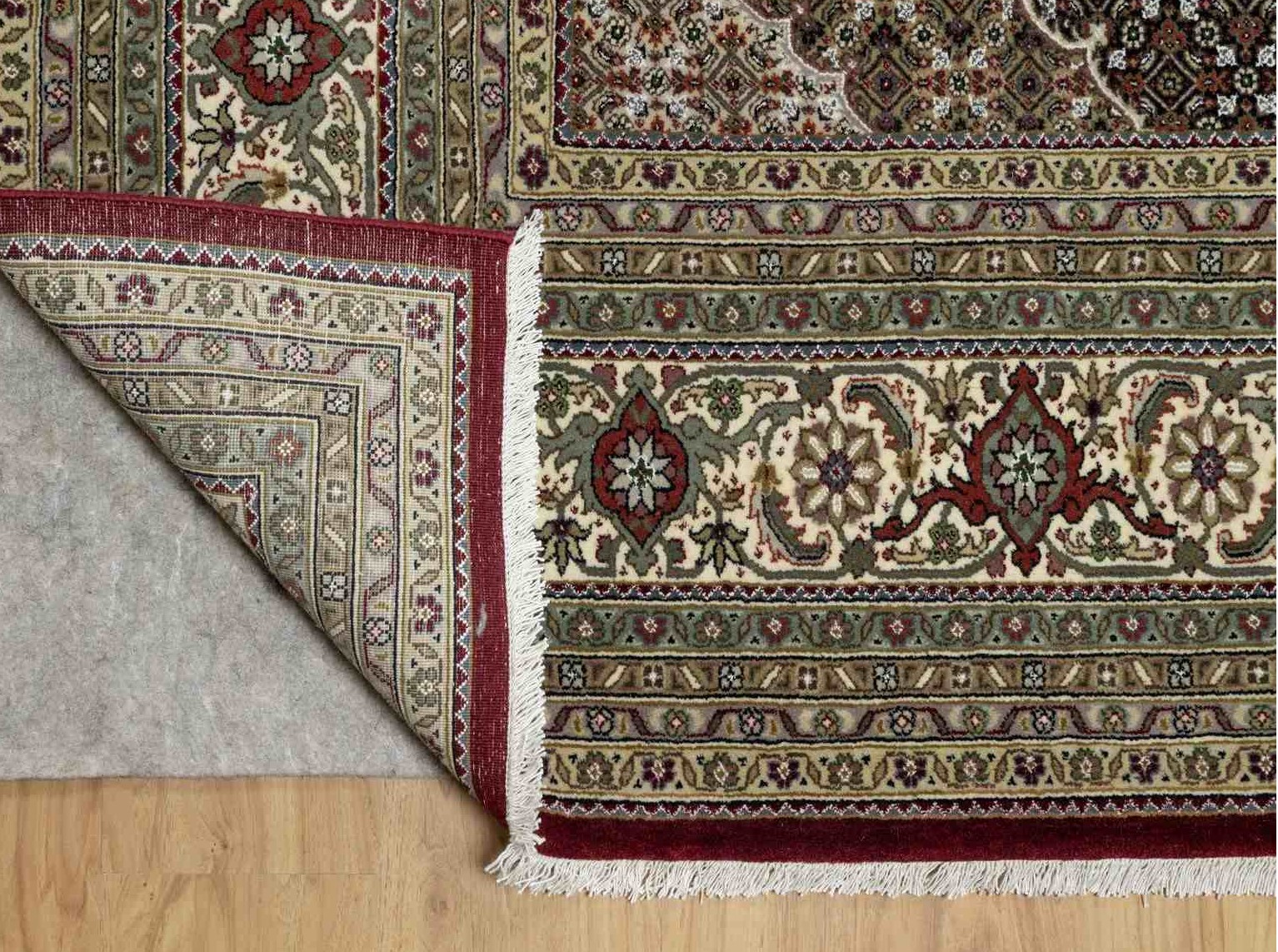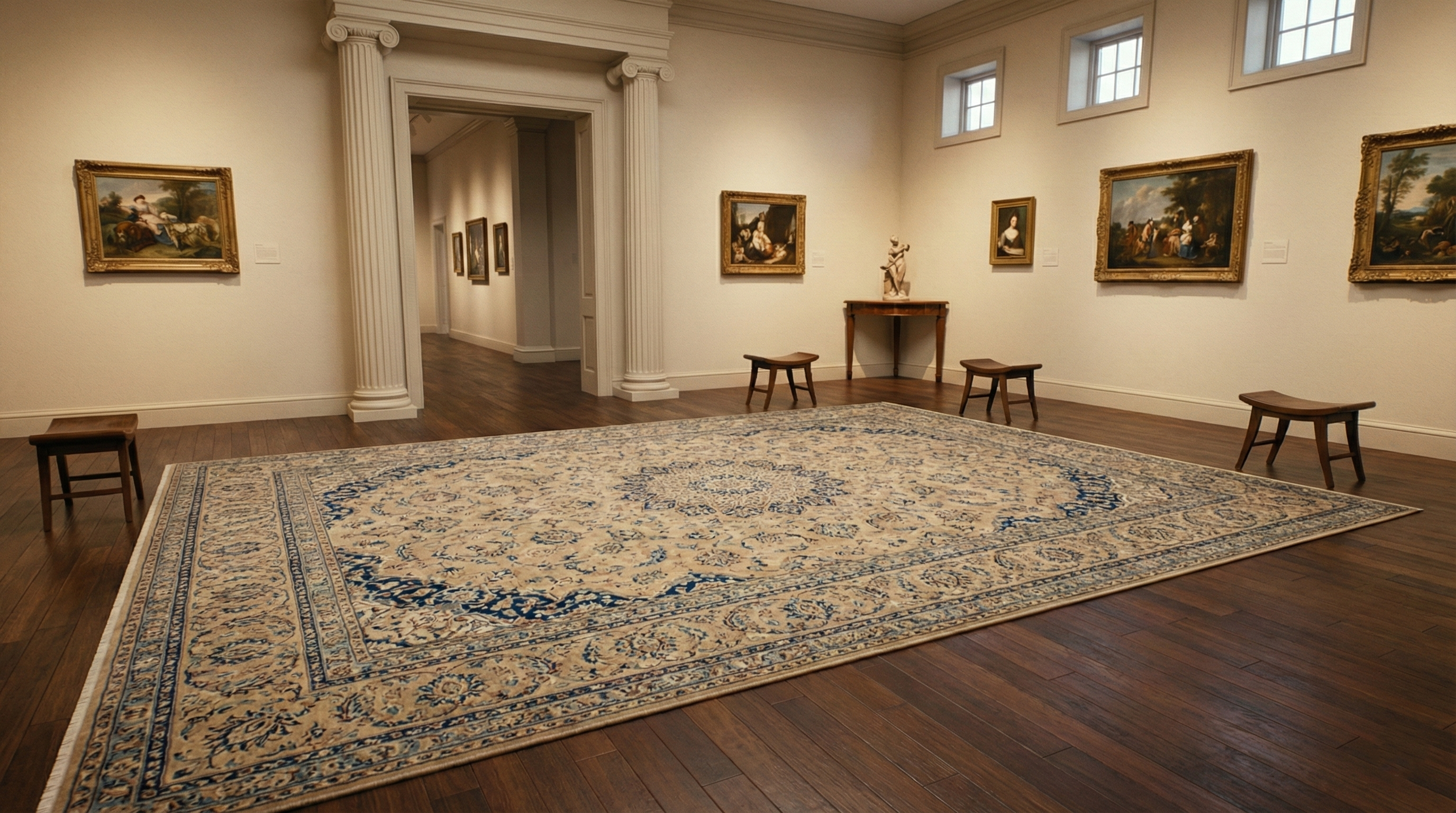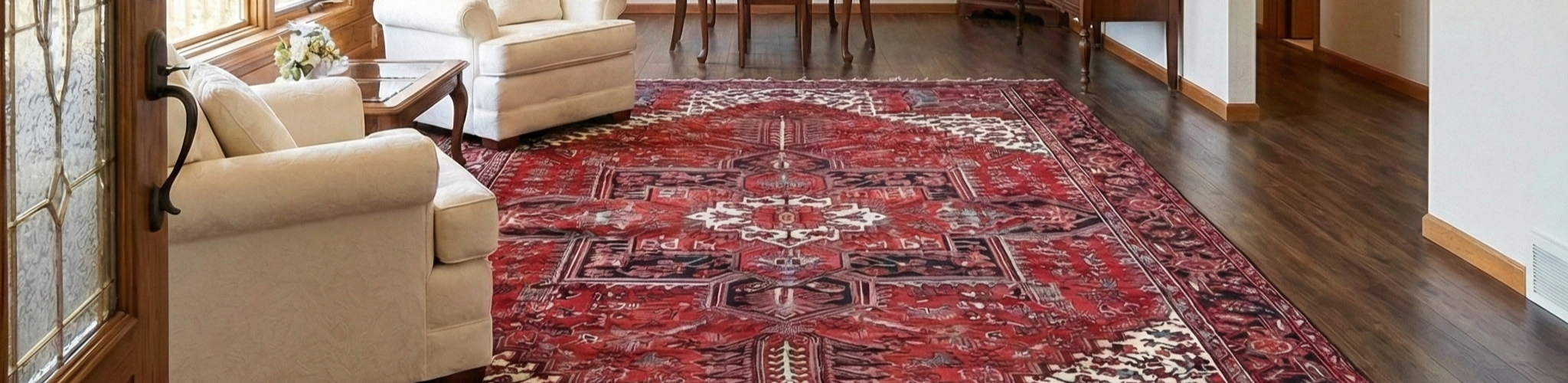
Persian Rugs – The Perfect Choice for Traditional, Modern, and Contemporary Homes

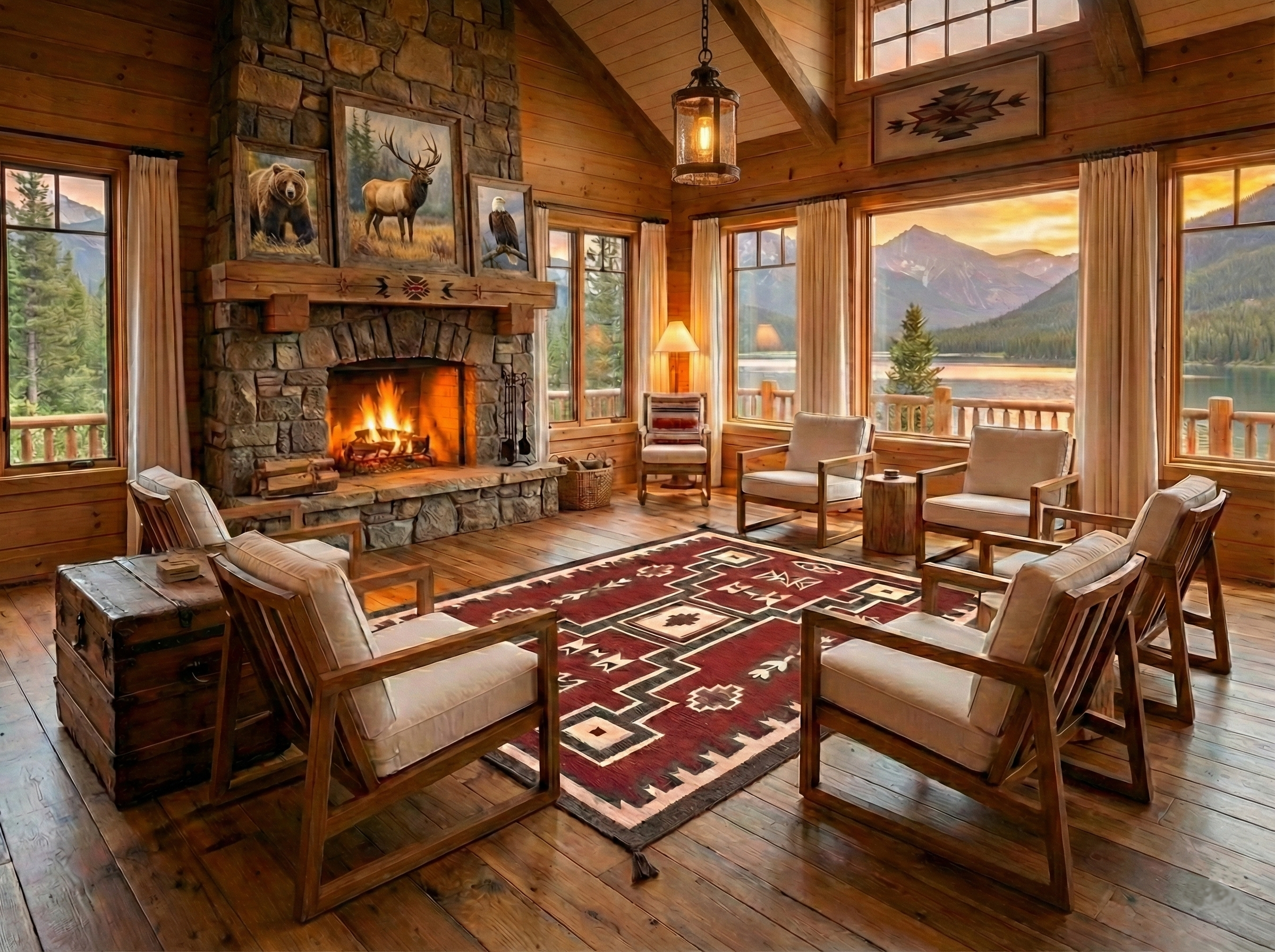
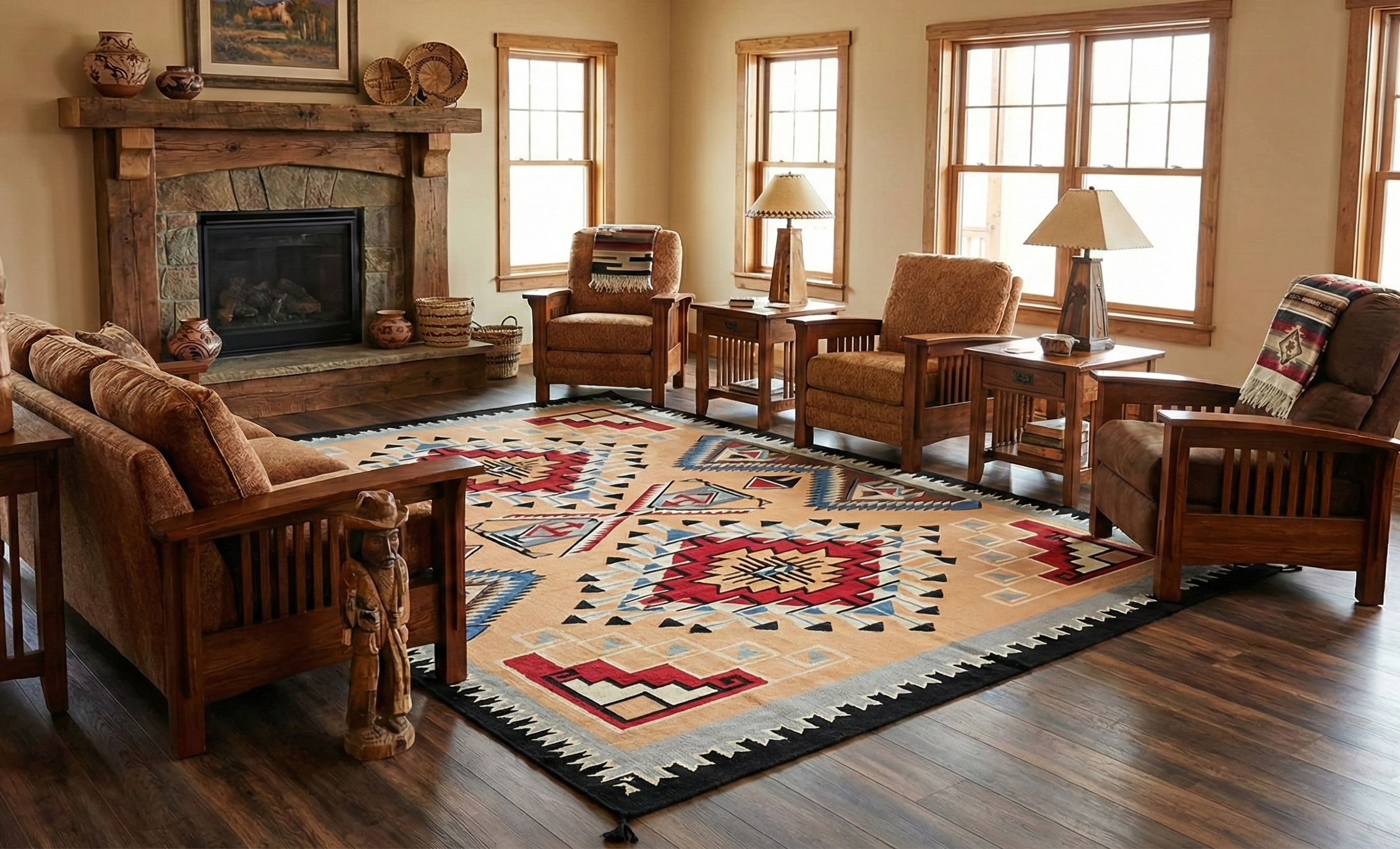
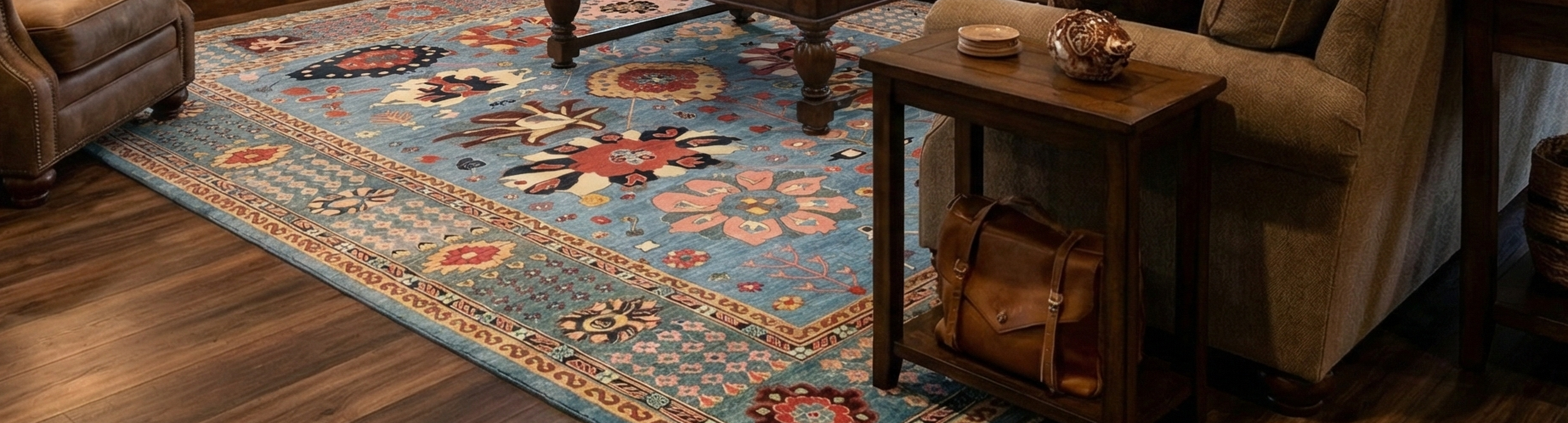
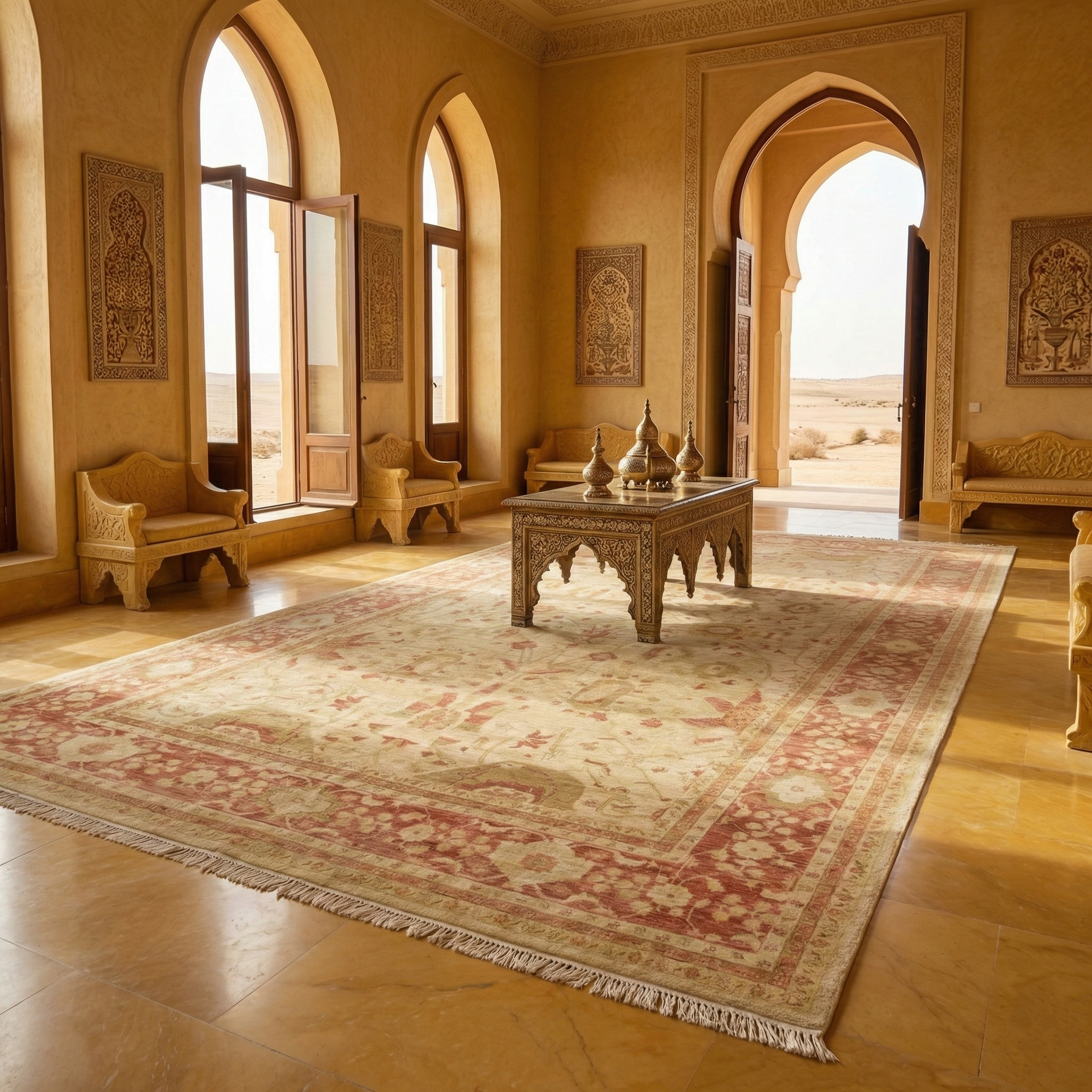
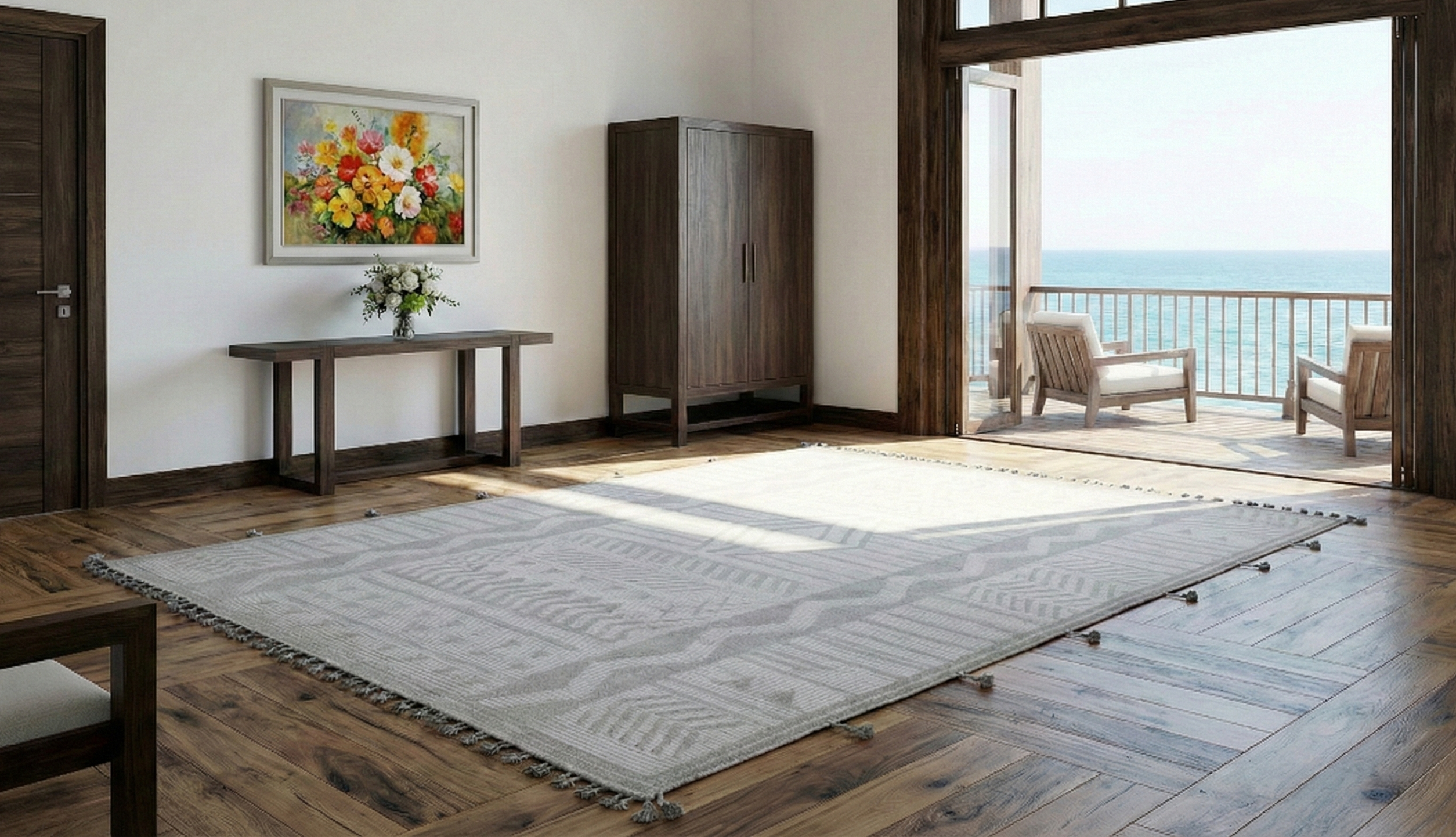
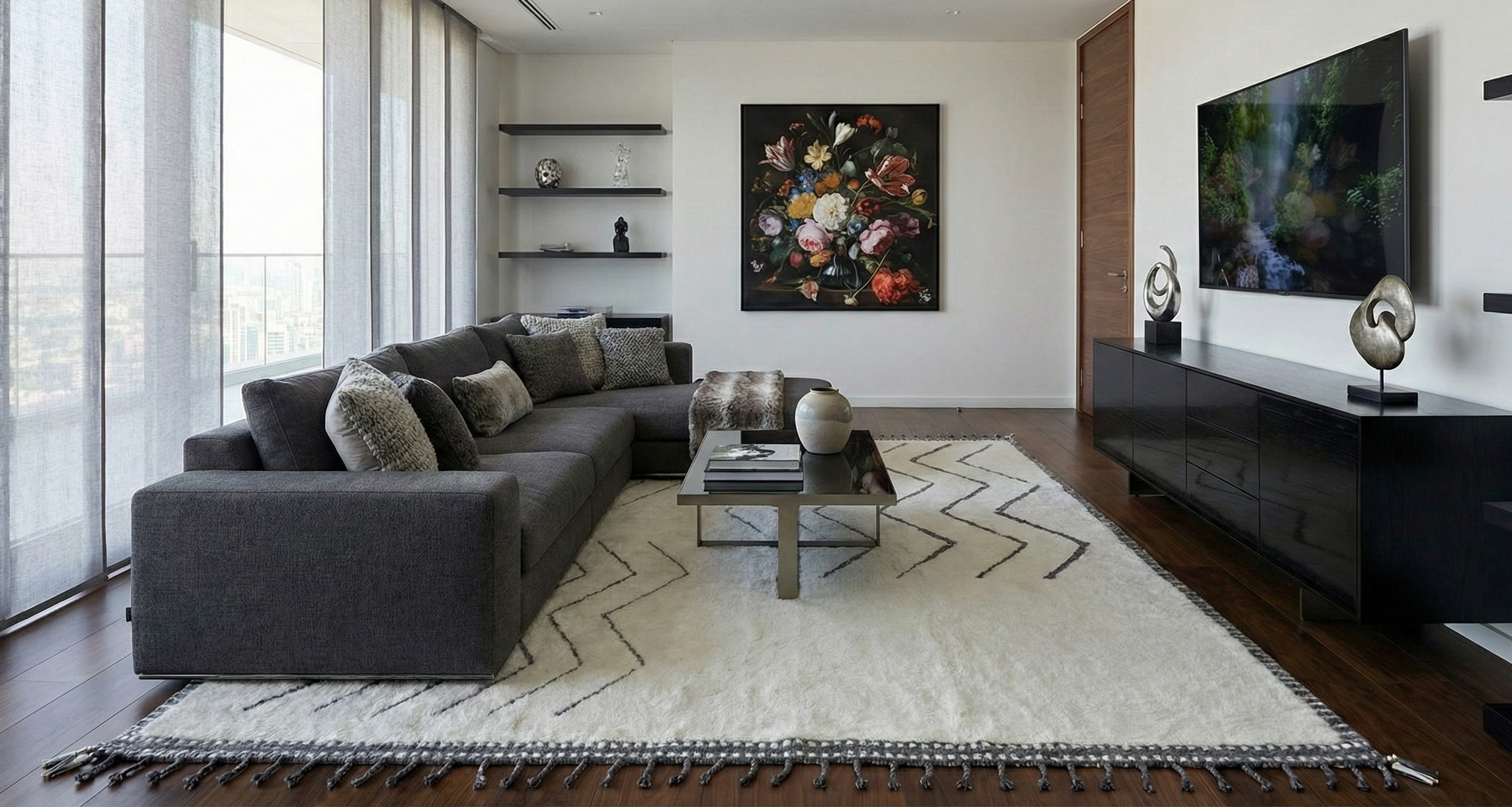
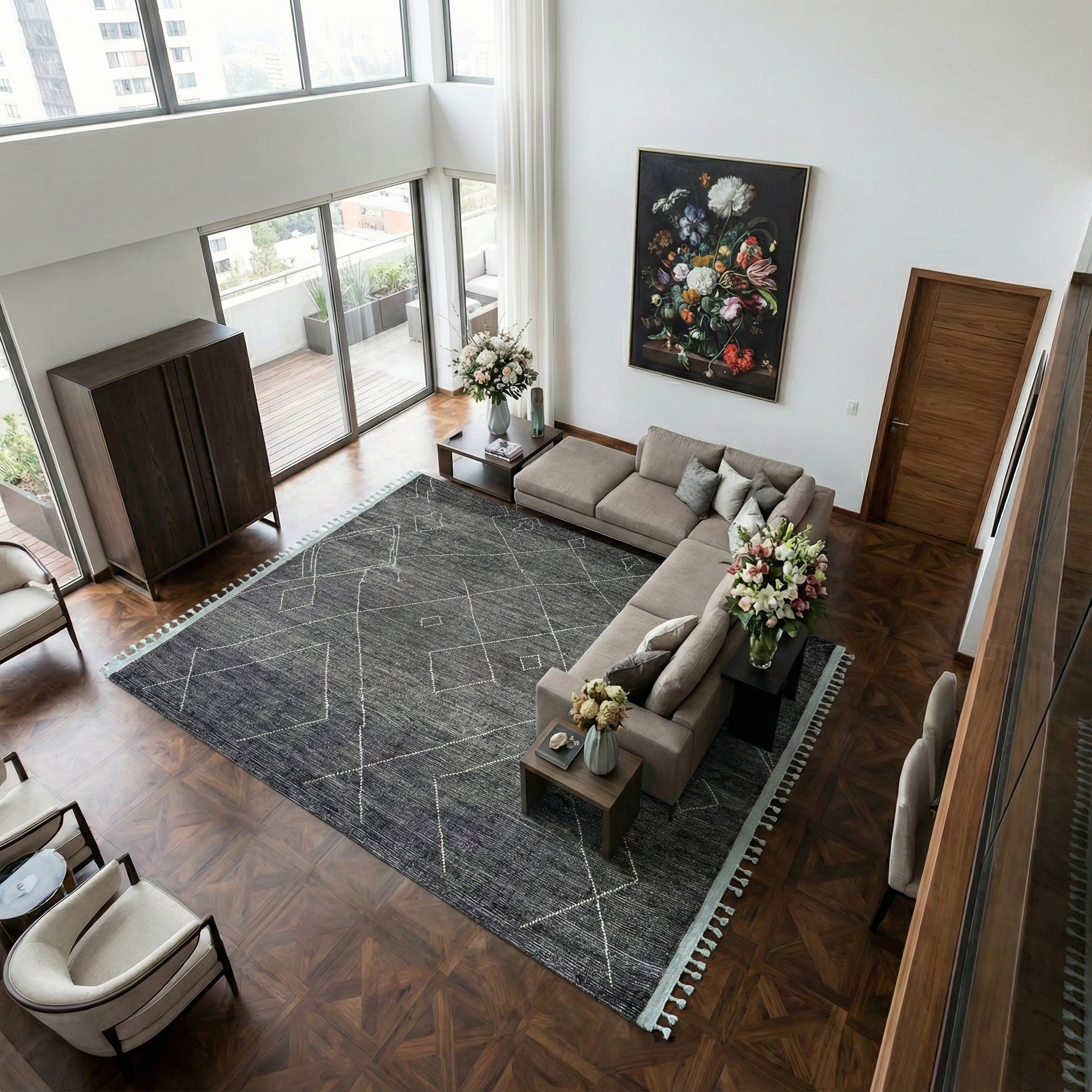
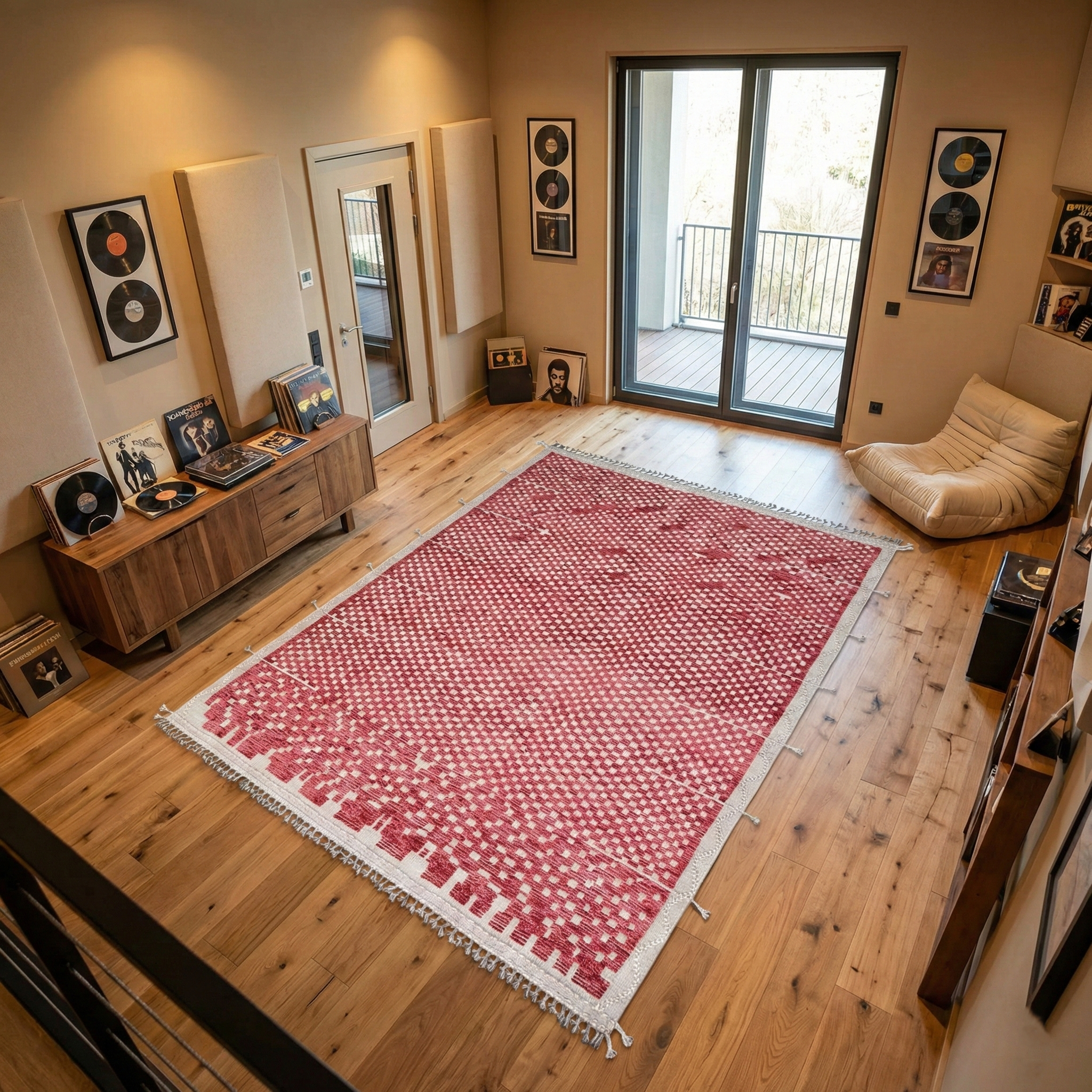
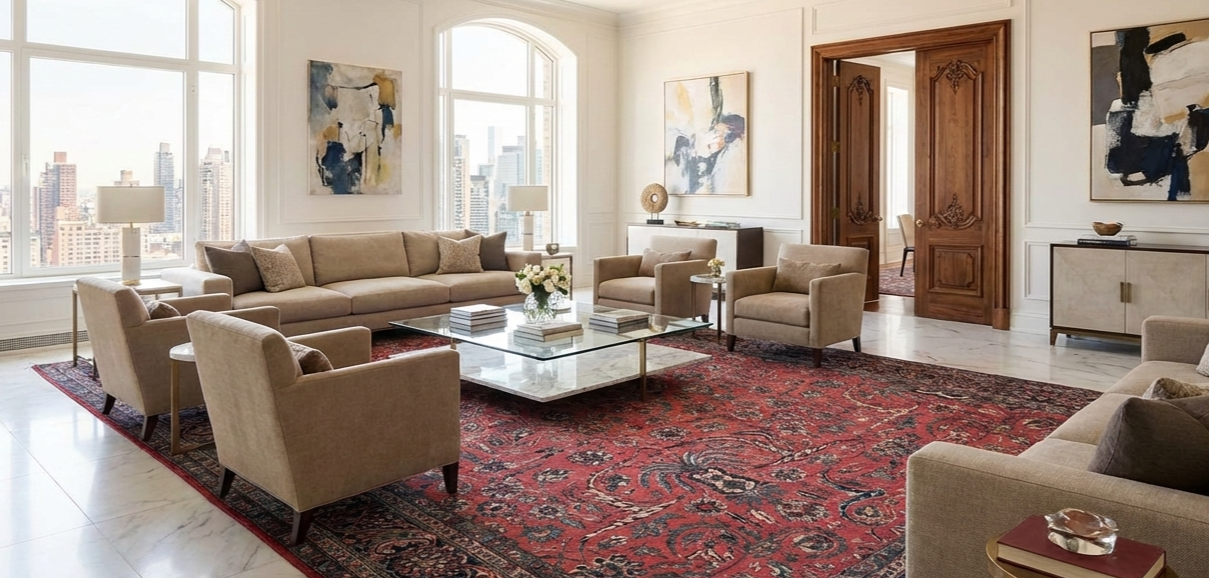
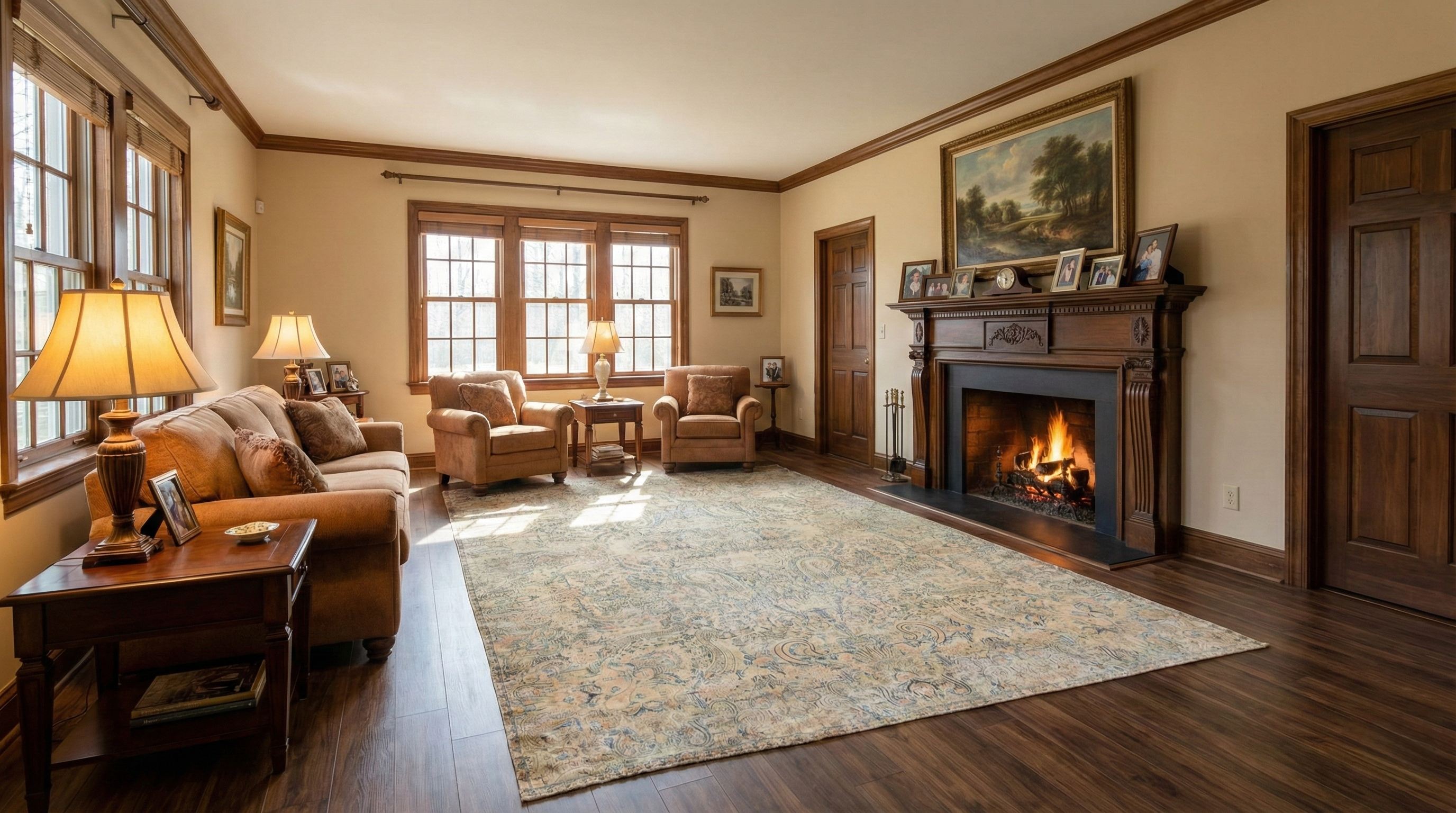
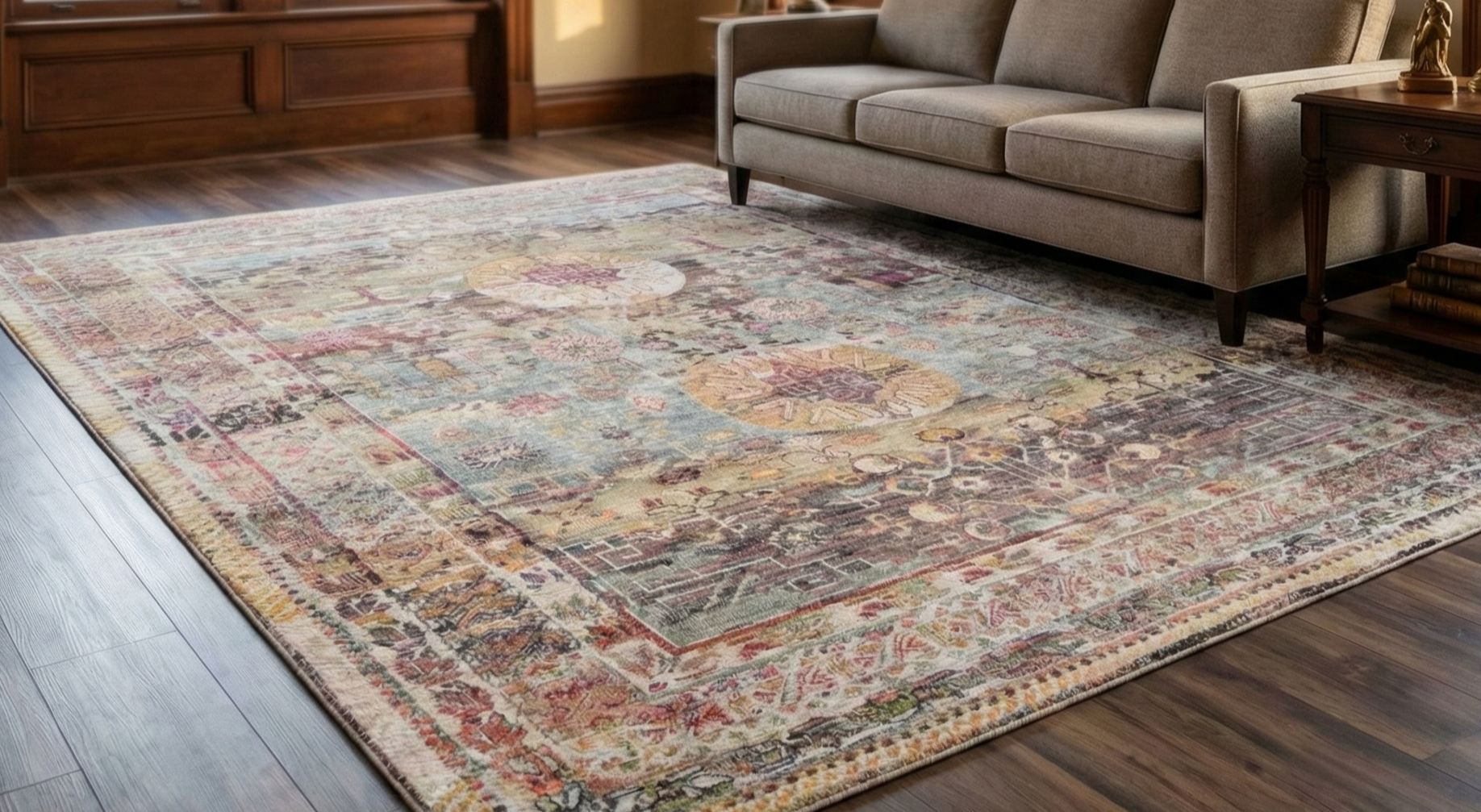
Mixing traditional Persian rugs with contemporary design or new Persian rugs with traditional decor is a key way to create an interesting and compelling interior design. Persian rugs are also very affordable if you choose from the hand-knotted range of vintage and contemporary Persian rugs in our large inventory at © 1800getarug.com .


Persian rugs are consistently the rug of choice for the homes of influential designers. Husband and wife designers Charles and Ray Eames became famous for their mid-20th century designs. They used a selection of Persian rugs to decorate a cute reading nook in their contemporary California home. Even the celebrated 20th century architect known as Le Corbusier – the man credited with creating “white box” Modernism – placed Persian rugs in the living rooms of his all-white masterpieces.
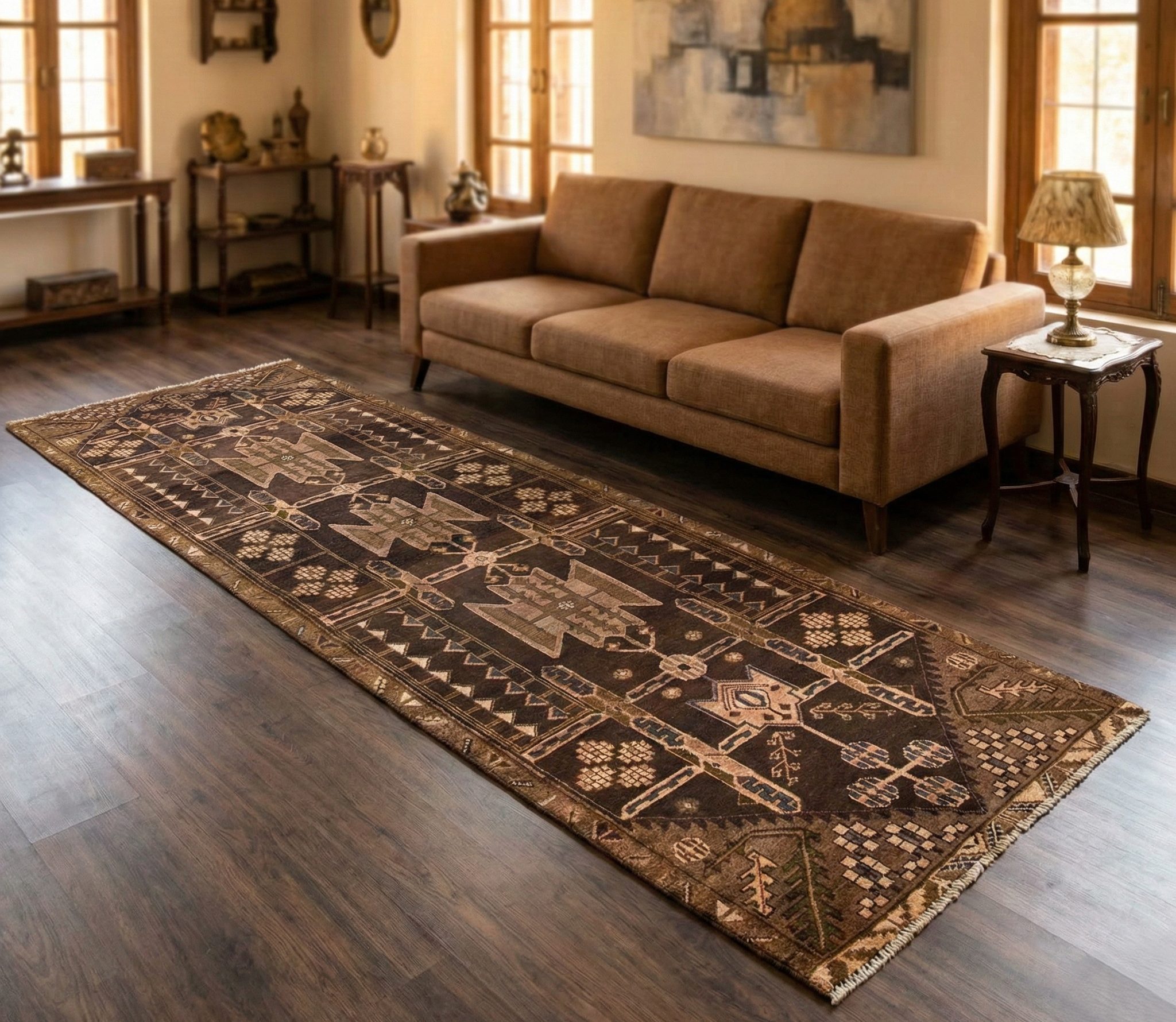
Chocolate Brown, Vintage Persian Bakhtiar, Hand Knotted, 100% Wool, Worn and Distressed, Sheared Low, Zero Pile, Sides and Ends Professionally Secured, Wide Runner, Oriental Rug
This handcrafted Vintage Persian Bakhtiar is an authentic Pure Wool oriental rug. © 1800getarug.com


These statement rug choices by the Eames’ and Le Corbusier are all the more relevant in the 21st century when many interior designers know the secret to great interior design – whether traditional, modern, contemporary, eclectic, jungalow, or maximalism – is a Persian rug. Read on to discover why the beauty, tradition, and handmade narrative pleasure of these rugs is just right for your home no matter what your decorating style.


Persian Rugs versus Oriental Rugs

In the 21st century, the terms Persian rug and Oriental rug refer broadly to the same type of rug. The two terms became interchangeable in the 19th century when exports of these rugs to the US and Europe took off and found new, appreciative customers. To make things easy we’ll use the term Persian rug in this post.
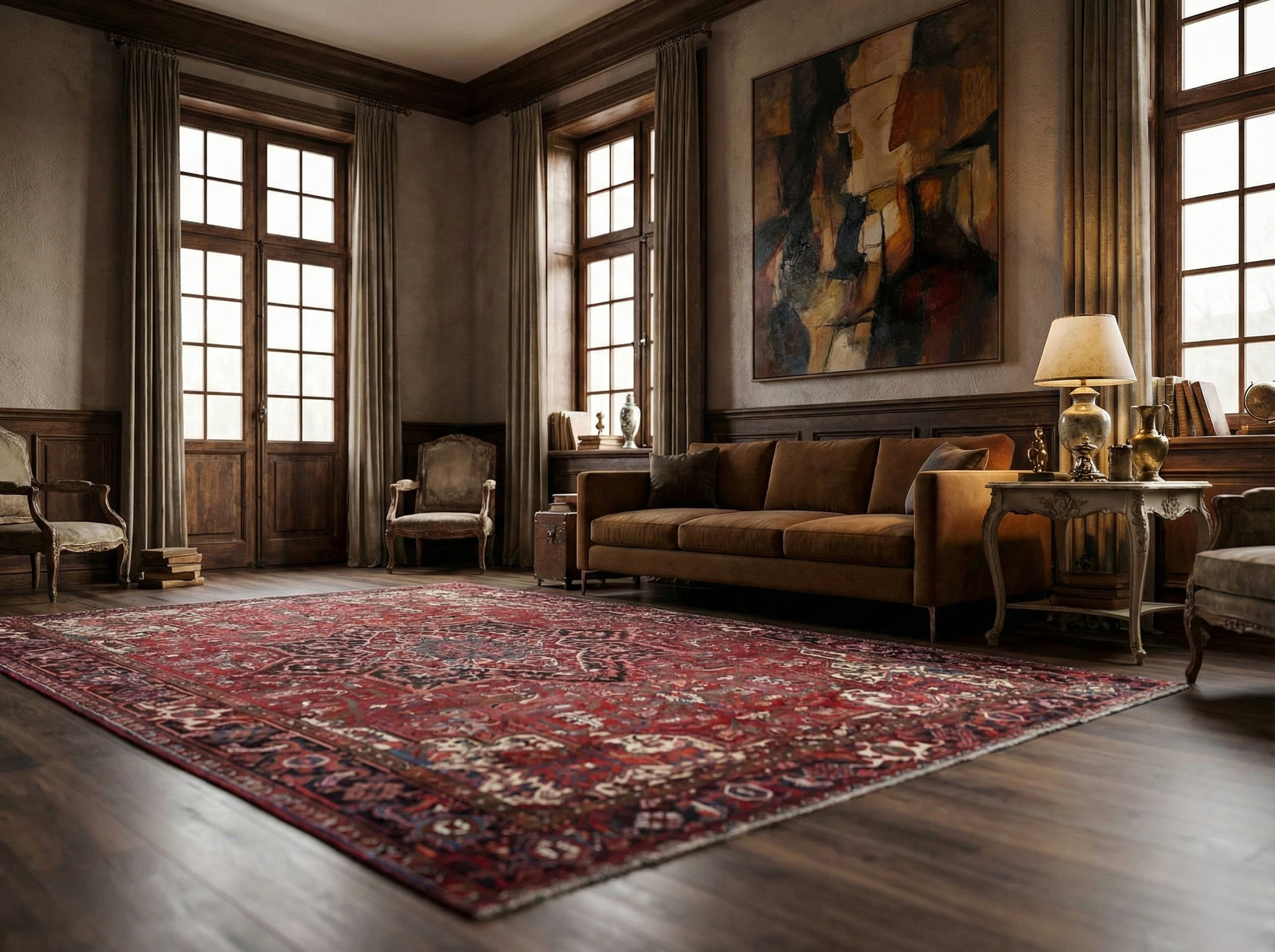
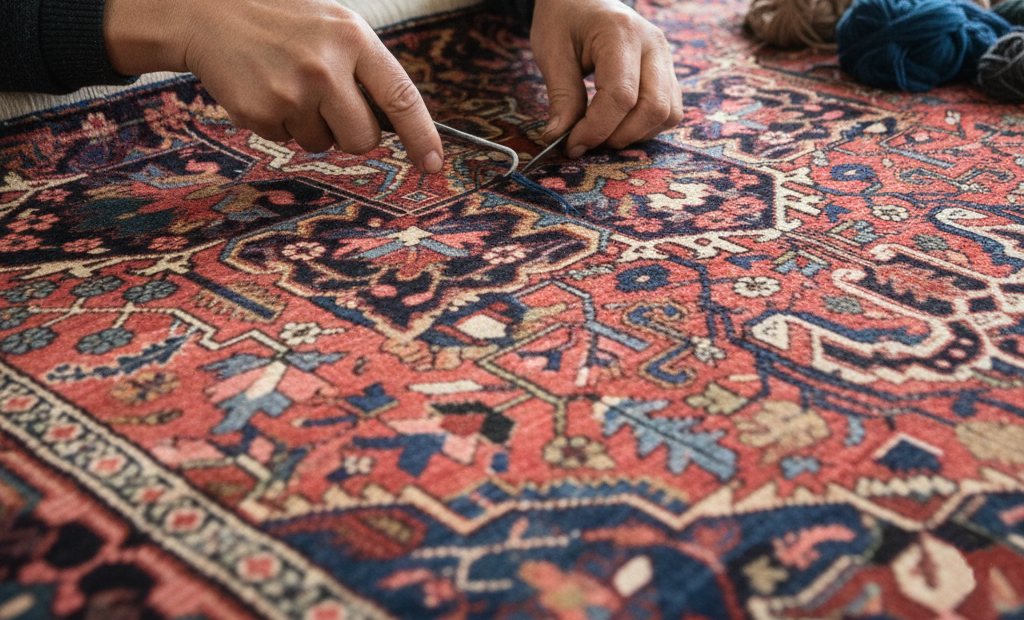
Blush Red, Vintage Persian Heriz with Flower Medallion Design, 100% Wool, Hand Knotted, Even Wear, Sheared Low, Good Condition, Sides and Ends Professionally Secured, Oriental Rug
This handcrafted Vintage Persian Heriz is an authentic Pure Wool oriental rug. © 1800getarug.com


Antique, Vintage, or New?

Persian rugs are still made today using traditional patterns that are often updated with colors that appeal to 21st century consumers. Antique Persian rugs are generally accepted to be older than 100 years, although some rug dealers choose 80 years as the cut-off. Vintage means older than twenty years but less than 100 years. We stock mainly vintage and new Persian rugs. Often we overdye our vintage rugs to change a colorful, busy pattern into a single color rug where the original pattern is still visible.
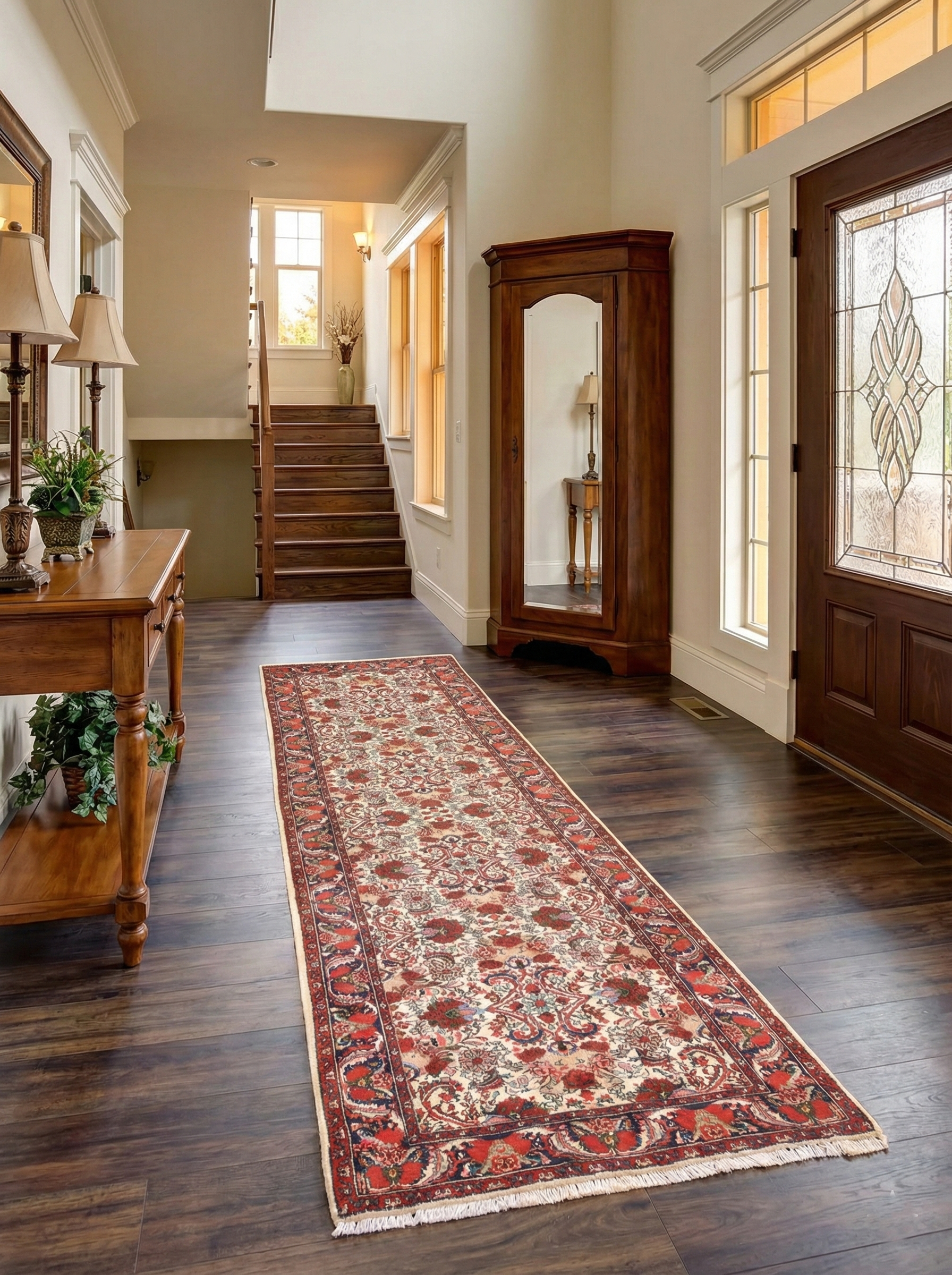
Swan White, Vintage Persian Bijar, Flower Design, Pure Wool, Hand Knotted, Thick and Plush, Good Condition, Clean, Wide Runner, Oriental Rug
This handcrafted Vintage Persian Bijar is an original Pure Wool oriental rug. © 1800getarug.com


here Were Traditional Persian Rugs Made?

Traditional Persian rugs don’t represent a single culture or style. They were hand-knotted or loom woven by many tribes, nomads, urban imperial cultures (for example the Mughal Empire) in many regions and countries using different techniques, colors, patterns and fibers.

The epicenter of Persian rug weaving was the country we now know as Iran. At the height of Persia’s power its empire spread from its “heart” (the capital of Persepolis in present-day Iran) west to Egypt, east to Kabul and northern India, north to Turkey, and south to the Persian Gulf.
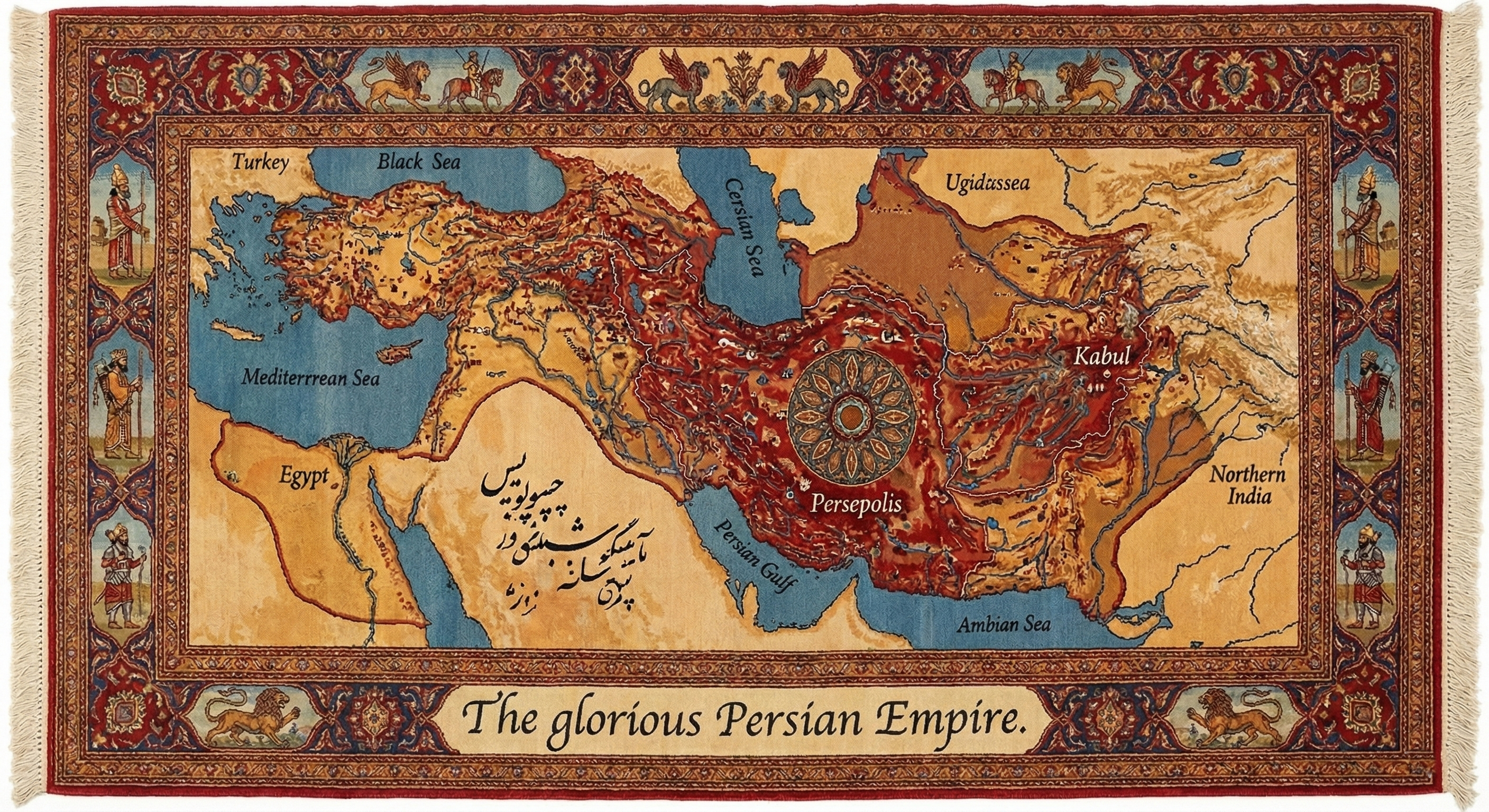
Persian Rugs
This is an illustration of the height of the Persian Empire.. © 1800getarug.com

The largest and best-known centers for rug production were in Persia. These centers include Tabriz (1500-1550), Herat (1525-1650), Kashan (1525-1650) and Kerman (1600-1650). Rugs made in these locations are usually referred to by the locations.

There’s a surprising twist to the tale of Persian rugs. When exports of Persian rugs to Europe and the United States took off in the 19th century it soon became apparent western taste didn’t always match the rugs being imported. Entrepreneurs reacted by creating a style of Persian rugs known as Zieglers. The name Ziegler isn’t a location or a tribe, but is the name of a German company that commissioned their own rug style to match the desires of Western customers.


What Types of Designs Are Found in Persian Rugs?

Many Persian designs feature plants, gardens, and animals, often interlaced or bordered with geometric patterns or featuring central medallions. Popular motifs from the past to the present include the Tree of Life and the Four Seasons. These lush botanical patterns represent a mix of reality and the magical realm of faith and imagination. Many weaving centers were located in arid, desert-like regions that despite the adverse climate had areas of lush growth due to ingenious canals and aqueduct systems that made deserts bloom.
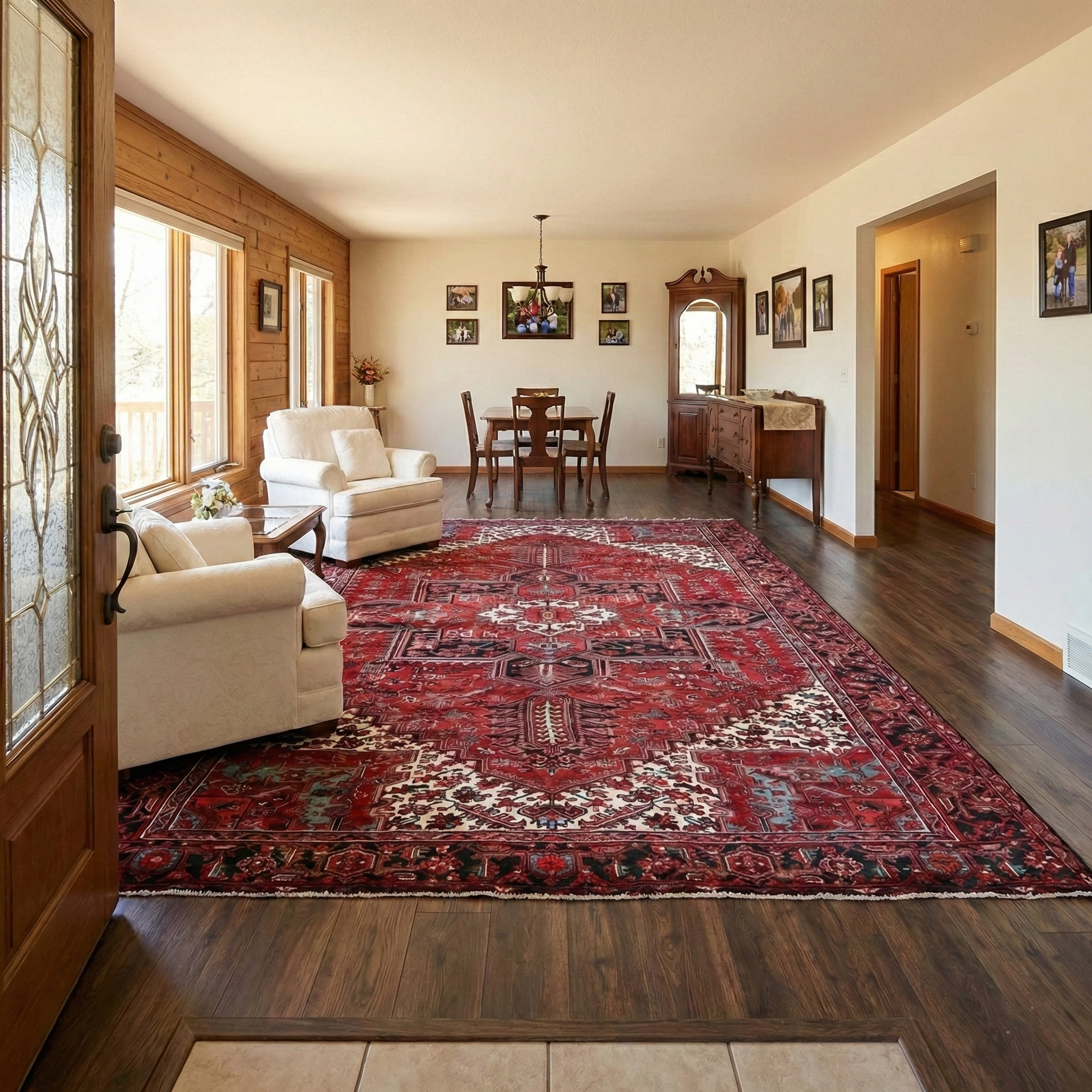
Scarlet Red, Vintage Persian Heriz with Geometric Medallion Design, 100% Wool, Hand Knotted, Even Wear, Sheared Low, Good Condition, Sides and Ends Professionally Secured, Oriental Rug
This handcrafted Vintage Persian Heriz is an authentic Pure Wool oriental rug. © 1800getarug.com


There’s so much more to know about Persian rugs –  knotting techniques, density (knots per square inch), dye processes  – which is why we warmly invite you to visit with one of our rug specialists at our showroom just six miles from the greater New York metro area. Or if you live further away, please schedule a video call so we can show you a range of our hand-knotted and affordable Persian rugs.  Call Now.


The Essence: Rug Knots


Before we think about technology and machinery, coloring and design, hand skill and passed-on knowledge, there is one single, elemental component to rug weaving: the knot. Rug knot is such a simple concept that one might overlook its central position in rug structure, look and durability.

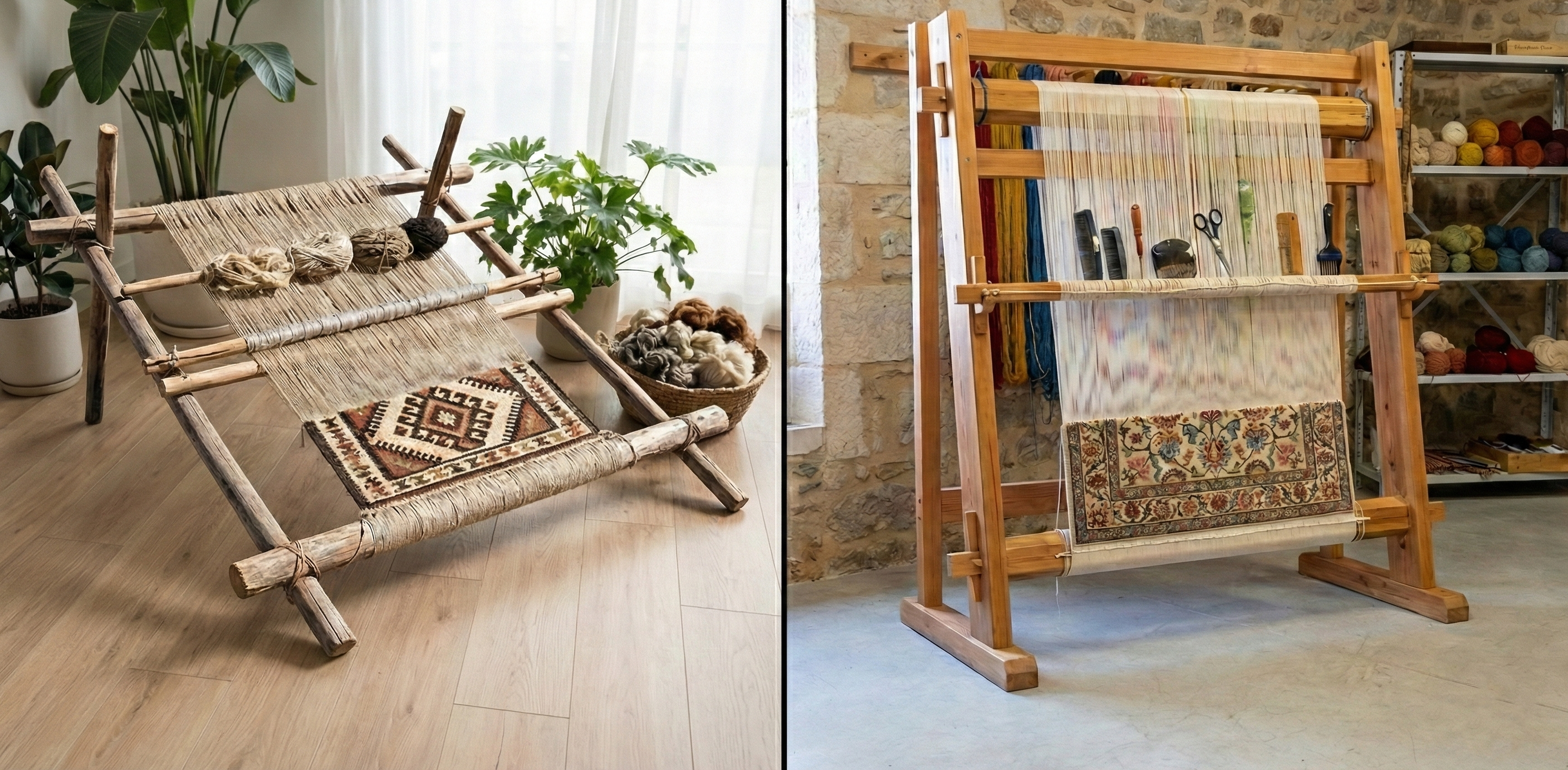
nomad or a village hand-woven rug
Nomadic Loom.  –  Village / workshop Loom.  ©1800getarug.com


There are two ways a rug knot is defined: density and type. When choosing a nomad or a village hand-woven rug, one might not consider the density of the knot a major factor. These traditional articles are made either within a season – and therefore fast – or with simple looms, and usually contain about 25-100 knots per square inch. Other factors are at play here: originality of the individual artist’s design (from memory), natural local dyes, manual labor, and plenty of love.

Sun Baked Orange, Serapi Heriz with Large Medallion Design, Vegetable Dyes, Hand Knotted, Aryana Grade, High Mountain Wool, Soft Pile, Densely Woven, Oriental Rug
Close-up of a Kazak rug. Notice the rather closely woven rug knots. ©1800getarug.com


The workshop hand-made rugs, however, are woven on a much more sophisticated machinery. Precision is therefore a major factor- on par with design and authenticity. The knot density ranges between 100-1000 knots per square inch. If you consider that each knot takes about 10 seconds to complete, it is astounding how long finishing a large enough rug may take, keeping in mind a rather high knot density.

Terracotta Antique Persian Mahal Good Condition with Some Wear Clean Hand Knotted Oriental Rug
This Handcrafted Antique Persian , is an original Pure Wool oriental rug. ©1800getarug.com


The other way of thinking of a rug knot is its method, with two predominant ones being symmetrical and asymmetrical. Popular in most of Iran, India, Egypt, China, and parts of Turkey, the asymmetrical, or Persian Senneh, have their knot loops tied around two warps and come up on the same sides to make the rug tufts. The Turkish Ghiordes knot (the symmetrical one) goes around two warp threads on opposite sides and comes up in the middle. The most commonly used knots are slight variations on the Persian one. The Tibetan knot is perhaps the most interesting one, wrapping around warps in a complex fashion and reminiscent of Indic script.

Fire Whirl Red, Antique Persian Heriz, Good Condition, Clean, Sides and Ends Professionally Secured, 100% Wool, Hand Knotted, Oriental Rug
An Illustration of a Persian Knot. ©1800getarug.com


The study of rug knots is not necessarily complex, but it certainly is full of grace and style, which is necessary for understanding the structure, design, and feel of these wonderful hand-woven rugs that we cherish throughout our lives.


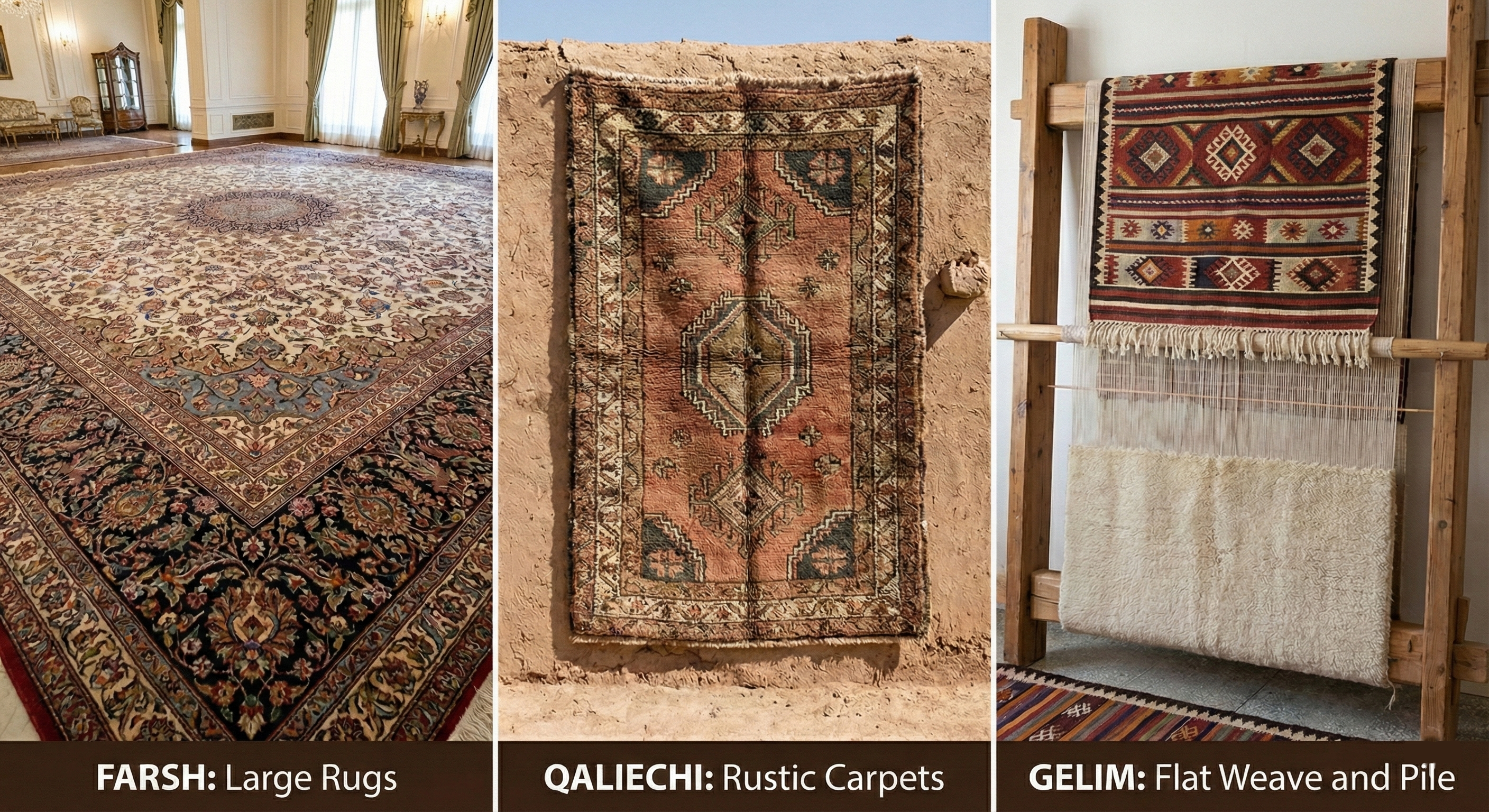
The simple beauty of Kilim Flatweave rugs


Sometimes things can be uncomplicated, sometimes they can be understated. Sometimes the beauty comes from the simplicity of the design and execution. Look no further than Kilim hand-woven rugs, classic flatweave carpets known for their unique contained look and versatility.

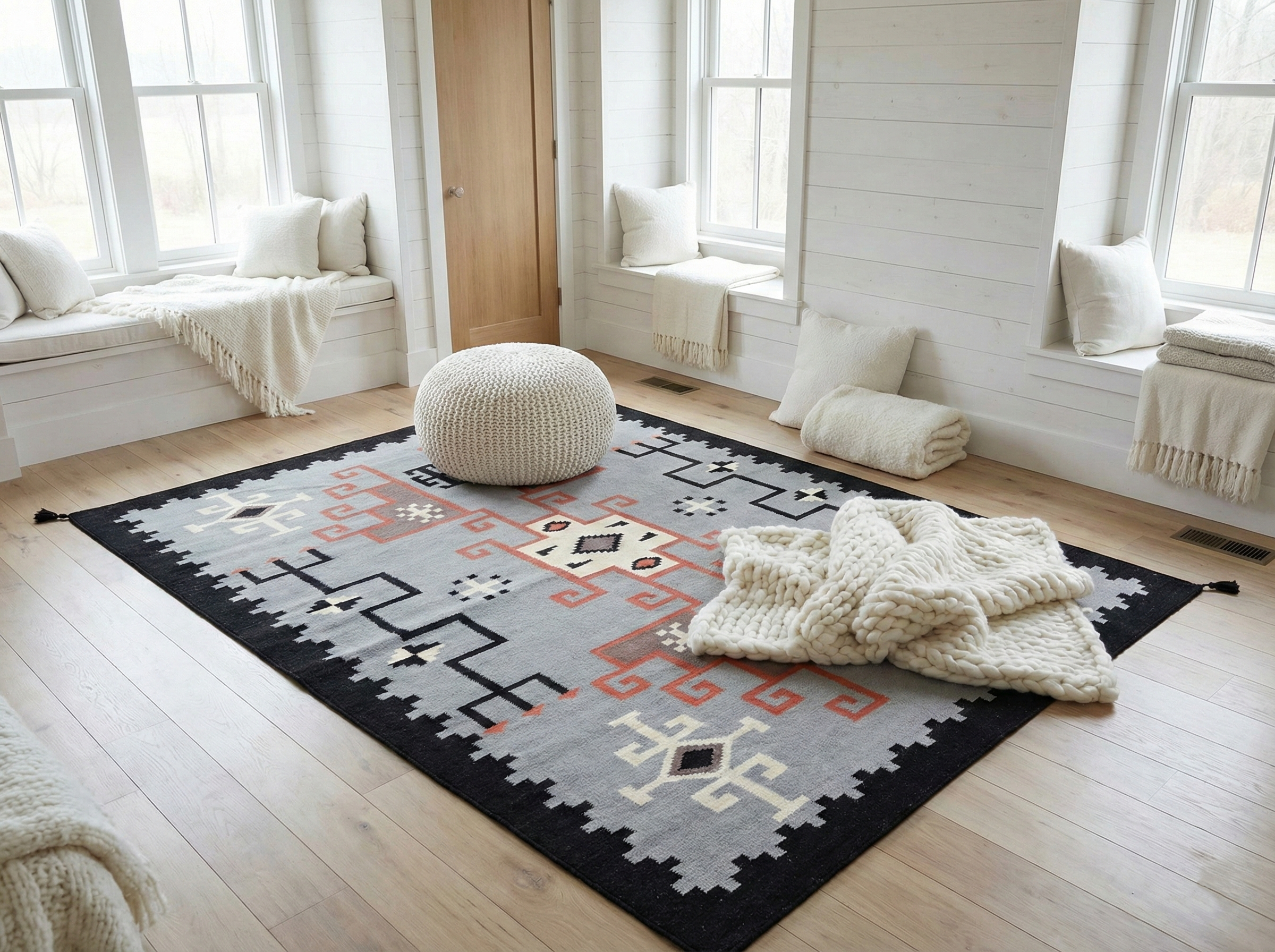
Medium Gray, Flat Weave, American Indian Southwest Geometric Design, Hand Woven, 100% Wool, Oriental Rug
This handcrafted American Indian Southwest Geometric Design is an authentic Pure Wool oriental rug. © 1800getarug.com


One of the most consistent technique to go back centuries, Kilim rugs were most likely first used by nomadic peoples of Middle East and Central Asia. The earliest examples were found around Khotan, present day Xinjiang, China, one of the centers of trade along the Silk Roads, and go back centuries. The name is derived from Turkish “gelim”, which means, “to spread” (as in, to spread a rug). Its pure geometrical designs are believed to have mystical, inspirational powers.

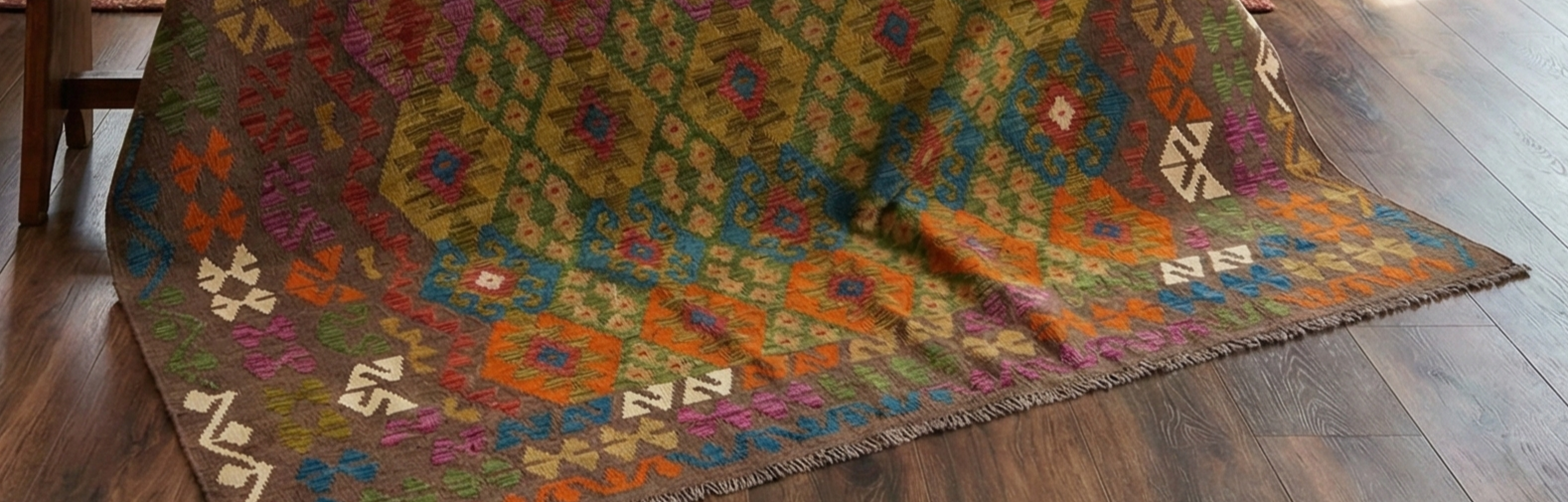
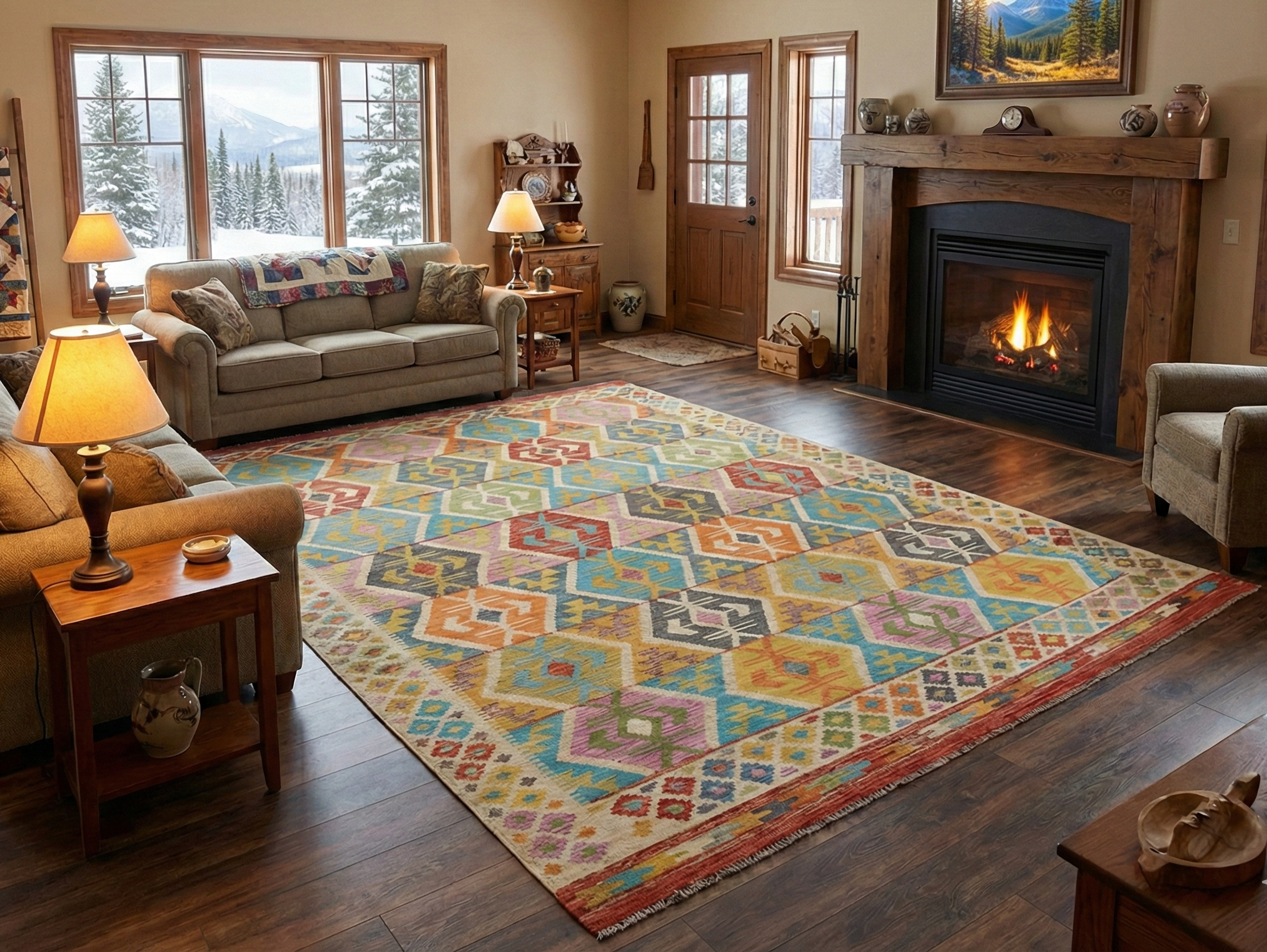
Bone White, Afghan Kilim with All Over Colorful Geometric Pattern, 100% Wool, Natural Dyes, Flat Weave, Hand Woven, Reversible, Oriental Rug
This handcrafted Afghan Kilim is an original Pure Wool oriental rug. © 1800getarug.com


To us, the most fascinating thing about the hand-woven Kilim rugs is the unique weaving technique, called slit weave. These rugs don’t have a pile, and are created by simply weaving the woolen wefts and the cotton or wool warps (thread ratio is 16 of weft, 14 of warp). Two different-colored weft blocks are tightly packed into the warp by a special comb and returned to original side once they reach each other, leaving a slight “gap” in between – the slit! This is the origin of the traditional Kilim motif: diagonal and horizontal lines, a pattern designed for durability.

Coconut Brown, Hand Woven, Flat Weave, American Indian Southwest Geometric Design, 100% Wool, Oriental Rug
This handcrafted American Indian Southwest Geometric Design is an authentic Pure Wool oriental rug.© 1800getarug.com


While the traditional colors for these magical Kilim hand-woven rugs are blue, green, red, and yellow, the modern take on the carpets includes a variety of dyes and designs. Still these works of art are as versatile and affordable as they were centuries ago: they are easy to spread or fold, don’t crease; are great at being a centerpiece decoration, hanging on a wall or serving as a door step rug, or for saddling your mule, if the occasion truly calls for it!

Peach Color, Flat Weave, American Indian Southwest Geometric Design, 100% Wool, Hand Woven, Oriental Rug
This handcrafted American Indian Southwest Geometric Design is an authentic Pure Wool oriental rug. © 1800getarug.com


What are Peshawar Hand-Woven rugs?


Looking into our rugs is sometimes like looking into the depths of history. The Peshawar rugs take us to one of the greatest depths. One of the epicenters of the great Silk Roads, the city of Peshawar was, quite literally on the map since the 5th century B.C. From the ancient Persians and the Hellenistic descendants of Alexander the Great, to the medieval Mongols and finally the Muslim empires. Peshawar commanded authority throughout the region, housing millions of citizens and invariably creating and absorbing culture for centuries. Some may argue the Mughal era of rule over the region was one of the most successful in last few centuries and has inspired some of the most fascinating and impressive works of art.

Beige, Afghan Peshawar with All Over Mahal Design, Clean, Full Pile, Long and Narrow, 100% Wool, Hand Knotted, Oriental Rug
This handcrafted Afghan Peshawar is an authentic Wool oriental rug. ©1800getarug.com


Perhaps the best time capsule of this Mughal artistry is the hand-woven Peshawar rug, whose designs evolved through the centuries but with mastery that never dwindled. In the 16th century, emperor Akbar had ordered the construction of rug weaving workshops and fostered the knowledge exchange with the Persian artisans to reinforce the local style. In the 20th, after the crumbling of British colonialism the existing industry simply needed a push from the newly independent government to survive and to flourish.

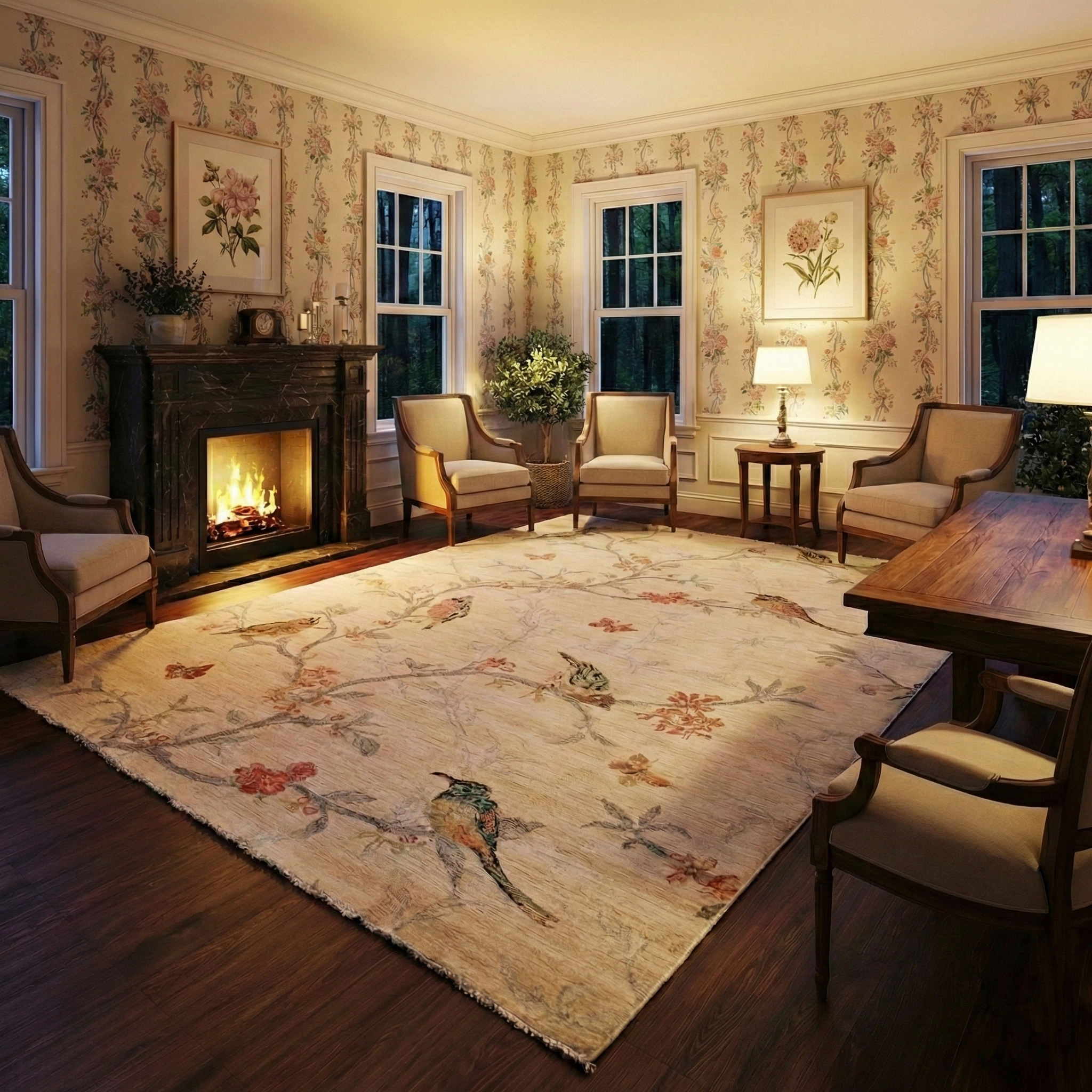
Chiffon White, Sparrows on the Tree, Peshawar, High Mountain Wool, Hand Knotted, Soft to the Touch, Densely Woven, Oriental Rug
Chiffon White, Sparrows on the Tree, Peshawar, High Mountain Wool, Hand Knotted, Soft to the Touch, Densely Woven, Oriental Rug  ©1800getarug.com


Traditional Peshawar rugs are always hand-woven, and feature a pure high mountain hand-spun wool pile, although sometimes, in select rugs, fine merino wool is blended in – that makes the rugs look slicker. Occasionally silk is woven in as well, especially if the artist wants to highlight a motif. The weft and warp are cotton, for the strongest support. The resulting rugs are durable and reliable, but are luxurious and extremely soft to the touch.

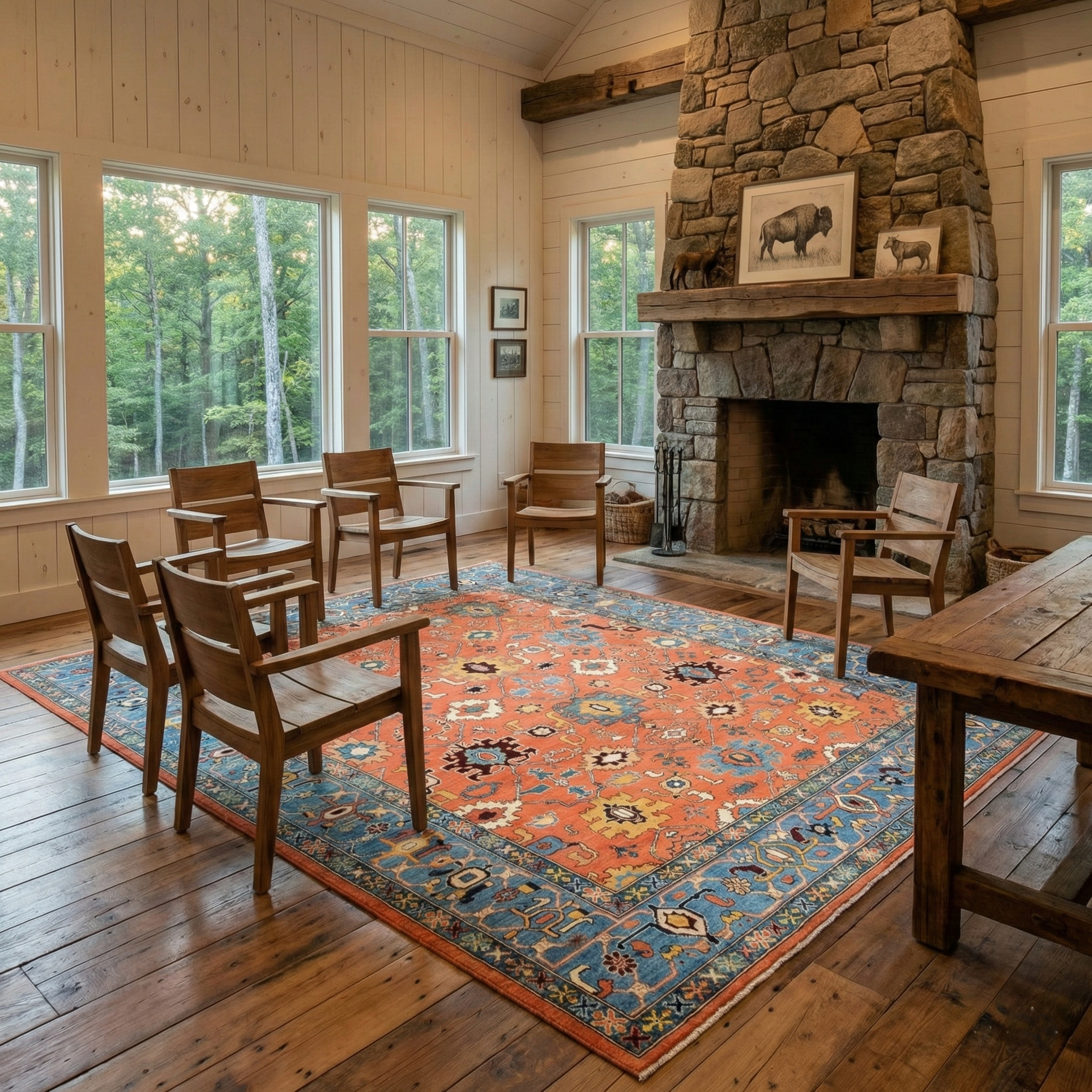
Rust Orange, Afghan Peshawar with Heriz All Over Design, Hand Knotted, Soft 100% Wool, Densely Woven, Oriental Rug
This handcrafted Heriz All Over Design is an original Pure Wool oriental rug. ©1800getarug.com


The design of the rugs, as chronicled in history, is heavily influenced by ancient Persian rug motifs. The colors, usually light and earthy and derived from sun-dried vegetable dyes, give the rugs its characteristic antique and washed-out look. But whether they are stonewashed and have their piles cut shorter, or the modernist take will have the colors pop, you are sure to be mesmerized by the deep richness and artistry that are the Peshawar rugs.

Maya Blue, Afghan Peshawar with Heriz All Over Design, Hand Knotted, 100% Wool, Densely Woven, Oriental Rug
This handcrafted Heriz All Over Design is an original Pure Wool oriental rug. © 1800getarug.com


Moroccan Rugs

Moroccan Rugs: A journey of creativeness.


Moroccan rugs are a large category of hand-woven carpets from Morocco. History and geography played a key role in the development of these rugs. To understand their variety we have to keep in mind Morocco is a blend of cultures, such as Arabic, Indigenous Berber, Sub–Saharan and European influences. Furthermore, the rich and varied landscape ranging from desert to mountains gives the rugs specific characteristics. For instance, knotted heavy pile rugs are used in the snowy Atlas Mountains while flat, light woven ones are better suited for the Sahara Desert.

Daisy White, Moroccan Weave with Geometric Pattern, Hand Knotted, Tone on Tone, Soft Wool, Textured Pile, Runner, Oriental Rug
This handcrafted Moroccan weave is an authentic Pure Wool oriental rug. © 1800getarug.com 


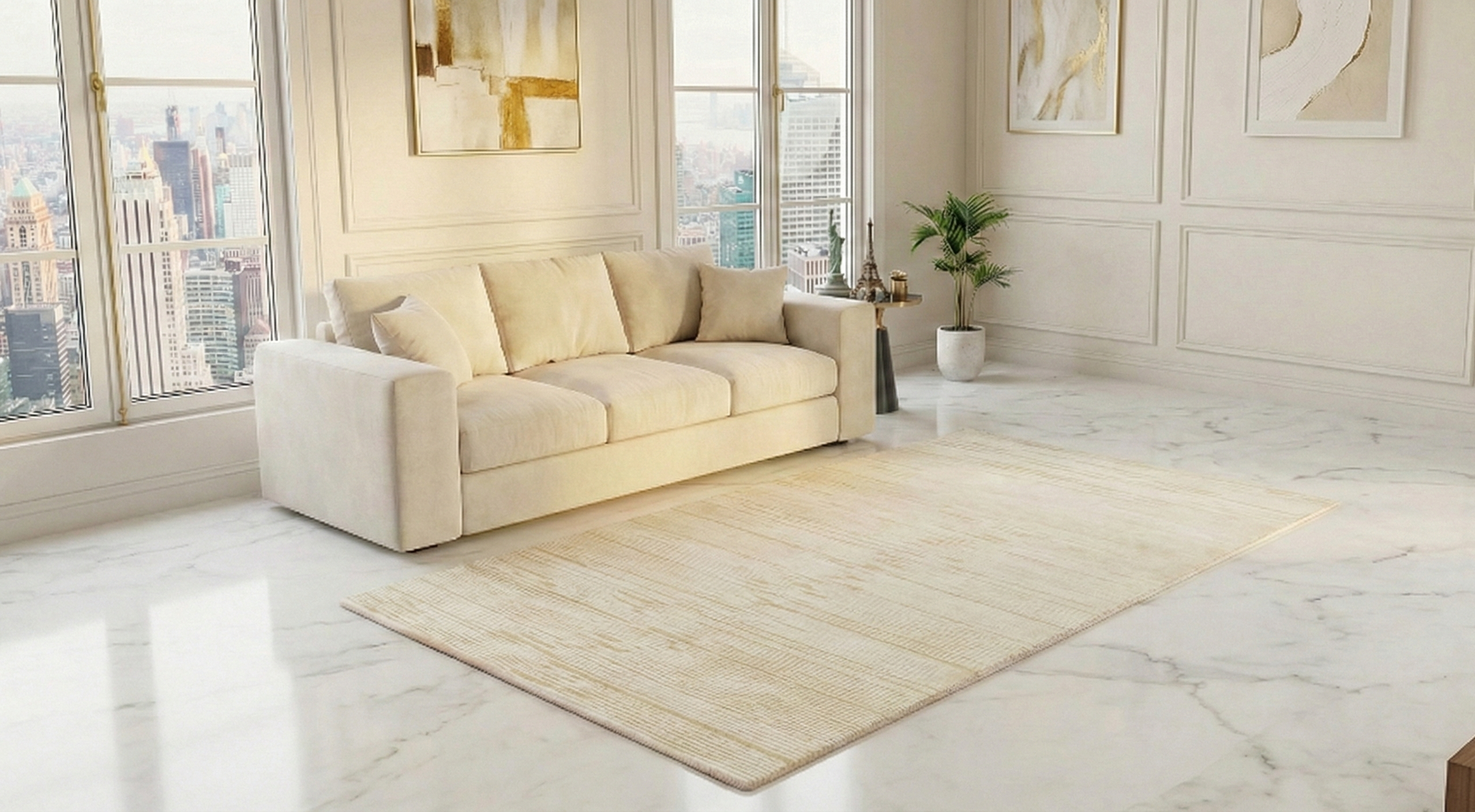
In the past, traditional Moroccan Rugs had a utilitarian purpose: indigenous people from the desert used them to sleep, sit, dress, cover or to protect their animals with little though for decoration, but today western collectors appreciate the simple tribal designs and the wide color hues because they are easily matched with modern and sleek furniture.

Lazy Gray and Light Beige, Embossed Pile Moroccan Weave Geometric Oulad Bousbaa Design, Tone On Tone, Vegetable Dyes, Organic Wool, Hand Knotted, Oriental Rug
This handcrafted Moroccan Weave, is an authentic Pure Wool oriental rug. © 1800getarug.com


Depending on the region, Moroccan rugs have distinctive designs and styles as shown below:
Berber Beni Ourain rug are usually weaved in two colors of neutral shades with tribal patterns and designs.

Azilal tribal are carpets woven by Berber women from the Azilal region for domestic use, they feature abstract and minimalist colorful designs.

Daisy White, Moroccan Weave with Geometric Line Design, Modern, Textured Pile, Natural Undyed Wool, Shabby Chic, Hand Knotted, Oriental Rug
Daisy White, Moroccan Weave with Geometric Line Design, Modern. © 1800getarug.com


Rugs made in Rabat are well known for their diamond shape, flower designs and bare field.

Charcoal Black, Moroccan Weave with Geometric Pattern, Soft Wool, Hand Knotted, Tone on Tone, Textured Pile, Oriental Rug
This handcrafted Moroccan weave is an authentic Pure Wool oriental rug. © 1800getarug.com


Boucherouite (Rag Rugs) beautifully made from scraps of old clothes.

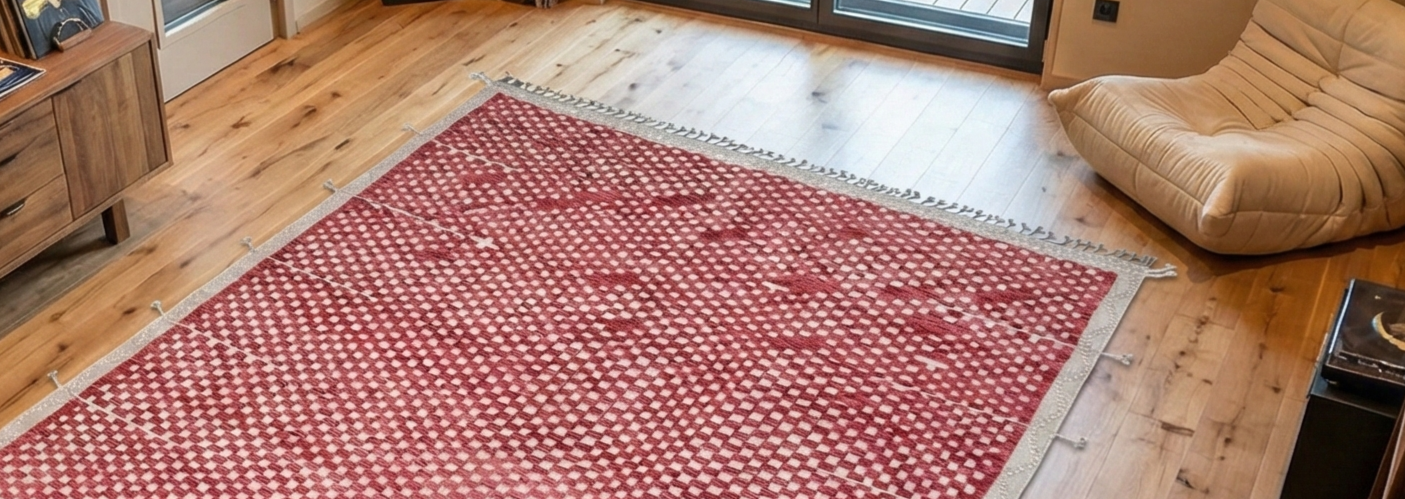
Chilli Pepper Red With Narrow Border, Hand Knotted, 100% Wool, All Over Grid Design, Marmoucha Inspired Moroccan Oriental Rug
This handcrafted Moroccan Marmoucha Design, is an authentic Pure Wool oriental rug. © 1800getarug.com


Moroccan rugs showcase the diversity and history of an entire country, from the ocean side cities to the snow-capped mountains, these rugs take us on a journey of creativeness and connect our spaces with ancient cultures.


Decoding Esfahan Rugs- The Flavor of ‘Enchanted City’

An Esfahan Rug is not just something that covers your floor, it is in fact a work of art.


My quest for these marvelous pieces began when I got the keys to my first apartment as buying the perfect rug for my floor was amongst the most important things that I needed to decorate my home. Now, the reason for my ardent inclination towards Esfahan Rugs can be traced back to my childhood, when I would visit my grandparents: their house always full of friends, family and relatives and the floor always adorned with beautiful Persian rugs. Thinking about an authentic oriental, Persian rug conjures memories of our extended family gathered together, having those cozy meals, sometimes on the floor with a soft, warm rug providing unmatched comfort. This is the kind of atmosphere that I wanted for my new apartment, a home that welcomes all and flooring that becomes the point of conversation.


Esfahan Rugs remember


It is amazing how I distinctly remember the bold circular central medallion set against a background of floral motifs and an intricately tinkling vine palmette of my grandfather’s rug. This quintessential central medallion is inspired from the famous mosque of Shah Lutf Allah in Isfahan, I am told. It was beyond doubt that I needed an Esfahan rug for my floor as these rugs are at the pinnacle of the Persian rug industry. Given my persistent encounters with some of the finest rugs since childhood, I had some basic insights into the world of these hand knotted beauties. However to buy the perfect Esfahan Rug I still needed a lot of research and groundwork. My father used to tell me that grandpa was so particular about the rug he was buying that he would scratch the back of the rug before making the purchase as handmade rugs have many secrets hidden at the back- right from the intricacy of the weaving to the knot count per square meter. As I dug deeper into the world of Esfahan rugs I got to know about the city that produces these wonderful rugs, rendering them their enchanted flavor.


Understanding the Enchanted City

The city of Isfahan lies in the middle of Iran with Zagros Mountains to the left and the desert to the right. An important industrial center today, Isfahan has been recognized as one of the finest cities of the Islamic world architecturally. The old bridge, great Imam square and the parks render the city its oriental essence, which is in turn reflected in all the offerings from Isfahan, including the rugs. If you own an Isfahan, you own a truly oriental rug with a mystic and ever mesmerizing aura. Keeping this in mind, I explored the city to find the best place to buy Esfahan Rugs and came across names such as Seirafian, Haghighi, Enteshar and Davari, having earned a good reputation as rug specialists. My quest involved lengthy conversations with these makers to understand the rug better, thereby gaining insight into what an ‘Isfahan’ is all about and here is what I found out.

Understanding the Enchanted City
Illustration of a bazaar in Isfahan © 1800getarug.com


Entwined in an ‘Esfahan’

Carpets from the city of Isfahan have their own distinction when it comes to the composition of designs, materials and patterns. The highest quality wool, often Kurk wool or silk, is used for making the pile. These rugs are characterized by high knot density, the knots being asymmetrical and most times made on a silk warp. A high knot count of around 120 KPSI up to 842 KPSI is achieved by using premium wool sheared from the chest and shoulders of lambs. Detailed accents with metallic and silk fibers have become hallmarks of carpets from Isfahan. When buying an Esfahan, you will come across pictorial scenes, medallions and curvilinear arabesques with spiraling vine-scrolls.

Wine Red, 250 KPSI, Hand Knotted, Super Mahi with Large Medallion, Wool and Silk, Oriental Rug
This handcrafted Super Mahi, 250 KPSI ,is an original Pure Wool oriental rug. © 1800getarug.com


Timeless elegance that will stay with you for generations

Handmade Esfahan rugs have some imperfections, but that is where all the charm lies. Any handmade thing is bound to be asymmetric, with some inadequacies if you like, but this is precisely what makes each handmade rug unique. Characterized by rich colors, Isfahan rugs are most commonly found in ivory backgrounds with rose, blue and indigo motifs. An Esfahan rug is not just an option to cover the floor, but an investment with great resale value. So, to avoid blowing a fortune on an “authentic” Esfahan rug that is essentially a replica, find a reputable dealer who does not sell rugs but understands them, loves them. One small tip that I can pass on from my personal experience — keep away from the person who tries to ‘sell’ you a rug.

Parchment Ivory, Vintage Persian Esfahan, 400 KPSI, Good Condition, Clean, Soft and Pliable, Hand Knotted, Wool and Silk on Silk Oriental Rug
This handcrafted Antique Persian Esfahan is an authentic Wool oriental rug. © 1800getarug.com

The legacy of Esfahan Rugs endures still, as master weavers continue to create timeless heirloom rugs. Setting out to find the right rug is a journey that should not be rushed as this is something that will adorn your floors for not years but generations. These masterpieces are not meant to be hidden away in vaults, but lavishly displayed in your heaven for everybody to admire and appreciate.


Handmade Rugs – The Ultimate Home Decor Style

The rug and carpet industry is such a diverse one that it can easily cater a number of different customers and their multiple needs. Among the most usable item, handmade rugs have been popular for a very long time. Handmade rugs come in different sizes and styles; additionally the texture and the length of these rugs can help you to choose an appropriate piece for a particular place.


Here is an introductory piece of writing for all those who are interested in knowing about the handmade rugs:

What makes handmade rugs unique?

Many people are interested in knowing what features set apart the handmade rugs from other rugs and carpets and make an accurate choice. To these people’s searches for a rug, a number of points may be worth considering. First if all the handmade rugs are made on special looms operated and processed manually, where every knot is knitted manually by a skilled labor, by hand.

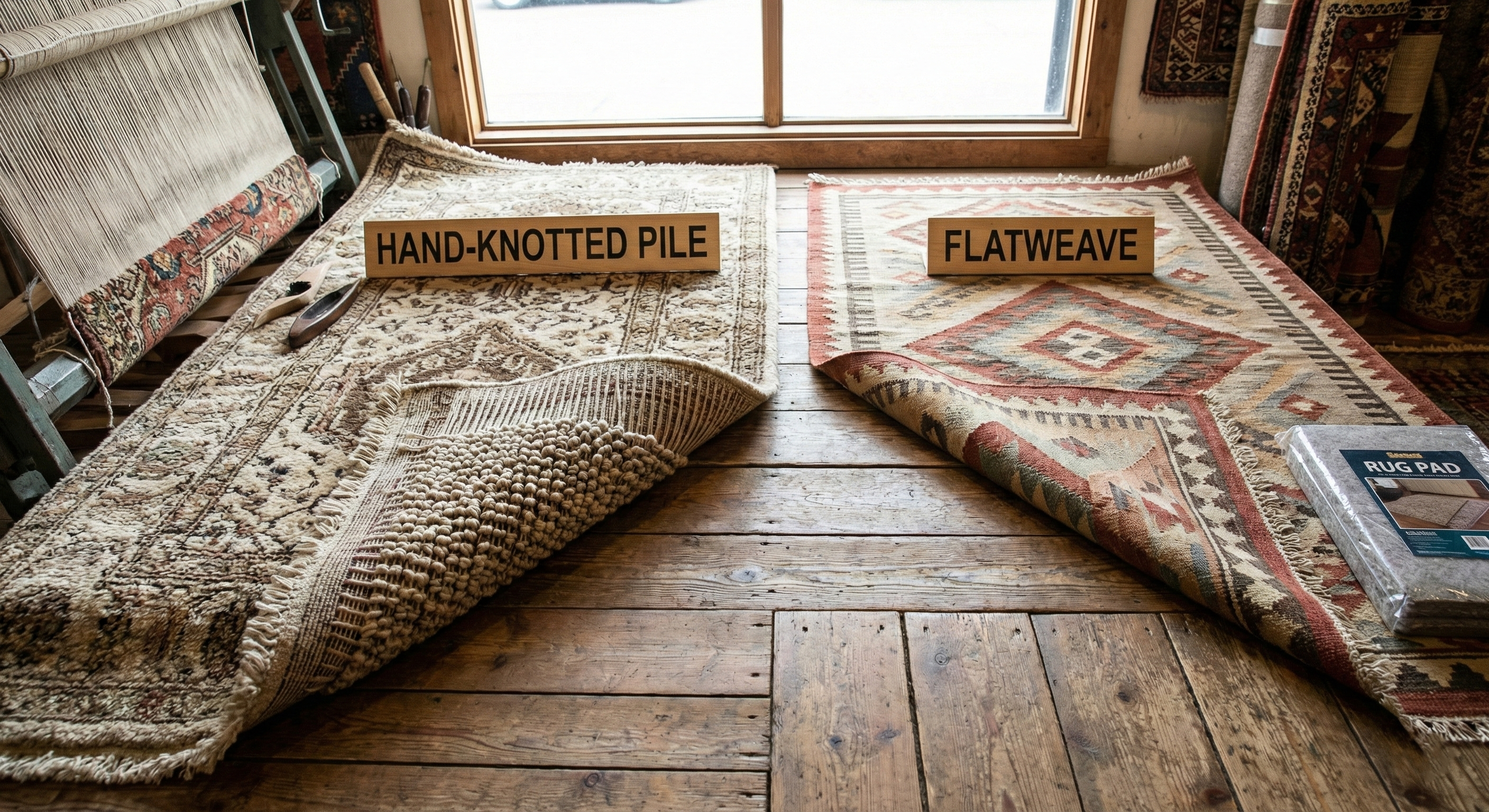
  • Knot pile style of handmade rugs:In this traditional style, the carpet weaver will make the knots in a way that each knot is tied to the other by hand in order to create a foundation. It is a longer and more tedious exercise when making a carpet as compared to other types of handmade rugs.
  • Flat weave style:As these handmade rugs lack the traditional pile of knots and the foundation of handmade knots on a loom, so does the height of these carpets, or in other words the thickness of these handmade carpets is very much more thin. Usually rug pads are largely used to make these rugs stay in place.
What makes handmade rugs unique?
Knot pile style of handmade rugs — Flat weave style. © 1800getarug.com


Judging the quality of handmade rugs:

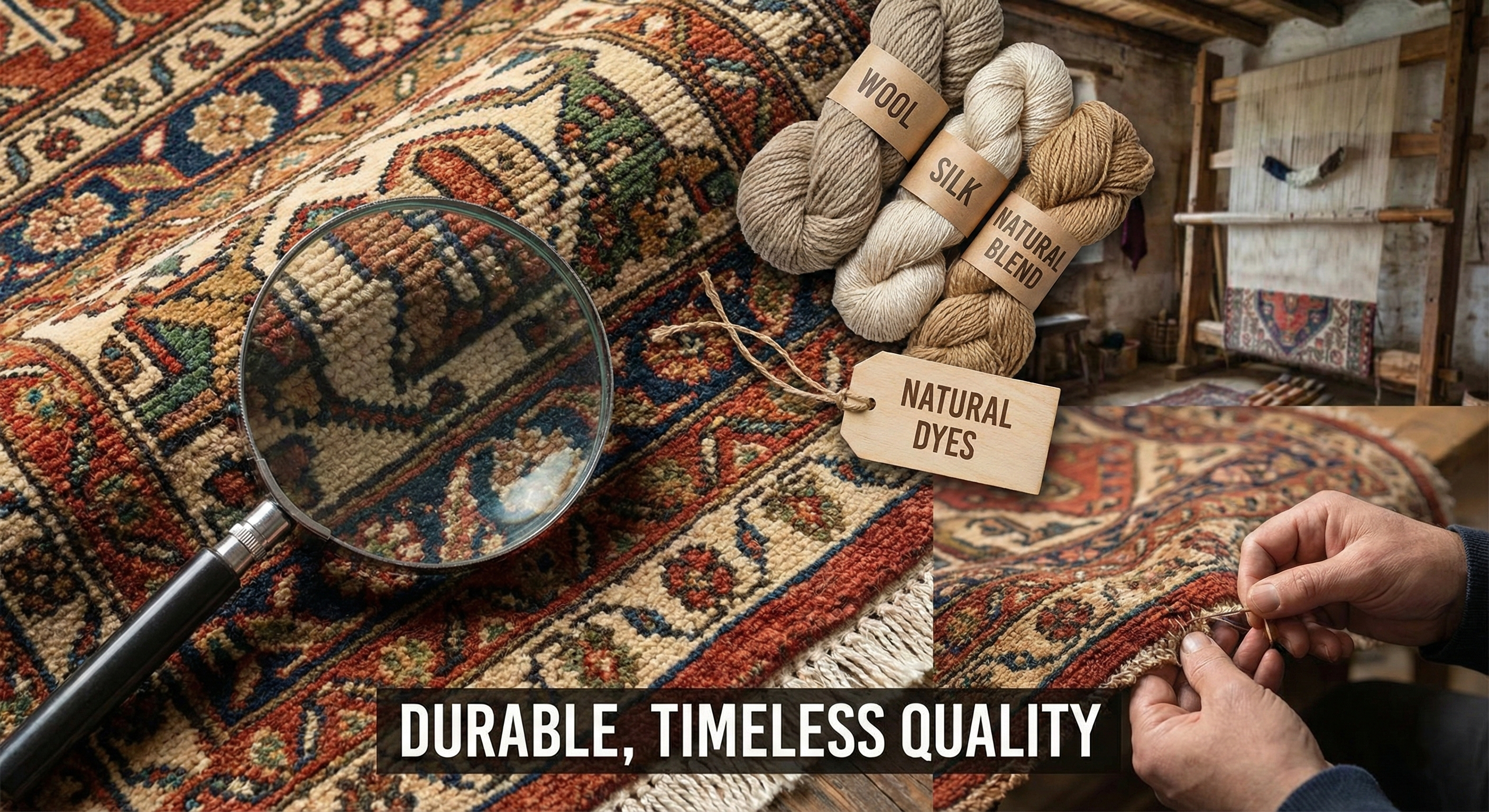
Most of the readers want to know, how we can determine the quality and standard of a handmade rug. For those readers, we would like to mention a few major factors which can be a source of judgment about the quality of the handmade rug:

  • Knot count
  • The type of dye used
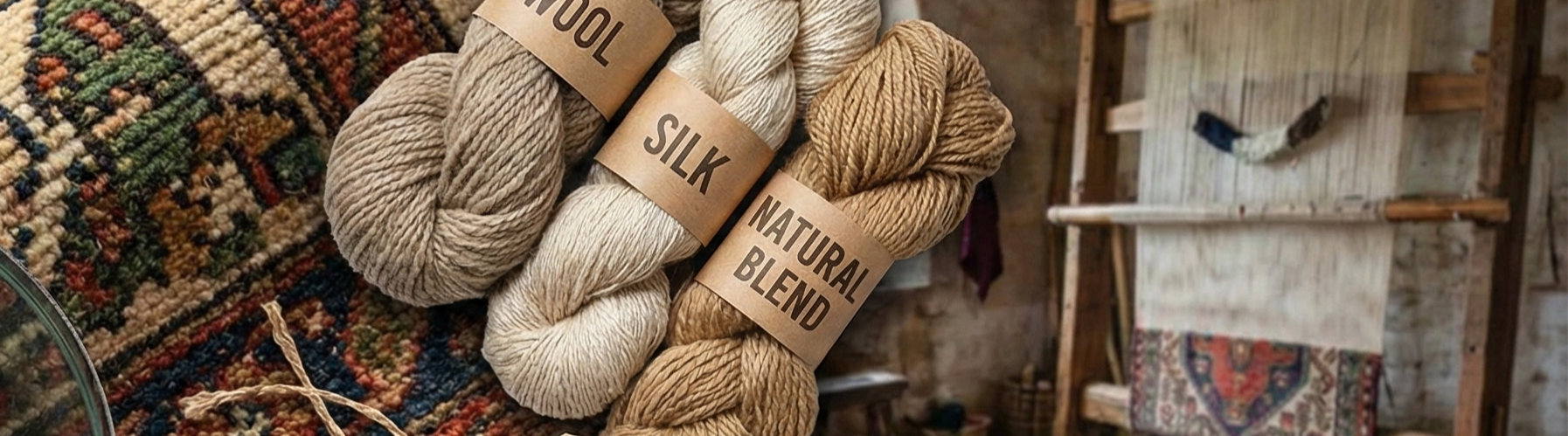
  • The type of yarn used
  • The durability of the rug

The handmade rug can be made up of a number of different materials, including the wool, silk or a mixture of different natural fibers. So the choice of your rug will largely depend upon the area and location where you will be using that particular rug.

Judging the quality of handmade rugs:
essential elements of handmade rug making. © 1800getarug.com


Some popular choices for handmade rugs:

There are a number of different choices for all those whose next purchasing is about the handmade rugs. So before you go to obtain a distinctive piece for your gorgeous room or living room, have a look at these major options available.


  • Turkish handmade rugs: One of the most distinctive features of a Turkish carpet is the fine arts embedded with the art of looming, so if your choice is a Turkish handmade carpet, you can easily get into finding a number of exclusive paintings and other designs on your rug.
Crimson Red, Antique Turkish Isparta, Good Condition, Clean and Soft, Even Wear, Mansion Size, 100% Wool, Hand Knotted, XL, Oversized, Oriental Rug
This handcrafted Antique Turkish Isparta is an authentic Pure Wool oriental rug. © 1800getarug.com


  • Caspian handmade rugs: One of the newly established industries for handmade rugs is known to be those of Caspian rugs. These handmade rugs provide the best combination of modern patterns with the traditional art of handmade rugs, so for all of those whose choice is a bit modern and of new styles, they can easily get the best handmade rugs out of this Caspian handmade rug industry. Again the color preferences and materials may vary according to the individual choice.
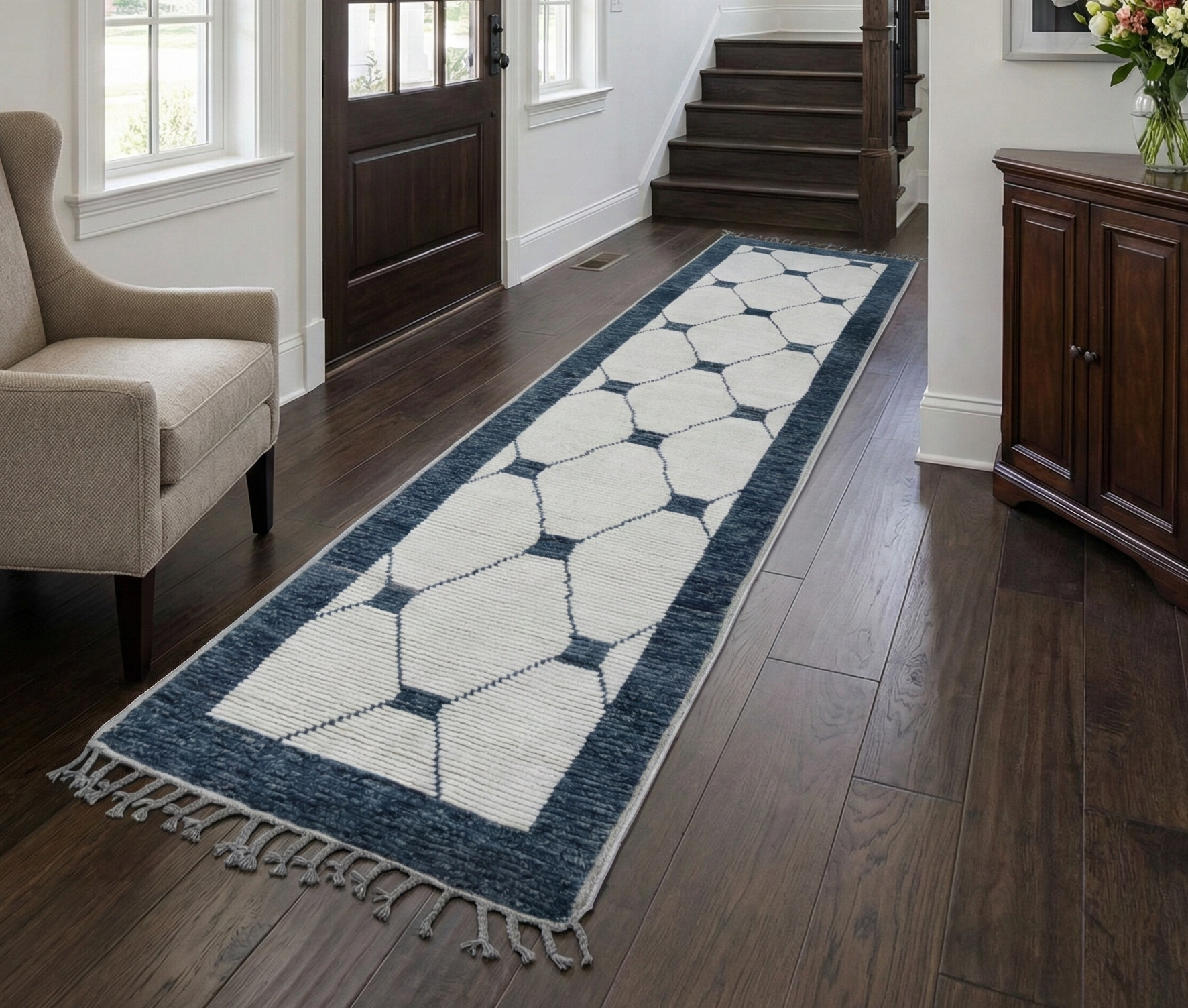
Cream White, Modern Oxidized Textured Wool, Hand Knotted, Short Runner, Oriental Rug
This handcrafted Modern is an authentic Pure Wool oriental rug. © 1800getarug.com


Handmade rugs can be the best choice if someone is really interested in making his home or office highly sophisticated and mesmerizing. The options are endless; all you need is to have a sound knowledge about the available options and the particular need which only you possess. Handmade rugs have the best possible ability to make your place look compelling and persuasive for all. Not only you will be able to get the appreciation of others, but your internal satisfaction will make you cherish these handmade rugs for years to come.


Cherish These Holidays With Rugs And Admiration.

Rugs are a sign of comfort and magnificence, because they symbolize family standards and tradition. Every hand knotted rug is surely a work of art; they soothe your aesthetic and visual senses as if you were looking at a marvelous item, something hypnotizing. They make you feel cozy and yet passionate about your home. Hand knotted rugs are the emblem of admiration as they take tremendous amount of time to elaborate, this are not plastic or electronic garbage but a truly man made livelihood. On a very long day you can sit and look around your favorite room of the house and stare at the balance that comes from the rug itself, just lay down on the floor making its statement of traditional art. And this is why these silk and wool knotted rugs are also a splendid way of living. Persian carpets are in fact are made of a major portion of a family heritage and trade evolution. They are shared among generations, rugs are trade for a living, rug dealers are a some of the highest earners in the textile industry. These rugs become especially obvious when it is holiday time because the greatest gift of all is a true Persian rug. Decorating your home with the appropriate type of rug will not only add the charisma in the interior decoration, but will also make your guests admire your sense of beauty and selection, when speaking about Funct-Shui


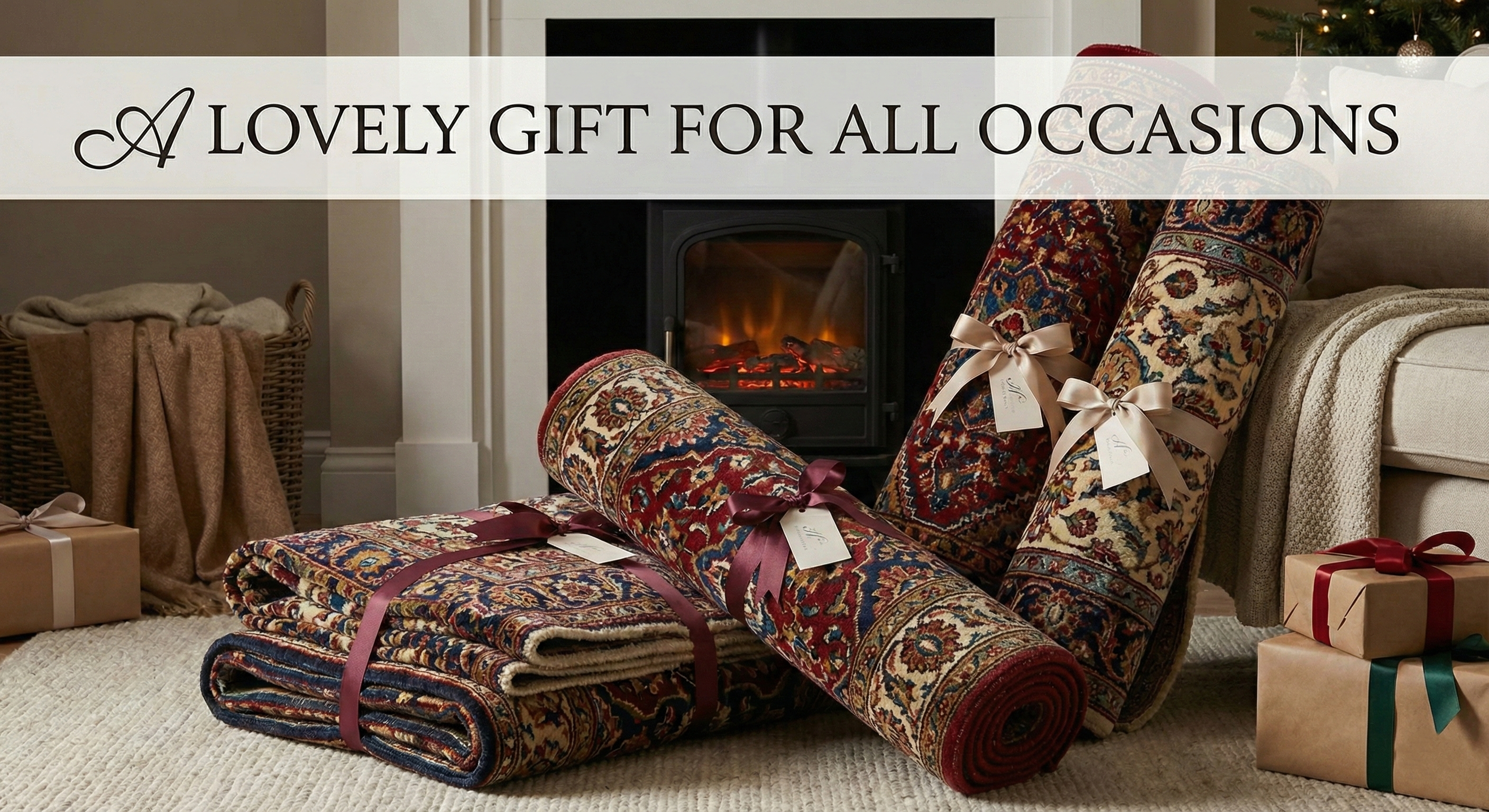
Hand knotted Rug – a lovely Gift for all occasions

Hand knotted rugs are sold widely across the United States but since the colors vary greatly and the sizes could be a big shipment item, choosing the perfect rug as a gift is quite a challenge, so your best bed would be to take a closer look and see who are the legitimate importers of rugs. There are very limited websites that sell rugs and one that is highly recommended because of its excellent reviews on Ebay and Ekomi is 1800getarug.com with it’s great selection of Persian rugs. None can deny that 1800getarug.com also have the lowest price guaranteed. Rugs are not for those who don’t have the cash, think about it this way, a rug is like gold it never loses it’s value and who know?, perhaps in the future your rug will be found frozen on your backyard and be added to a museum. If you want to give someone a gift that is not only luxurious, but its also a jaw dropper, you can gift that very special person a beautiful hand knotted Persian, or modern rug. Just keep in mind that you don’t want to intrude in their home and just change it, remember that there are boundaries when giving someone a gift. Moreover, if you are expecting guests at your place in this holiday season, open up your home in and pick a faultless rug which will make your visitors cherish the whole fun time of holidays in an unforgettable way.

a lovely Gift for all occasions
a lovely Gift for all occasions. © 1800getarug.com

When the holiday season comes and all the family is sitting on these rugs, they will sense a warm feeling, particularly helpful in the chilly and snowy regions of the world. So, despite their belief of being just another cheap decoration in the house, children or pets will love these rugs and the rugs won’t care because they are hand-made with a very durable and tough fabric.


Traditional Families – conventional values for spending holidays

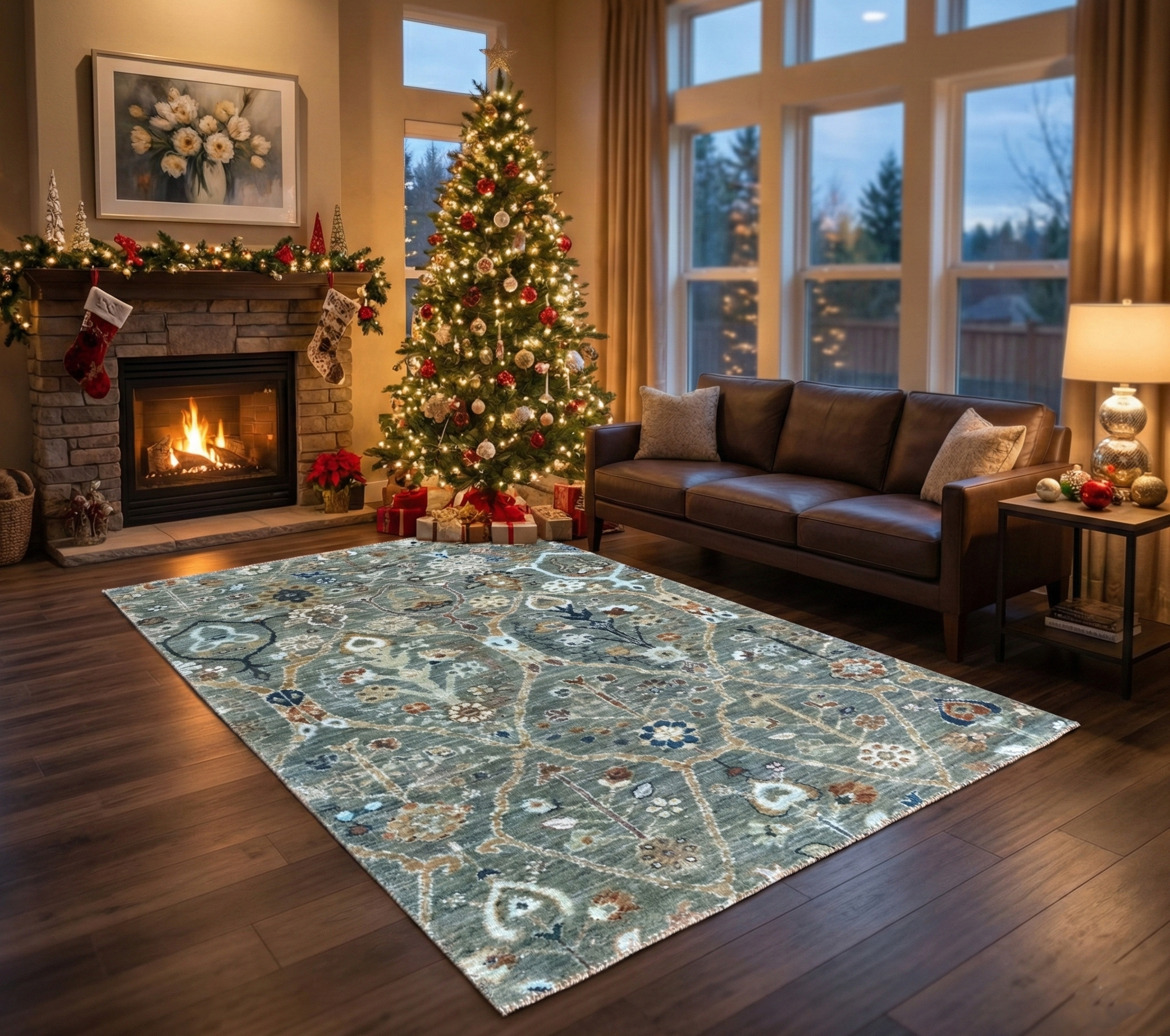
Traditional rugs include various motifs, patterns, and styles. The most common categories are Turkish rugs, Persian rugs and Afgani Rugs. So based on the type of holiday you are planning for, traditional rugs can add value to your home. The traditional hand knotted rugs add magnificence, sumptuousness and affluence to Victorian styled houses.

Crimson Red, Karajeh with Geometric Medallions Design, Pure Wool, Hand Knotted, Oriental Rug
This handcrafted Karjihooz with Geometric Medallions Design, is an original Pure Wool oriental rug. © 1800getarug.com


Transitional Rugs a good choice for your holiday gatherings

Transitional rugs can add a magnificent effect to your sitting rooms and in case your guest list contains a mix of friends which include, both long-established as well as present-day trendy followers, then
transitional rugs are the probably best choice for you. They hold the traditional characteristics of rug making with distinct colors and designs.

Hunter Green, Trellis Borderless Garden Design, Agra, Hand Knotted, Hand Spun New Zealand Wool, Oriental Rug
This handcrafted Agra Rug is an original New Zealand Wool oriental rug. © 1800getarug.com


Contemporary rugs make the modern families enjoy the holidays:

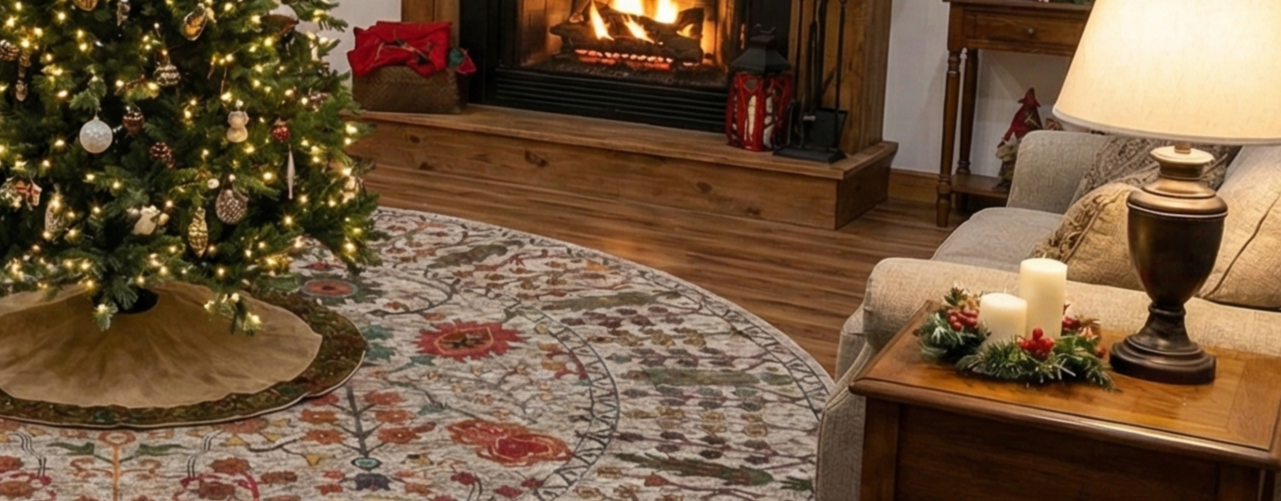
Old décor is not always the option when celebrating the holidays. Somewhere I might decide to have a white Christmas tree with purple ornaments, which would then call upon a modern Overdyed colored rug! Yes something like it. The belief that your contemporary styled homes are much better in comparison to transitional and traditional home, is quite a debate, as Modern houses are much easier to maintain. According to most designers a very important fact in the room décor are the rugs and carpets. In case you really want to arrange your living room together, it will then require paying close consideration to the choice of floor ornament. Rugs are accessories to maintain a colorful outlook of your rooms. They define the overall appearance of your room.

Basil Green with Ivory, Hand Knotted, Oxidized and Distressed Grass Design with Exposed Warps, 100% Wool, Oriental Rug
This Handcrafted Grass Design is an original 100% Wool oriental rug. © 1800getarug.com

Holidays are the best and the most memorable time, because you get precious moments with family. Whether on these holidays you are planning to invite your friend or you will be the host, rugs and carpets will add glamour and style to your interior, so put a long lasting impression which can be recalled even after years, purchase a new rug for the holidays.


How to Sell Your Old Rug?

Do you have a unique historical rug? And you have no clue what to do with it? Or you are looking to sell it for the best possible price? If yes, then you have come to the right place. We can help you determine what to do with your unique family rug, also we will buy it from you for the best possible price. Below are some important guidelines that will help you sell your rug.


Restoration of the Rug before you sell it

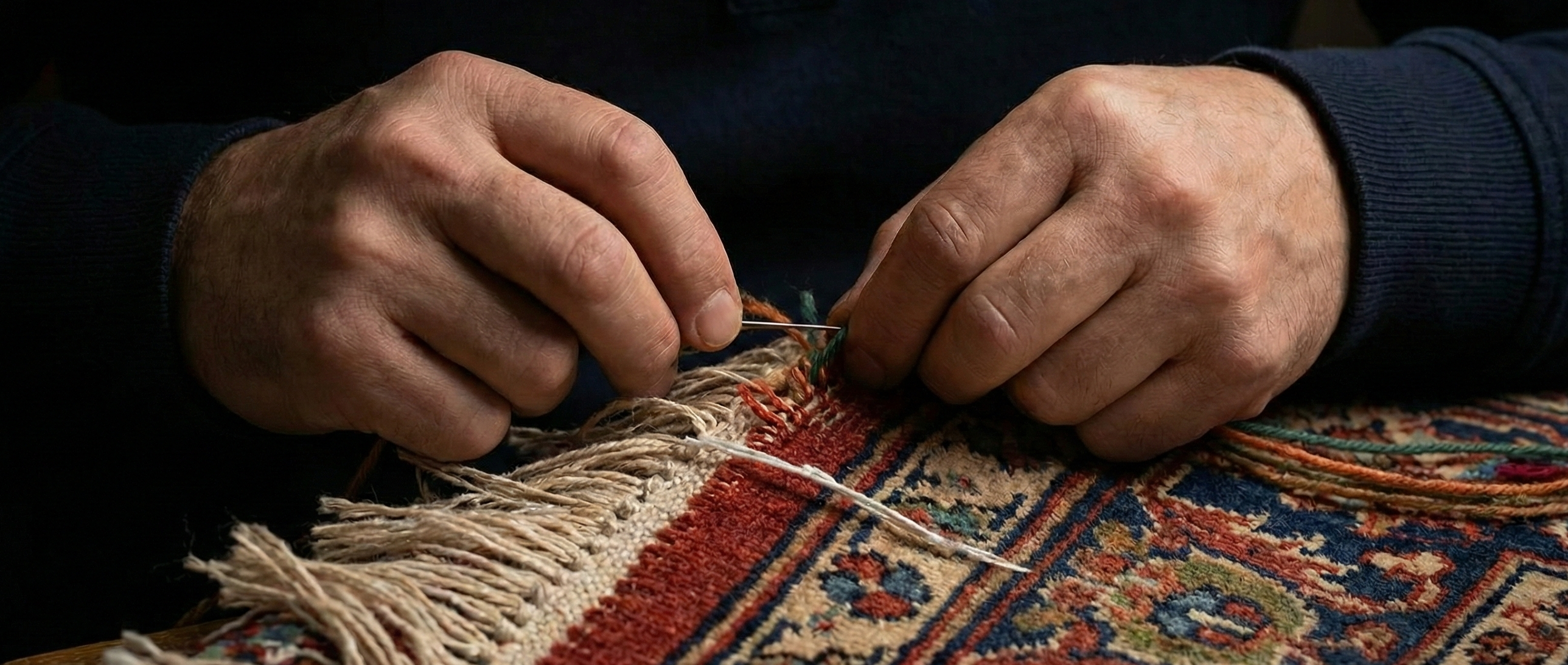
People are often persuaded to undertake very expensive repairs as they believe that this will increase the value of their oriental rug. Once they go into the market to sell their rugs, they discover that the rug wasn’t worth the repair as it is not even covering the price of the repairs they made. So, to be on the safe side, we will recommend that you first make an assessment of your rug resale value before get the repairs are done. If a repair shop informs you that your unique rug is worth a lot of money, and after the repair you will be able to sell your rug for thousands of dollars. You should ask them whether they would buy the rug for half of the price.

Cleaning & Repair - 1800 Get A Rug
Cleaning & Repair – 1800 Get A Rug


Get Your Rug Professionally cleaned

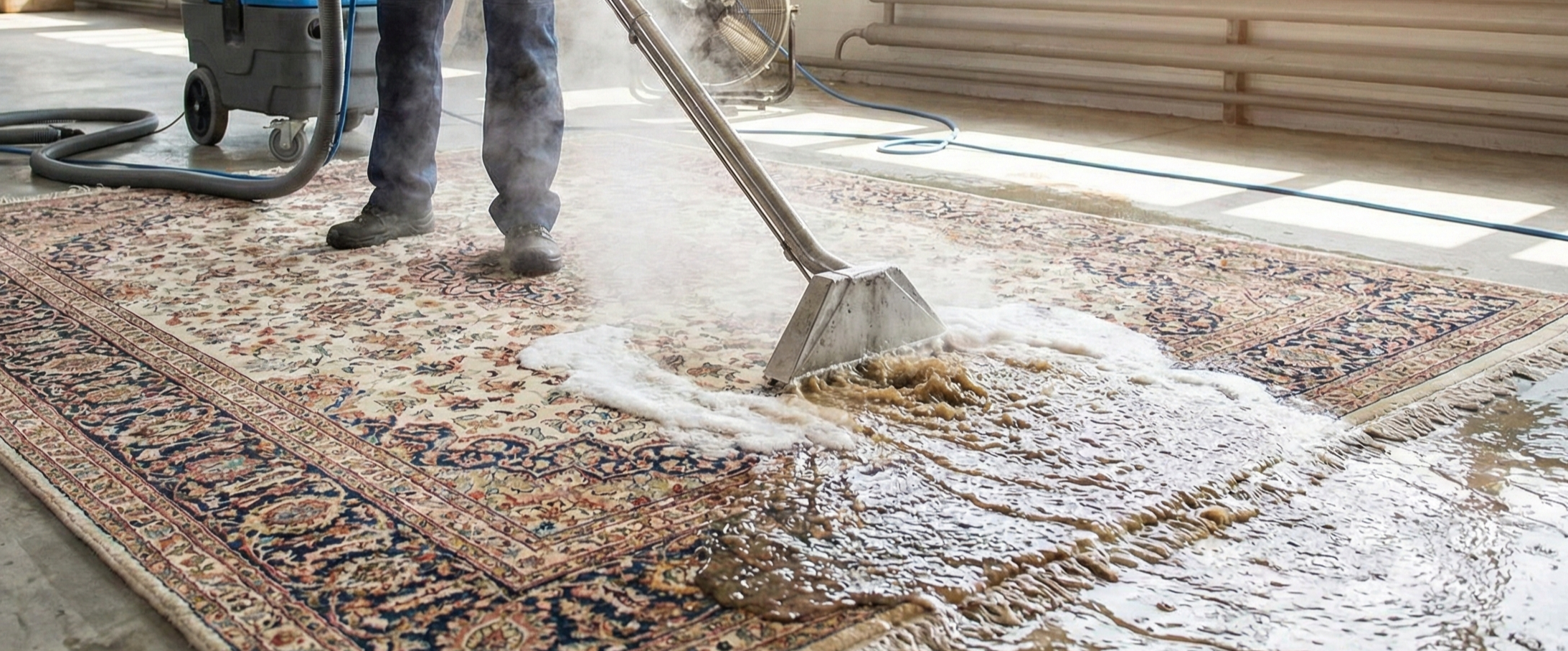
Getting your rug professionally cleaned is worthwhile. In order to get rid of the stain, you should consult a cleaner. If the cleaner promises you that the stain will come out, only then you should get it cleaned. Otherwise, you can get it vacuumed. Make sure you vacuum the back first and then the front, also always work in the direction of the pile.

Cleaning - 1800 Get A Rug
Cleaning – 1800 Get A Rug


Take Pictures of Your Rug

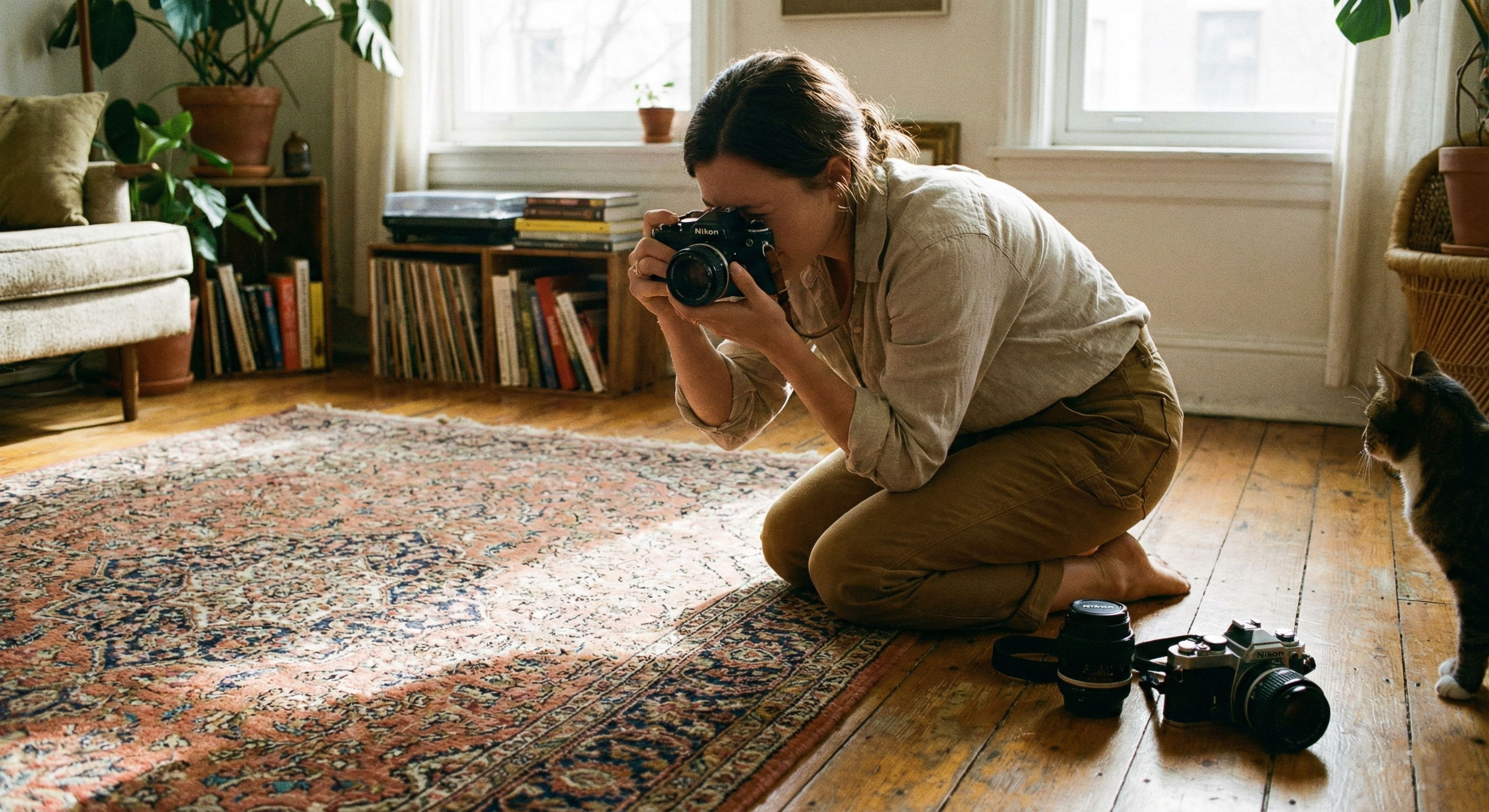
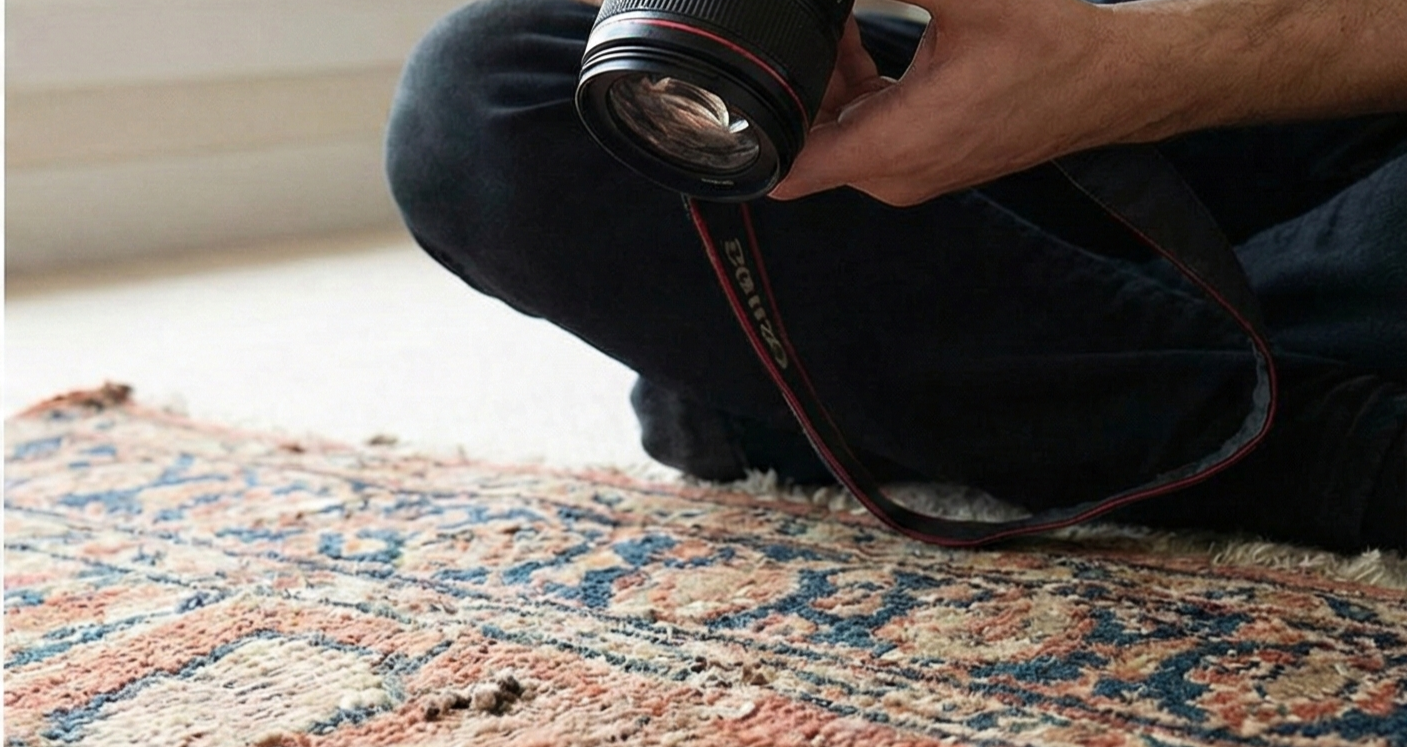
In order to sell your rug, you need to take some pictures of the carpet. Make sure the light is right and the camera you are using is also of good quality. As a good quality camera will show the exact condition of your rug. For us to make-out the quality of the rug, you should send us pictures of your rug. One picture should be of the front, the second of the back and third should be a zoomed in picture of the front. This will help us identify the pattern of the rug and also its condition.

Illustration of a photo capture on a carpet
Illustration of a photo capture on a carpet. © 1800getarug.com


Point Out the Damaged Areas and Other Rug Details

It is very important for the seller to point of the damaged areas. If you want our relationship to be a lasting one, you have to be frank with our company. We will make sure that you get the best price for your rug, but you should also be honest. To sell your rug to us you should tell us exactly where the fault lies.
You should give us the full details of the rug, including the height, width, and shape. We would like you to provide us information regarding the manufactures, if possible.

Illustration of a photo capture of the carpet details


List the Age of the Rug

The price of an antique thing increases with its age. The older the carpet is, the more expensive it gets. Similarly, you need to tell us the exact age of your rug, as the price factor is affected by this characteristic. If you have a very old family rug, let’s say a 100 years old and it is in a very good shape, chances are you will get a good price for it. Telling us the exact age will help us understand the uniqueness of the rug.

Iced Coffee Brown, Antique Persian Kirman, Even Low Pile, Clean, 100% Wool, Hand Knotted, Oriental Rug
This handcrafted Antique Persian Kerman is an authentic Pure Wool oriental rug. © 1800getarug.com


Decide a Price before Approaching Us

Many a times, clients call us and say that they want to sell their family rug, and when we ask for how much. They say they don’t know. It is important that you decide the price before you call us. You should check the market, ask different people and then decide a price. In order to sell your rug at a good price and to avoid being cheated out of your inheritance, it is important that you know the value of it. This way you will not even demand more for it, when it’s not worth it.
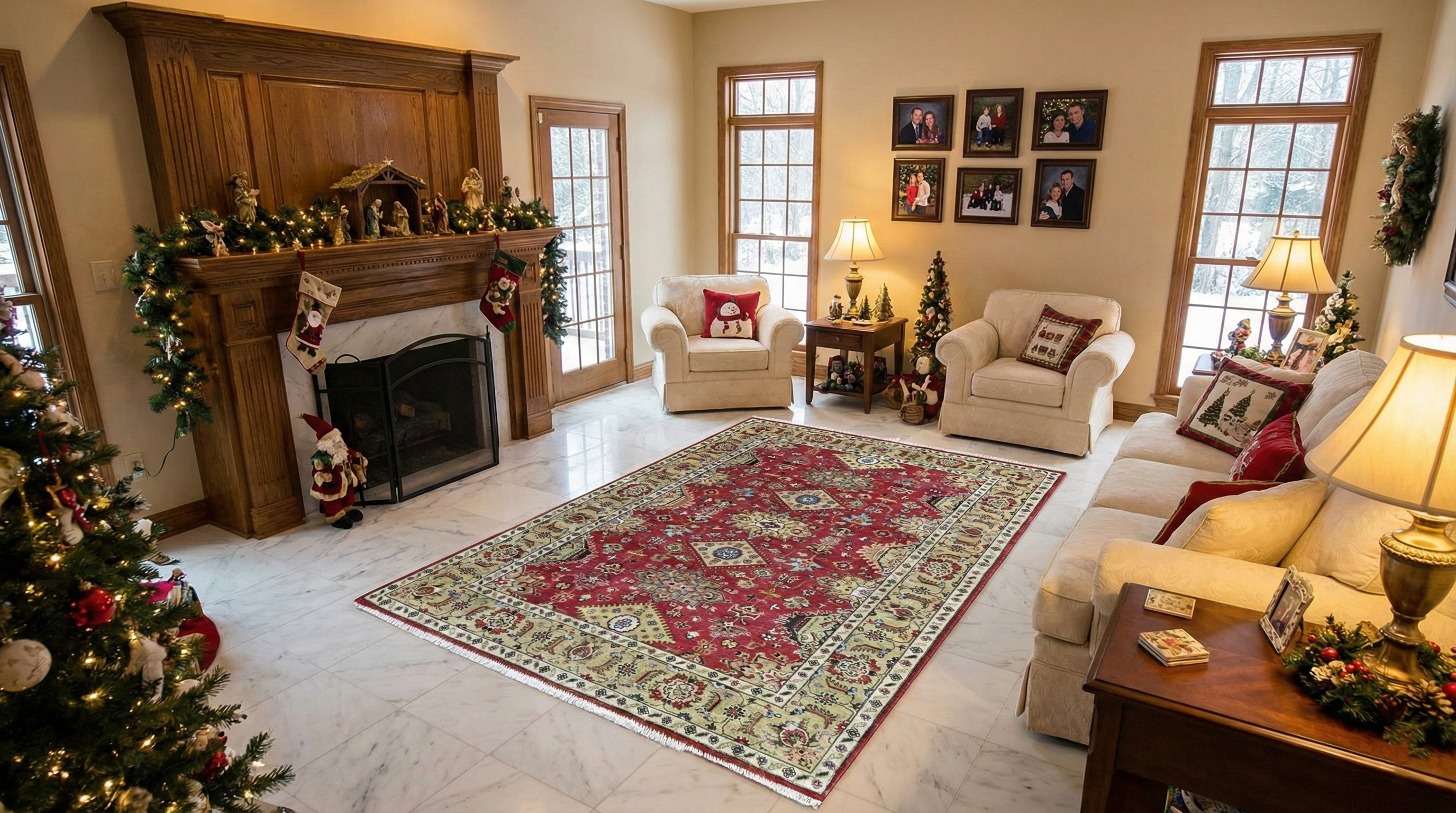
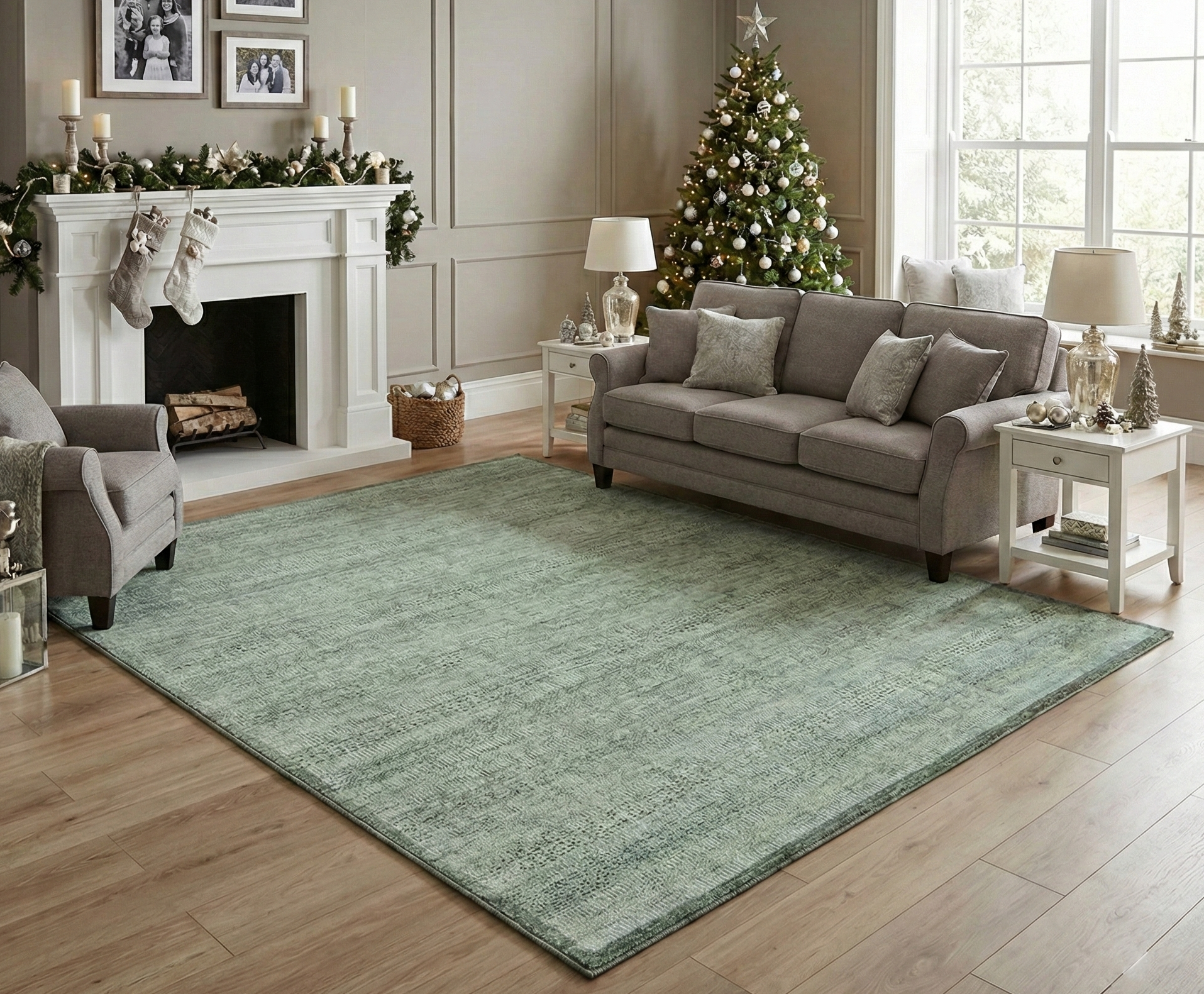
Fill Us in With Your Personal information.

Iced Coffee Brown, Antique Persian Kirman, Even Low Pile, Clean, 100% Wool, Hand Knotted, Oriental Rug
This handcrafted Antique Persian Kerman is an authentic Pure Wool oriental rug. © 1800getarug.com


We would like you to give us our information including

• Full Name
• City
• State or Province
• Telephone Number
• Mobile Number
• Email Address

Email 1800getarug.com
Email © 1800getarug.com


Selling your rug can be really easy if you follow the above foot steps. We will help you understand what is the right way to do a particular repair and how to go about the selling business.
You can check out our website, www.1800getarug.com, in order to sell your rug. And we assure you that we will give you the best possible price.


Is My Silk Rug Real Silk?

Silk as we know is a loved fabric, considered to be regal and very high in demand. It sure is a very expensive fabric but the softness and cool texture is like nothing it can be compared to. Silk is a weaving fabric used for many things such as dresses, scarfs, ribbons and carpets etc. the best thing about Silk is the texture of it as is just fabulous. Silk is the fabric that is used since the old ages by people. It has been known to date back to B.C. and it was used by the human civilization then.


Natural Silk Production:

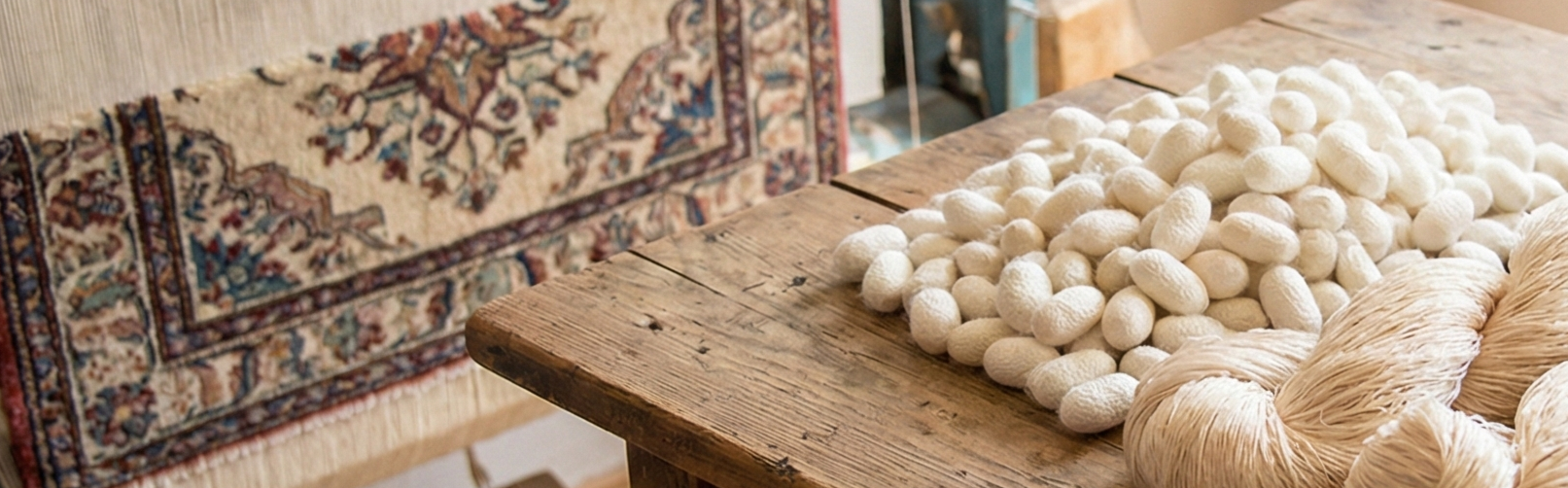
Silk is considered to be a quite tough fiber and has many different types based on the worms that produce them and also how they are intertwined. Silk is basically produced from the worm cocoon. The natural Silk fiber is really expensive because of the great deal of handling and the amount of care and time that it requires. Natural Silk is no doubt the most loved of the textile fabrics based upon the fact that other fibers like wool and hair can be obtain from the mammals that produce them over and over again. But when it comes to Silk, the worm that produces it is killed while getting the fiber. This means that regeneration of silk from same worm is impossible. This all contributes to having a very strong, but yet very soft feel making it the queen of fabrics. There are many countries that are producing wonderful silk fabric and one of them has always been. Also India, Japan, Italy and Iran are taking over the silk textile industry with great pace.
Techniques Involved In Silk Production:

The Silk production is the very rare form of industry. It has to be specialized and the industries around the world follow the mastered techniques of getting the silk from the silk worm.

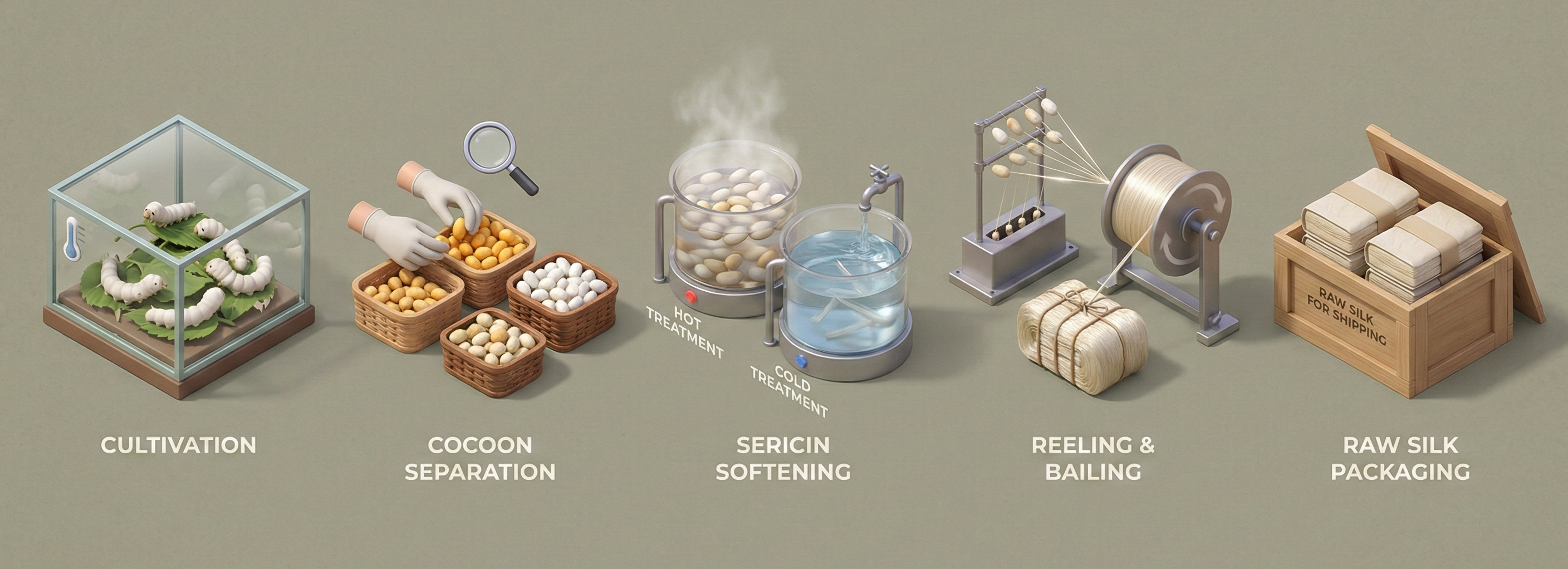
• First of all, the species of worm called as Bombyx Mori, are cultivated by the industrialists and then, the next step comes to the production of the Cocoon.
• Once it is done, every Cocoon is hand separated according to their color, size and shape. This process is very important since it really determines the quality of the silk fabric that is produced.
• The next step is rather technical one that is named as “Softening of the Sericin”. Sericin is substance that sticks the silk fibers intact that makes up the shape of the cocoon, it is gummy in nature. Every Cocoon is projected to the hot treatments in order to melt this gummy substance and then cold treatment to wash it off the fiber.
• Once the fiber is cleaned up, the next step comes of reeling and bailing of the Silk thread. The Silk thread is very thin and delicate, so as to get the desired diameter of one Silk thread for commercial use, it is necessary that 8-10 strands of the Silk strands be joined together. Once done, the time for bailing comes up. This means that the silk that is reeled up on the skeins and then packed in the forms of books and it is considered ready for the shipping. The material that is now shipped is called as Silk in the raw form.

Natural Silk Production
Illustration of silk manufacturing processes. © 1800getarug.com


What is Silken?

Along with the real silk in market, silken emerged in 1855; it was for those who couldn’t afford the natural silk. The need of artificial silk rose, due to the high demand for the pure fiber and also low supply of real silk. This all cumulated to raise the idea in the minds of scientists that they should try to produce the this fabric synthetically, so that everyone can benefit from it. For the first time, Georges Audemars who was a Swiss chemist, prepared the artificial Silk from the mulberry bark pulp and another ingredient that gave it a sticky effect. At that time the production of Silk with these two products was very slow but it was the first step towards the synthesis of silken.
Another attempt of formulating silken, was done by Hilaire de Charbonnet. He was a French chemist and the base he used for the silken production was cellulose. This product is used up until today. With the newest technology at hand now, the artificial silk industry is progressing by leaps and bounds every day and night. In fact in this niche, America is coming as one of the top of other countries in being very successful.

illustration of natural silk.
illustration of natural silk. © 1800getarug.com


Differentiating Between The Natural And Faux Silk:

Artificial silk that is produced in the industries has really taken a form in such a way that it is quite difficult to differentiate it from the natural silk. In the strength, beauty and color, artificial silk has made its place just near the quality of natural silk. But of course one thing that is natural, can never be replaced by anything that is artificial. It is the case between the natural and Faux silk. Artificial silk can get better and better but it will never be able to beat the standards of the natural Silk.

As for now it is really very hard to differentiate between natural and artificial silk, but the truth is that to an eye of an expert even a 1% of flaw in artificial silk cannot hide ever. One thing that can cent percent differentiate between the natural and artificial silk cloth, is the light. The natural silk looks wonderful with the daylight, it gives the luster that feels soothing to the eyes, but if you have the artificial silk in the same light, it will give the pinching luster and will not adjust to it very elegantly as natural silk does.

Differentiating Between The Natural And Faux Silk
Illustration of tests of natural and synthetic silk fabrics. © 1800getarug.com


Why Choose Natural Silk Over The Artificial Silk?

When it is a contest between the natural silk and the artificial silk, it is very sure that the natural silk will win for sure. Even though the natural silk is very expensive, the beauty that it has cannot be contained in any artificial silk. The faux silks that are altered with the technology, may give great softness due to high use of softeners but it can never be compared to the natural silk as it has the feel to it that is undeniably out of this world. There is no doubt about the natural silk that it is considered to be a Queen of textile, it sure has no other match to it.

Why Choose Natural Silk Over The Artificial Silk?
Illustration of silk fabric for making rugs. © 1800getarug.com


Silk Woven Rugs- A Sneak Peak In History:

The Silk fabric is used to weave the carpets and rugs. Since the 16th century, these Silk rugs became part of the Persian crown and were considered to be the luxury carpets. These carpets were commercialized to the European market in the 18th century and since then, they have become very highly popular. They become the great export content of Persia over time and the most popular hub of silk carpet declared by the English merchant Cartwright was Kashan. Since then Kashan has raised as the most important area of the Persia where the silk carpets are woven and they are considered to be of great value than the other ones.

In Persia whenever the British merchants step their foot, the first thing that caught their eye was the Persian silk. It was of fine quality and especially the silk carpets woven were of premium quality. This made many of the investors and traders to come into Persia and trade raw silk and silk rugs in exchange of clocks, watches and other technology. As for now, modern Iran still has kept its roots and the silk rugs and carpets are the biggest non-oil trade pivot of it. This is contributing majorly in the economy of Iran continuously.

Rouge Pink and Blue, Pure Silk with Khotan Medallion Design, Distinct Abrash, Shaved Low and Distressed, Hand Knotted, Oriental Rug
This handcrafted Khotan Design Pure Silk is an original oriental rug. © 1800getarug.com


Identify The Natural Silk Rug And Buy Only That:

To identify that the silk rug you are buying is natural Silk there are two tests:

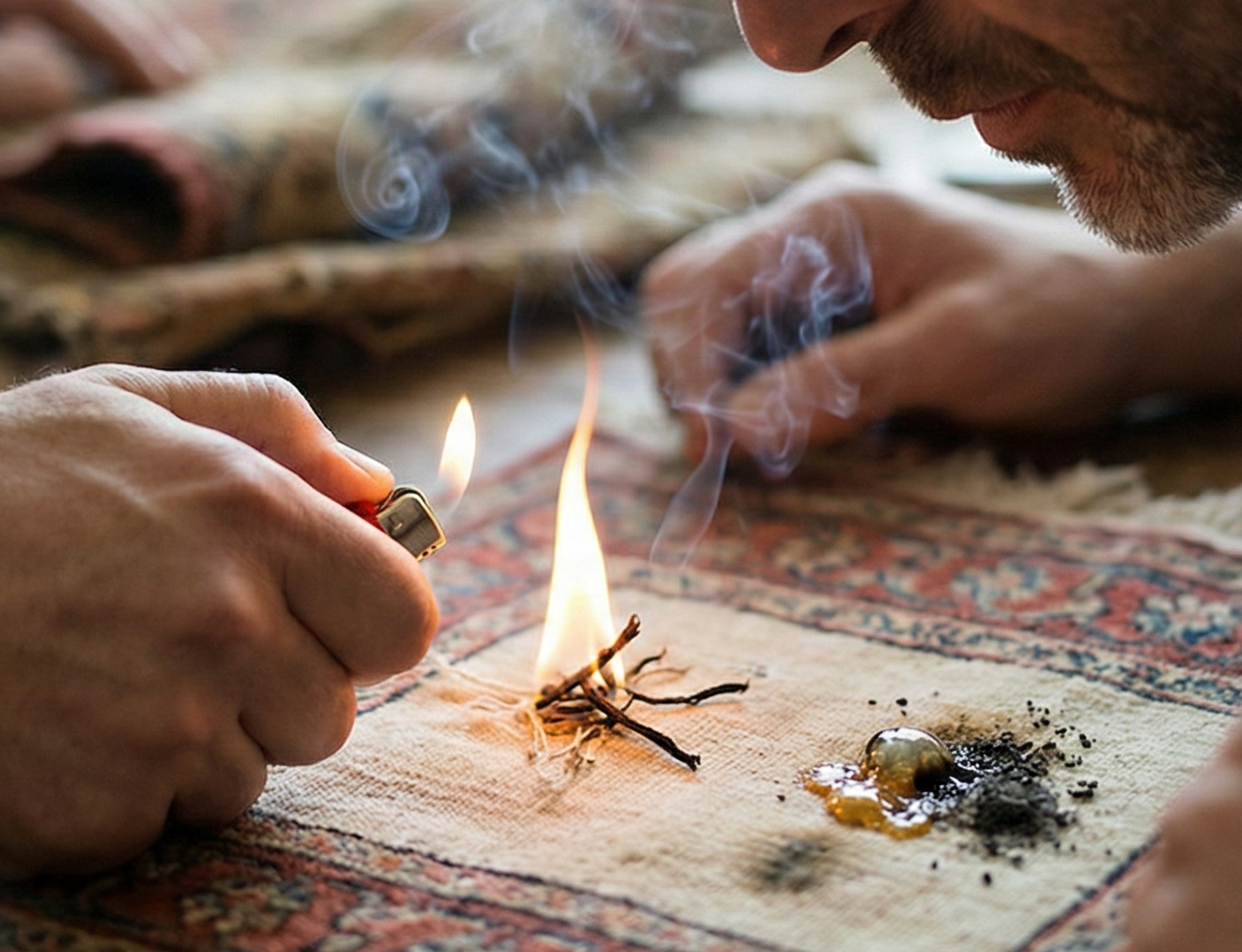
1. Burning test is the one that will need you to have very sharp smelling sense. Once you are on the shop of rugs, what you need to do is that; take a strand of the rug and burn it. Now there are two possibilities, one that it will give you a smell like burning paper and also the ash will be like crumbled up dusty stuff, this means that the silk is artificial one. Paper burning smell is due to the presence of cellulose used in manufacturing of faux silk.

The other possibility is the determination of true silk, when you burn the strand, the resultant will be the ball of ash and the smell will be like burning of hair. This means that you have true silk in your hands.

 Burning test is the one that will need you to have very sharp smelling sense
simulation of natural silk quality test. © 1800getarug.com


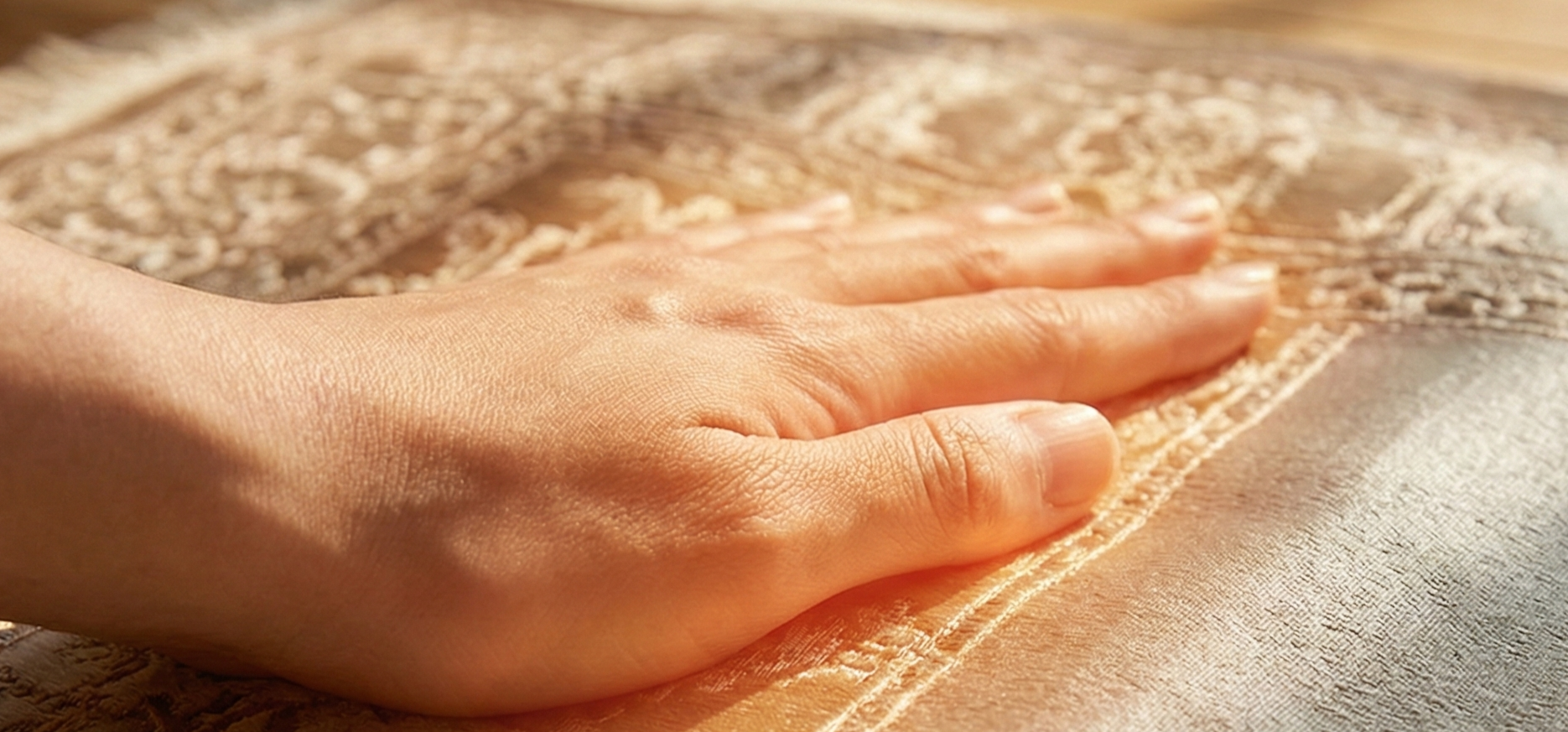
2. The second test is rubbing of the silk rug. All you have to do is rub the rug with your palm, if it feels warmer rapidly then it is true silk otherwise it would be the faux silk.

The second test is rubbing of the silk rug
Illustration of a quality test of natural silk. © 1800getarug.com


3. With all this valuable information about silk and silk rugs identification, it is impossible that you will bring back home the faux silk rug due to inexperience. All the tests will surely help you determine the right rug right away. To know more about silk rugs visit www.1800getarug.com and select silk rug of your choice for your rooms.