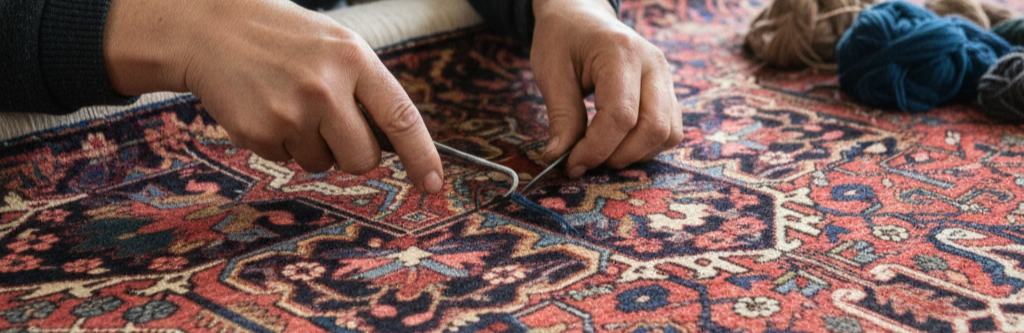
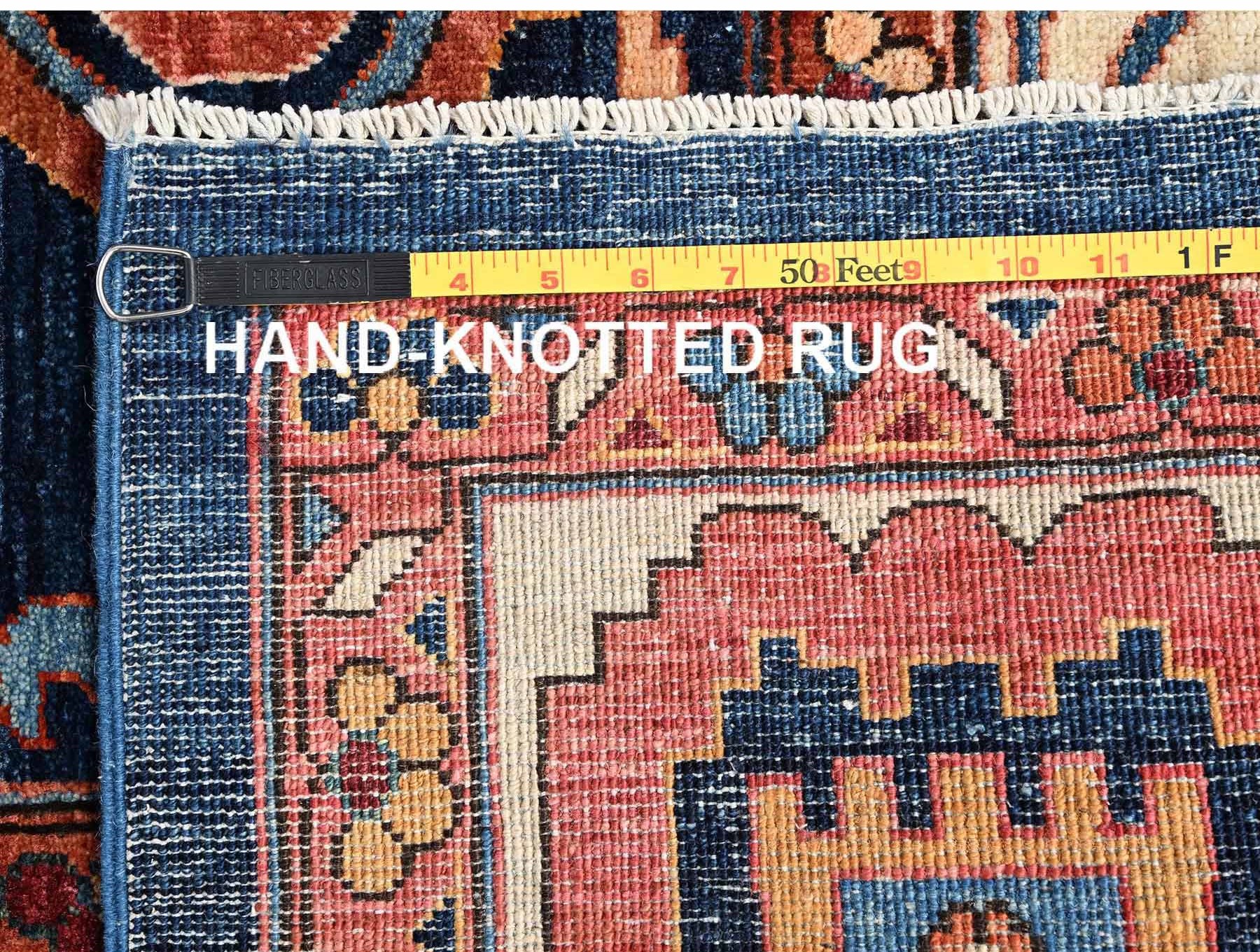
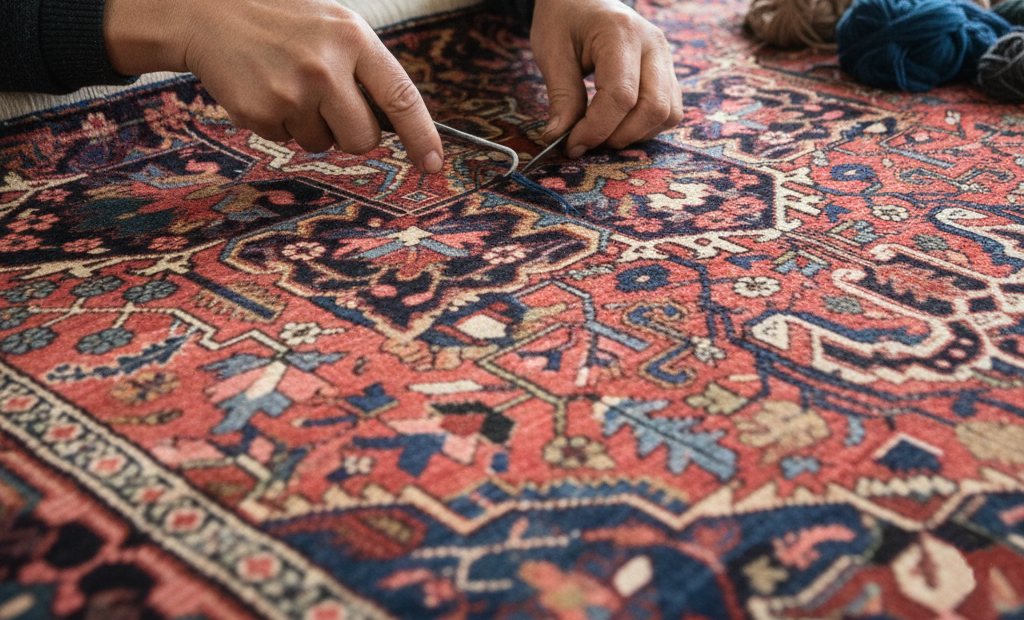
Before we think about technology and machinery, coloring and design, hand skill and passed-on knowledge, there is one single, elemental component to rug weaving: the knot. Rug knot is such a simple concept that one might overlook its central position in rug structure, look and durability.
There are two ways a rug knot is defined: density and type. When choosing a nomad or a village hand-woven rug, one might not consider the density of the knot a major factor. These traditional articles are made either within a season – and therefore fast – or with simple looms, and usually contain about 25-100 knots per square inch. Other factors are at play here: originality of the individual artist’s design (from memory), natural local dyes, manual labor, and plenty of love.
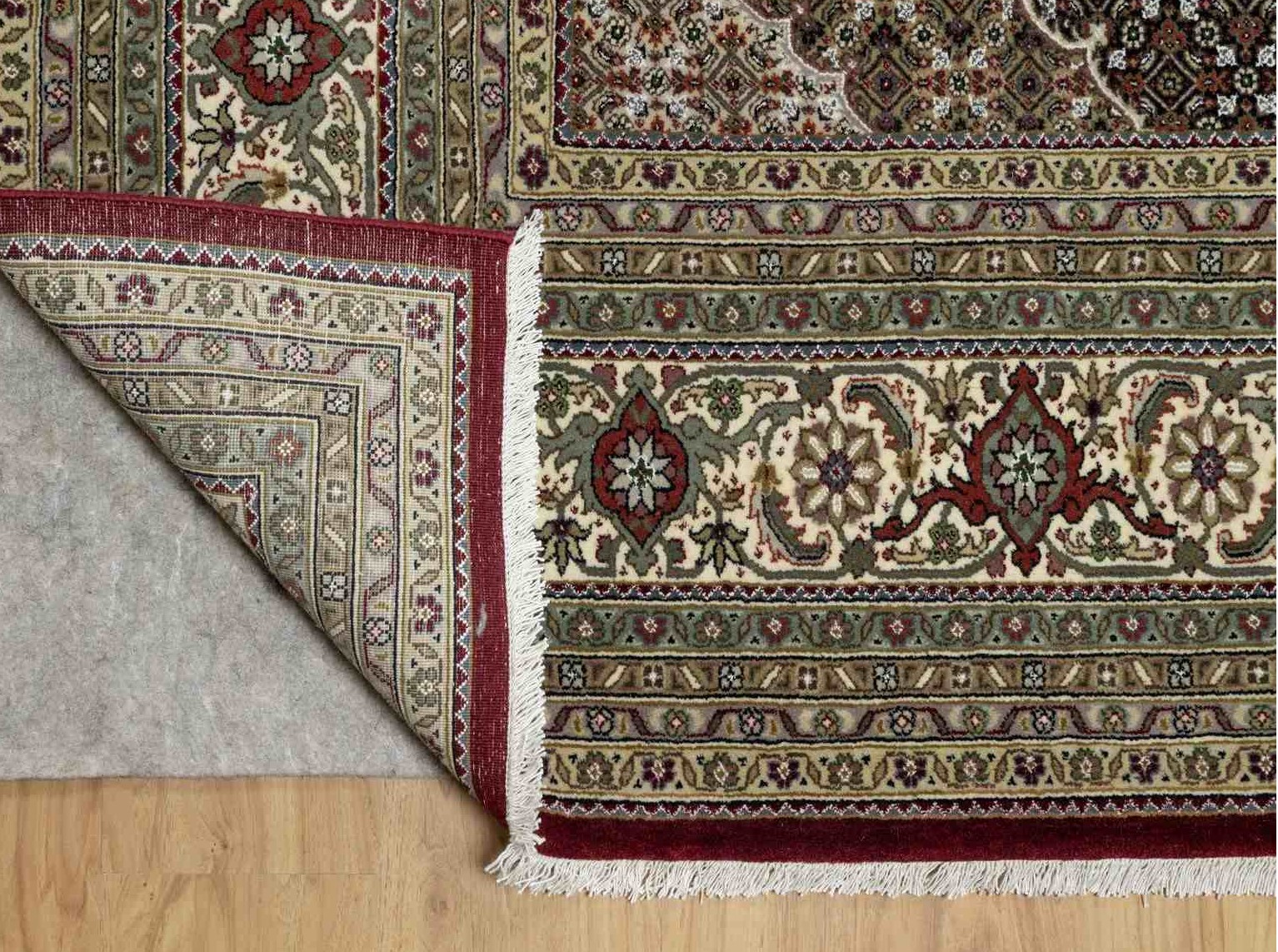
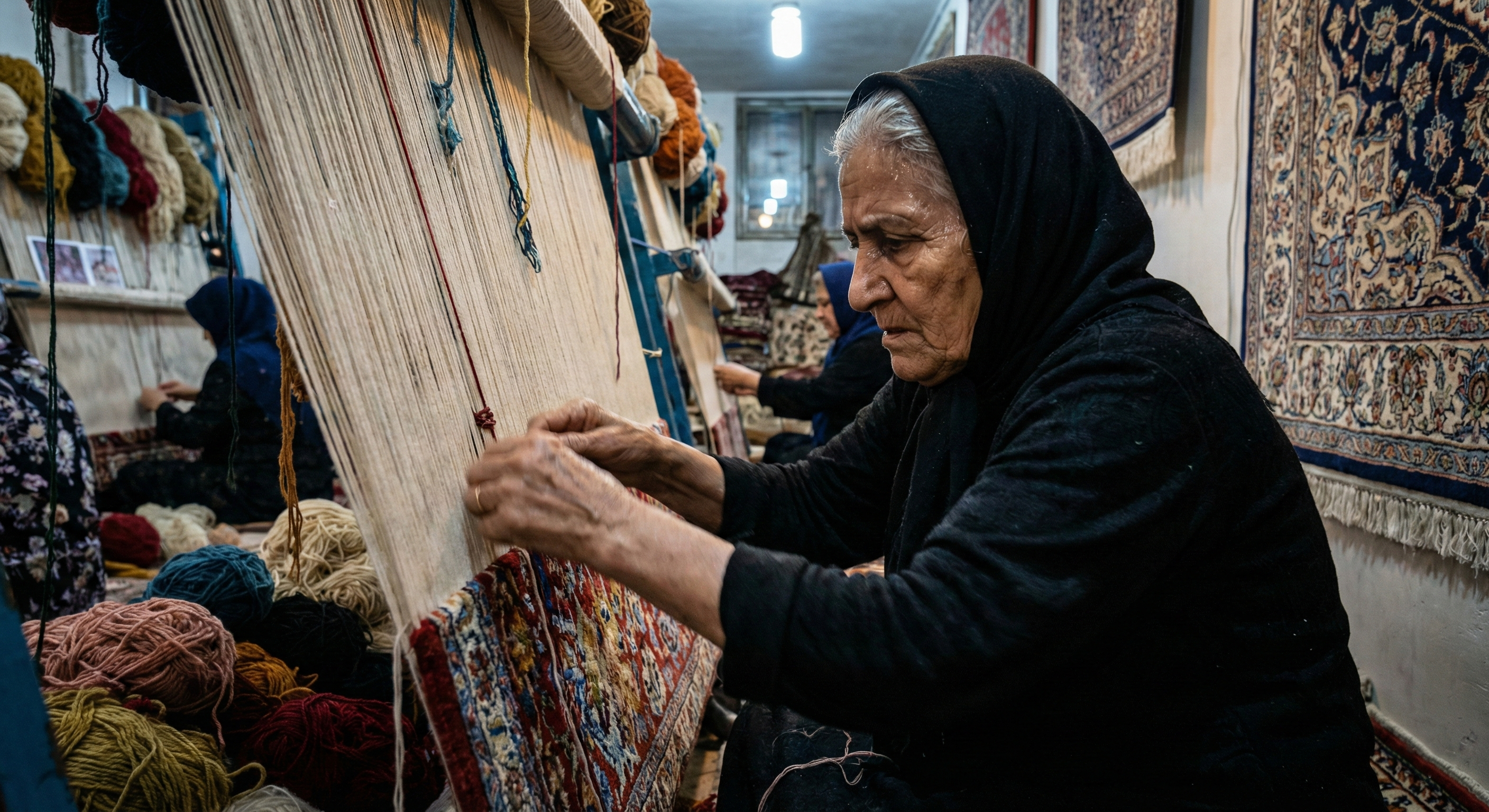
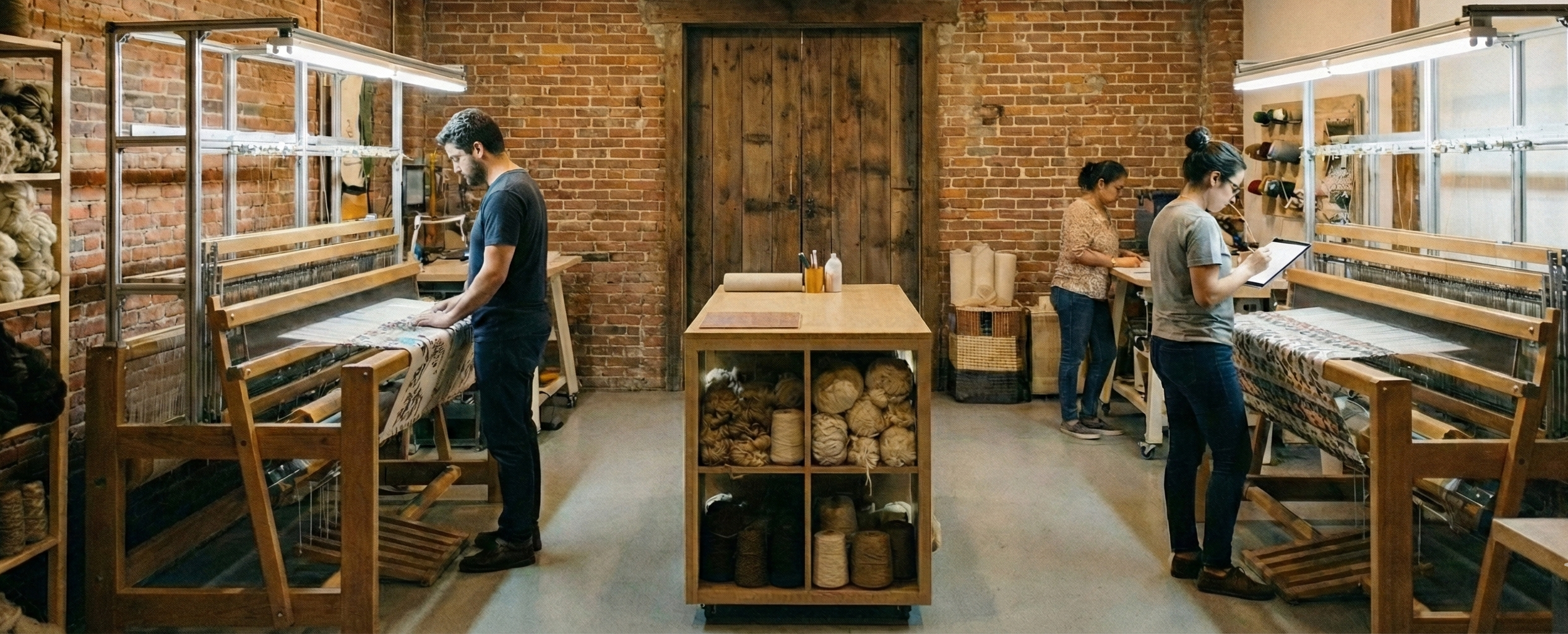
The workshop hand-made rugs, however, are woven on a much more sophisticated machinery. Precision is therefore a major factor- on par with design and authenticity. The knot density ranges between 100-1000 knots per square inch. If you consider that each knot takes about 10 seconds to complete, it is astounding how long finishing a large enough rug may take, keeping in mind a rather high knot density.
The other way of thinking of a rug knot is its method, with two predominant ones being symmetrical and asymmetrical. Popular in most of Iran, India, Egypt, China, and parts of Turkey, the asymmetrical, or Persian Senneh, have their knot loops tied around two warps and come up on the same sides to make the rug tufts. The Turkish Ghiordes knot (the symmetrical one) goes around two warp threads on opposite sides and comes up in the middle. The most commonly used knots are slight variations on the Persian one. The Tibetan knot is perhaps the most interesting one, wrapping around warps in a complex fashion and reminiscent of Indic script.
The study of rug knots is not necessarily complex, but it certainly is full of grace and style, which is necessary for understanding the structure, design, and feel of these wonderful hand-woven rugs that we cherish throughout our lives.
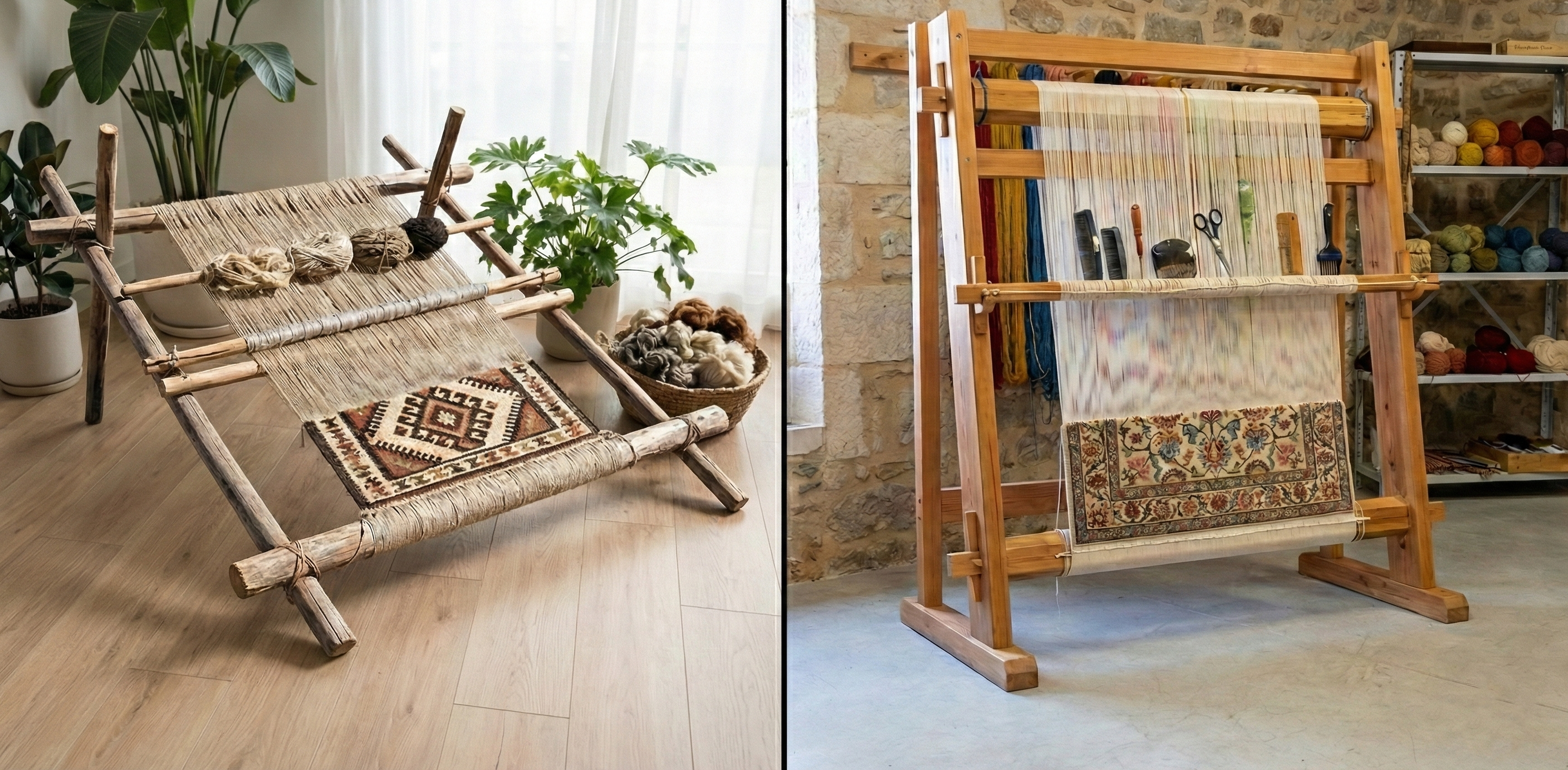
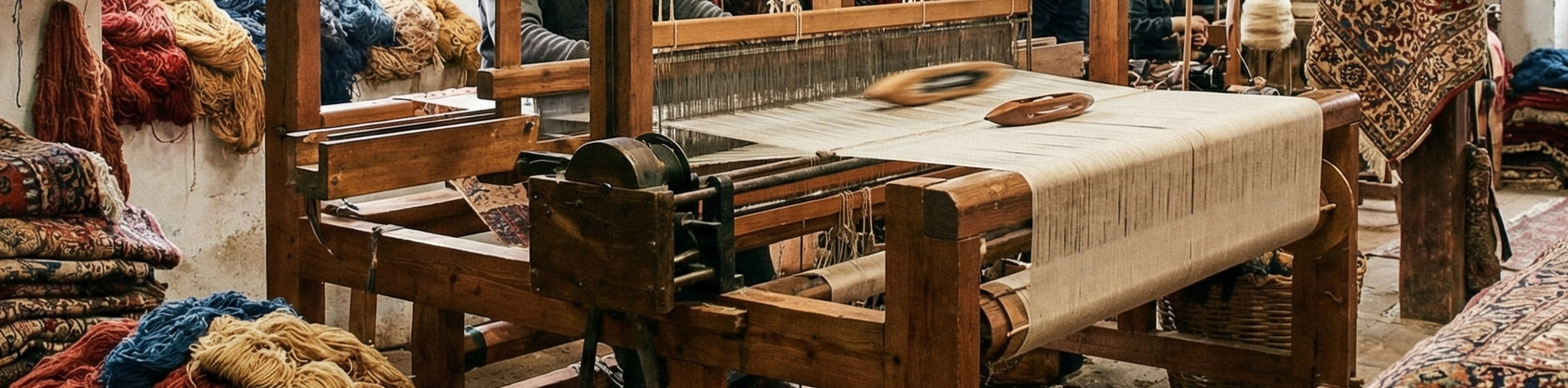
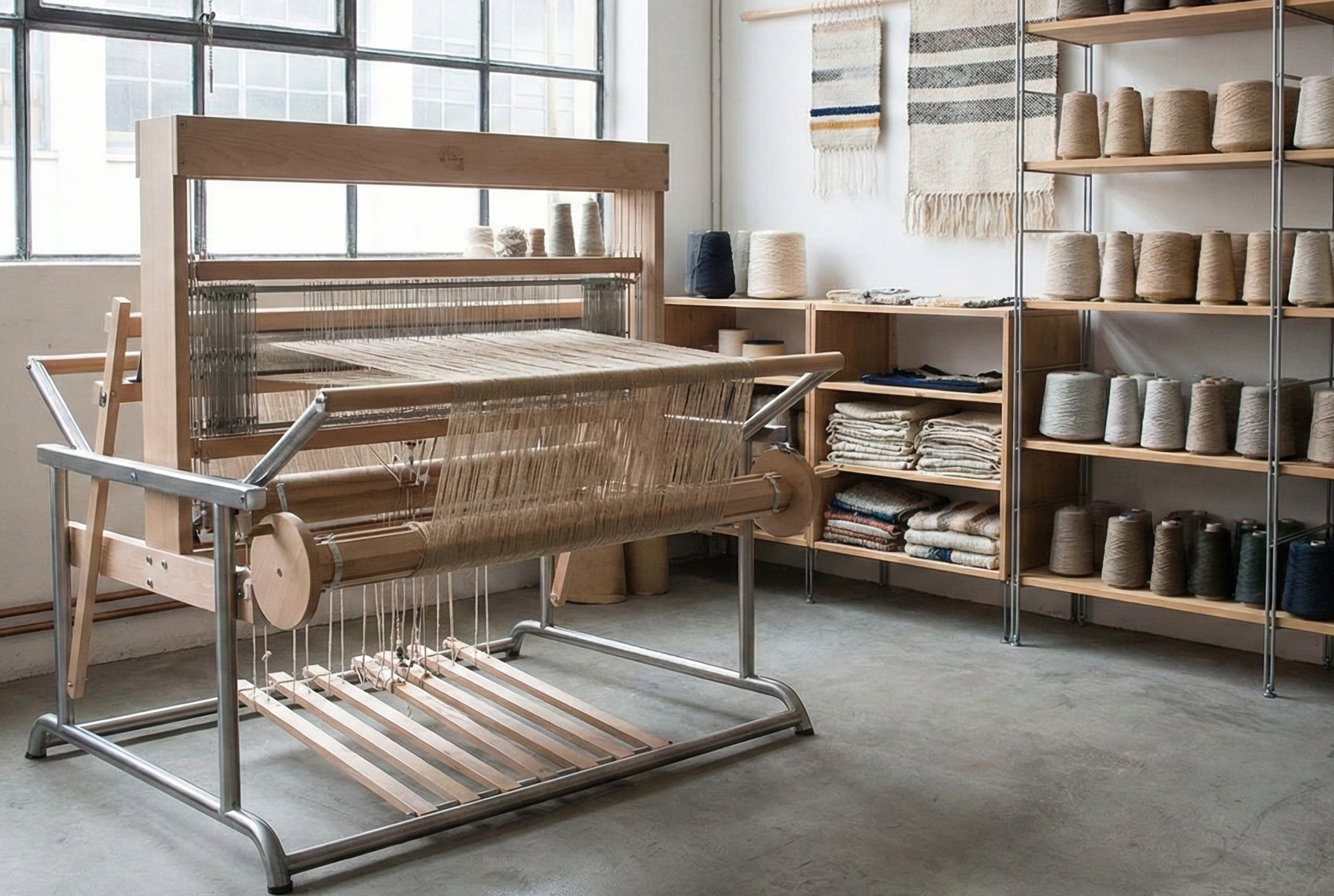
From the most basic designs to sophisticated machinery, the venerable loom is at the heart of rug making and is a key invention that heralded each of the eras of human technical advances, bringing people together.
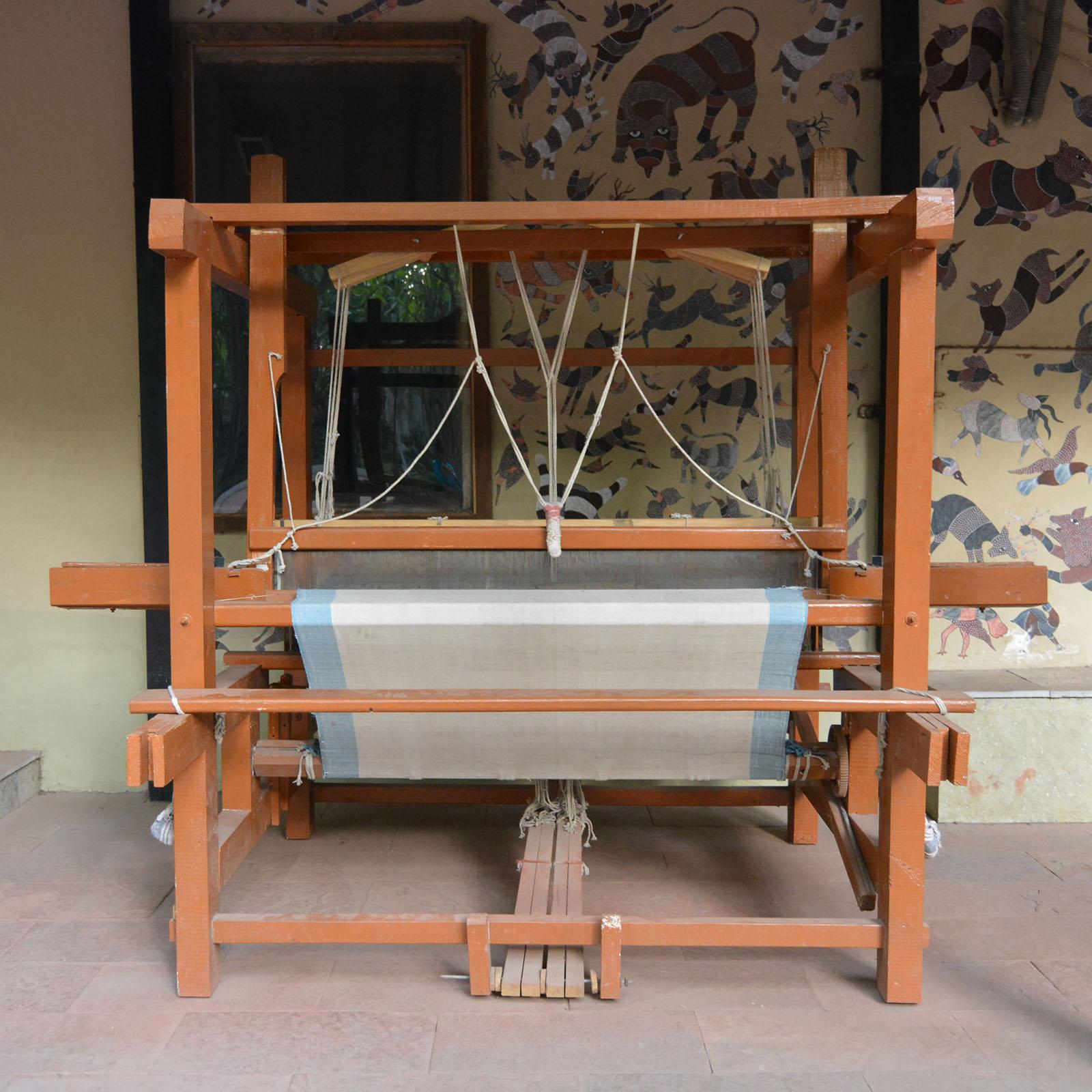
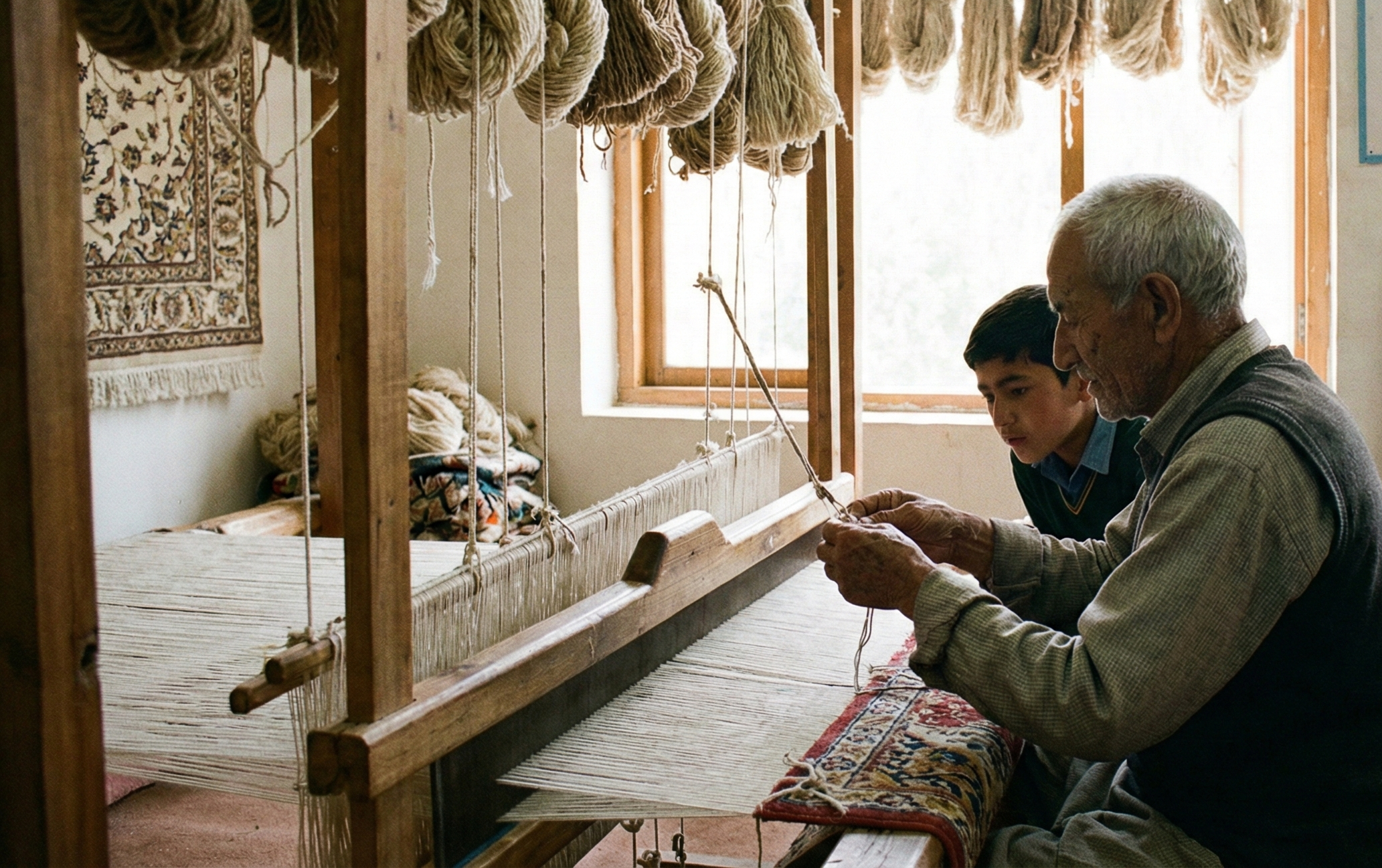
While it may look a bit intimidating, the loom is a rather simple construction, at its core. An interlocking structure of moving wooden beam frames is strung tightly together by yarn (warp) to create the rug foundation while a second yarn (weft) is passed through perpendicularly to hold the rug together. The pile yarn would then be woven into the rug base to create the visual patterns and texture of hand-woven carpets.
The process of weaving is traced back to the Neolithic age when its invention helped herald the agricultural revolution by both utilizing the newly mastered control over crops and techniques of extracting yarn from wool, and by helping make a home. Regular settlements and the nomads could use comfortable and beautiful rugs on their floors and walls, warming their abodes both literally and figuratively. Many rituals evolved to include rugs in them ever since.
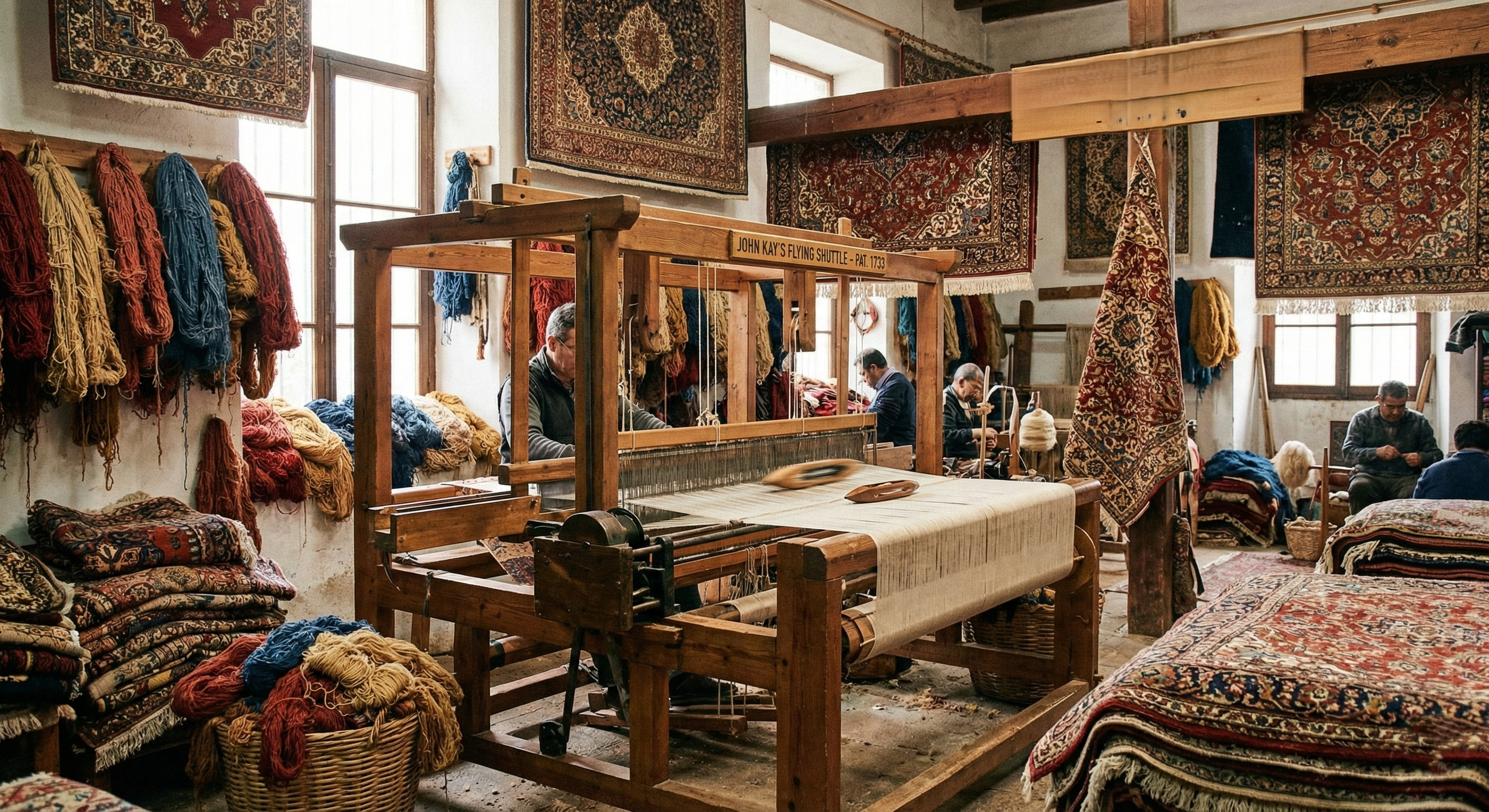
For all these millennia and all this prehistoric art, the basic loin loom was utilized, until later advances in the Middle Ages. The weavers used a very simple construction and their own body tension needed to make a rug for a perfect purpose. Later evolutions of the loom included stationary, heavier looms where separate heddles could be lifted to create complex designs, administered by a second weaver if the rug is too big. In 1773, a British weaver John Kay invented the flying shuttle, which could be flung across and around the loom, eliminating the need for the second person.
By twentieth century the looms became fully mechanized and powered electrically. This final stage has dramatically reduced the labor and increased production. That being said, the automated looms will of course never achieve the artistry, attention, and skill of experienced master weaver hands.
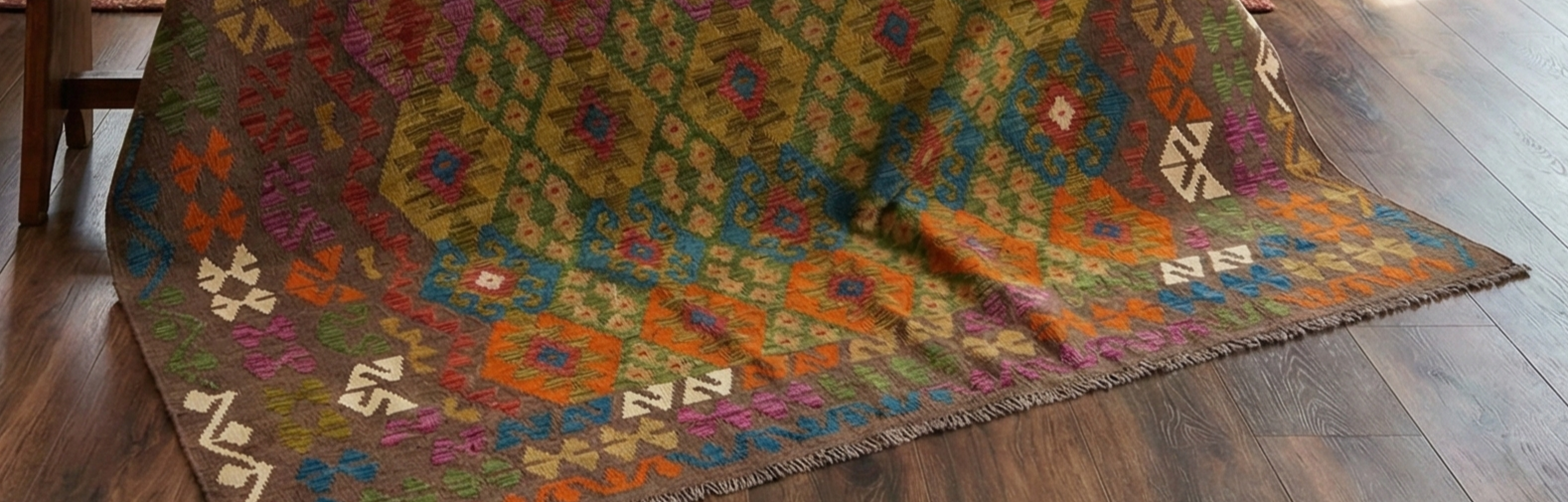
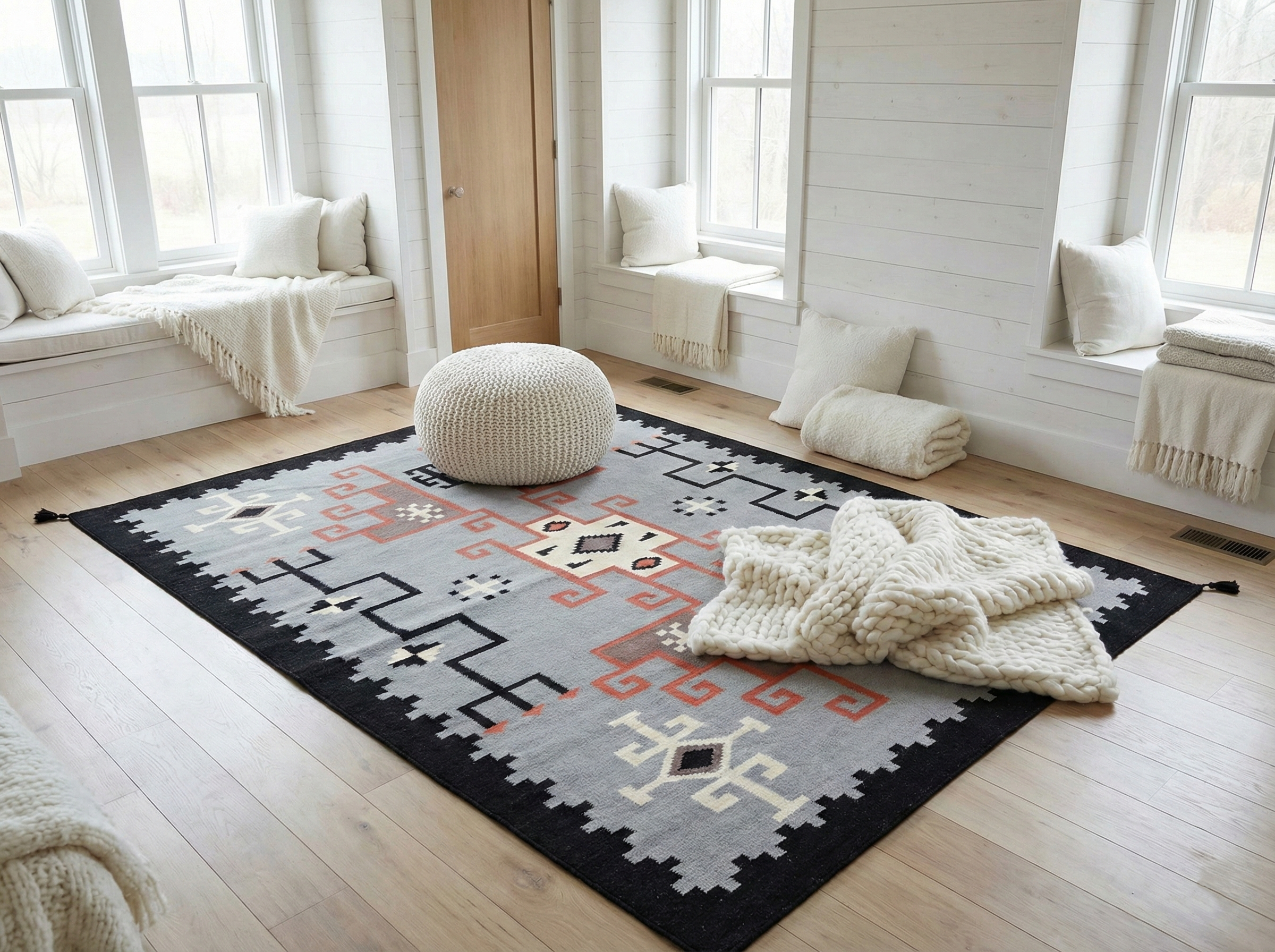
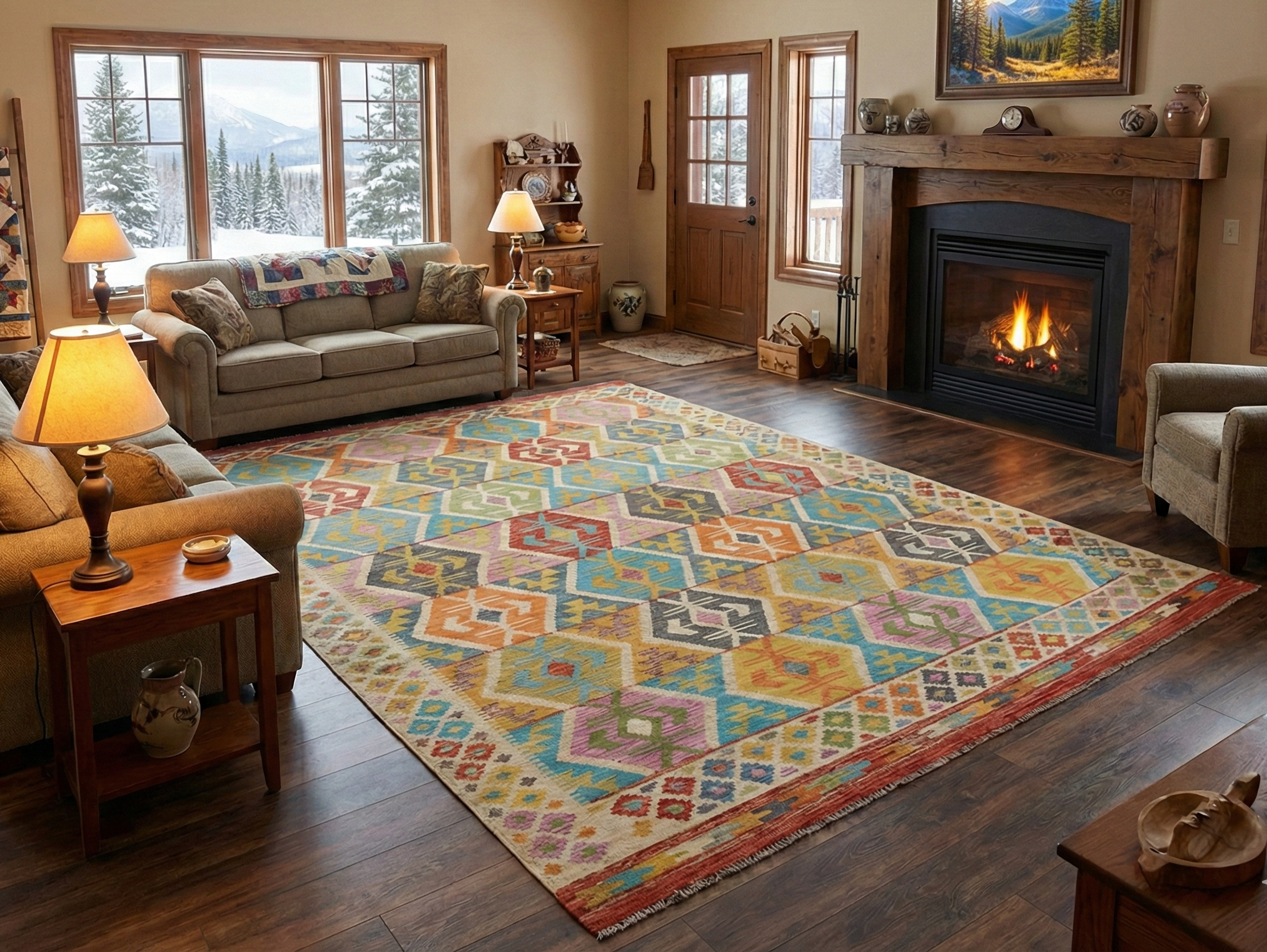
Sometimes things can be uncomplicated, sometimes they can be understated. Sometimes the beauty comes from the simplicity of the design and execution. Look no further than Kilim hand-woven rugs, classic flatweave carpets known for their unique contained look and versatility.
One of the most consistent technique to go back centuries, Kilim rugs were most likely first used by nomadic peoples of Middle East and Central Asia. The earliest examples were found around Khotan, present day Xinjiang, China, one of the centers of trade along the Silk Roads, and go back centuries. The name is derived from Turkish “gelim”, which means, “to spread” (as in, to spread a rug). Its pure geometrical designs are believed to have mystical, inspirational powers.
To us, the most fascinating thing about the hand-woven Kilim rugs is the unique weaving technique, called slit weave. These rugs don’t have a pile, and are created by simply weaving the woolen wefts and the cotton or wool warps (thread ratio is 16 of weft, 14 of warp). Two different-colored weft blocks are tightly packed into the warp by a special comb and returned to original side once they reach each other, leaving a slight “gap” in between – the slit! This is the origin of the traditional Kilim motif: diagonal and horizontal lines, a pattern designed for durability.
While the traditional colors for these magical Kilim hand-woven rugs are blue, green, red, and yellow, the modern take on the carpets includes a variety of dyes and designs. Still these works of art are as versatile and affordable as they were centuries ago: they are easy to spread or fold, don’t crease; are great at being a centerpiece decoration, hanging on a wall or serving as a door step rug, or for saddling your mule, if the occasion truly calls for it!
Looking into our rugs is sometimes like looking into the depths of history. The Peshawar rugs take us to one of the greatest depths. One of the epicenters of the great Silk Roads, the city of Peshawar was, quite literally on the map since the 5th century B.C. From the ancient Persians and the Hellenistic descendants of Alexander the Great, to the medieval Mongols and finally the Muslim empires. Peshawar commanded authority throughout the region, housing millions of citizens and invariably creating and absorbing culture for centuries. Some may argue the Mughal era of rule over the region was one of the most successful in last few centuries and has inspired some of the most fascinating and impressive works of art.
Perhaps the best time capsule of this Mughal artistry is the hand-woven Peshawar rug, whose designs evolved through the centuries but with mastery that never dwindled. In the 16th century, emperor Akbar had ordered the construction of rug weaving workshops and fostered the knowledge exchange with the Persian artisans to reinforce the local style. In the 20th, after the crumbling of British colonialism the existing industry simply needed a push from the newly independent government to survive and to flourish.
Traditional Peshawar rugs are always hand-woven, and feature a pure high mountain hand-spun wool pile, although sometimes, in select rugs, fine merino wool is blended in – that makes the rugs look slicker. Occasionally silk is woven in as well, especially if the artist wants to highlight a motif. The weft and warp are cotton, for the strongest support. The resulting rugs are durable and reliable, but are luxurious and extremely soft to the touch.
The design of the rugs, as chronicled in history, is heavily influenced by ancient Persian rug motifs. The colors, usually light and earthy and derived from sun-dried vegetable dyes, give the rugs its characteristic antique and washed-out look. But whether they are stonewashed and have their piles cut shorter, or the modernist take will have the colors pop, you are sure to be mesmerized by the deep richness and artistry that are the Peshawar rugs.
Kazaks (Kazakhs), the majestic carpets from de Caucasus
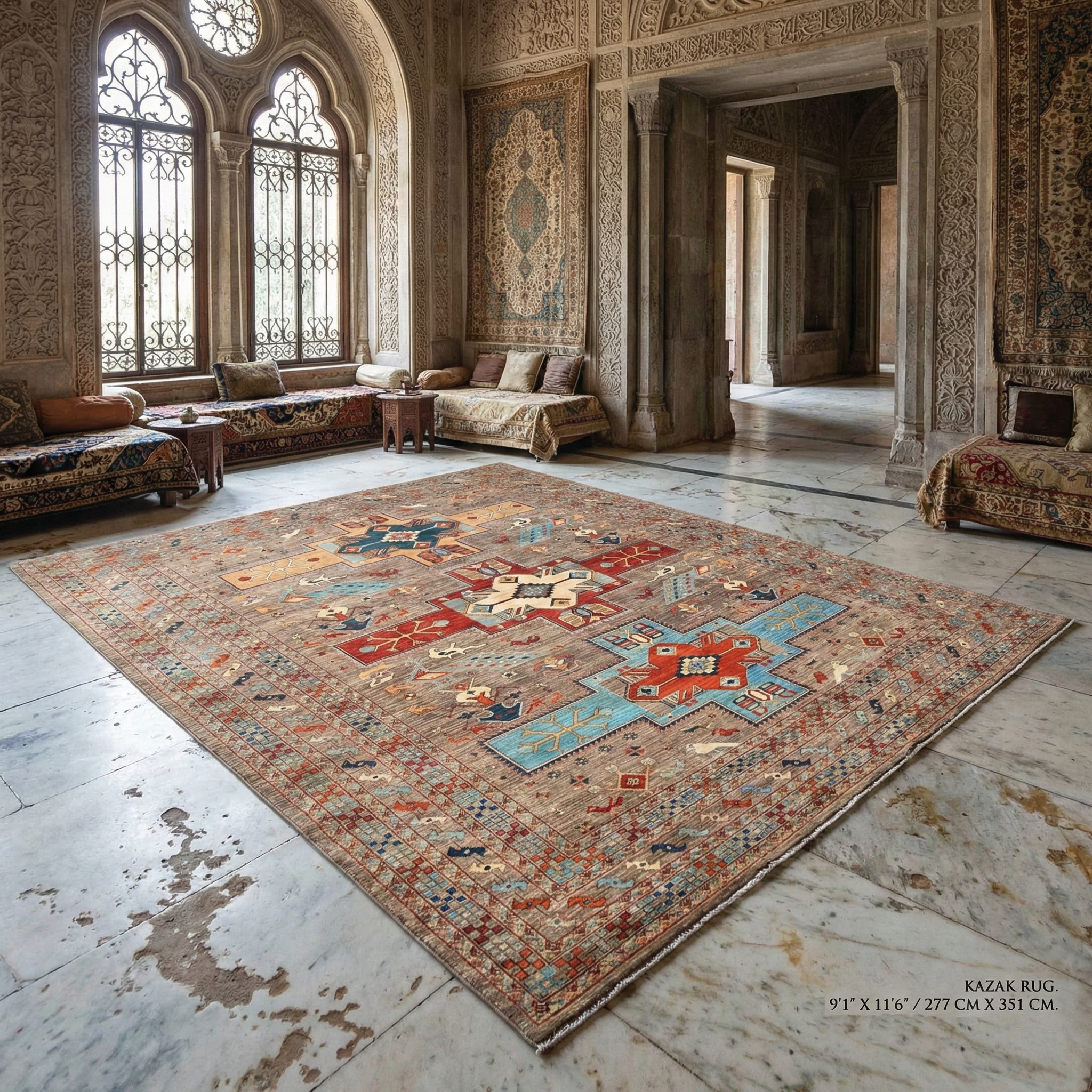
Luxurious, spectacular, magnificent are good adjectives to describe the geometrically designed Kazak or Kazakh rug. Centuries of Armenian craftsmanship carried down to our days, the best natural dyes, unique patterns, the finest wool, are among the characteristics that guarantees carpets of the best quality. Large-scale designs, numerous medallions, and contrasting colors such as blue, red and ivory, gives this type of carpets a superb appearance.
Its origin dates back to the 18th and 19th centuries in the Kazak area of the Caucasus, probably the most famous area in weaving terms. Kazak rugs were hand-knotted by the women of the Tiflis and Erevan. Within the Kazakh rugs, other categories are considered depending on the geographical area were they were woven, for example carpets from the south of the Tiflis, Bordajalou Kazak rugs, coarsely woven with simple designs. Carpets from the North of the Erevans, with shorter pile and more formal designs. Other categories includes carpets made before 1925, known as: Karabach, Sjirvan, Kuba and Dagestan carpets. Each one with variation in the patterns and predominance of the traditional colors.
Considered a sign of status, Kazakh rugs and other Armenian carpets were an important possession in the wealthy houses, in palaces, and in churches. They could be used as tapestries, or to cover the king`s throne. They were also used for day to day activities like dining. Kazakhs were frequently woven with threads of silver and gold, making them precious enough to be demanded as part of the tax owed to the nobility that ruled over the Armenians.
Just like kings and princes prized the Kazakh carpets, Caucasian rugs connoisseur`s highly esteem their robust aesthetic and saturated natural color tones, large motifs and majestic proportions that explain the appeal of these iconic designs.
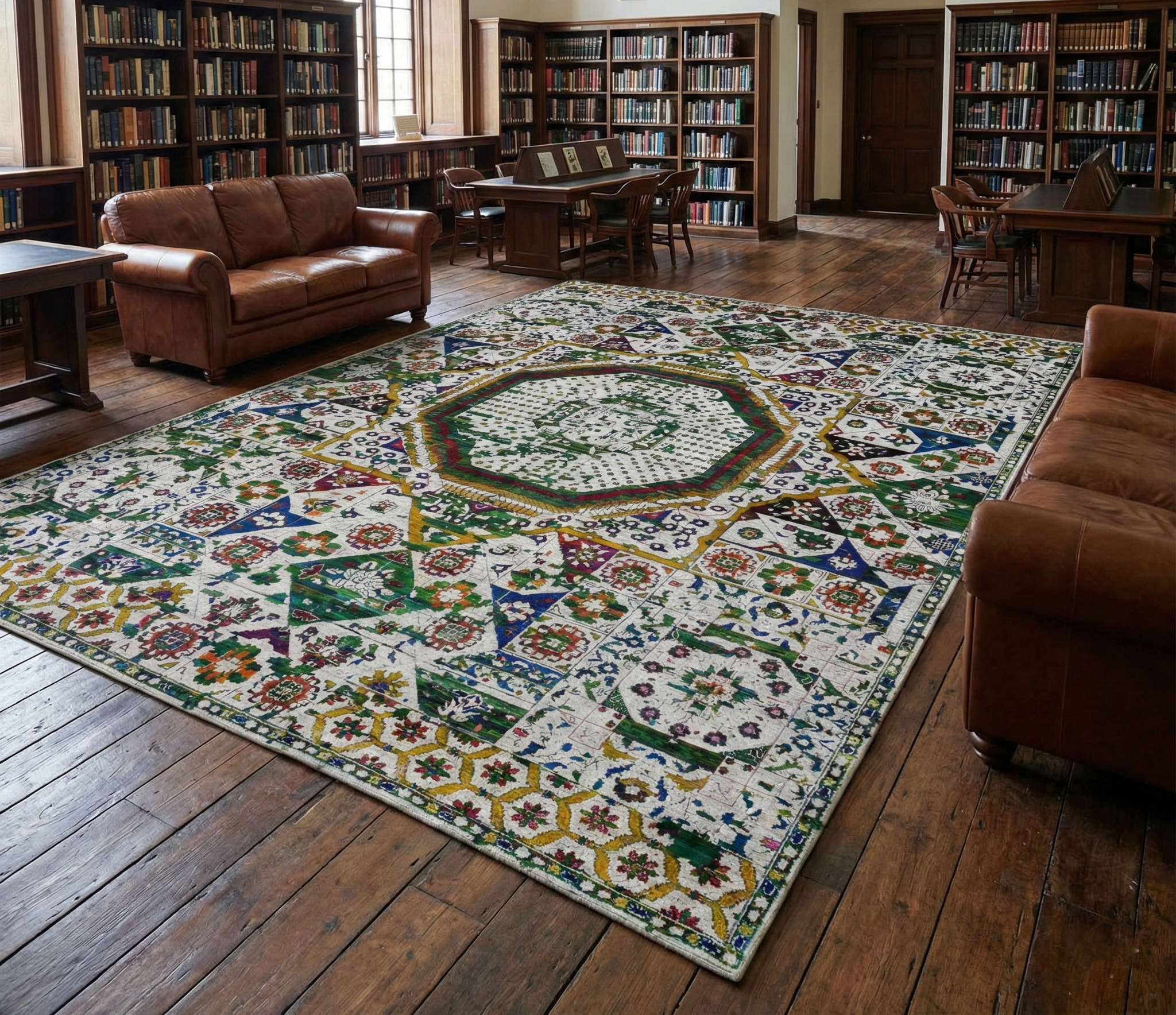
The grace and the gemlike colors of Sari`s silk are cleverly transformed into yarns that are then weaved into marvelous hand knotted rugs by highly skilled artisans. The Mamluk, pictured here, goes a step further mixing the luxurious sari silk with the rustic look of oxidized wool. The oxidized wool lowers the pile of the rug while the silk is not affected by the process, creating the high and low effect and, above all, enhancing its brightness in a mixed material rug. The final effect is astonishing, reserved for those who enjoy originality and a varied look.
The Sari Silk remnants become the raw material for rugs. Indian artisans unthread the saris by hand, the extracted silk is fortified with cotton or other natural fibers and utilized again for new rugs. Another way of obtaining the Sari Silk is by re-spinning silk from the mill ends of sari looms: once the rug is weaved with silk and wool, it goes through an oxidation process that reduces the wool pile.
Think of these rugs as an exquisite drapery that will dress any special room in your home. Be aware: They are unique pieces, elegant and sophisticated for that special place in your home. Sari Silk rugs are durable, however try to keep them in low traffic areas. If well kept, they will be a decoration treasure for decades!
An Esfahan Rug is not just something that covers your floor, it is in fact a work of art.
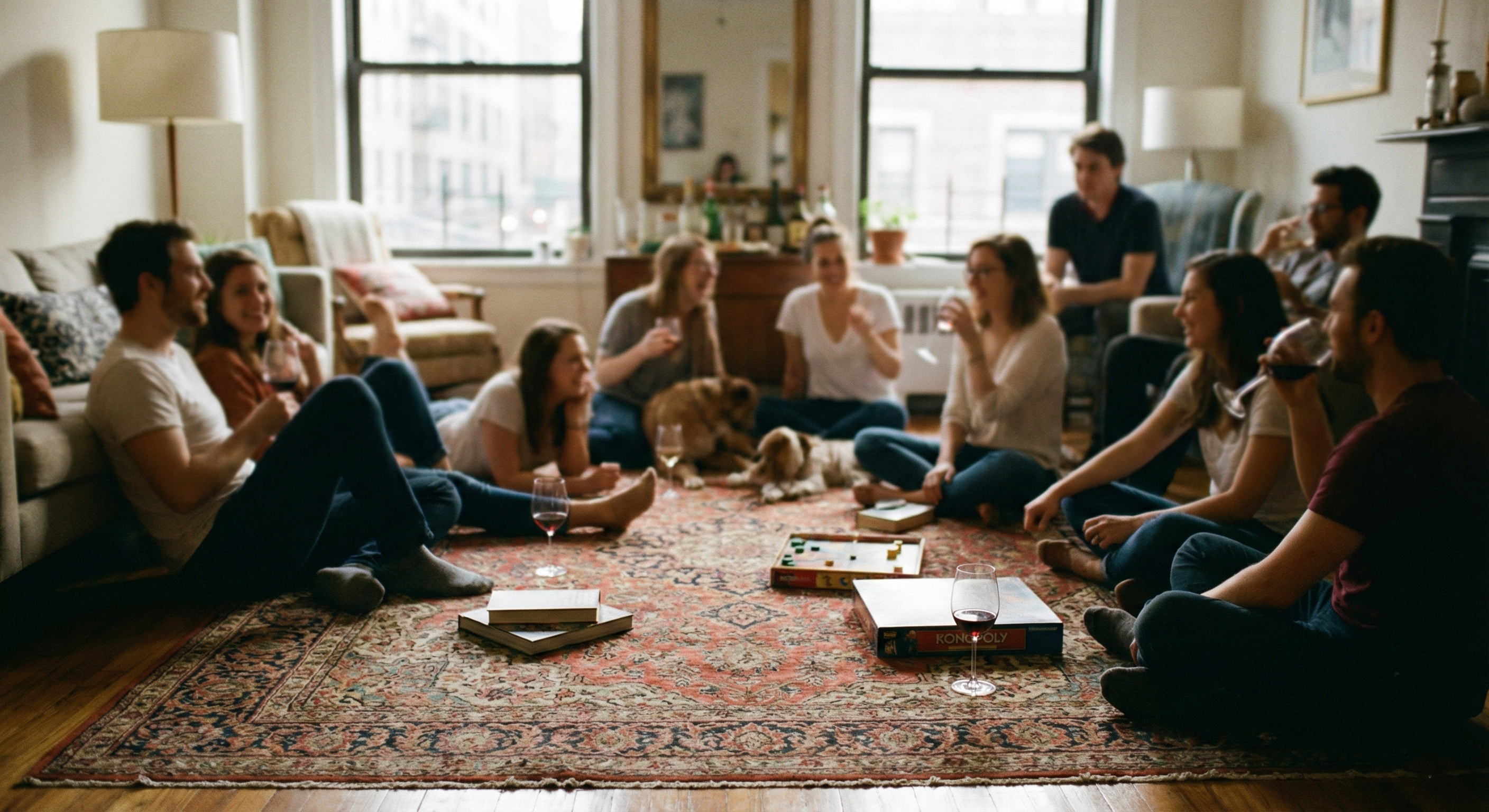
My quest for these marvelous pieces began when I got the keys to my first apartment as buying the perfect rug for my floor was amongst the most important things that I needed to decorate my home. Now, the reason for my ardent inclination towards Esfahan Rugs can be traced back to my childhood, when I would visit my grandparents: their house always full of friends, family and relatives and the floor always adorned with beautiful Persian rugs. Thinking about an authentic oriental, Persian rug conjures memories of our extended family gathered together, having those cozy meals, sometimes on the floor with a soft, warm rug providing unmatched comfort. This is the kind of atmosphere that I wanted for my new apartment, a home that welcomes all and flooring that becomes the point of conversation.
It is amazing how I distinctly remember the bold circular central medallion set against a background of floral motifs and an intricately tinkling vine palmette of my grandfather’s rug. This quintessential central medallion is inspired from the famous mosque of Shah Lutf Allah in Isfahan, I am told. It was beyond doubt that I needed an Esfahan rug for my floor as these rugs are at the pinnacle of the Persian rug industry. Given my persistent encounters with some of the finest rugs since childhood, I had some basic insights into the world of these hand knotted beauties. However to buy the perfect Esfahan Rug I still needed a lot of research and groundwork. My father used to tell me that grandpa was so particular about the rug he was buying that he would scratch the back of the rug before making the purchase as handmade rugs have many secrets hidden at the back- right from the intricacy of the weaving to the knot count per square meter. As I dug deeper into the world of Esfahan rugs I got to know about the city that produces these wonderful rugs, rendering them their enchanted flavor.
Understanding the Enchanted City
The city of Isfahan lies in the middle of Iran with Zagros Mountains to the left and the desert to the right. An important industrial center today, Isfahan has been recognized as one of the finest cities of the Islamic world architecturally. The old bridge, great Imam square and the parks render the city its oriental essence, which is in turn reflected in all the offerings from Isfahan, including the rugs. If you own an Isfahan, you own a truly oriental rug with a mystic and ever mesmerizing aura. Keeping this in mind, I explored the city to find the best place to buyEsfahan Rugs and came across names such as Seirafian, Haghighi, Enteshar and Davari, having earned a good reputation as rug specialists. My quest involved lengthy conversations with these makers to understand the rug better, thereby gaining insight into what an ‘Isfahan’ is all about and here is what I found out.
Carpets from the city of Isfahan have their own distinction when it comes to the composition of designs, materials and patterns. The highest quality wool, often Kurk wool or silk, is used for making the pile. These rugs are characterized by high knot density, the knots being asymmetrical and most times made on a silk warp. A high knot count of around 120 KPSI up to 842 KPSI is achieved by using premium wool sheared from the chest and shoulders of lambs. Detailed accents with metallic and silk fibers have become hallmarks of carpets from Isfahan. When buying an Esfahan, you will come across pictorial scenes, medallions and curvilinear arabesques with spiraling vine-scrolls.
Timeless elegance that will stay with you for generations
Handmade Esfahan rugs have some imperfections, but that is where all the charm lies. Any handmade thing is bound to be asymmetric, with some inadequacies if you like, but this is precisely what makes each handmade rug unique. Characterized by rich colors, Isfahan rugs are most commonly found in ivory backgrounds with rose, blue and indigo motifs. An Esfahan rug is not just an option to cover the floor, but an investment with great resale value. So, to avoid blowing a fortune on an “authentic” Esfahan rug that is essentially a replica, find a reputable dealer who does not sell rugs but understands them, loves them. One small tip that I can pass on from my personal experience — keep away from the person who tries to ‘sell’ you a rug.
The legacy of Esfahan Rugs endures still, as master weavers continue to create timeless heirloom rugs. Setting out to find the right rug is a journey that should not be rushed as this is something that will adorn your floors for not years but generations. These masterpieces are not meant to be hidden away in vaults, but lavishly displayed in your heaven for everybody to admire and appreciate.
There is an overwhelming range of rugs available in the market, each trying to outdo its competitor, fighting to capture your attention. While the marketing pitches can get very invasive, most of them seem rather reluctant to talk about one thing—ethicality of their produce.
Tracing Roots of This Discussion
This topic is a result of a rather long discussion that happened at a friend’s place last week. The overall mood was upbeat. The occasion was like a house-warming gig and the hosts were enjoying every moment of compliments from the guests. One of the most appreciated elements of their new living space was an Oriental Rug. Somewhere during the conversations, a question emerged—recently there has been a lot of debate about how some big lifestyle brands indulge in exploitative labor practices. Does this apply to the niche of rugs and carpets too? To ensure the young couple wasn’t bogged down by the morality of their purchase, the debate was quickly wrapped up but the topic registered in our minds.
Why talking about ethics is apt in the niche of Handmade Rugs?
If you dig into the subject, you will realize natural rugs are highly vulnerable to being sourced from unethical, inhumane practices. Just consider this—a humble looking 8 x 10 hand-woven rug might have a million knots, each hand-done knot takes considerable effort. Still, many conventional rug-making locales just about manage to sustain themselves. In today’s era of every handmade item being termed sacred, pure or organic, isn’t it strange that natural handmade rugs are often available at hugely discounted prices?
If you have already been thinking this issue, you are not alone. Chances are that some human rights group has already put serious doubts in your mind about buying that wonderful looking rug. However, you should not blame yourself for this. To a certain degree, the problem lies in the eastern Asian culture where rug making often became synonymous with child labor. Weaving and embroidery often meant laboring in conditions that would now appear inhumane. Even the concept of children having more dexterity due to their smaller fingers is somewhat of a myth construed over centuries of household weaving for below-average wages.
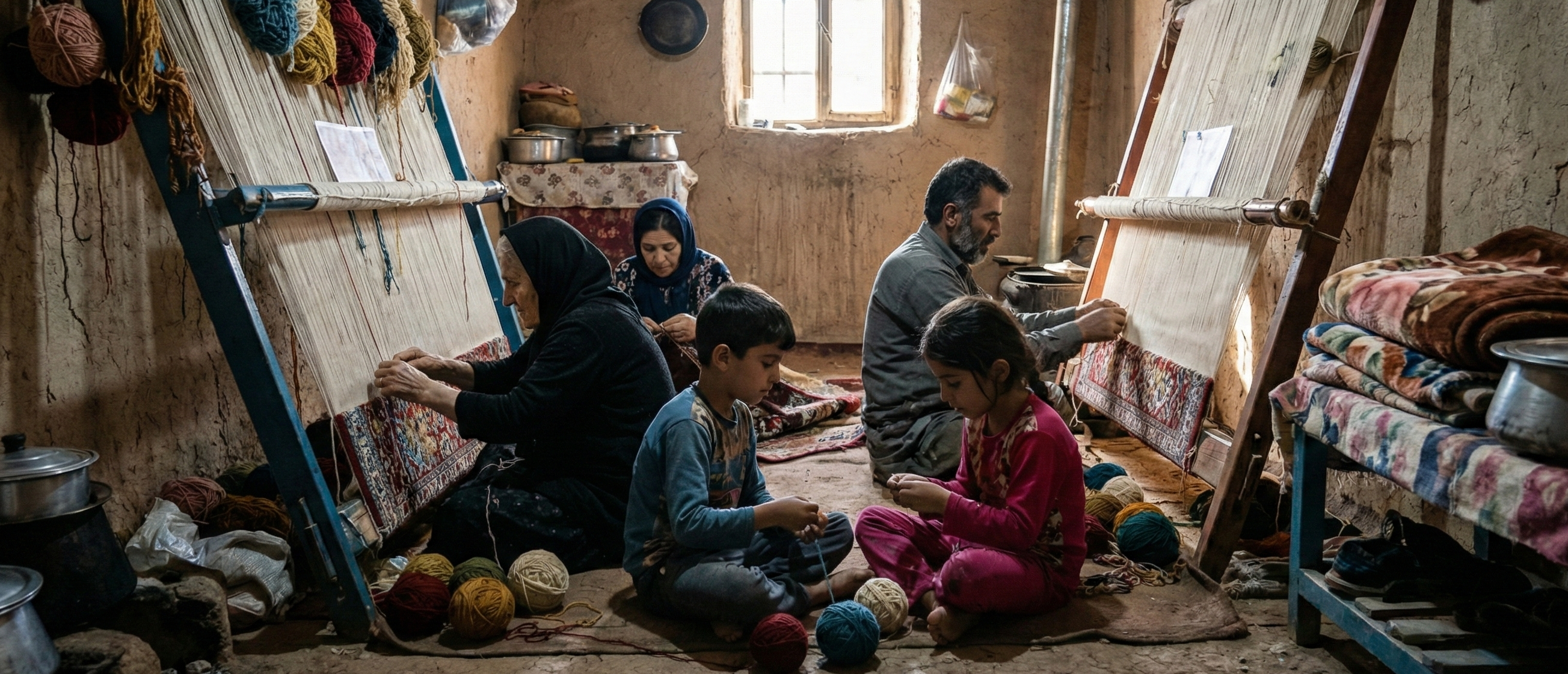
Most rugs are sourced from rural-based, household set-ups. These are small enterprises where men, women and children work hard in very humble environments. This is unlike the well-paid industry workers at an assembly line setup. In many Asian rug-making locales, chances of engaging child labor are higher than you can imagine. The reason is simple—smaller, nimble fingers can work intricate designs a lot better and the wages are invariably lower than employing an adult resource.
Get Your Facts Right: Every Rug is NOT Inhumanely Made
However, this does not mean that every Oriental Rug is a result of human exploitation. Still, there are rug sellers and re-sellers who intentionally indulge in such practices to maximize their profit. While some rug destinations like Turkey can boast of negligible chances of unethical rugs, the same does not apply to every Asiatic destination popular for its rug produce. As a consumer, you might be unintentionally fueling such inhumane industries. To make a better, well-informed choice, you need to be more aware about the type of rug you are about to purchase.
Why making the right choice is difficult but not IMPOSSIBLE?
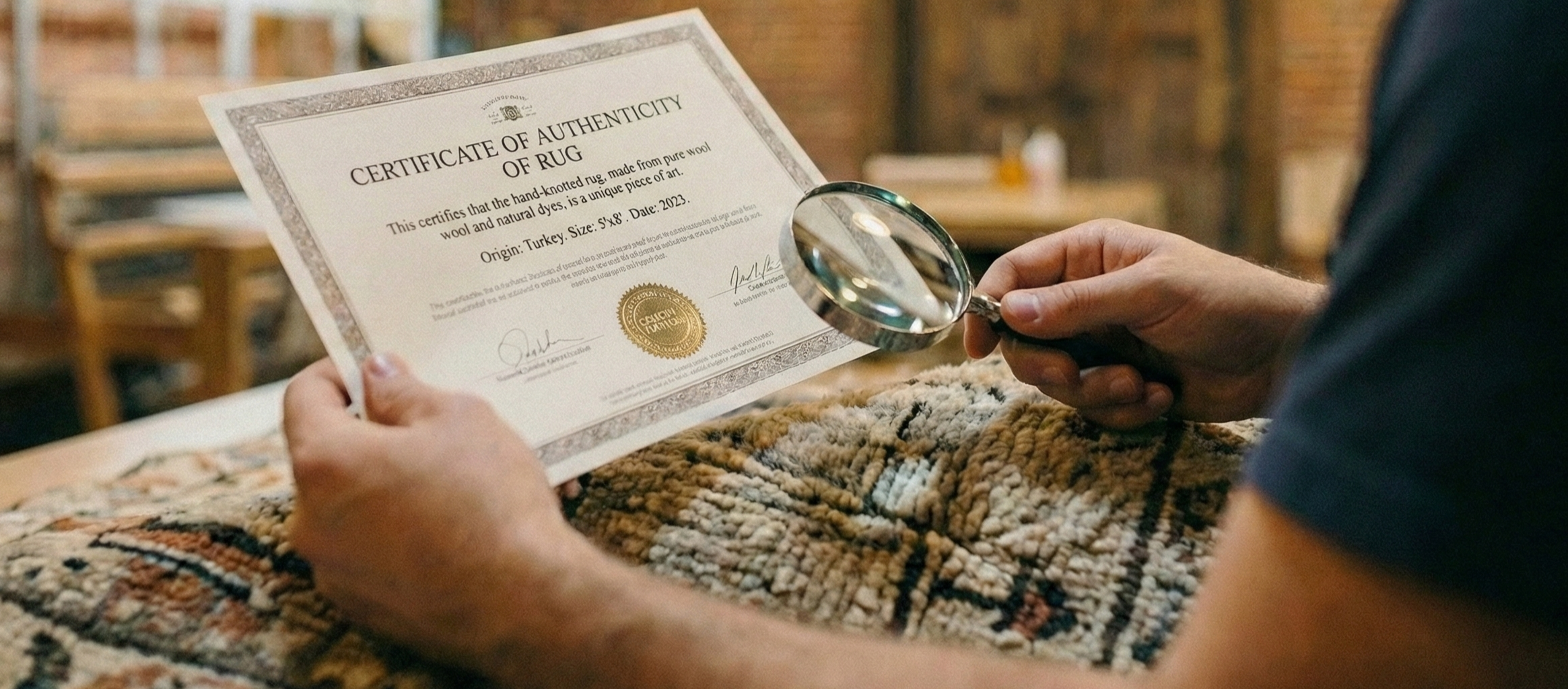
It is hard to get an ethically made certification for each rug. There has been a rising incidence of rug makers getting Fair Trade certifications or Good Weave licenses. Still, there is every chance that the rug you are about to buy does not carry sufficient proof of its ethicality. You can ask questions about the locations from which rugs have been procured and environmental impact of the rug’s creation process. Invariably, rug sellers indulging in fair trade practices are least likely to offer genuine handmade rugs at throwaway prices. Sticking to morally correct rug making ensures that the pre-market cost cannot be restricted beyond a certain point.
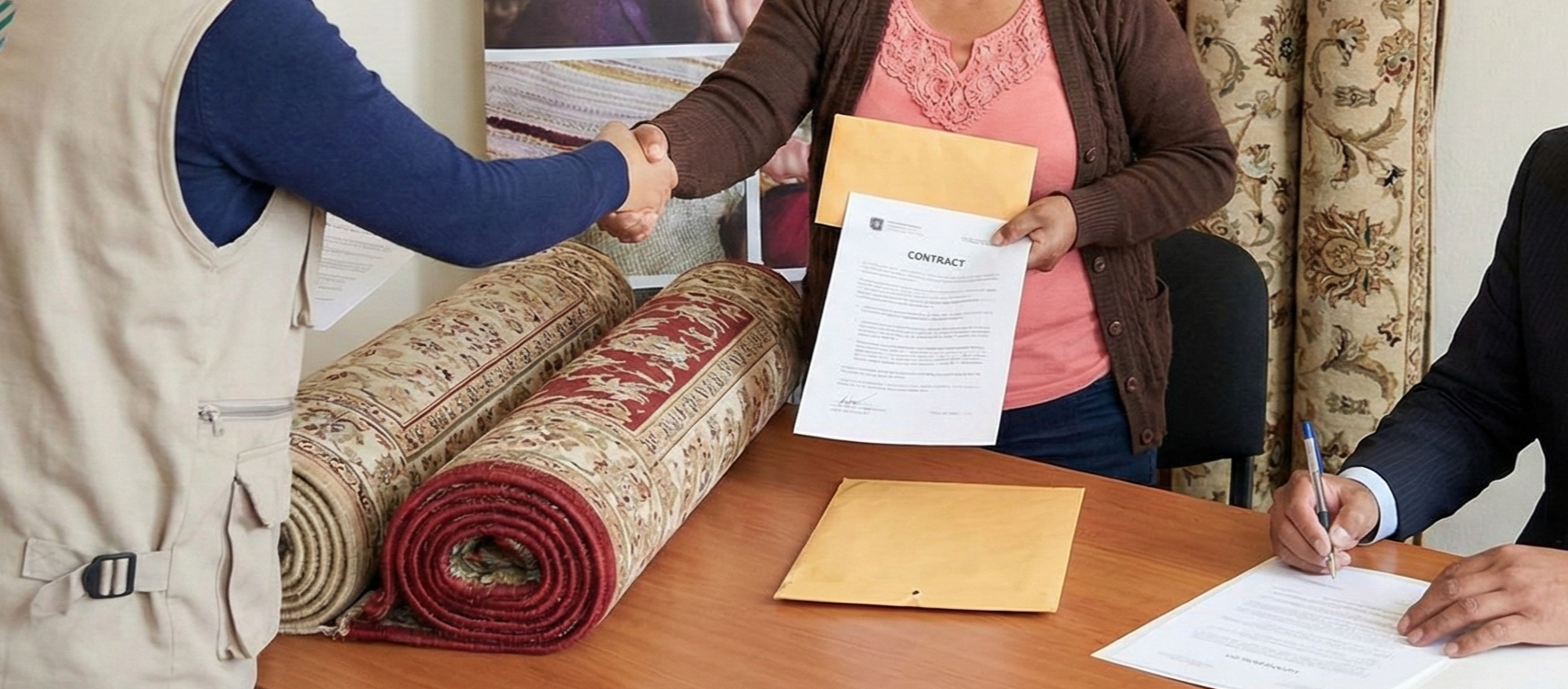
Ethical rugs are also about fair pricing and the profits being shared with the real workers. The rug industry is highly susceptible to getting inventory where the skill of weavers is not aptly awarded. Now, more non-profit organizations are taking the ownership of ensuring that rug sellers pay weavers more-than-reasonable wages. Other initiatives include assuring primary education to children from the rug weaving communities.
The industry might see a price revision not to a customer’s like but at least the exploitative traditional practices will give way to a more responsible approach to making rugs. For regional communities that carry on the legacy of this intricate art, this is a big step forward. As consumers, it is vital that you support their cause.
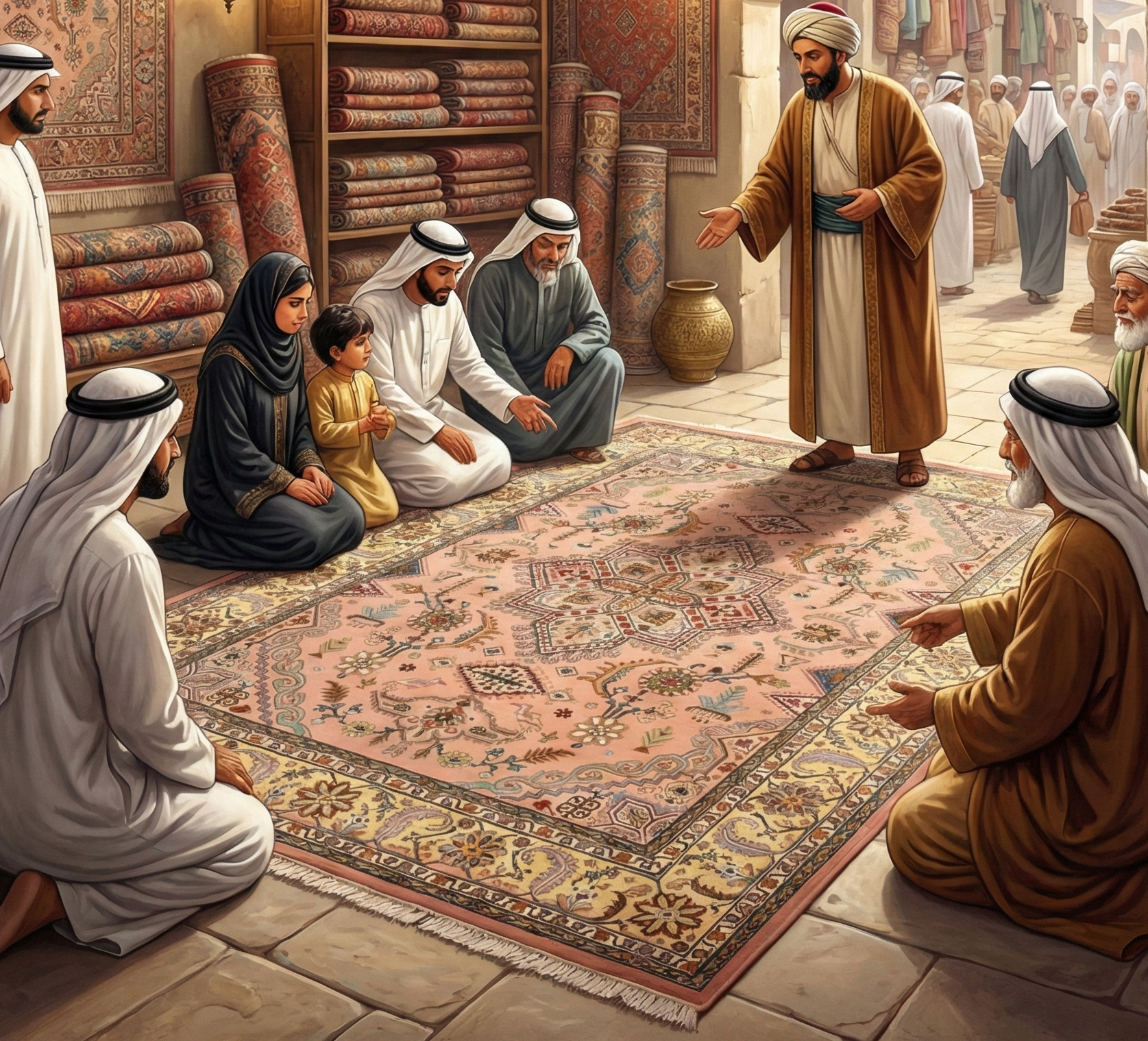
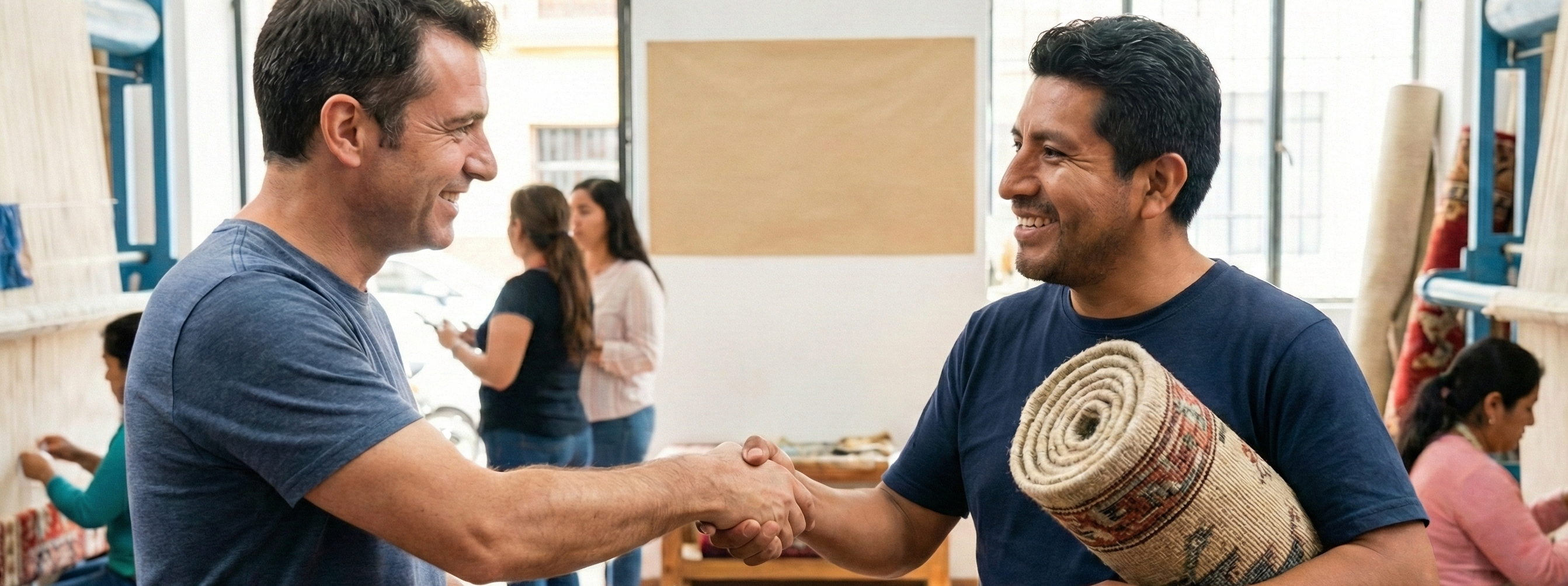
The onus is on you to buy rugs from retailers who have proven credentials in the market. Quality rugs at a genuine dealer will not come with jaw-dropping discounts. Think of the rug provider as your partner in making a smart, educated buying decision. The retailer should be able to guarantee the authenticity of rugs, taking the time to educate you about the creative process and the rug’s regional heritage. With this approach, weaving communities will get their share for handcrafting a rug that will last you for years and you earn the satisfaction of knowing that your purchase hasn’t trampled human rights.
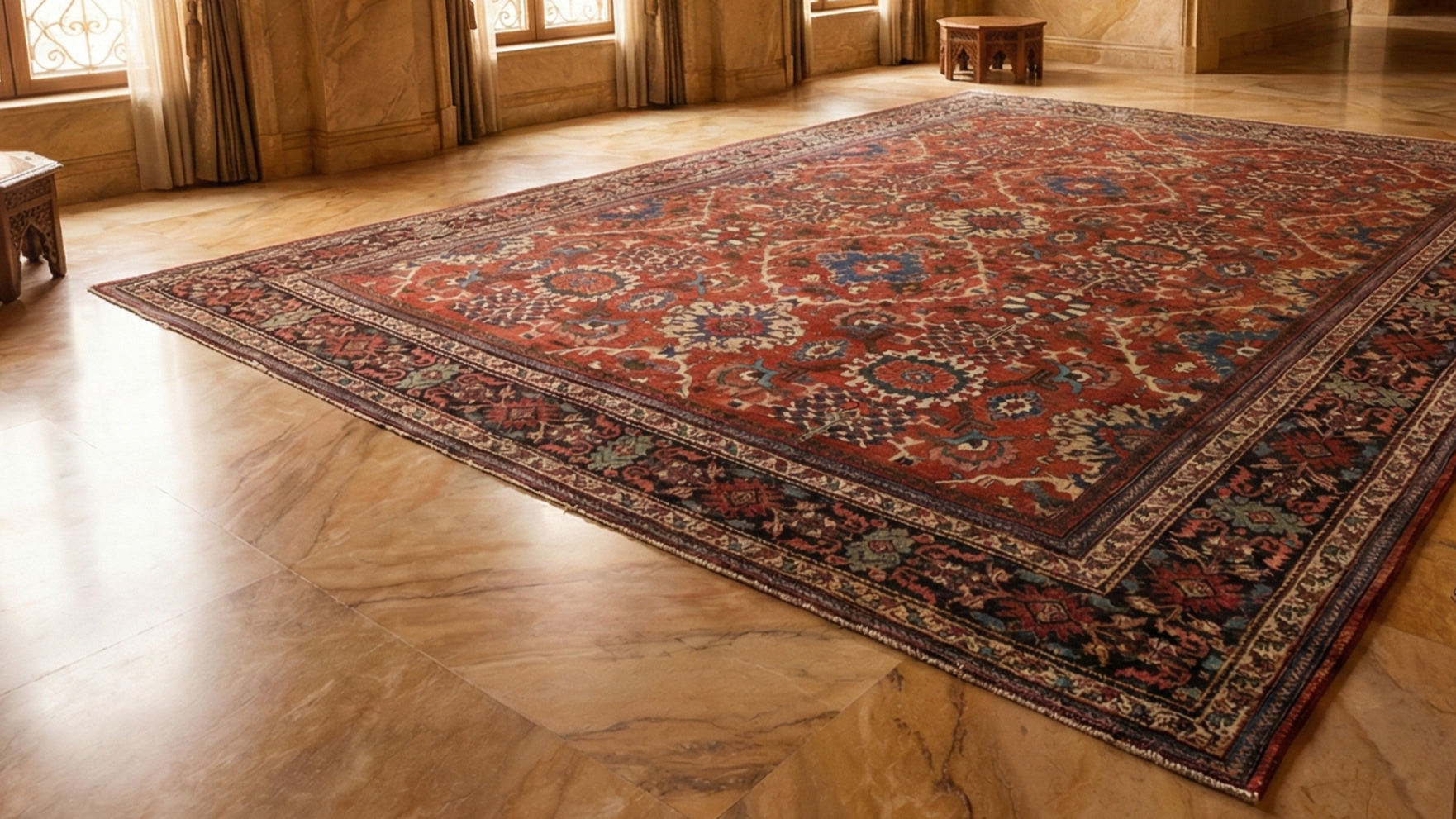
With everything that’s been going on in Iran lately, we tend to forget that the Middle Eastern country is known as the original home of the oriental carpet. Iran (Persia) is the oldest and once the most powerful empire in the Middle East. Many of the finest antique Persian carpets have originated from Iran over the last hundred years or longer.
Persia stood at the crossroads of Eastern and Western civilizations. Under the Safavid dynasty, Iran attained its artistic height. Court weaving, together with the art of calligraphy, miniature painting, and tile work, flourished to exceptional heights during this dynasty. It is during this dynasty that many of the fine antique Persian carpets from today were made.
The brilliant era witnessed the development of highly qualified carpet factories in cities including Kerman, Isfahan, Kashan, Tabriz, and Herat (now a part of Afghanistan). Iran is the genesis of most motifs, patterns, and traditional coloration, that are produced in rugs throughout the world today. Over the centuries, antique Persian carpets have become treasured heirlooms, passed on from one generation to the next. It is a true testament to the people who made the carpet originally that they are able to hold up over the course of time and still be in a condition that would be acceptable for use year after year.
So whether you’re looking for a Persian Antique Carpet or Semi-Antique, Fine New Oriental Rugs, 19th century European designs or modern area rugs, log on to www.1800getarug.com where you will find a unique collection of beautiful hand-knotted rugs which is always up to date with new colors and designs. Our showroom is open Monday through Saturday for you to view our vast selection of fine Persian rugs, and for you to find that special rug that you can pass on in your family for generations to come! Please stop by today or visit our website to find the rug for you.
Rug Glossary II (Persian Rugs): Oriental rugs are generally carpets that are hand-knotted using natural fibers such as wool cotton or silk or any combination of them or may be simply woven rugs. Machine made rugs or rugs woven by anything except by hand are not considered real oriental rugs. Different cultures and countries influence the design and production of oriental rugs, and they are usually categorized by their geographic origin: Persian rugs, Chinese rugs, Kurdish rugs, Turkish rugs and more. Let’s take a close look at Persian Rugs:
Persian Rugs: are an integral part of the culture and tradition of Persia. Iranian and Persian rugs were woven in ancient Persia thousands of years ago. The Weaving of rugs in Persia is part of it’s art and as many as million hand weavers are producing hand made Persian rugs for domestic and for export. Persian rugs in general are categorized by sizes: over 6X4 ft rugs are called Farsh, and smaller carpet includes Kilim and Zilu.
Tabriz Rugs: Tabriz is a Persian city, which is famous for fine handknotted rugs with timeless classic floral designs. It is one of the cities with the longest weaving history like Esfahan, Kirman and Kashan. In this collection you will find the finest handmade and hand knotted Tabriz rugs at discount and wholesale prices with free shipping.
So whether you’re looking for a Persian Antique or Semi-Antique, Fine New Oriental Rugs, 19th century European designs or modern area rugs, log on to www.1800getarug.com where you will find a unique collection of beautiful handknotted rugs which is always up to date with color and design.