The Essence: Rug Knots


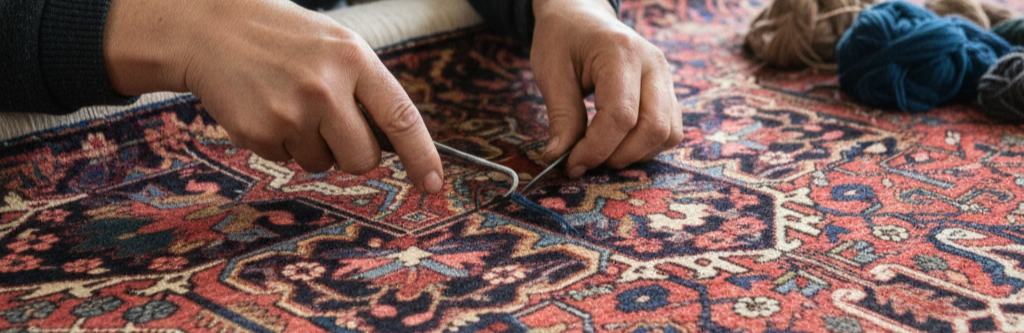
Before we think about technology and machinery, coloring and design, hand skill and passed-on knowledge, there is one single, elemental component to rug weaving: the knot. Rug knot is such a simple concept that one might overlook its central position in rug structure, look and durability.
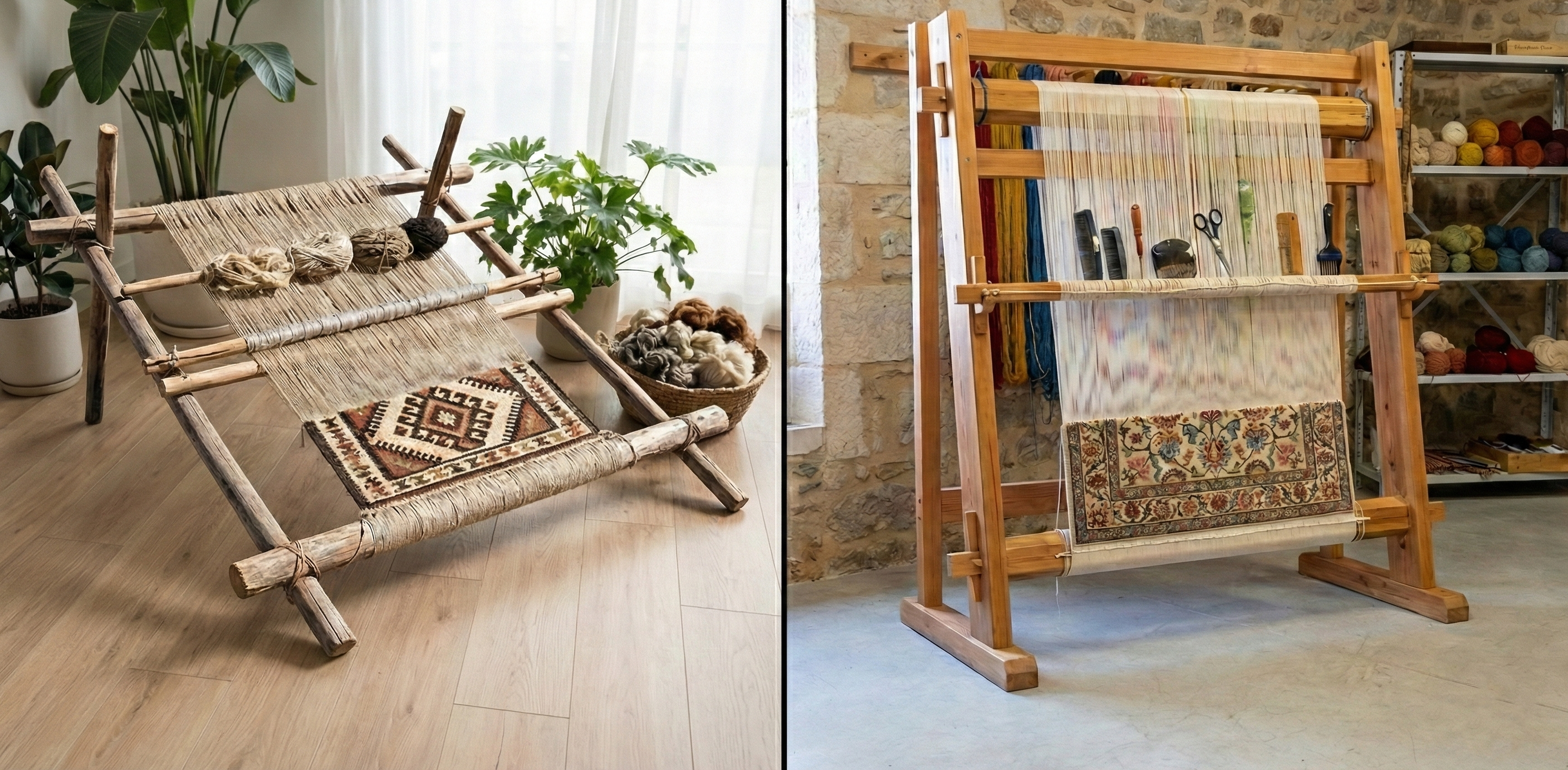
nomad or a village hand-woven rug
Nomadic Loom.  –  Village / workshop Loom.  ©1800getarug.com


There are two ways a rug knot is defined: density and type. When choosing a nomad or a village hand-woven rug, one might not consider the density of the knot a major factor. These traditional articles are made either within a season – and therefore fast – or with simple looms, and usually contain about 25-100 knots per square inch. Other factors are at play here: originality of the individual artist’s design (from memory), natural local dyes, manual labor, and plenty of love.
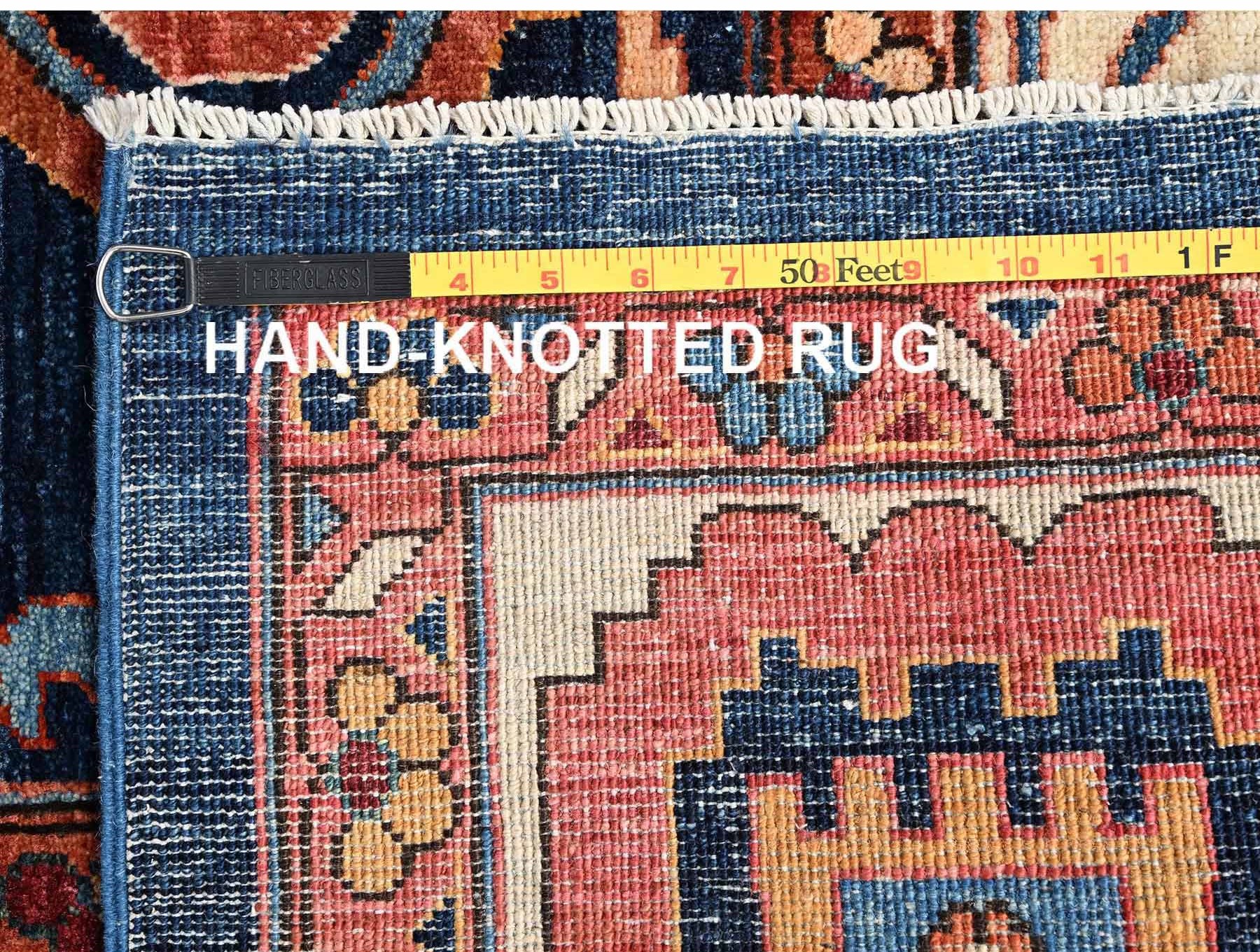
Sun Baked Orange, Serapi Heriz with Large Medallion Design, Vegetable Dyes, Hand Knotted, Aryana Grade, High Mountain Wool, Soft Pile, Densely Woven, Oriental Rug
Close-up of a Kazak rug. Notice the rather closely woven rug knots. ©1800getarug.com


The workshop hand-made rugs, however, are woven on a much more sophisticated machinery. Precision is therefore a major factor- on par with design and authenticity. The knot density ranges between 100-1000 knots per square inch. If you consider that each knot takes about 10 seconds to complete, it is astounding how long finishing a large enough rug may take, keeping in mind a rather high knot density.
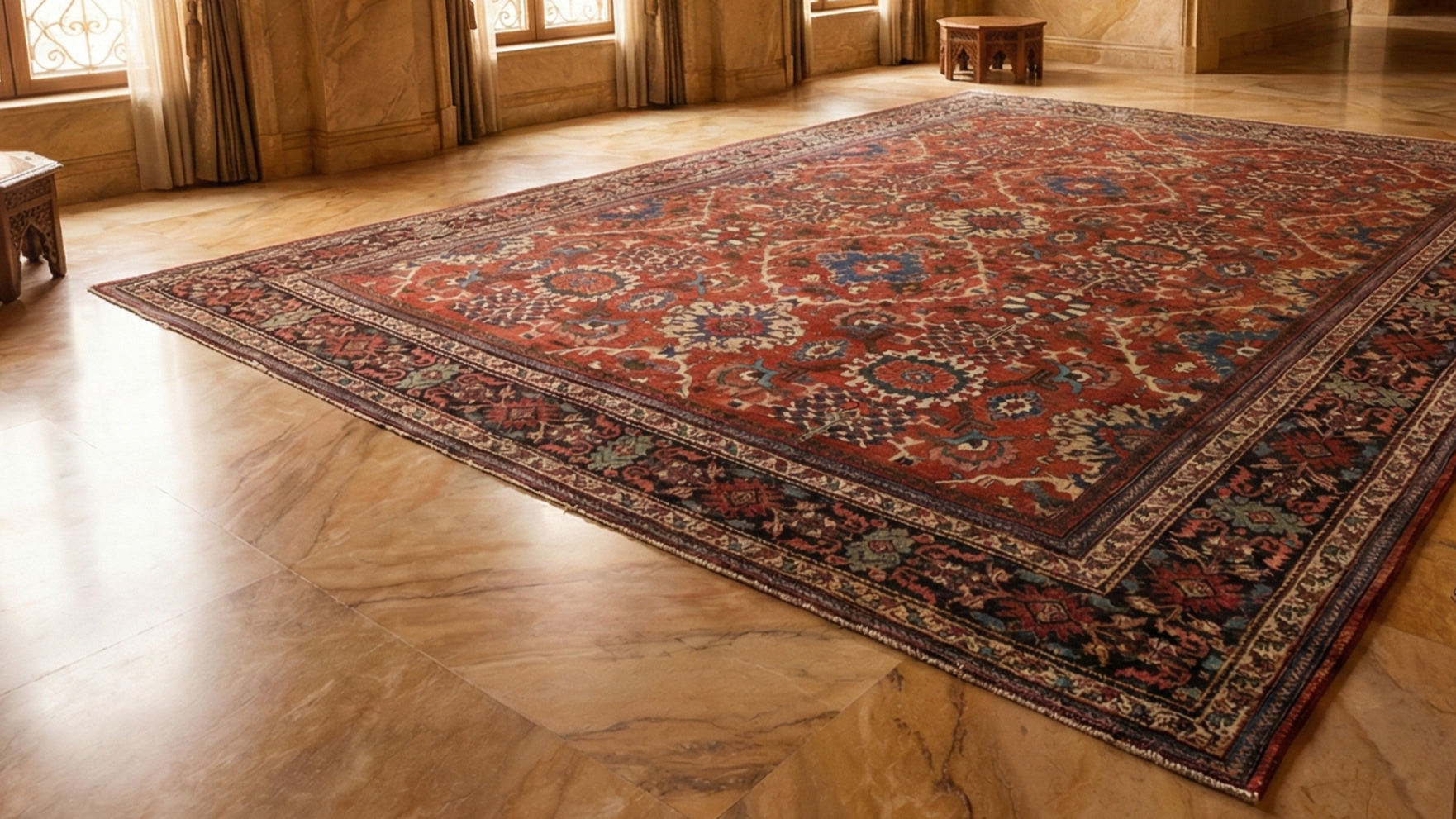
Terracotta Antique Persian Mahal Good Condition with Some Wear Clean Hand Knotted Oriental Rug
This Handcrafted Antique Persian , is an original Pure Wool oriental rug. ©1800getarug.com


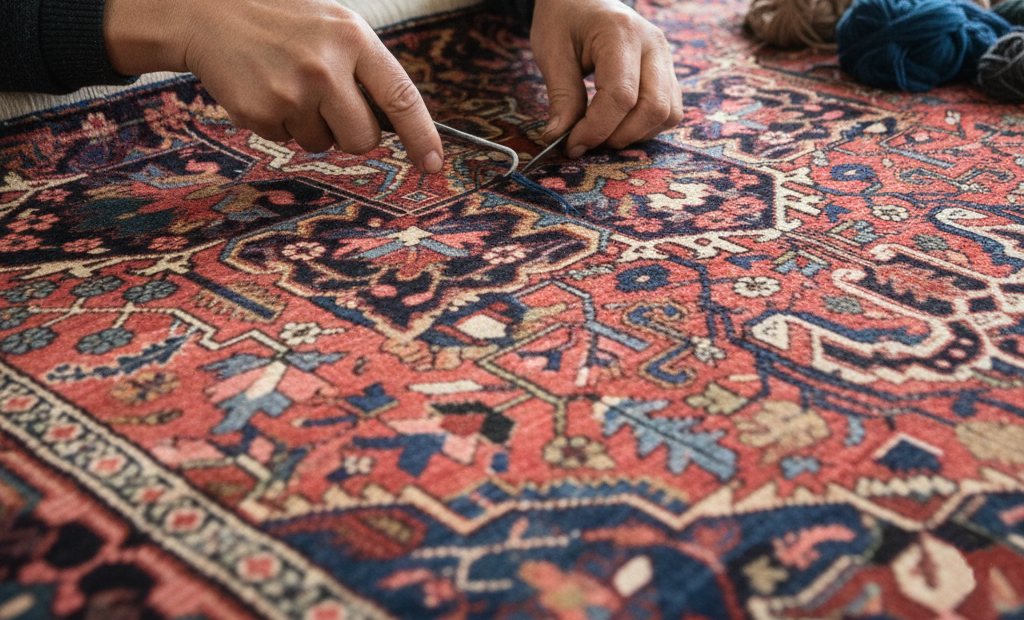
The other way of thinking of a rug knot is its method, with two predominant ones being symmetrical and asymmetrical. Popular in most of Iran, India, Egypt, China, and parts of Turkey, the asymmetrical, or Persian Senneh, have their knot loops tied around two warps and come up on the same sides to make the rug tufts. The Turkish Ghiordes knot (the symmetrical one) goes around two warp threads on opposite sides and comes up in the middle. The most commonly used knots are slight variations on the Persian one. The Tibetan knot is perhaps the most interesting one, wrapping around warps in a complex fashion and reminiscent of Indic script.
Fire Whirl Red, Antique Persian Heriz, Good Condition, Clean, Sides and Ends Professionally Secured, 100% Wool, Hand Knotted, Oriental Rug
An Illustration of a Persian Knot. ©1800getarug.com


The study of rug knots is not necessarily complex, but it certainly is full of grace and style, which is necessary for understanding the structure, design, and feel of these wonderful hand-woven rugs that we cherish throughout our lives.




The simple beauty of Kilim Flatweave rugs


Sometimes things can be uncomplicated, sometimes they can be understated. Sometimes the beauty comes from the simplicity of the design and execution. Look no further than Kilim hand-woven rugs, classic flatweave carpets known for their unique contained look and versatility.

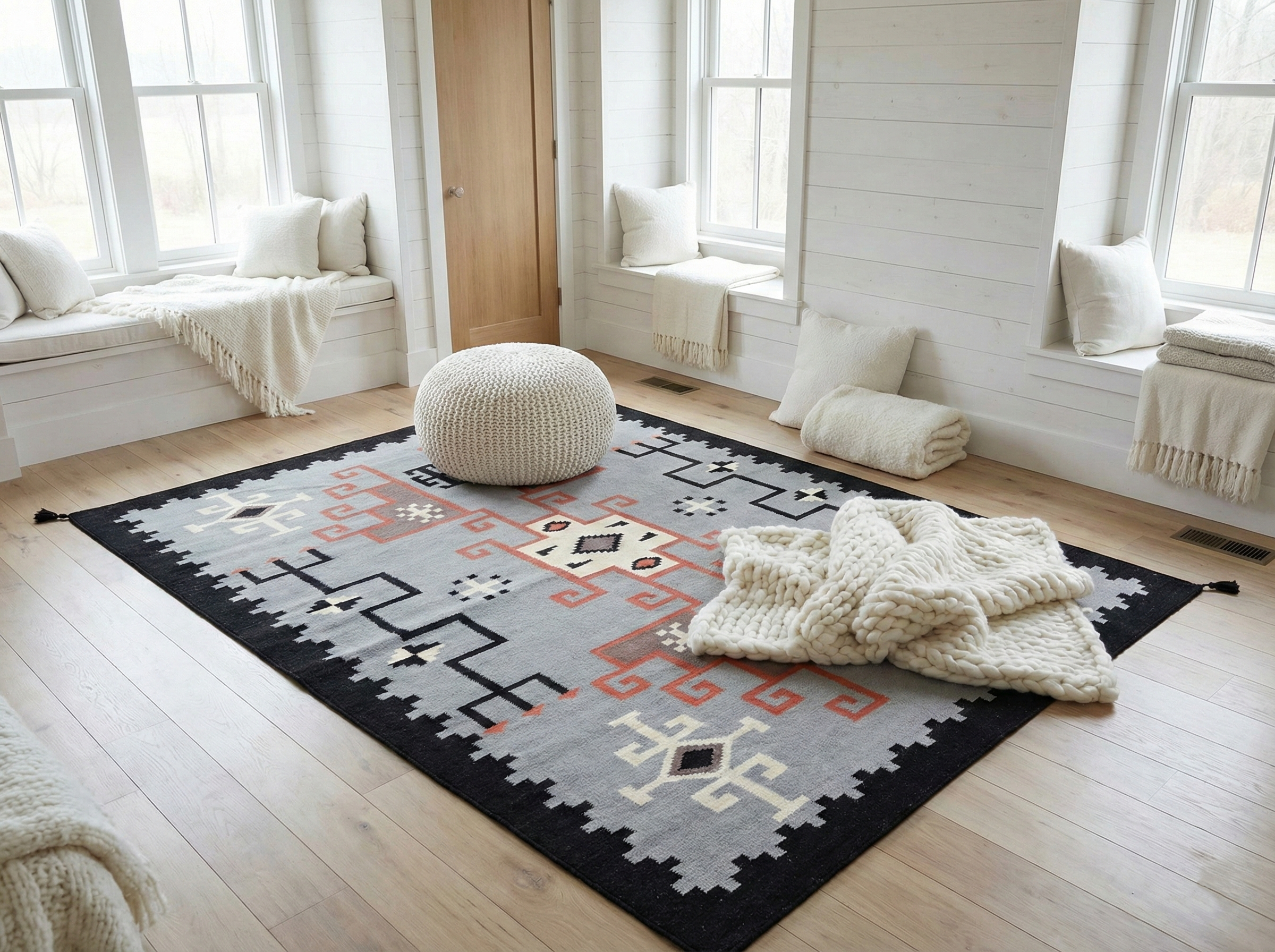
Medium Gray, Flat Weave, American Indian Southwest Geometric Design, Hand Woven, 100% Wool, Oriental Rug
This handcrafted American Indian Southwest Geometric Design is an authentic Pure Wool oriental rug. © 1800getarug.com


One of the most consistent technique to go back centuries, Kilim rugs were most likely first used by nomadic peoples of Middle East and Central Asia. The earliest examples were found around Khotan, present day Xinjiang, China, one of the centers of trade along the Silk Roads, and go back centuries. The name is derived from Turkish “gelim”, which means, “to spread” (as in, to spread a rug). Its pure geometrical designs are believed to have mystical, inspirational powers.

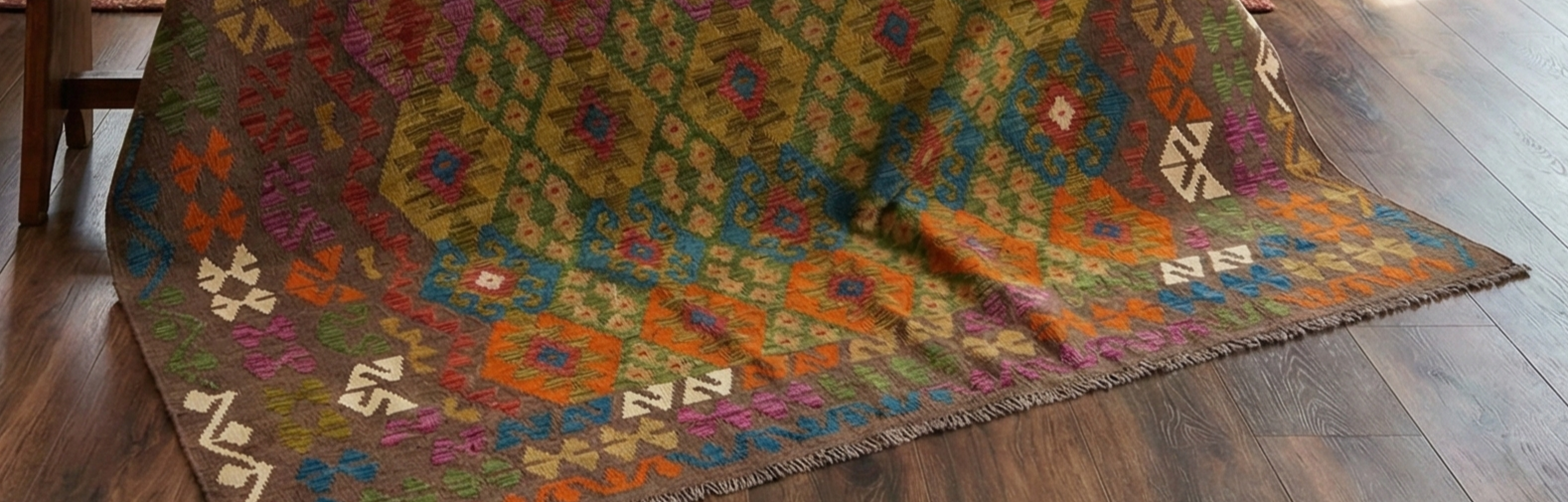
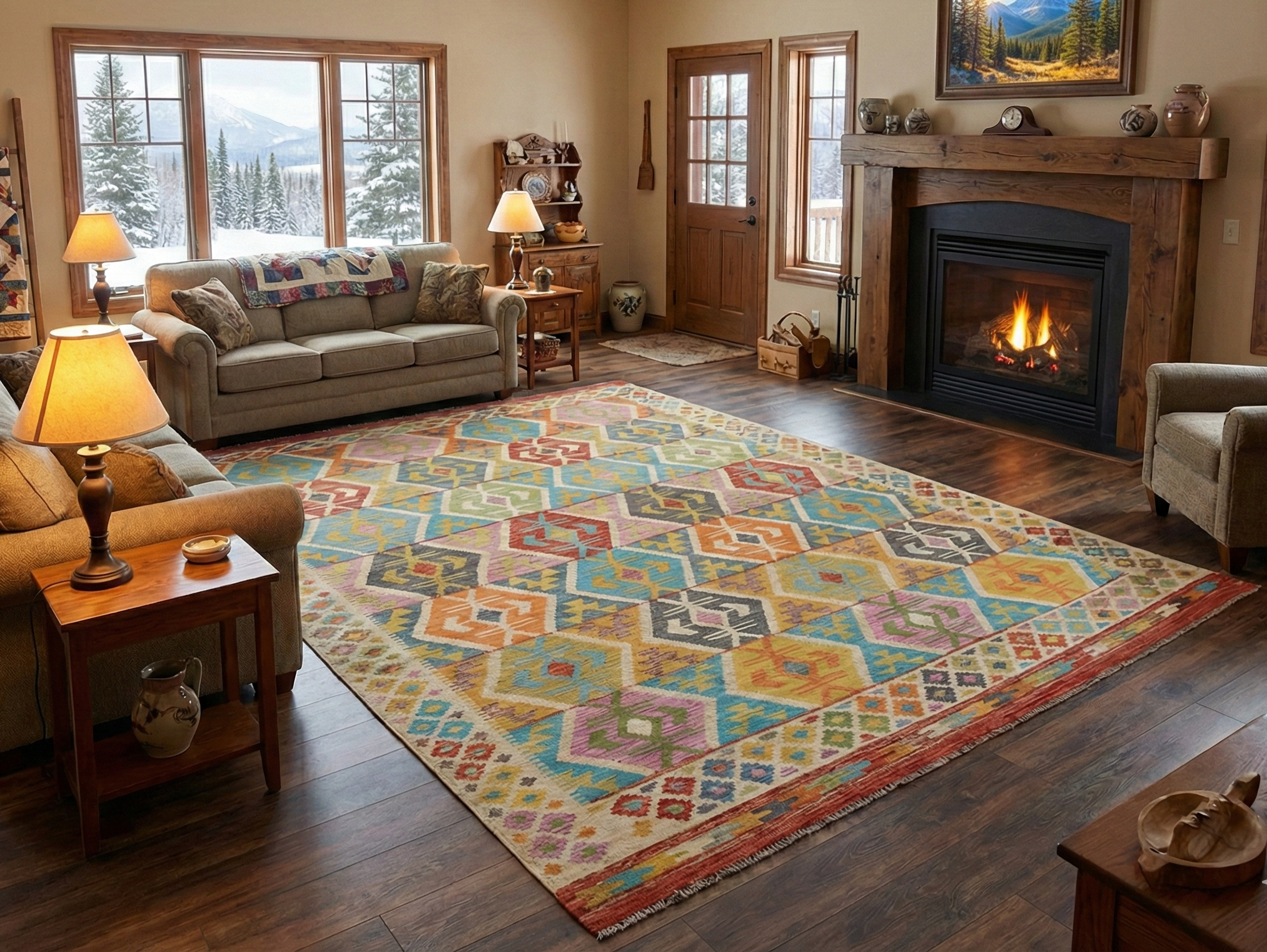
Bone White, Afghan Kilim with All Over Colorful Geometric Pattern, 100% Wool, Natural Dyes, Flat Weave, Hand Woven, Reversible, Oriental Rug
This handcrafted Afghan Kilim is an original Pure Wool oriental rug. © 1800getarug.com


To us, the most fascinating thing about the hand-woven Kilim rugs is the unique weaving technique, called slit weave. These rugs don’t have a pile, and are created by simply weaving the woolen wefts and the cotton or wool warps (thread ratio is 16 of weft, 14 of warp). Two different-colored weft blocks are tightly packed into the warp by a special comb and returned to original side once they reach each other, leaving a slight “gap” in between – the slit! This is the origin of the traditional Kilim motif: diagonal and horizontal lines, a pattern designed for durability.

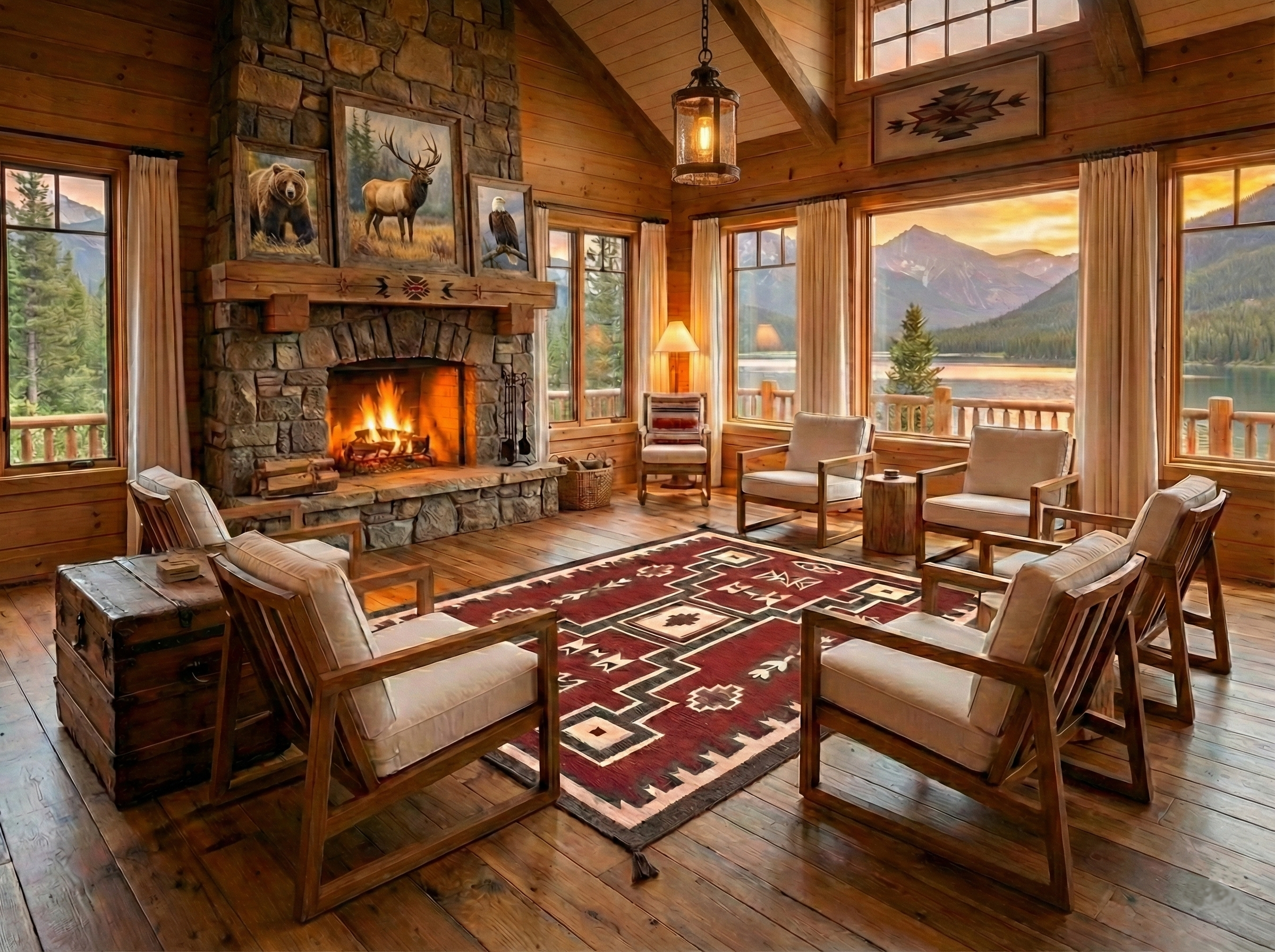
Coconut Brown, Hand Woven, Flat Weave, American Indian Southwest Geometric Design, 100% Wool, Oriental Rug
This handcrafted American Indian Southwest Geometric Design is an authentic Pure Wool oriental rug.© 1800getarug.com


While the traditional colors for these magical Kilim hand-woven rugs are blue, green, red, and yellow, the modern take on the carpets includes a variety of dyes and designs. Still these works of art are as versatile and affordable as they were centuries ago: they are easy to spread or fold, don’t crease; are great at being a centerpiece decoration, hanging on a wall or serving as a door step rug, or for saddling your mule, if the occasion truly calls for it!

Peach Color, Flat Weave, American Indian Southwest Geometric Design, 100% Wool, Hand Woven, Oriental Rug
This handcrafted American Indian Southwest Geometric Design is an authentic Pure Wool oriental rug. © 1800getarug.com


Don’t Have A Persian Rug in Every Single Room…Well What Are You Waiting For?!

So I’ve got this Persian friend whose sole purpose in life is to convince everyone she knows to buy Persian rugs.  Not only are Persian rugs necessary household items, but they should also be in every single room in every home.  True story, I learned.

I’ll never forget the look on my friend’s face when she first stepped onto my bedroom rug. It was, and I’m sorry to say, Ikea-ed to death.  Her face was a combination of pain, suffering, and sheer embarrassment.  The following day, she brought me to her house where I had my first foot-to-Persian rug experience, and I have to say, my toes were forever changed.   The beautiful hand knotted rug featured stunning colors and beautiful floral motifs.  The next day, I threw out my polyester Ikea rug in exchange for a Persian rug.  That very next morning, I woke up to find that I had somehow fallen asleep on my exquisite new rug, back-free pain and all.

Five and a half years later I have found myself advocating for Persian rugs, because frankly, nothing ties a room together better than a Persian rug, especially if you have got a beautiful Persian friend happily smiling beside you.

The Louvre Museum

My family, since before I can remember, has a long standing history of collecting antique Persian and oriental rugs. The care and time spent creating and weaving a hand knotted rug represents not only a rich history, but also beauty as well. On a recent trip to Paris, France, I visited the Louvre Museum that houses a Persian rug from the 16th century. The gift was given in 1914 buy Joanny Peytel and is titled “Carpet with animals”. The small rug is made entirely of silk and is said to have come from Kashan, Iran. This Persian rug features a rare indigo blue color and various pictures of animals frolicking on a field.

It was by luck that I came across this particular Persian rug while on holiday. The accentuated beauty, interesting motifs and designs, and rich colors of a rug from so many years ago before my eyes made me love Persian rugs even more. Now, nearly four centuries later, I was able to witness evidence that expert weavers knew what they were really doing since they continue to be in such good condition even today for myself. I’ve always purchased my Persian rugs from 1800GetARug.com because of their great prices and authenticity. With their help, I can bring what I love the most into my own home.

Hand Knotted Rugs For Your Handcrafted Home

Your home is so very important to you. Whether you live in a palatial mansion or a closet-like big city apartment, your space helps define you. You spend a lot of time finding just the right artfully decorative accessories and furniture that suits you and the space. You hand pick the things that matter to you and seem charming because you want your space to be yours.

With a hand knotted rug you can give the smallest or largest space a bit of handcrafted charm that will sync up perfectly with the more “lived in” particular choices you have made. It can really tie a room together or if spread through out your home it can tie the whole place together.

Knowing that these rugs are knotted by hand is incredibly special. To be able to notice and appreciate all of the work that actual people put into making these rugs is just astounding. It is rare these days that you have any connection to the goods in your home. These rugs can also find their way into hallways, bathrooms, and kitchenettes as hand knotted area rugs.

We have so many things that are built by robots and machines these days. It is nice to think about someone somewhere actually making a thing as beautiful as a rug.