The Essence: Rug Knots


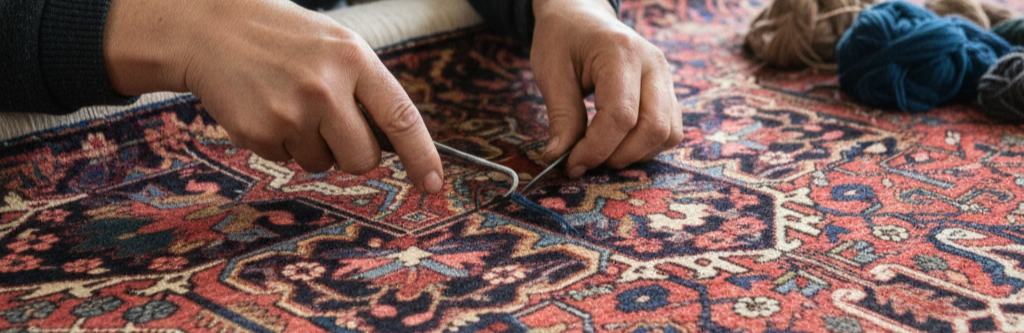
Before we think about technology and machinery, coloring and design, hand skill and passed-on knowledge, there is one single, elemental component to rug weaving: the knot. Rug knot is such a simple concept that one might overlook its central position in rug structure, look and durability.
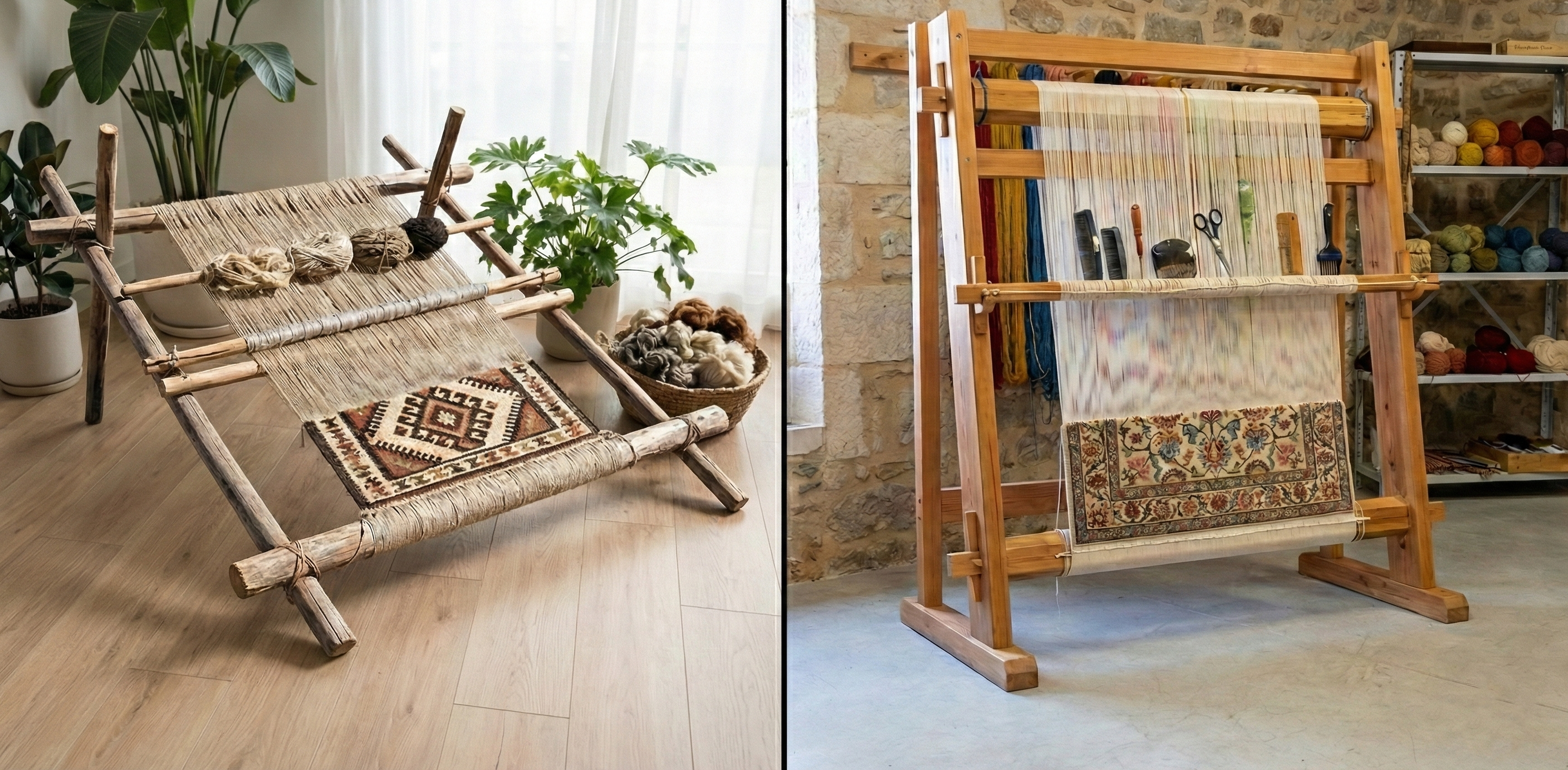
nomad or a village hand-woven rug
Nomadic Loom.  –  Village / workshop Loom.  ©1800getarug.com


There are two ways a rug knot is defined: density and type. When choosing a nomad or a village hand-woven rug, one might not consider the density of the knot a major factor. These traditional articles are made either within a season – and therefore fast – or with simple looms, and usually contain about 25-100 knots per square inch. Other factors are at play here: originality of the individual artist’s design (from memory), natural local dyes, manual labor, and plenty of love.
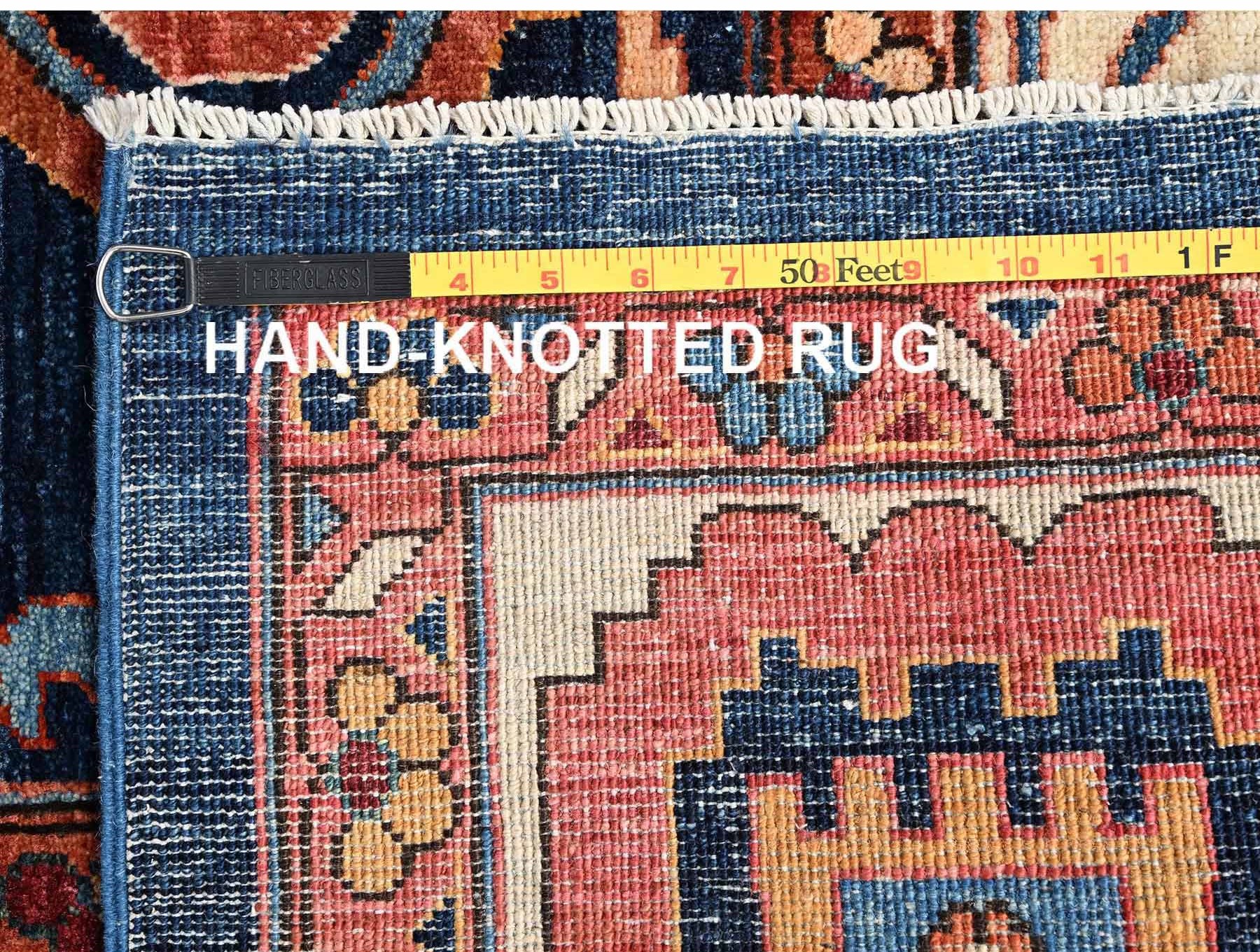
Sun Baked Orange, Serapi Heriz with Large Medallion Design, Vegetable Dyes, Hand Knotted, Aryana Grade, High Mountain Wool, Soft Pile, Densely Woven, Oriental Rug
Close-up of a Kazak rug. Notice the rather closely woven rug knots. ©1800getarug.com


The workshop hand-made rugs, however, are woven on a much more sophisticated machinery. Precision is therefore a major factor- on par with design and authenticity. The knot density ranges between 100-1000 knots per square inch. If you consider that each knot takes about 10 seconds to complete, it is astounding how long finishing a large enough rug may take, keeping in mind a rather high knot density.
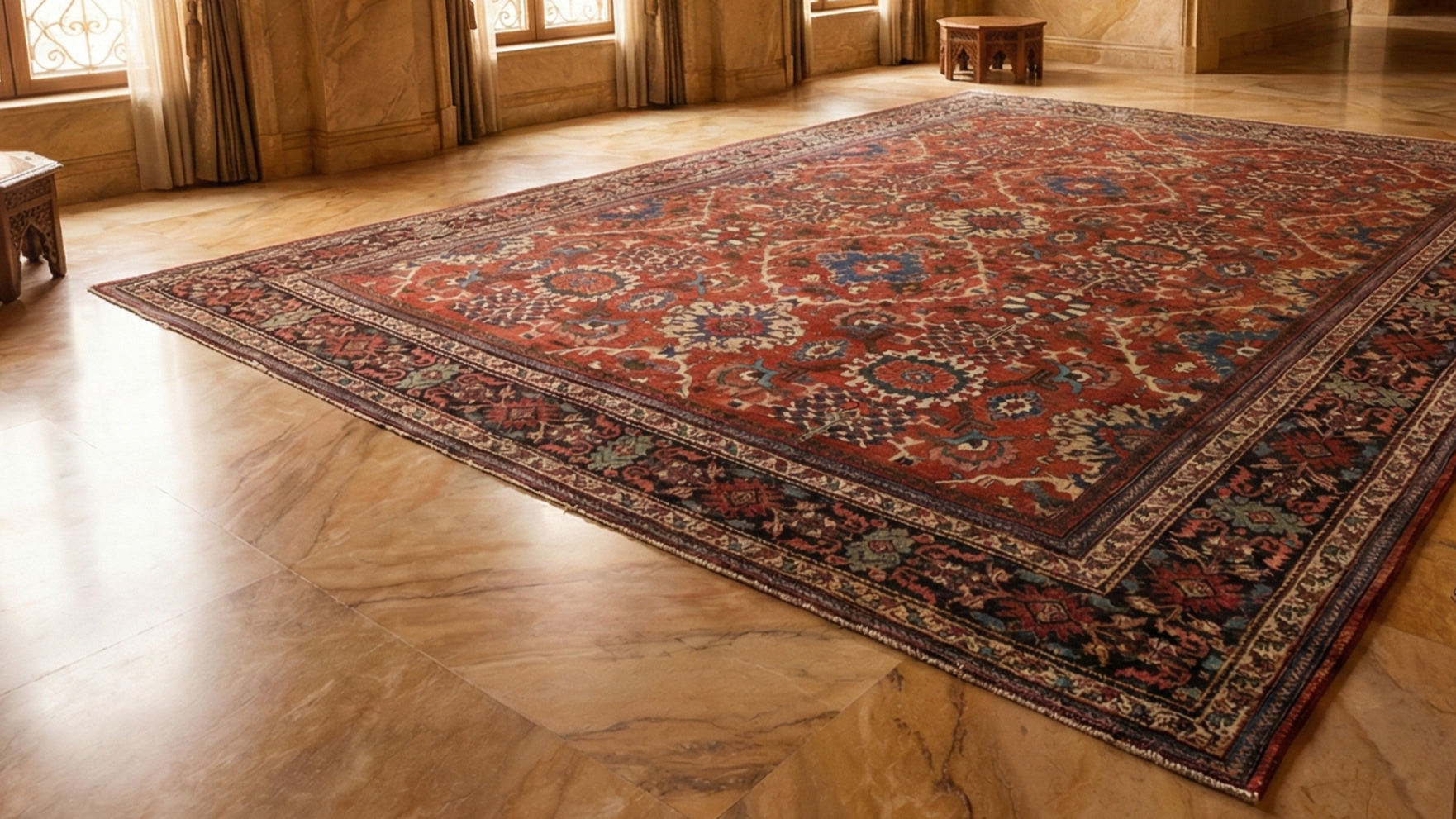
Terracotta Antique Persian Mahal Good Condition with Some Wear Clean Hand Knotted Oriental Rug
This Handcrafted Antique Persian , is an original Pure Wool oriental rug. ©1800getarug.com


The other way of thinking of a rug knot is its method, with two predominant ones being symmetrical and asymmetrical. Popular in most of Iran, India, Egypt, China, and parts of Turkey, the asymmetrical, or Persian Senneh, have their knot loops tied around two warps and come up on the same sides to make the rug tufts. The Turkish Ghiordes knot (the symmetrical one) goes around two warp threads on opposite sides and comes up in the middle. The most commonly used knots are slight variations on the Persian one. The Tibetan knot is perhaps the most interesting one, wrapping around warps in a complex fashion and reminiscent of Indic script.
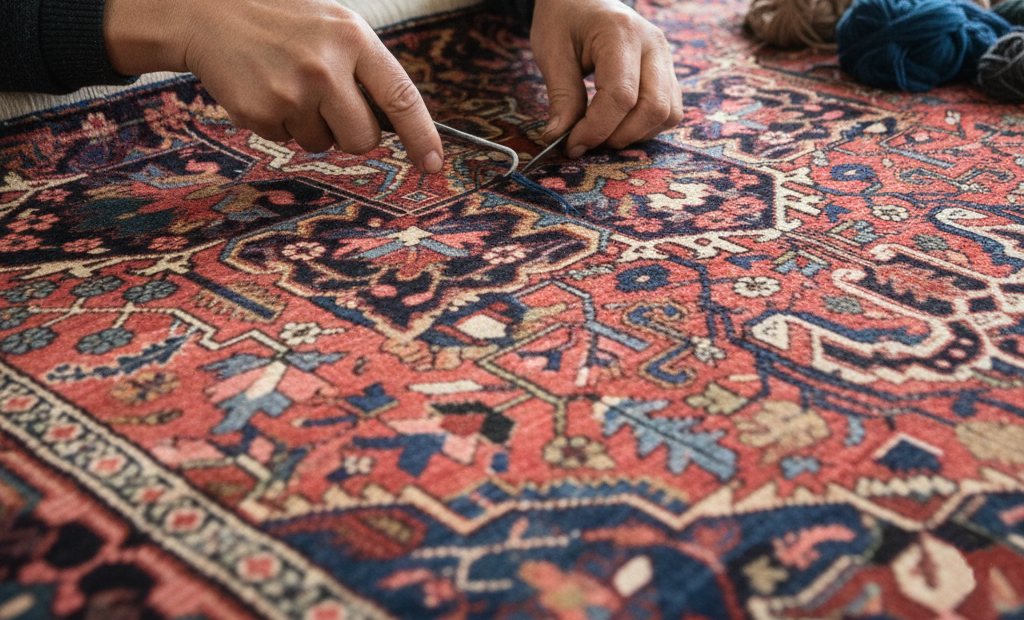
Fire Whirl Red, Antique Persian Heriz, Good Condition, Clean, Sides and Ends Professionally Secured, 100% Wool, Hand Knotted, Oriental Rug
An Illustration of a Persian Knot. ©1800getarug.com


The study of rug knots is not necessarily complex, but it certainly is full of grace and style, which is necessary for understanding the structure, design, and feel of these wonderful hand-woven rugs that we cherish throughout our lives.



The simple beauty of Kilim Flatweave rugs


Sometimes things can be uncomplicated, sometimes they can be understated. Sometimes the beauty comes from the simplicity of the design and execution. Look no further than Kilim hand-woven rugs, classic flatweave carpets known for their unique contained look and versatility.

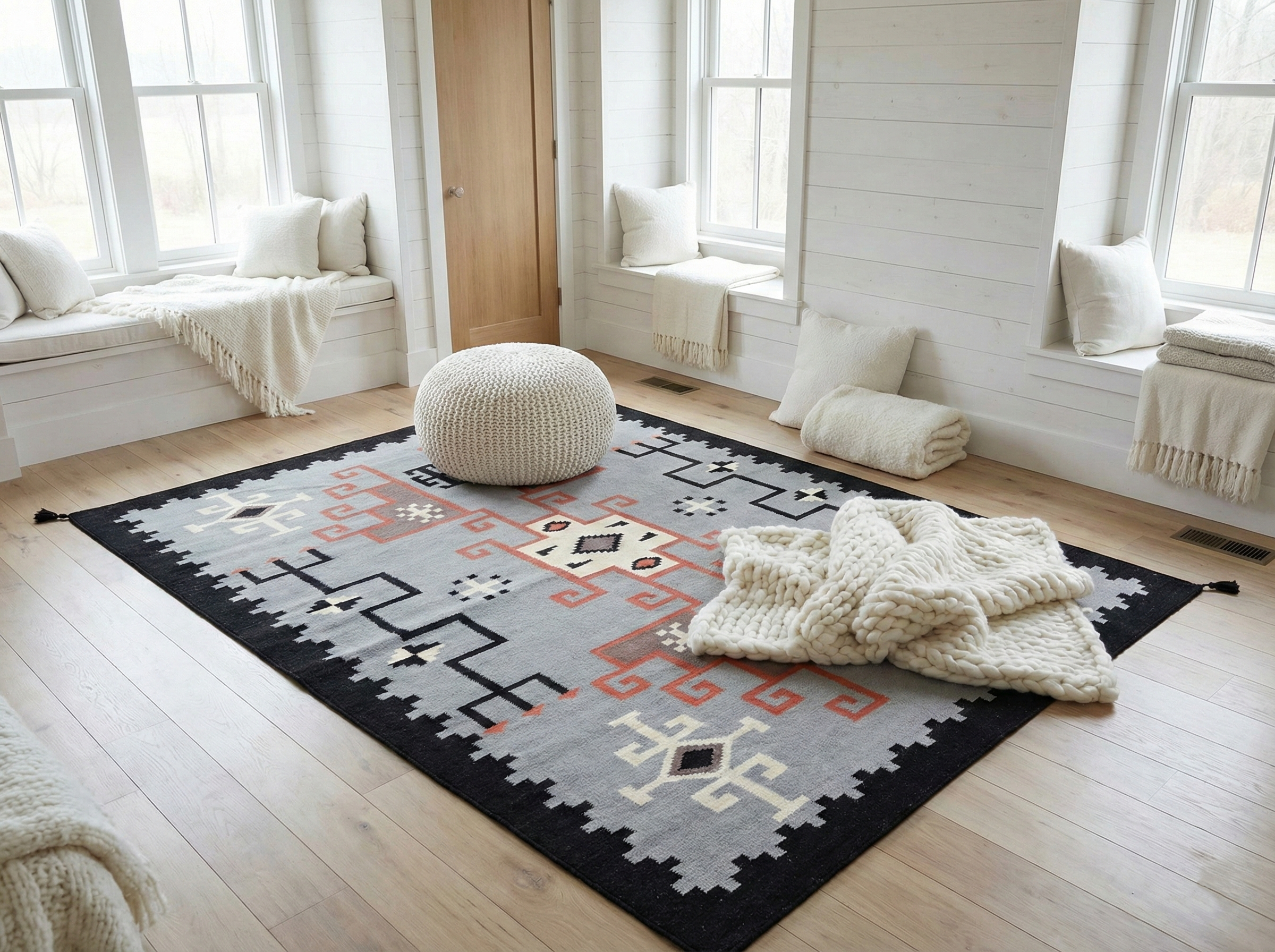
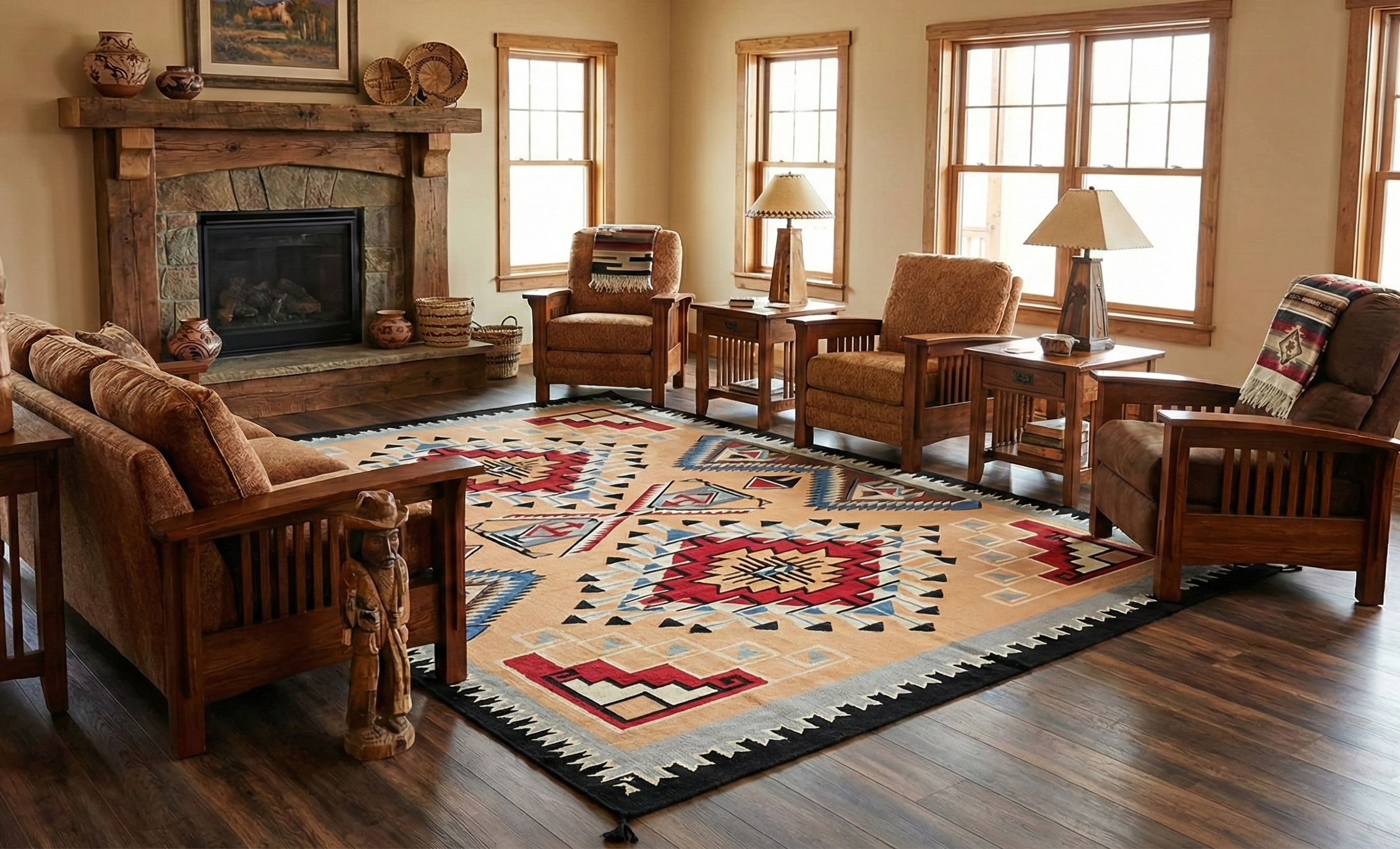
Medium Gray, Flat Weave, American Indian Southwest Geometric Design, Hand Woven, 100% Wool, Oriental Rug
This handcrafted American Indian Southwest Geometric Design is an authentic Pure Wool oriental rug. © 1800getarug.com


One of the most consistent technique to go back centuries, Kilim rugs were most likely first used by nomadic peoples of Middle East and Central Asia. The earliest examples were found around Khotan, present day Xinjiang, China, one of the centers of trade along the Silk Roads, and go back centuries. The name is derived from Turkish “gelim”, which means, “to spread” (as in, to spread a rug). Its pure geometrical designs are believed to have mystical, inspirational powers.

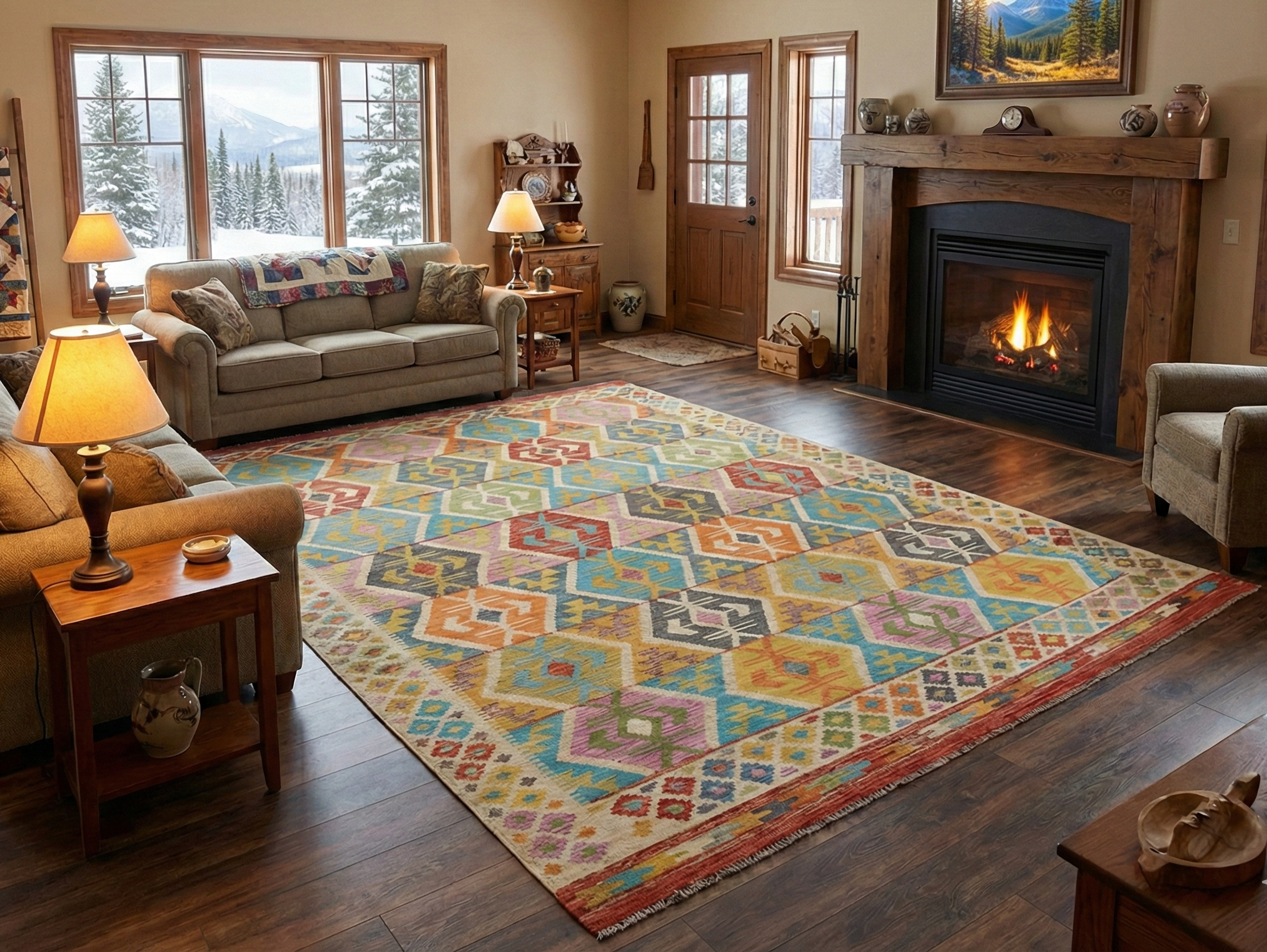
Bone White, Afghan Kilim with All Over Colorful Geometric Pattern, 100% Wool, Natural Dyes, Flat Weave, Hand Woven, Reversible, Oriental Rug
This handcrafted Afghan Kilim is an original Pure Wool oriental rug. © 1800getarug.com


To us, the most fascinating thing about the hand-woven Kilim rugs is the unique weaving technique, called slit weave. These rugs don’t have a pile, and are created by simply weaving the woolen wefts and the cotton or wool warps (thread ratio is 16 of weft, 14 of warp). Two different-colored weft blocks are tightly packed into the warp by a special comb and returned to original side once they reach each other, leaving a slight “gap” in between – the slit! This is the origin of the traditional Kilim motif: diagonal and horizontal lines, a pattern designed for durability.

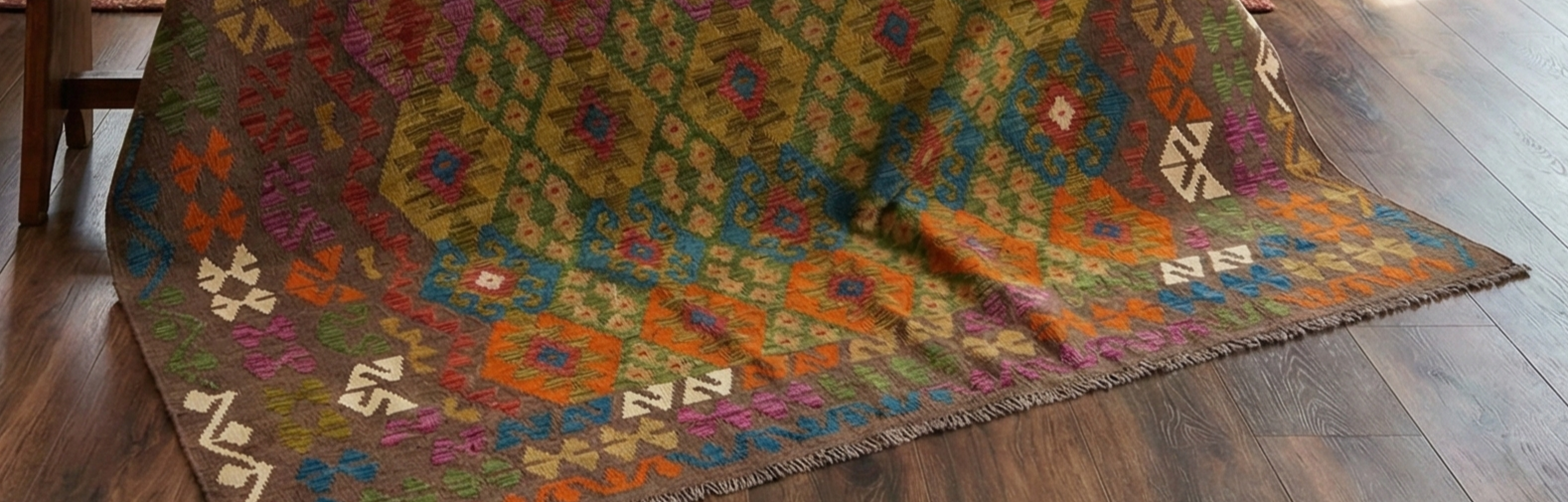
Coconut Brown, Hand Woven, Flat Weave, American Indian Southwest Geometric Design, 100% Wool, Oriental Rug
This handcrafted American Indian Southwest Geometric Design is an authentic Pure Wool oriental rug.© 1800getarug.com


While the traditional colors for these magical Kilim hand-woven rugs are blue, green, red, and yellow, the modern take on the carpets includes a variety of dyes and designs. Still these works of art are as versatile and affordable as they were centuries ago: they are easy to spread or fold, don’t crease; are great at being a centerpiece decoration, hanging on a wall or serving as a door step rug, or for saddling your mule, if the occasion truly calls for it!

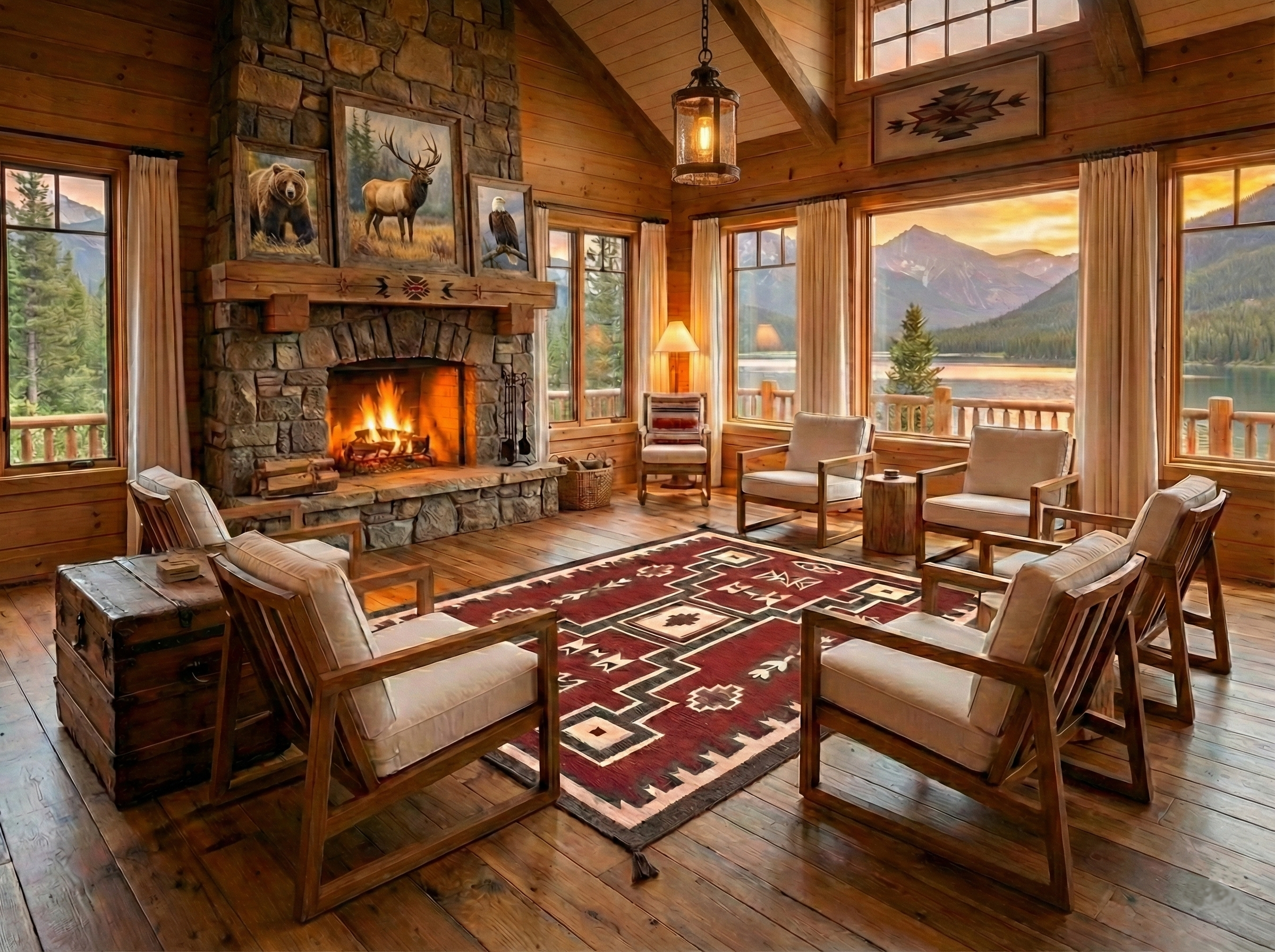
Peach Color, Flat Weave, American Indian Southwest Geometric Design, 100% Wool, Hand Woven, Oriental Rug
This handcrafted American Indian Southwest Geometric Design is an authentic Pure Wool oriental rug. © 1800getarug.com


What are Peshawar Hand-Woven rugs?


Looking into our rugs is sometimes like looking into the depths of history. The Peshawar rugs take us to one of the greatest depths. One of the epicenters of the great Silk Roads, the city of Peshawar was, quite literally on the map since the 5th century B.C. From the ancient Persians and the Hellenistic descendants of Alexander the Great, to the medieval Mongols and finally the Muslim empires. Peshawar commanded authority throughout the region, housing millions of citizens and invariably creating and absorbing culture for centuries. Some may argue the Mughal era of rule over the region was one of the most successful in last few centuries and has inspired some of the most fascinating and impressive works of art.

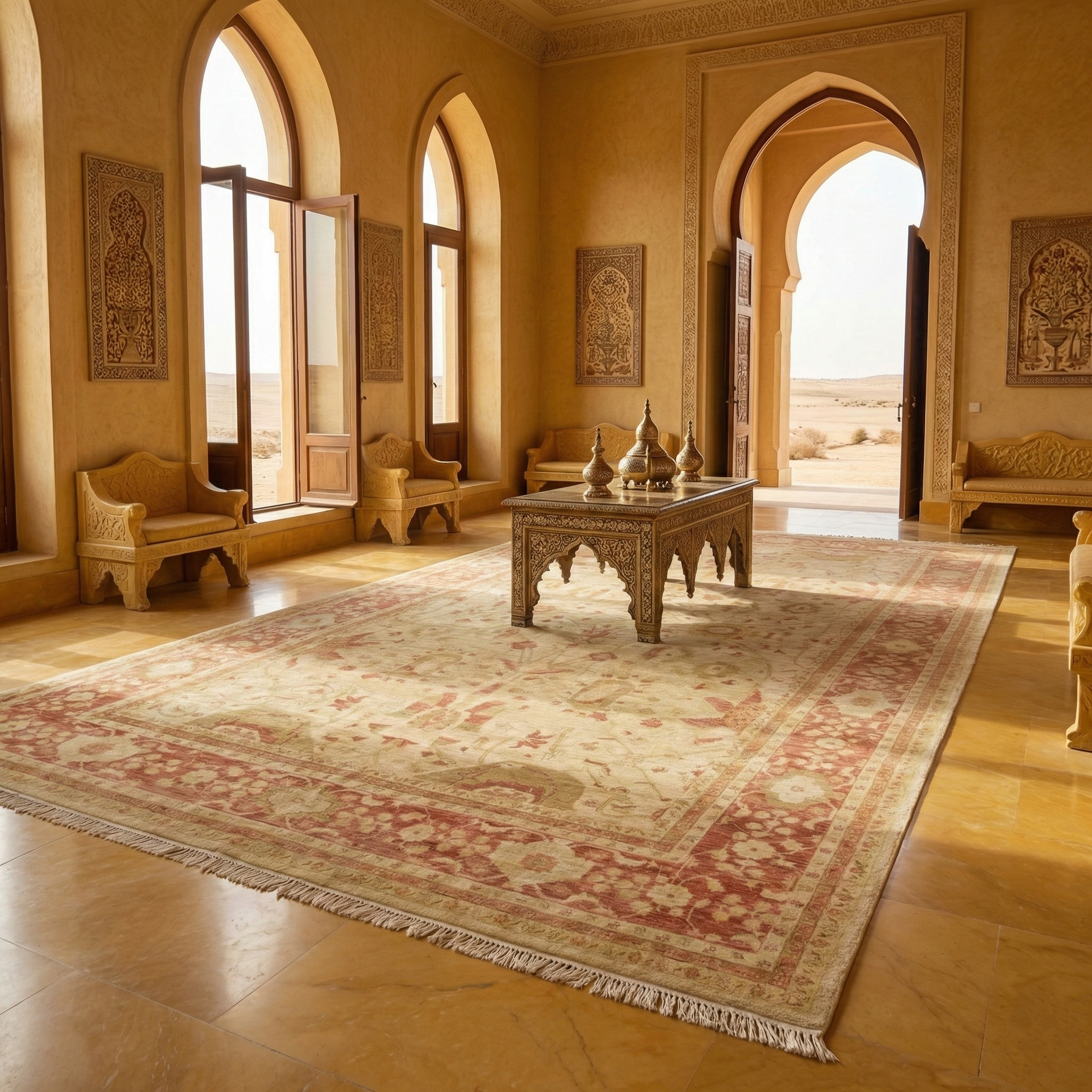
Beige, Afghan Peshawar with All Over Mahal Design, Clean, Full Pile, Long and Narrow, 100% Wool, Hand Knotted, Oriental Rug
This handcrafted Afghan Peshawar is an authentic Wool oriental rug. ©1800getarug.com


Perhaps the best time capsule of this Mughal artistry is the hand-woven Peshawar rug, whose designs evolved through the centuries but with mastery that never dwindled. In the 16th century, emperor Akbar had ordered the construction of rug weaving workshops and fostered the knowledge exchange with the Persian artisans to reinforce the local style. In the 20th, after the crumbling of British colonialism the existing industry simply needed a push from the newly independent government to survive and to flourish.

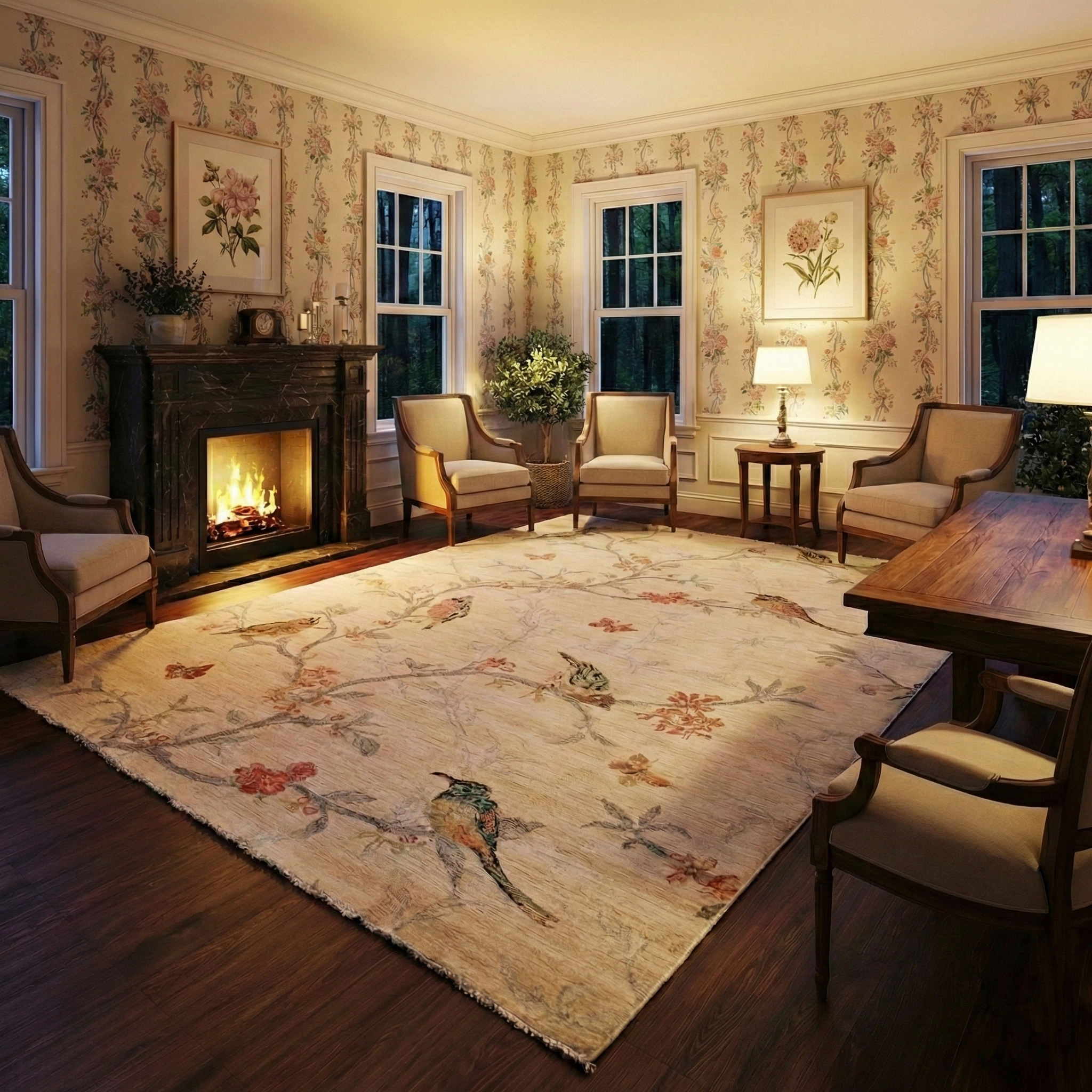
Chiffon White, Sparrows on the Tree, Peshawar, High Mountain Wool, Hand Knotted, Soft to the Touch, Densely Woven, Oriental Rug
Chiffon White, Sparrows on the Tree, Peshawar, High Mountain Wool, Hand Knotted, Soft to the Touch, Densely Woven, Oriental Rug  ©1800getarug.com


Traditional Peshawar rugs are always hand-woven, and feature a pure high mountain hand-spun wool pile, although sometimes, in select rugs, fine merino wool is blended in – that makes the rugs look slicker. Occasionally silk is woven in as well, especially if the artist wants to highlight a motif. The weft and warp are cotton, for the strongest support. The resulting rugs are durable and reliable, but are luxurious and extremely soft to the touch.

Rust Orange, Afghan Peshawar with Heriz All Over Design, Hand Knotted, Soft 100% Wool, Densely Woven, Oriental Rug
This handcrafted Heriz All Over Design is an original Pure Wool oriental rug. ©1800getarug.com


The design of the rugs, as chronicled in history, is heavily influenced by ancient Persian rug motifs. The colors, usually light and earthy and derived from sun-dried vegetable dyes, give the rugs its characteristic antique and washed-out look. But whether they are stonewashed and have their piles cut shorter, or the modernist take will have the colors pop, you are sure to be mesmerized by the deep richness and artistry that are the Peshawar rugs.

Maya Blue, Afghan Peshawar with Heriz All Over Design, Hand Knotted, 100% Wool, Densely Woven, Oriental Rug
This handcrafted Heriz All Over Design is an original Pure Wool oriental rug. © 1800getarug.com


The Dirty Persian Rug Test

Feel like your Oriental rugs or Persian rugs are dirty? Having a hard time remembering what color it was when you first bought it? Chances are, it’s filthy, either that, or you’re losing your mind. Most hand knotted Oriental or Persian rugs require a yearly cleaning, depending on a couple of factors. Performing the dirty Persian rug test is one way to tell.

Try one of the following methods to see if your rug needs a cleaning:

  1. Moisten a white towel and gently rub back and forth; if the towel is soiled, it’s time for a cleaning!
  2. Pick up the corner of your rug and give it a swift kick; if a little cloud of dust emerges, it’s time for a cleaning!
  3. Lift up a corner of your rug so that the backside is facing you; fold the corner down and over so you can get a good look of the crevices your vacuum can’t reach. If you see debris, dust, or fibers, it’s time for a cleaning!

In terms of self-cleaning, the process is a bit more complicated. If your task is to clean a large area rug, stop and call a professional. The smaller the rug, the easier it is to clean, and the less likely you’ll be to ruin the entire rug. Now cleaning a rug is similar to washing your hair. But before you start anything, test a small patch to check for color runs! Firstly, remove any debris with a quick vacuum job, lather your rug with shampoo and water, rinse thoroughly with water, squeeze excess water out, and lay flat to dry.

To maintain a clean rug, avoid wearing shoes inside the house or try vacuuming once a month to get rid of dust and fibers. Stick with these few tips and you’ll be more likely to see your rug’s true colors.

All About Vegetable Dyed Rugs

There is a common notion among new rug buyers that vegetable dyed rugs are more desirable and are of higher quality than synthetic rugs. Vegetable dyes are considered to be more old world and traditional than the synthetic. Synthetic dyes are thought to be more commercial.

However, vegetable dyes are highly corrosive to the wool, and may cause rugs to wear faster than synthetic dyes. For instance, it is often seen that the vegetable black used in many Turkish and Balouch rugs is so corrosive that the black colored pile will be completely worn away, and other colors will still be thick and fully piled. However, many don’t realize that synthetic dyes were introduced to weaving areas between 1875 and 1890, and by the turn of century were available to many weavers in rural areas.

So that means just because a rug is old, doesn’t necessarily mean that a rug is vegetable dyed. In the past twenty years or so, there has been a large influx in the quantity and variety of new vegetable dyed rugs on the market. The three most commonly used vegetable dyes are indigo, madder, and larkspur. These dyes produce dark navy blue, dark rusty red, and muted gold.

Hand Knotted Rugs For Your Handcrafted Home

Your home is so very important to you. Whether you live in a palatial mansion or a closet-like big city apartment, your space helps define you. You spend a lot of time finding just the right artfully decorative accessories and furniture that suits you and the space. You hand pick the things that matter to you and seem charming because you want your space to be yours.

With a hand knotted rug you can give the smallest or largest space a bit of handcrafted charm that will sync up perfectly with the more “lived in” particular choices you have made. It can really tie a room together or if spread through out your home it can tie the whole place together.

Knowing that these rugs are knotted by hand is incredibly special. To be able to notice and appreciate all of the work that actual people put into making these rugs is just astounding. It is rare these days that you have any connection to the goods in your home. These rugs can also find their way into hallways, bathrooms, and kitchenettes as hand knotted area rugs.

We have so many things that are built by robots and machines these days. It is nice to think about someone somewhere actually making a thing as beautiful as a rug.