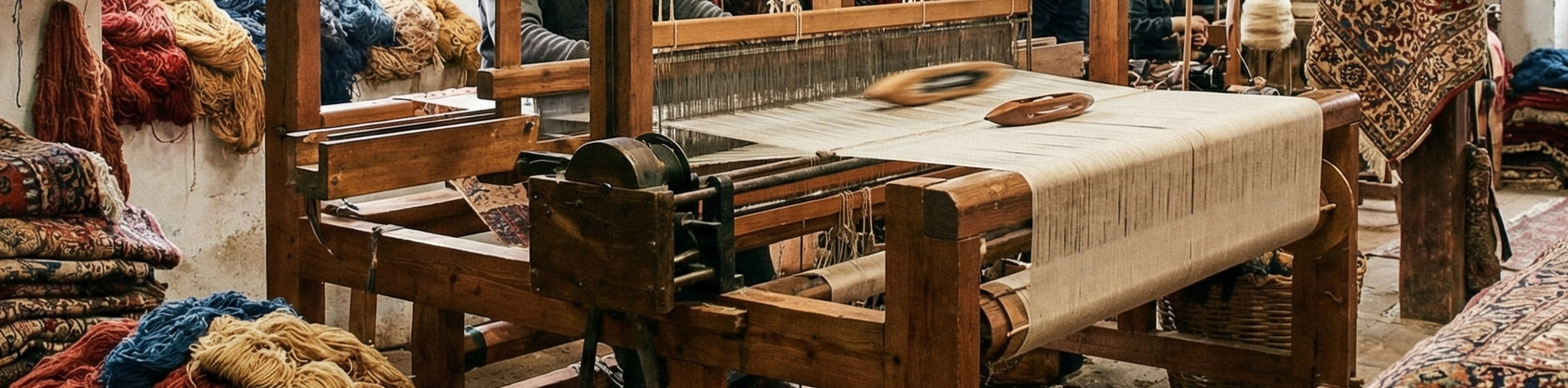
From the most basic designs to sophisticated machinery, the venerable loom is at the heart of rug making and is a key invention that heralded each of the eras of human technical advances, bringing people together.
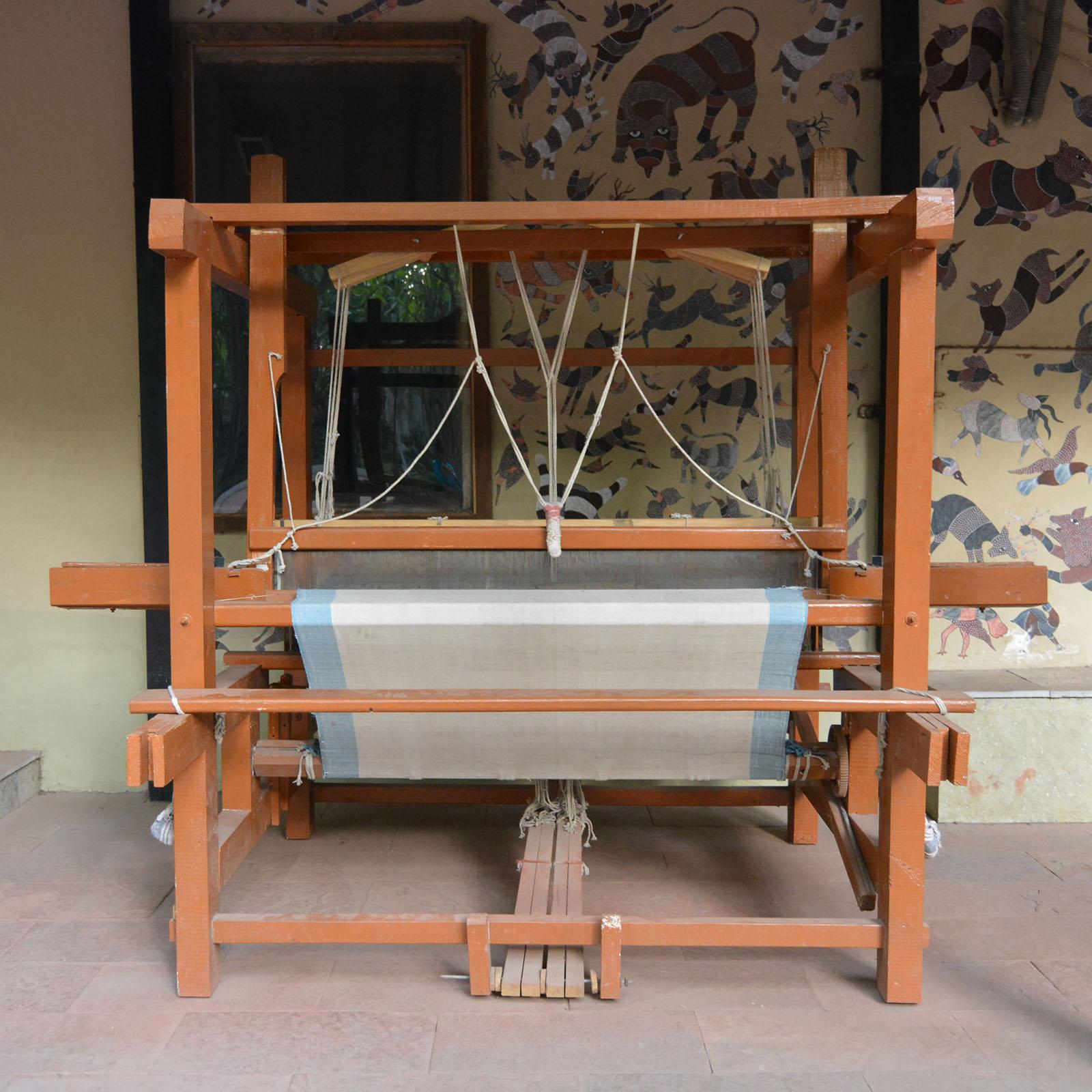
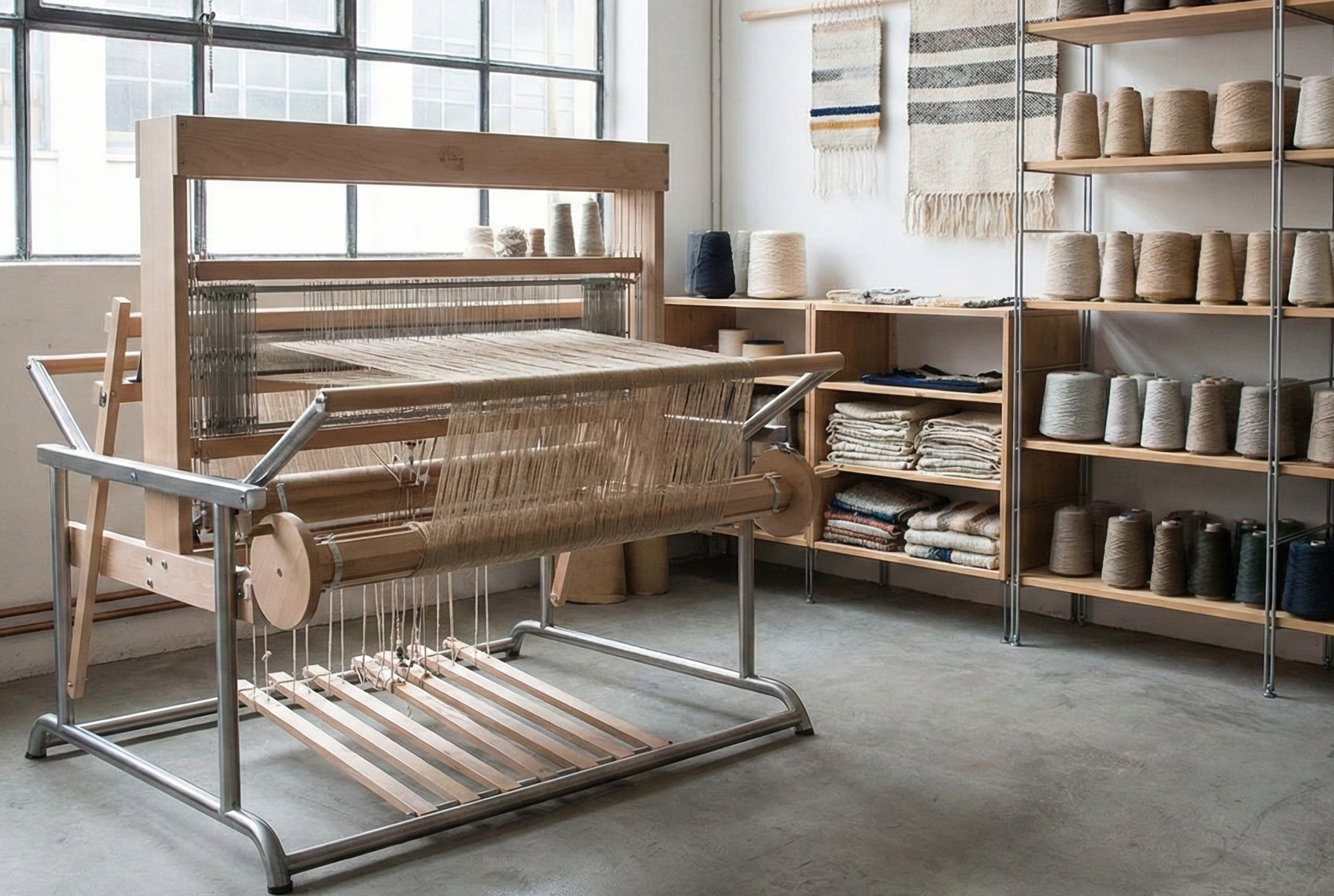
While it may look a bit intimidating, the loom is a rather simple construction, at its core. An interlocking structure of moving wooden beam frames is strung tightly together by yarn (warp) to create the rug foundation while a second yarn (weft) is passed through perpendicularly to hold the rug together. The pile yarn would then be woven into the rug base to create the visual patterns and texture of hand-woven carpets.
The process of weaving is traced back to the Neolithic age when its invention helped herald the agricultural revolution by both utilizing the newly mastered control over crops and techniques of extracting yarn from wool, and by helping make a home. Regular settlements and the nomads could use comfortable and beautiful rugs on their floors and walls, warming their abodes both literally and figuratively. Many rituals evolved to include rugs in them ever since.
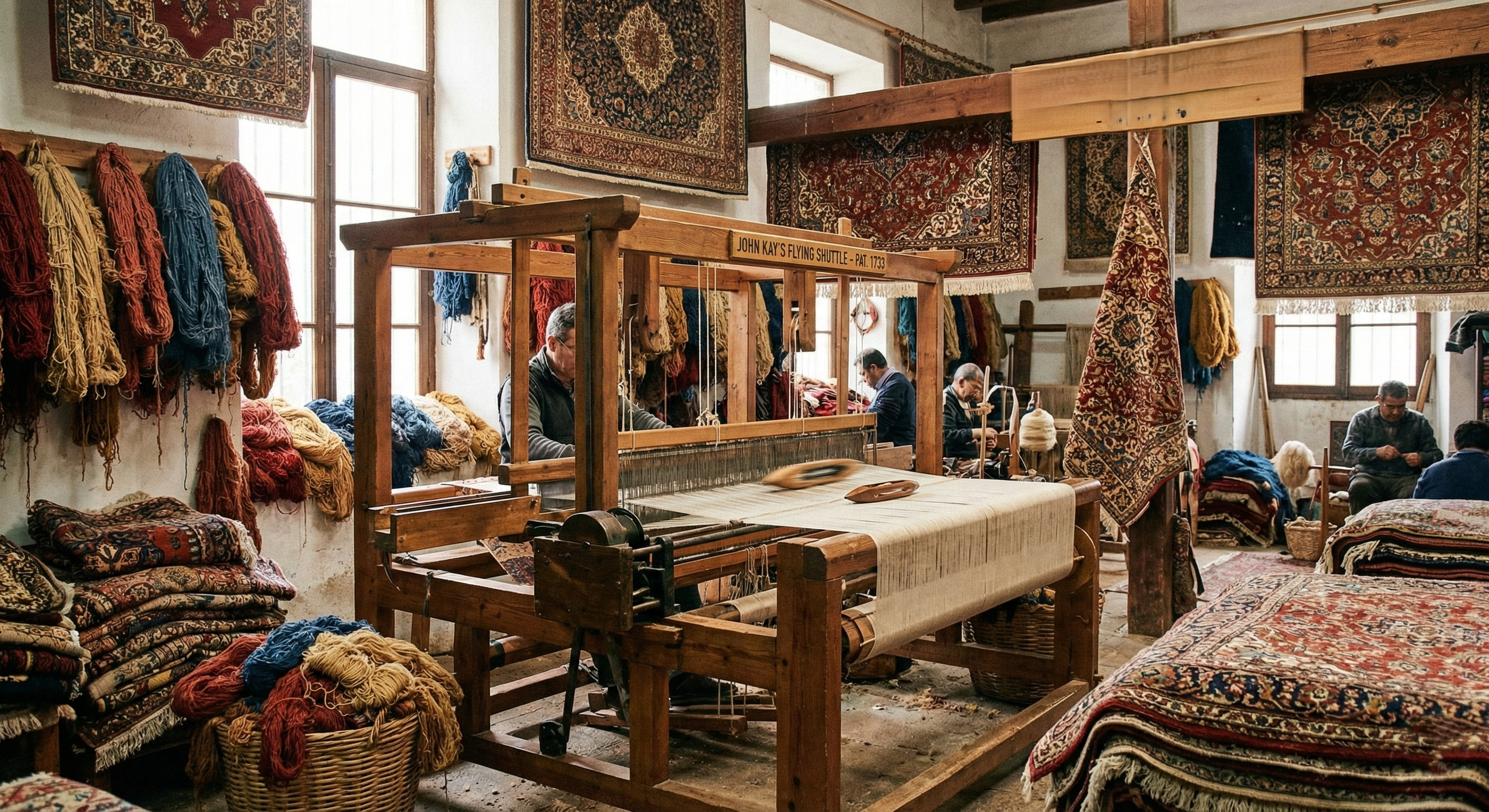
For all these millennia and all this prehistoric art, the basic loin loom was utilized, until later advances in the Middle Ages. The weavers used a very simple construction and their own body tension needed to make a rug for a perfect purpose. Later evolutions of the loom included stationary, heavier looms where separate heddles could be lifted to create complex designs, administered by a second weaver if the rug is too big. In 1773, a British weaver John Kay invented the flying shuttle, which could be flung across and around the loom, eliminating the need for the second person.
By twentieth century the looms became fully mechanized and powered electrically. This final stage has dramatically reduced the labor and increased production. That being said, the automated looms will of course never achieve the artistry, attention, and skill of experienced master weaver hands.
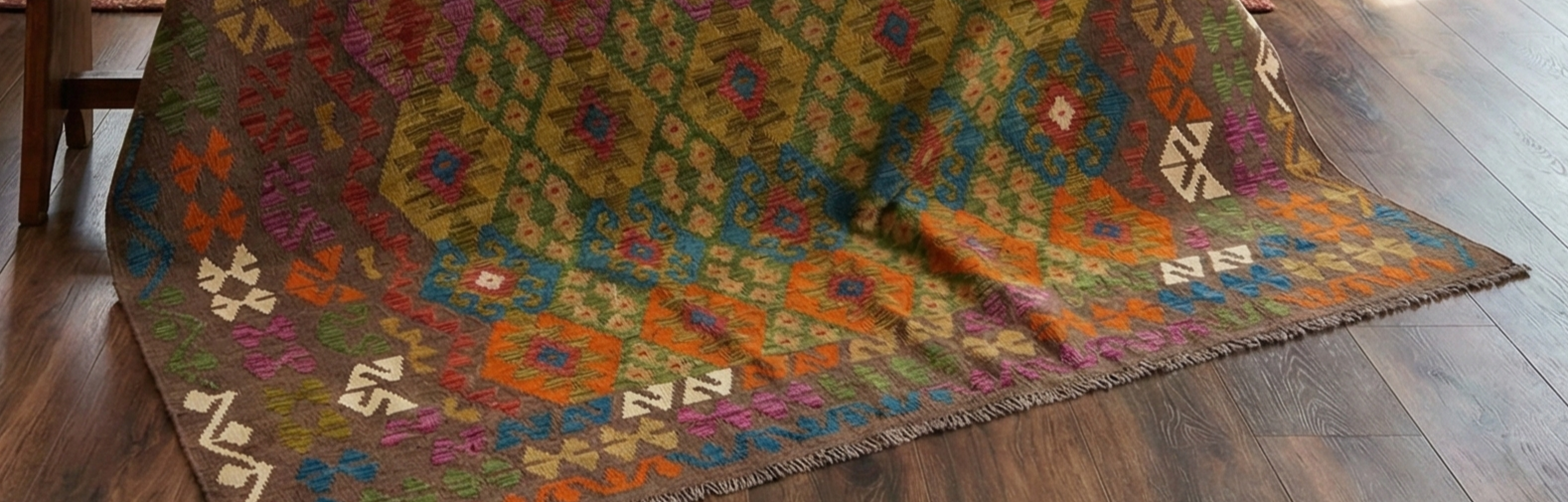
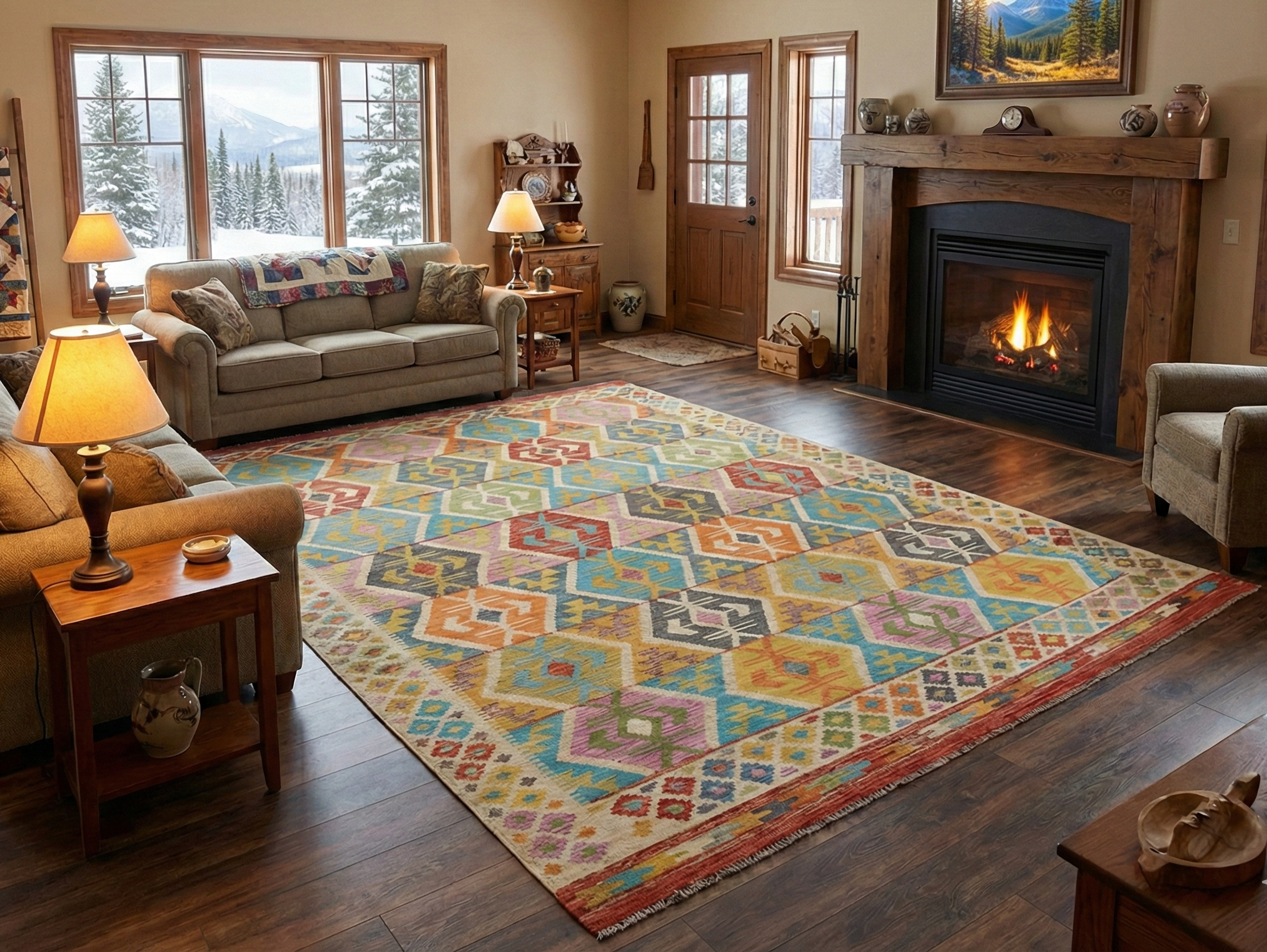
Sometimes things can be uncomplicated, sometimes they can be understated. Sometimes the beauty comes from the simplicity of the design and execution. Look no further than Kilim hand-woven rugs, classic flatweave carpets known for their unique contained look and versatility.
One of the most consistent technique to go back centuries, Kilim rugs were most likely first used by nomadic peoples of Middle East and Central Asia. The earliest examples were found around Khotan, present day Xinjiang, China, one of the centers of trade along the Silk Roads, and go back centuries. The name is derived from Turkish “gelim”, which means, “to spread” (as in, to spread a rug). Its pure geometrical designs are believed to have mystical, inspirational powers.
To us, the most fascinating thing about the hand-woven Kilim rugs is the unique weaving technique, called slit weave. These rugs don’t have a pile, and are created by simply weaving the woolen wefts and the cotton or wool warps (thread ratio is 16 of weft, 14 of warp). Two different-colored weft blocks are tightly packed into the warp by a special comb and returned to original side once they reach each other, leaving a slight “gap” in between – the slit! This is the origin of the traditional Kilim motif: diagonal and horizontal lines, a pattern designed for durability.
While the traditional colors for these magical Kilim hand-woven rugs are blue, green, red, and yellow, the modern take on the carpets includes a variety of dyes and designs. Still these works of art are as versatile and affordable as they were centuries ago: they are easy to spread or fold, don’t crease; are great at being a centerpiece decoration, hanging on a wall or serving as a door step rug, or for saddling your mule, if the occasion truly calls for it!
Looking into our rugs is sometimes like looking into the depths of history. The Peshawar rugs take us to one of the greatest depths. One of the epicenters of the great Silk Roads, the city of Peshawar was, quite literally on the map since the 5th century B.C. From the ancient Persians and the Hellenistic descendants of Alexander the Great, to the medieval Mongols and finally the Muslim empires. Peshawar commanded authority throughout the region, housing millions of citizens and invariably creating and absorbing culture for centuries. Some may argue the Mughal era of rule over the region was one of the most successful in last few centuries and has inspired some of the most fascinating and impressive works of art.
Perhaps the best time capsule of this Mughal artistry is the hand-woven Peshawar rug, whose designs evolved through the centuries but with mastery that never dwindled. In the 16th century, emperor Akbar had ordered the construction of rug weaving workshops and fostered the knowledge exchange with the Persian artisans to reinforce the local style. In the 20th, after the crumbling of British colonialism the existing industry simply needed a push from the newly independent government to survive and to flourish.
Traditional Peshawar rugs are always hand-woven, and feature a pure high mountain hand-spun wool pile, although sometimes, in select rugs, fine merino wool is blended in – that makes the rugs look slicker. Occasionally silk is woven in as well, especially if the artist wants to highlight a motif. The weft and warp are cotton, for the strongest support. The resulting rugs are durable and reliable, but are luxurious and extremely soft to the touch.
The design of the rugs, as chronicled in history, is heavily influenced by ancient Persian rug motifs. The colors, usually light and earthy and derived from sun-dried vegetable dyes, give the rugs its characteristic antique and washed-out look. But whether they are stonewashed and have their piles cut shorter, or the modernist take will have the colors pop, you are sure to be mesmerized by the deep richness and artistry that are the Peshawar rugs.
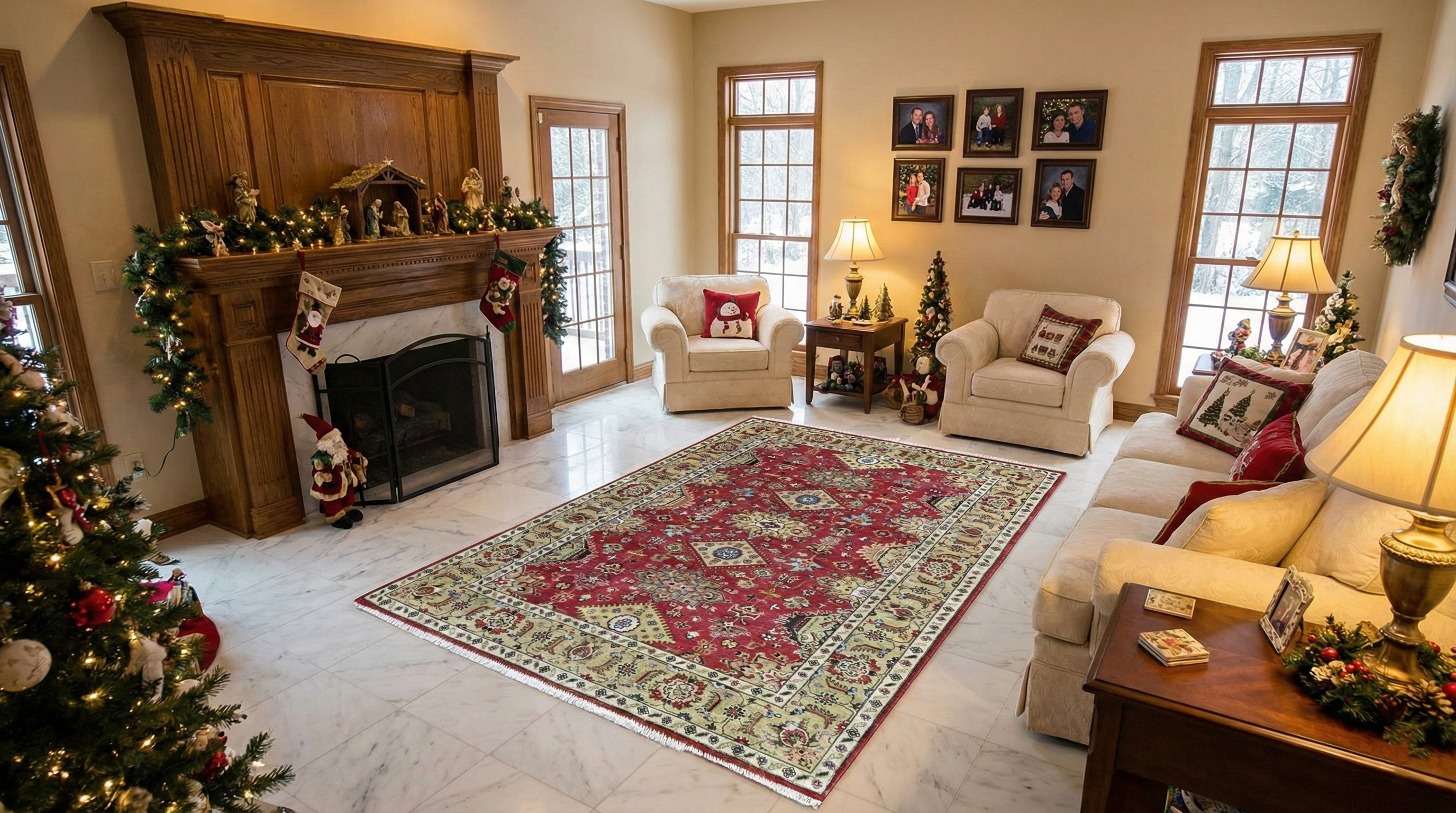
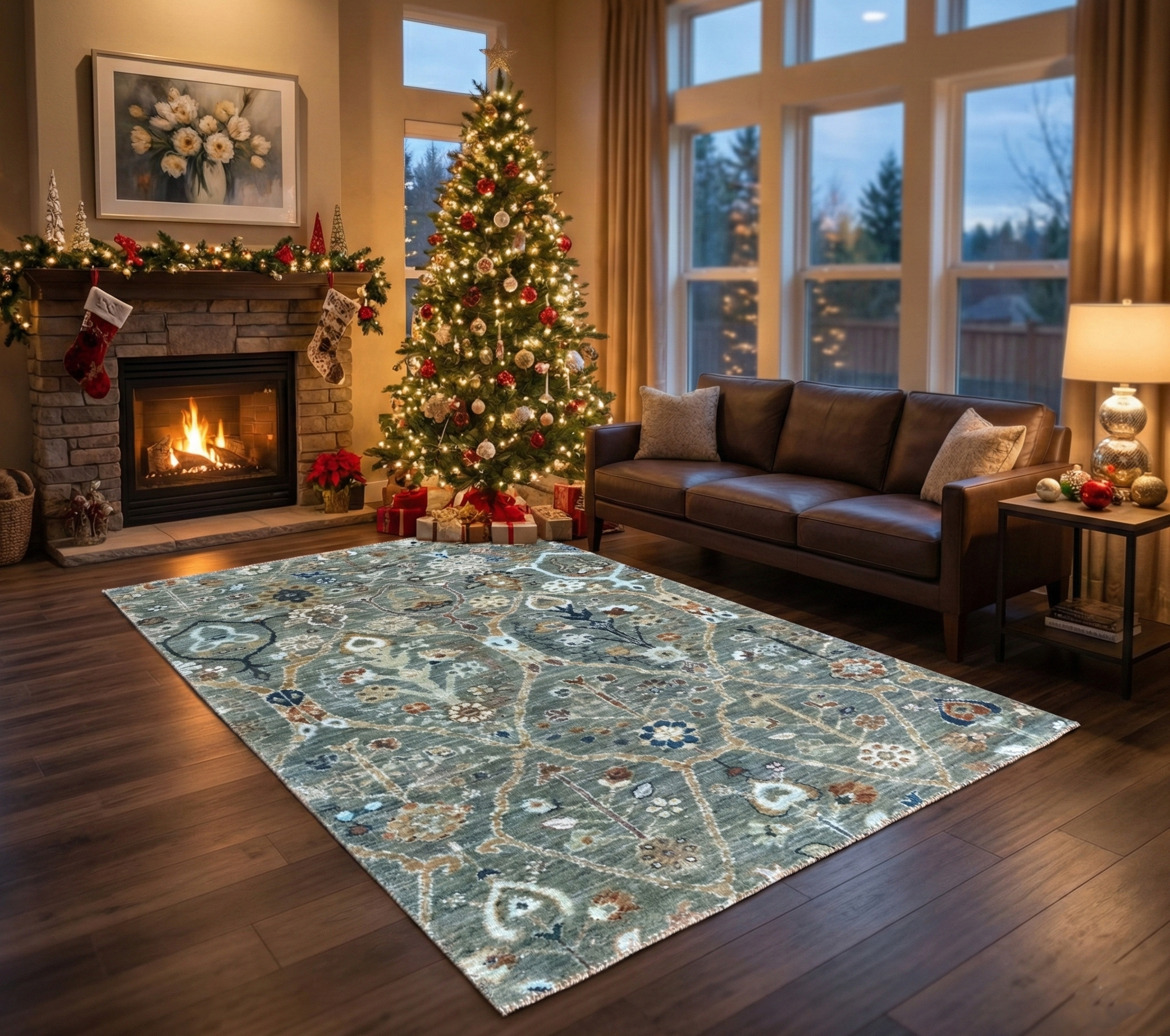
Rugs are a sign of comfort and magnificence, because they symbolize family standards and tradition. Every hand knotted rug is surely a work of art; they soothe your aesthetic and visual senses as if you were looking at a marvelous item, something hypnotizing. They make you feel cozy and yet passionate about your home. Hand knotted rugs are the emblem of admiration as they take tremendous amount of time to elaborate, this are not plastic or electronic garbage but a truly man made livelihood. On a very long day you can sit and look around your favorite room of the house and stare at the balance that comes from the rug itself, just lay down on the floor making its statement of traditional art. And this is why these silk and wool knotted rugs are also a splendid way of living. Persian carpets are in fact are made of a major portion of a family heritage and trade evolution. They are shared among generations, rugs are trade for a living, rug dealers are a some of the highest earners in the textile industry. These rugs become especially obvious when it is holiday time because the greatest gift of all is a true Persian rug. Decorating your home with the appropriate type of rug will not only add the charisma in the interior decoration, but will also make your guests admire your sense of beauty and selection, when speaking about Funct-Shui
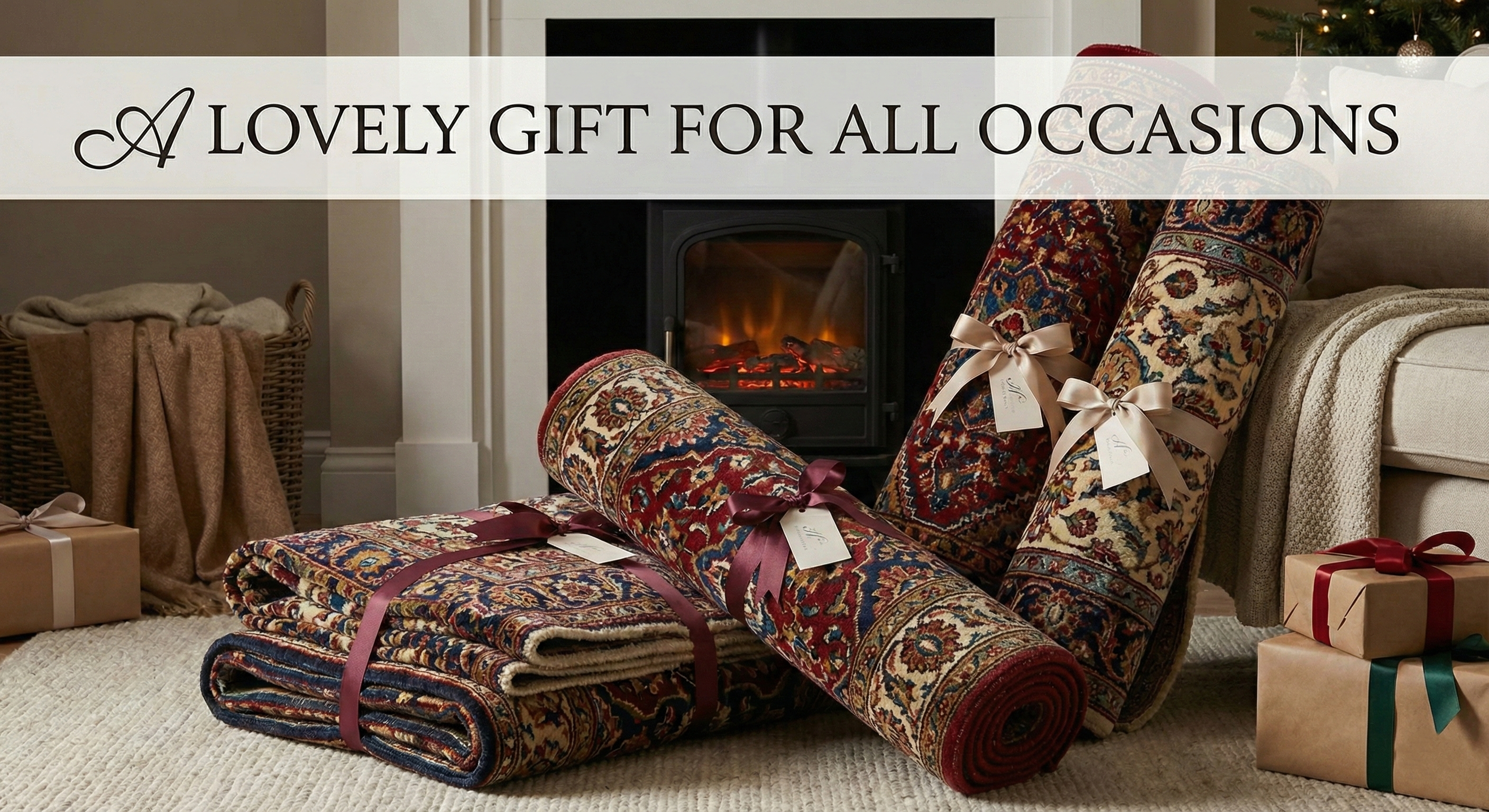
Hand knotted Rug – a lovely Gift for all occasions
Hand knotted rugs are sold widely across the United States but since the colors vary greatly and the sizes could be a big shipment item, choosing the perfect rug as a gift is quite a challenge, so your best bed would be to take a closer look and see who are the legitimate importers of rugs. There are very limited websites that sell rugs and one that is highly recommended because of its excellent reviews on Ebay and Ekomi is 1800getarug.com with it’s great selection of Persian rugs. None can deny that 1800getarug.com also have the lowest price guaranteed. Rugs are not for those who don’t have the cash, think about it this way, a rug is like gold it never loses it’s value and who know?, perhaps in the future your rug will be found frozen on your backyard and be added to a museum. If you want to give someone a gift that is not only luxurious, but its also a jaw dropper, you can gift that very special person a beautiful hand knotted Persian, or modern rug. Just keep in mind that you don’t want to intrude in their home and just change it, remember that there are boundaries when giving someone a gift. Moreover, if you are expecting guests at your place in this holiday season, open up your home in and pick a faultless rug which will make your visitors cherish the whole fun time of holidays in an unforgettable way.
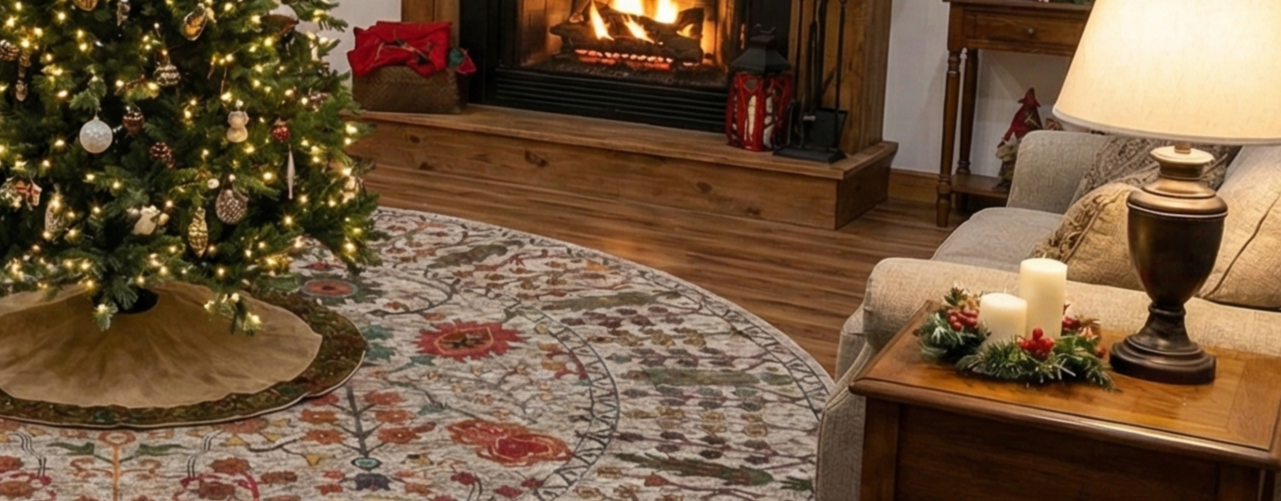
When the holiday season comes and all the family is sitting on these rugs, they will sense a warm feeling, particularly helpful in the chilly and snowy regions of the world. So, despite their belief of being just another cheap decoration in the house, children or pets will love these rugs and the rugs won’t care because they are hand-made with a very durable and tough fabric.
Traditional Families – conventional values for spending holidays
Traditional rugs include various motifs, patterns, and styles. The most common categories are Turkish rugs, Persian rugs and Afgani Rugs. So based on the type of holiday you are planning for, traditional rugs can add value to your home. The traditional hand knotted rugs add magnificence, sumptuousness and affluence to Victorian styled houses.
Transitional Rugs a good choice for your holiday gatherings
Transitional rugs can add a magnificent effect to your sitting rooms and in case your guest list contains a mix of friends which include, both long-established as well as present-day trendy followers, then
transitional rugs are the probably best choice for you. They hold the traditional characteristics of rug making with distinct colors and designs.
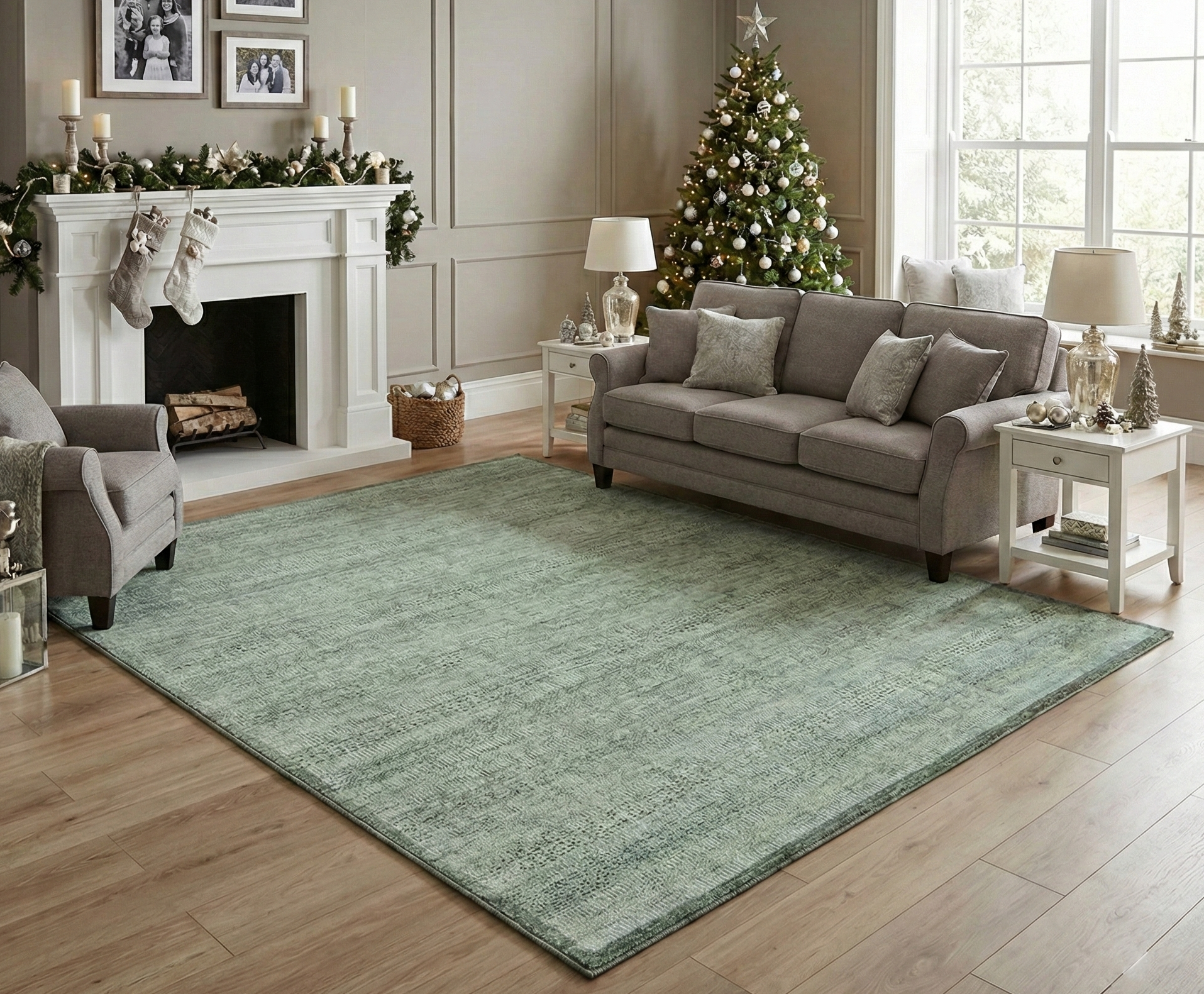
Contemporary rugs make the modern families enjoy the holidays:
Old décor is not always the option when celebrating the holidays. Somewhere I might decide to have a white Christmas tree with purple ornaments, which would then call upon a modern Overdyed colored rug! Yes something like it. The belief that your contemporary styled homes are much better in comparison to transitional and traditional home, is quite a debate, as Modern houses are much easier to maintain. According to most designers a very important fact in the room décor are the rugs and carpets. In case you really want to arrange your living room together, it will then require paying close consideration to the choice of floor ornament. Rugs are accessories to maintain a colorful outlook of your rooms. They define the overall appearance of your room.
Holidays are the best and the most memorable time, because you get precious moments with family. Whether on these holidays you are planning to invite your friend or you will be the host, rugs and carpets will add glamour and style to your interior, so put a long lasting impression which can be recalled even after years, purchase a new rug for the holidays.
The Persian Rug is more than just a decorative piece. Rugs and carpets are a vital part of the Iranian culture. It’s also interesting to know that rug weaving is an honorable occupation in the Persian culture – only last year Iran exported more than 400 million dollars worth of hand made rugs and it’s Iran’s largest export after… oil!
You can imagine that rug weaving is pretty complicated. Depending on size, quality and the pattern of the carpet, it can take up to a few years to make a rug. When knotting a rug, the weaver creates detailed and complicated patterns; as rug weavers can create thousands of patterned knots in each day.
Sounds like much of a hassle over something that a machine can do in a matter of minutes. Well, there are machine rugs which might look like Persian rugs but there is no real knotting involved and as in most of machine made products – these rugs are made from industrial materials and synthetic fibers that can not match the true beauty and quality of a handmade rug.
If you’re interested in seeing the magic of weaving – it’s fairly simple. All you have to do is visit Tabriz – the center of carpet production in Persia. Here is a glimpse at the process of weaving an Oriental rug in Turkey:
For more information about Persian Antique or Semi-Antique, Fine New Oriental Rugs, 19th century European designs or modern area rugs, log on to www.1800getarug.com where you will find a unique collection of beautiful hand-knotted rugs which is always up to date with color and design.
Picking out rugs can be a pain if you don’t know what you’re doing. And so, from all of us at 1-800 Get-a-Rug, here is our very own Rug-Buying for Dummies guide.
First, figure out what size rug you want. A large rug that takes up most of the floor can make the room seem bigger than it really is.
Next, figure out what shape you want. Round? Oval? Square? Rectangular? Round and square rugs usually don’t work, because rooms are so rarely equilateral and it looks strange to have so much more bare floor on one side of a rug than on the others. (However, if the rug is meant to be used just under a piece of furniture, a round or square rug could work nicely to match the shape of the furniture. Oval and rectangular are better for area rugs, and you could easily draw out a few sketches of the room and see how different shapes would look in it.
Then, decide what color and/or pattern you want. If you have lots of patterned furniture, you might want to stick to a simpler design for the rug, maybe with just 2 or 3 of the colors prominent in the room.
Finally, choose a weave. Do you want a hand-knotted rug? Needlepoint? Remember to take durability and cleanability into account.
The relaxation oriental rugs provide is a luxury. It makes a big difference when you can sit in a living room with the floor beneath you a blaze of rich color and light. The silk Persian rugs capture and refract the glow from the logs burning in the fireplace. You rest your head against the back of your leather chair, feeling the cold scotch in your hand.
Your friend and confidant of many years is here tonight. You reminisce fondly on years past, the trials and errors of your youth. You sip the gold liquid from the tumbler feeling the warmth penetrate from your fingers to your toes. The fire crackles. Your friend admires the arabesques and floral curlicues in the deep burgundy around the area rugs, glances at the creamy white background the church blues sit on and the vibrant greens leaves that radiate from the center of the Persian rugs.
You become conscious of your pleasure, and it recedes. Your eyes make contact and you break the short silence that grew while the scotch worked. “Good to see you, old friend.”
“Good to be here.” And from the languid way his shoulders hang, and how his fingers splay on the easy chair, you know he means it.