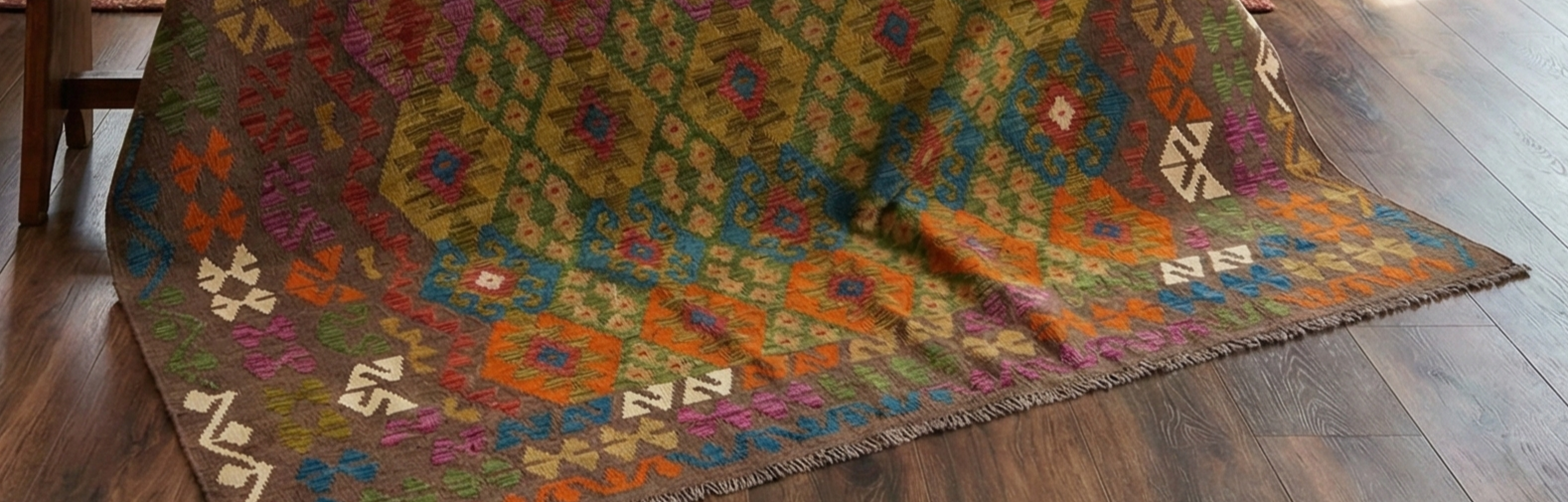
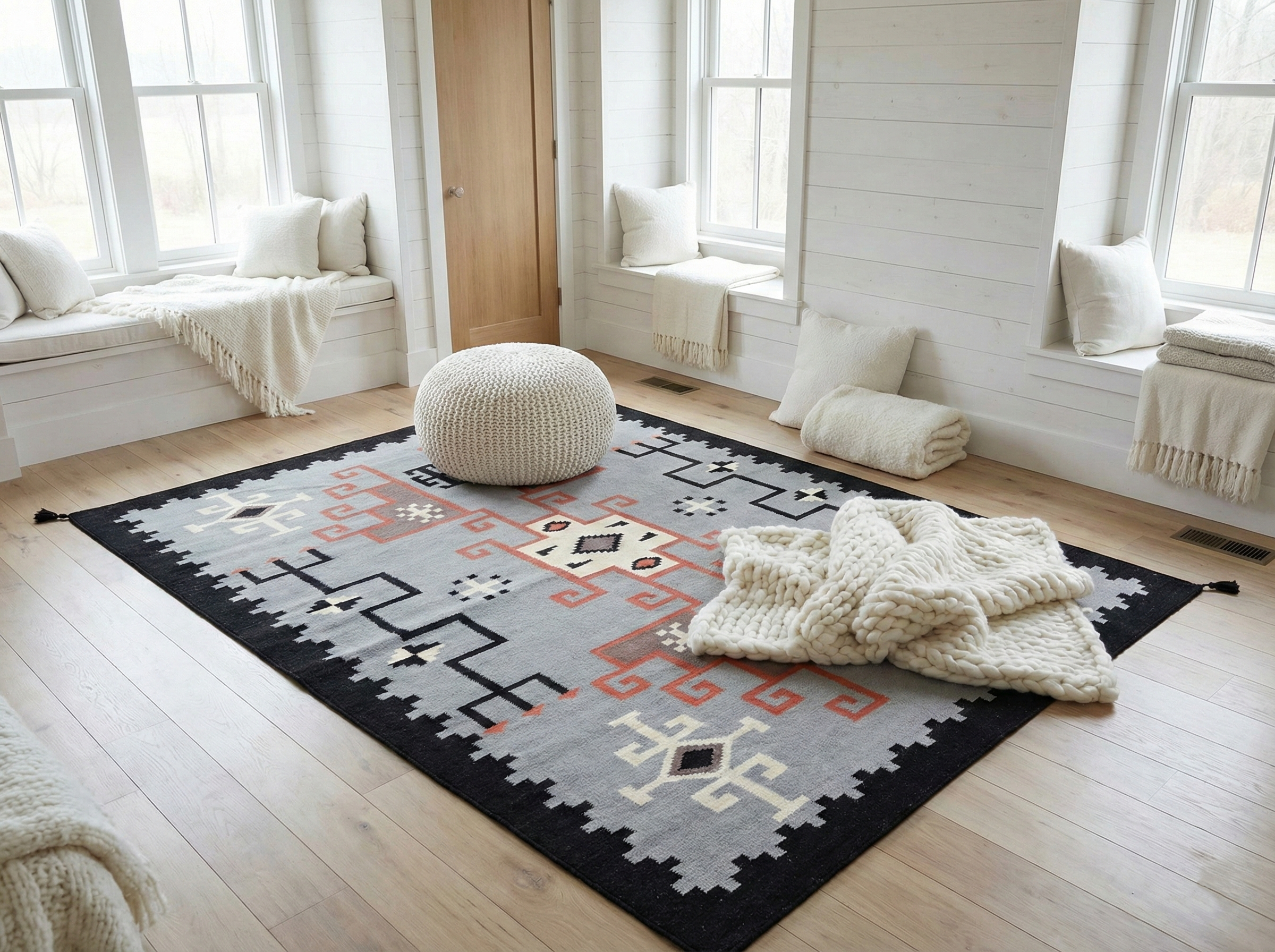
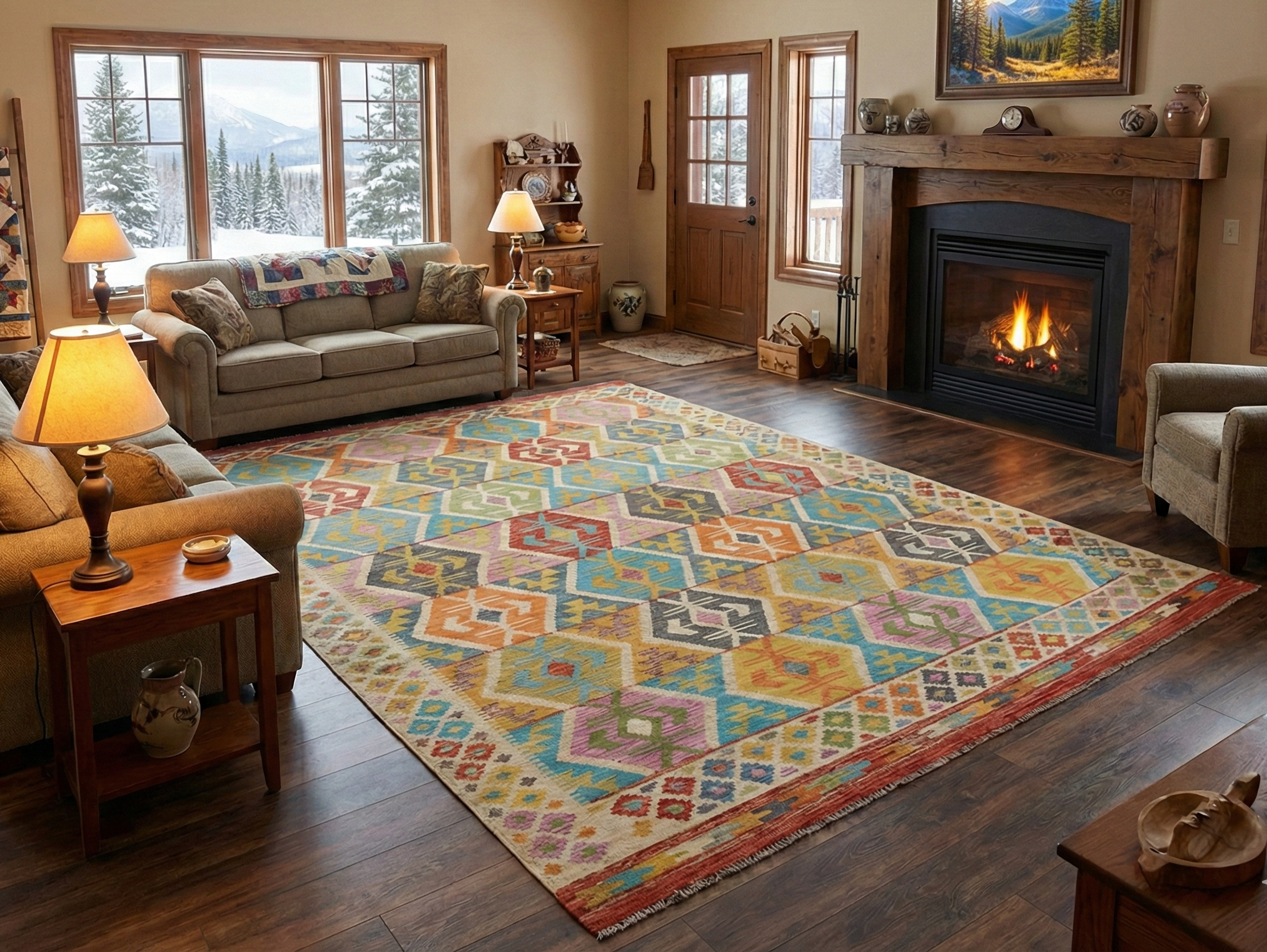
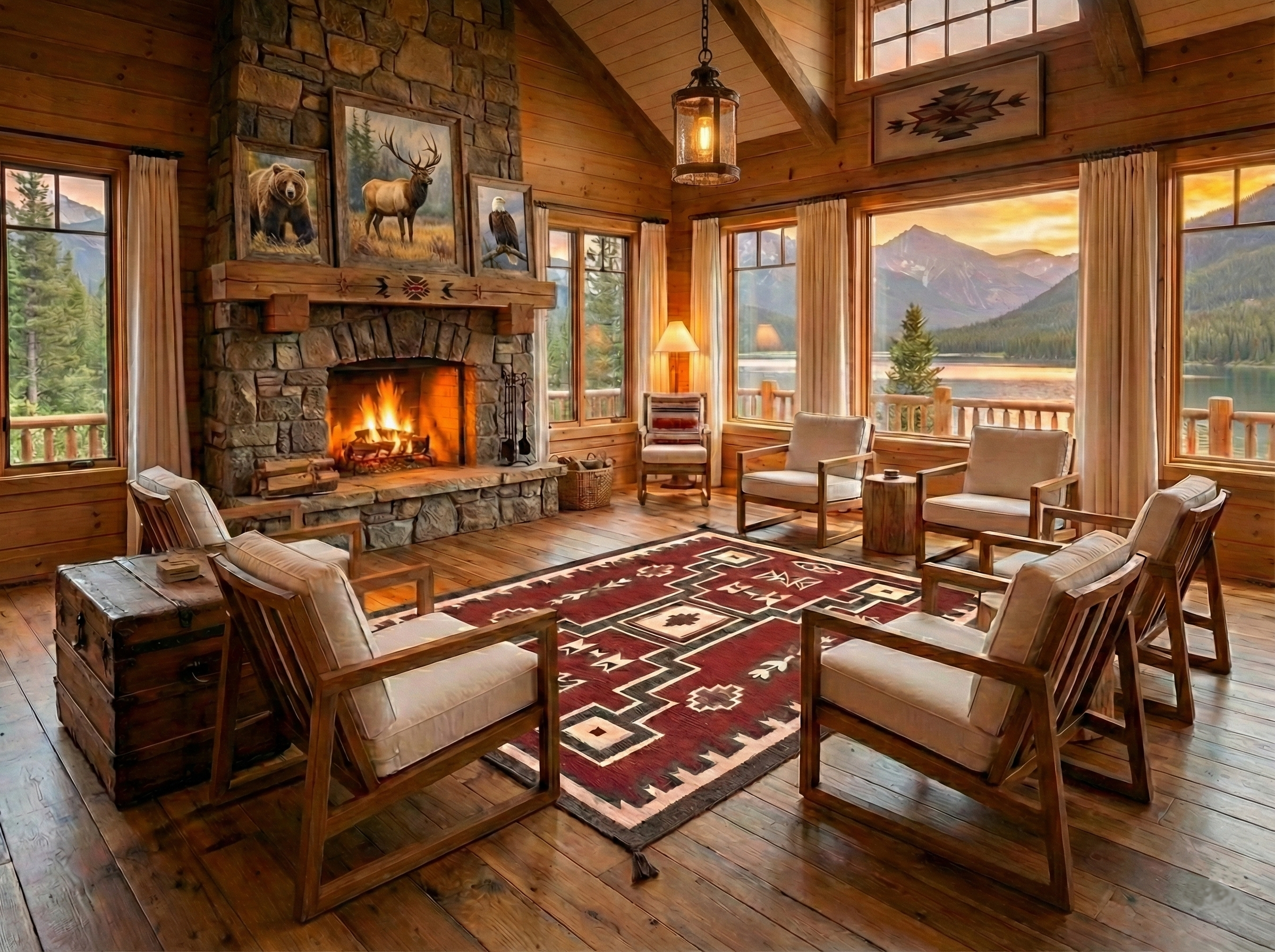
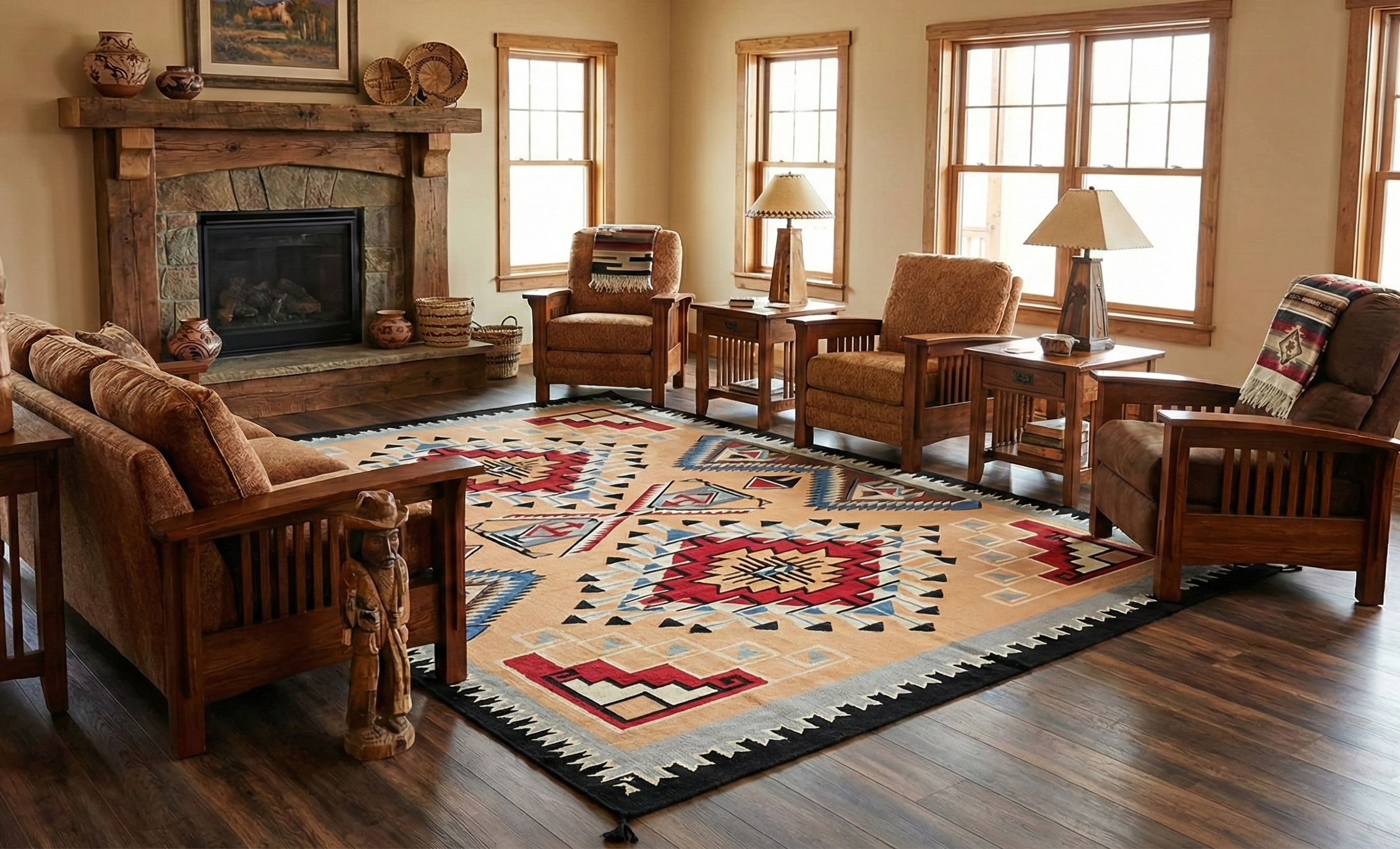
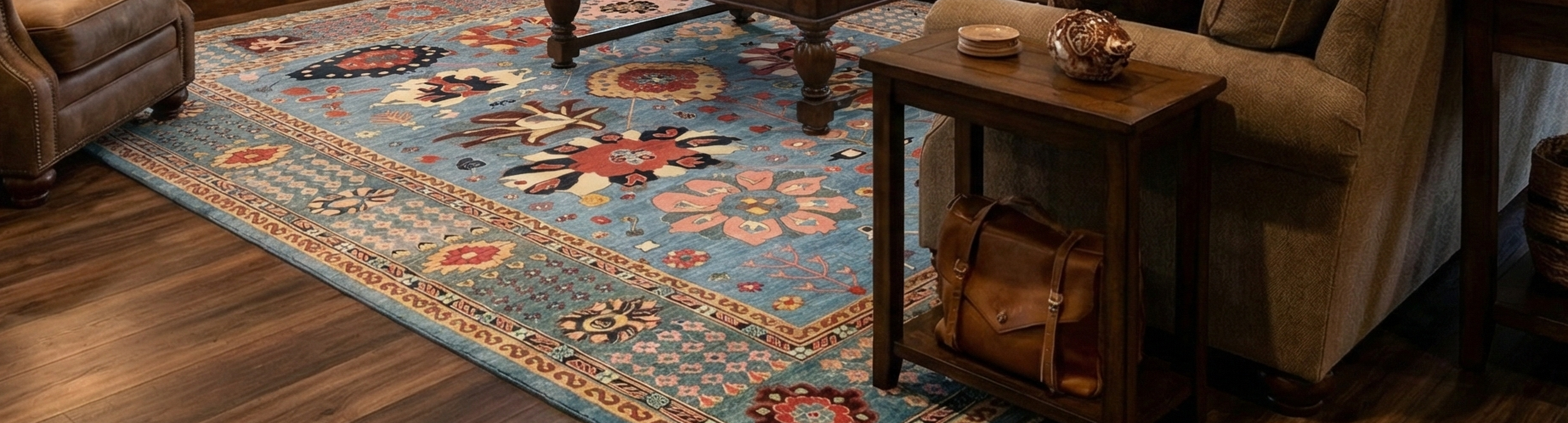
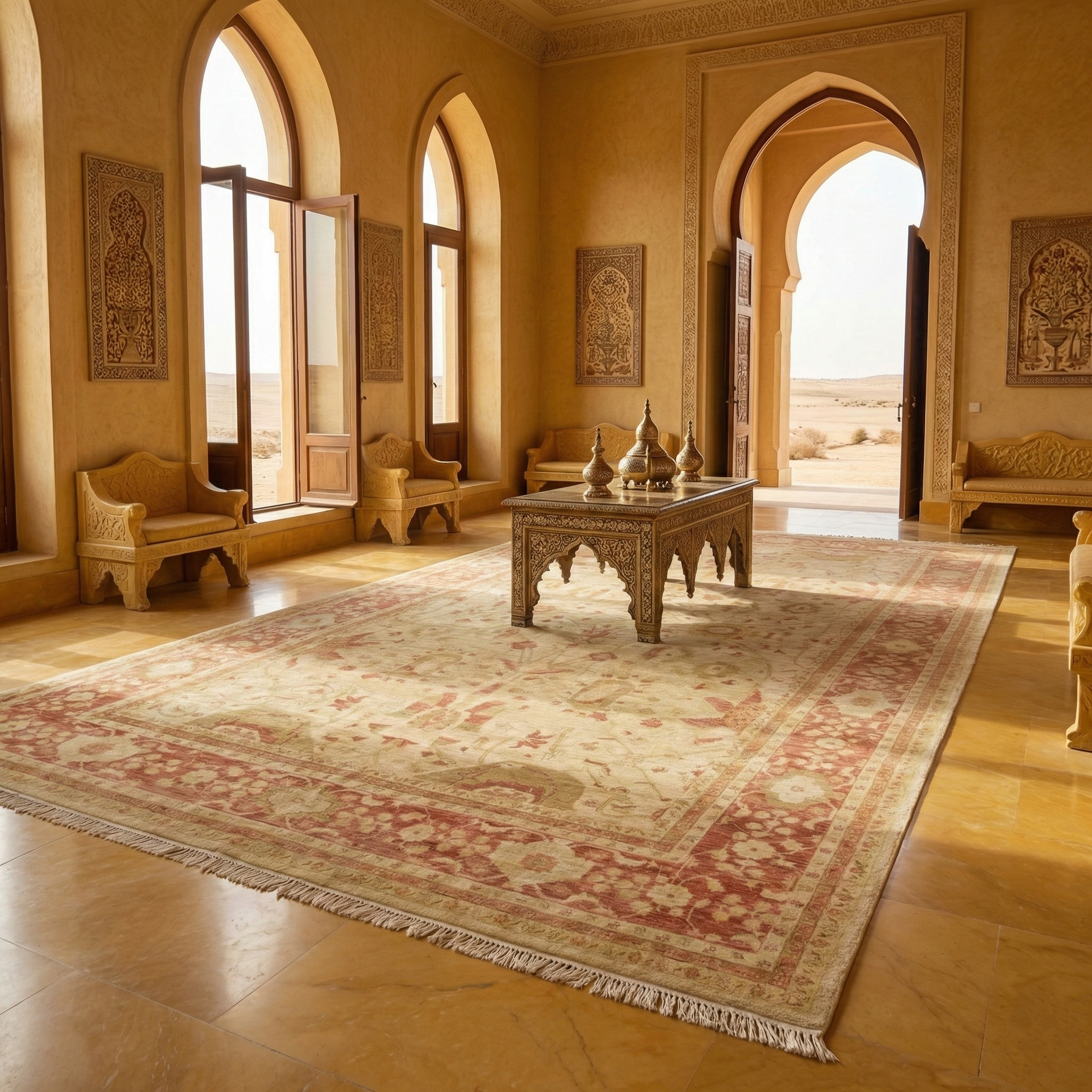
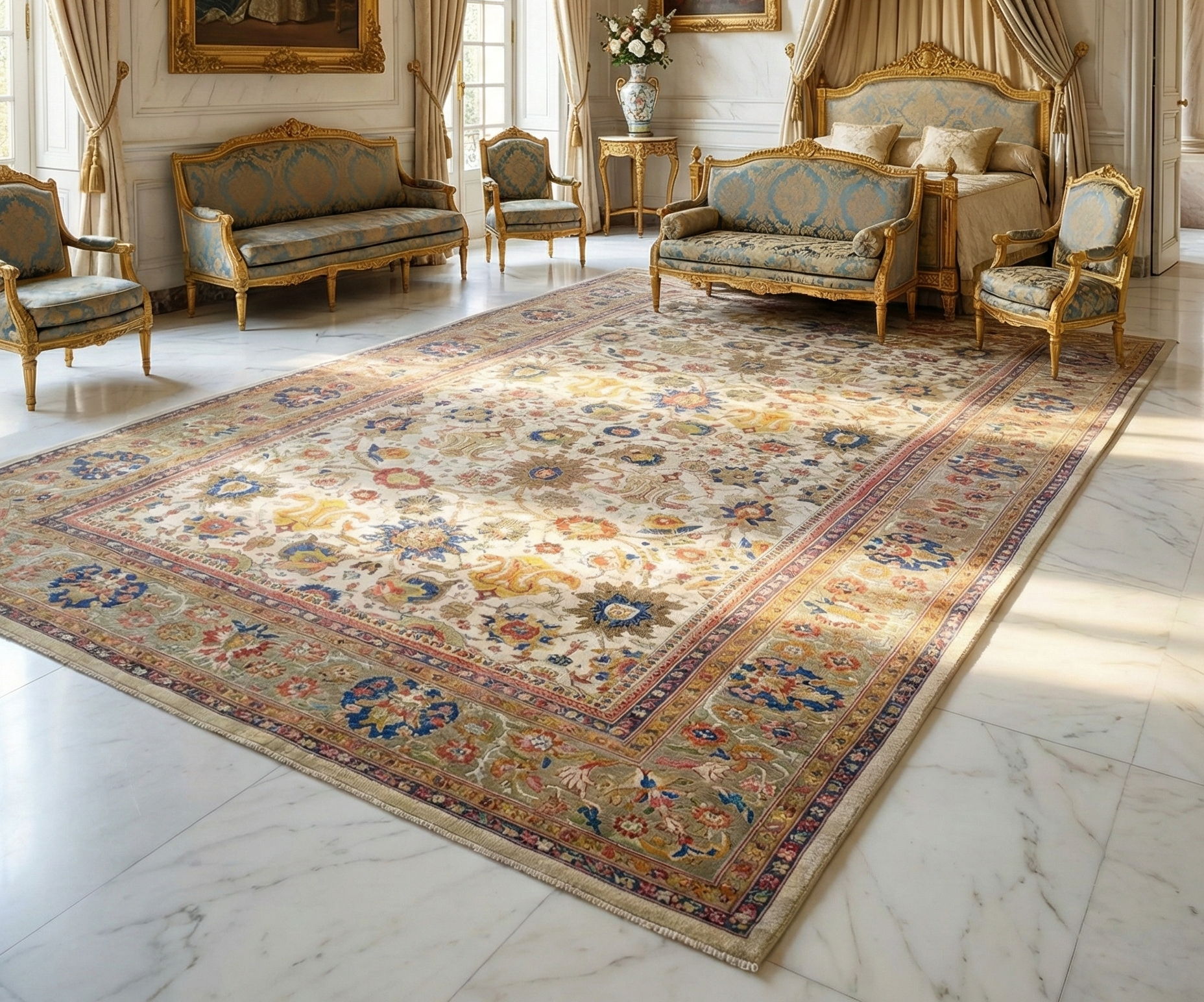
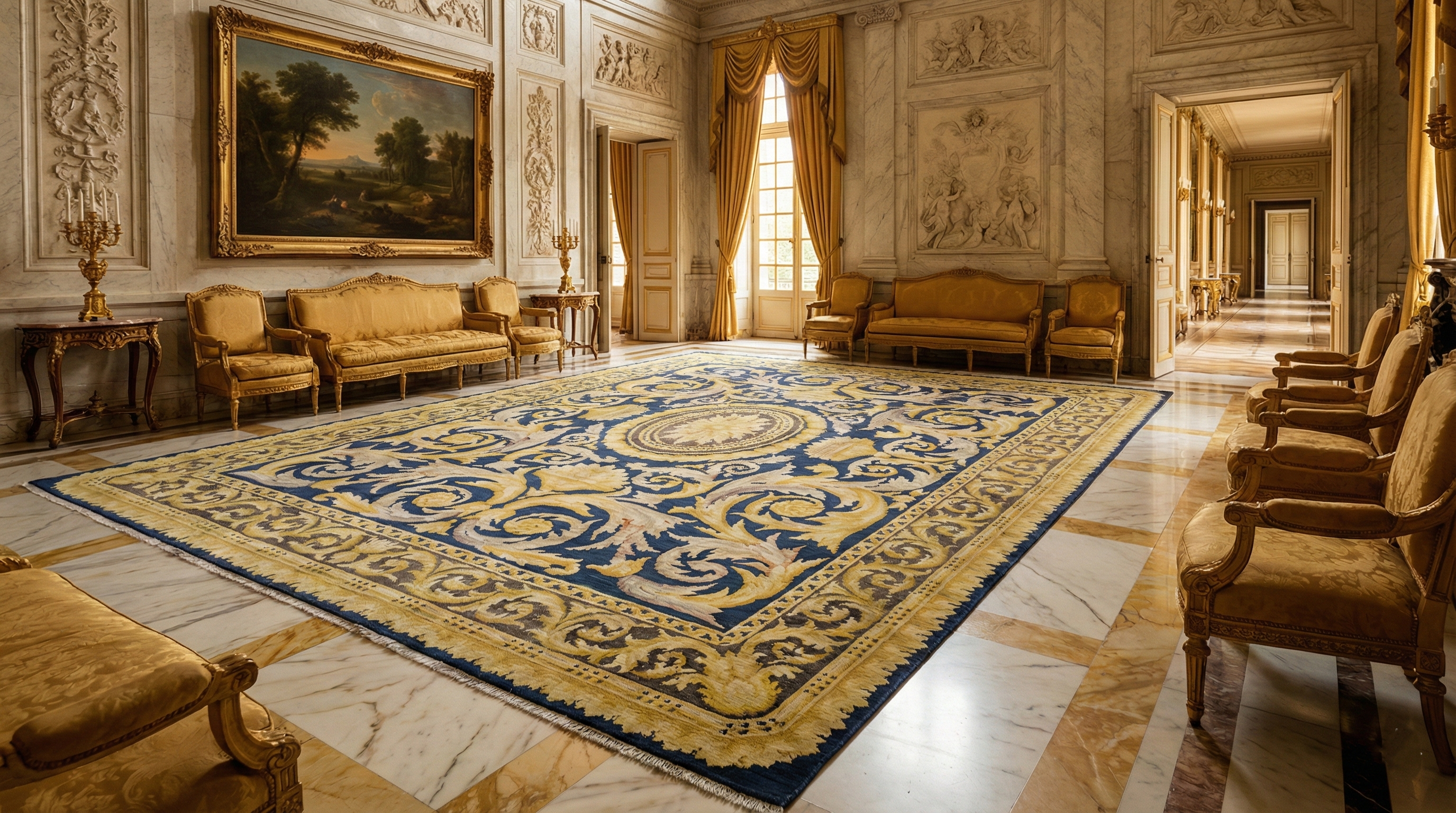
Sometimes things can be uncomplicated, sometimes they can be understated. Sometimes the beauty comes from the simplicity of the design and execution. Look no further than Kilim hand-woven rugs, classic flatweave carpets known for their unique contained look and versatility.
One of the most consistent technique to go back centuries, Kilim rugs were most likely first used by nomadic peoples of Middle East and Central Asia. The earliest examples were found around Khotan, present day Xinjiang, China, one of the centers of trade along the Silk Roads, and go back centuries. The name is derived from Turkish “gelim”, which means, “to spread” (as in, to spread a rug). Its pure geometrical designs are believed to have mystical, inspirational powers.
To us, the most fascinating thing about the hand-woven Kilim rugs is the unique weaving technique, called slit weave. These rugs don’t have a pile, and are created by simply weaving the woolen wefts and the cotton or wool warps (thread ratio is 16 of weft, 14 of warp). Two different-colored weft blocks are tightly packed into the warp by a special comb and returned to original side once they reach each other, leaving a slight “gap” in between – the slit! This is the origin of the traditional Kilim motif: diagonal and horizontal lines, a pattern designed for durability.
While the traditional colors for these magical Kilim hand-woven rugs are blue, green, red, and yellow, the modern take on the carpets includes a variety of dyes and designs. Still these works of art are as versatile and affordable as they were centuries ago: they are easy to spread or fold, don’t crease; are great at being a centerpiece decoration, hanging on a wall or serving as a door step rug, or for saddling your mule, if the occasion truly calls for it!
Looking into our rugs is sometimes like looking into the depths of history. The Peshawar rugs take us to one of the greatest depths. One of the epicenters of the great Silk Roads, the city of Peshawar was, quite literally on the map since the 5th century B.C. From the ancient Persians and the Hellenistic descendants of Alexander the Great, to the medieval Mongols and finally the Muslim empires. Peshawar commanded authority throughout the region, housing millions of citizens and invariably creating and absorbing culture for centuries. Some may argue the Mughal era of rule over the region was one of the most successful in last few centuries and has inspired some of the most fascinating and impressive works of art.
Perhaps the best time capsule of this Mughal artistry is the hand-woven Peshawar rug, whose designs evolved through the centuries but with mastery that never dwindled. In the 16th century, emperor Akbar had ordered the construction of rug weaving workshops and fostered the knowledge exchange with the Persian artisans to reinforce the local style. In the 20th, after the crumbling of British colonialism the existing industry simply needed a push from the newly independent government to survive and to flourish.
Traditional Peshawar rugs are always hand-woven, and feature a pure high mountain hand-spun wool pile, although sometimes, in select rugs, fine merino wool is blended in – that makes the rugs look slicker. Occasionally silk is woven in as well, especially if the artist wants to highlight a motif. The weft and warp are cotton, for the strongest support. The resulting rugs are durable and reliable, but are luxurious and extremely soft to the touch.
The design of the rugs, as chronicled in history, is heavily influenced by ancient Persian rug motifs. The colors, usually light and earthy and derived from sun-dried vegetable dyes, give the rugs its characteristic antique and washed-out look. But whether they are stonewashed and have their piles cut shorter, or the modernist take will have the colors pop, you are sure to be mesmerized by the deep richness and artistry that are the Peshawar rugs.
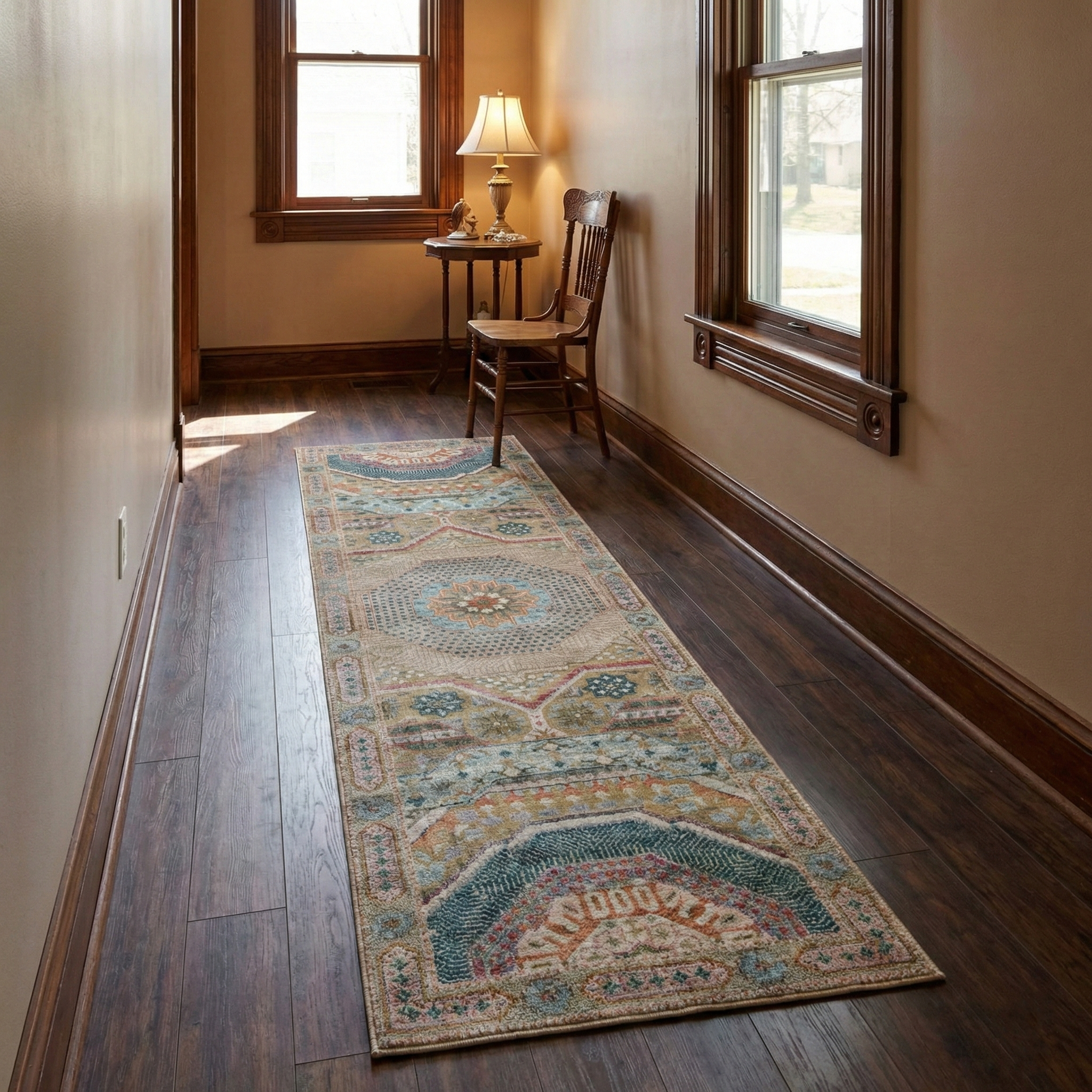
Mamluk inspired carpets carry a vast culture of Middle Eastern designs. The Mamluk people arrived to Egypt during the thirteenth century to work as slave soldiers and established the Mamluk Sultanate; a ruling empire in their new home. Their carpet weaving tradition led them to develop a thriving rug weaving emporium during the last years of the fifteenth century and until the mid–sixteenth century. Cairo, Egypt`s capital, became a well-respected carpet weaving center, even when the Ottomans took over Egypt, rug production continued. Mamluk`s carpet weaving art influenced Ottoman`s decoration and manufacturing method. Rug production was commissioned from the Mamluk`s workshops of Cairo, this explains how Mamluk rugs are closely related to Turkish carpets.
Their exceptional quality defied the passage of time allowing us to admire these antique pieces in museums, mosques, and carpet collections. The Mamluk style carpets are also found in European works of art, particularly in Carpaccio’s paintings.
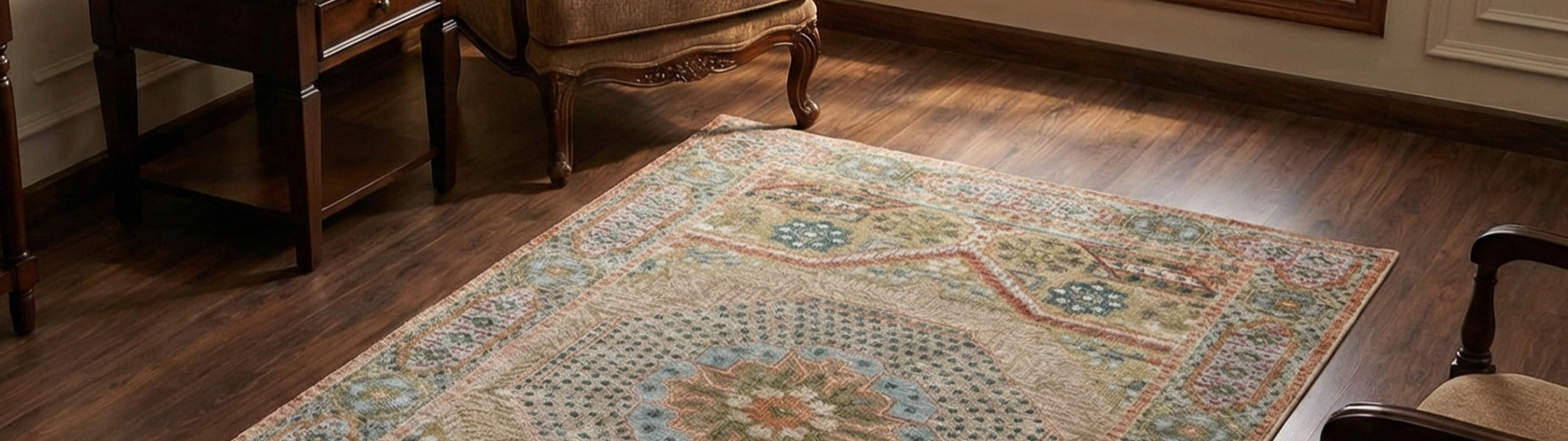
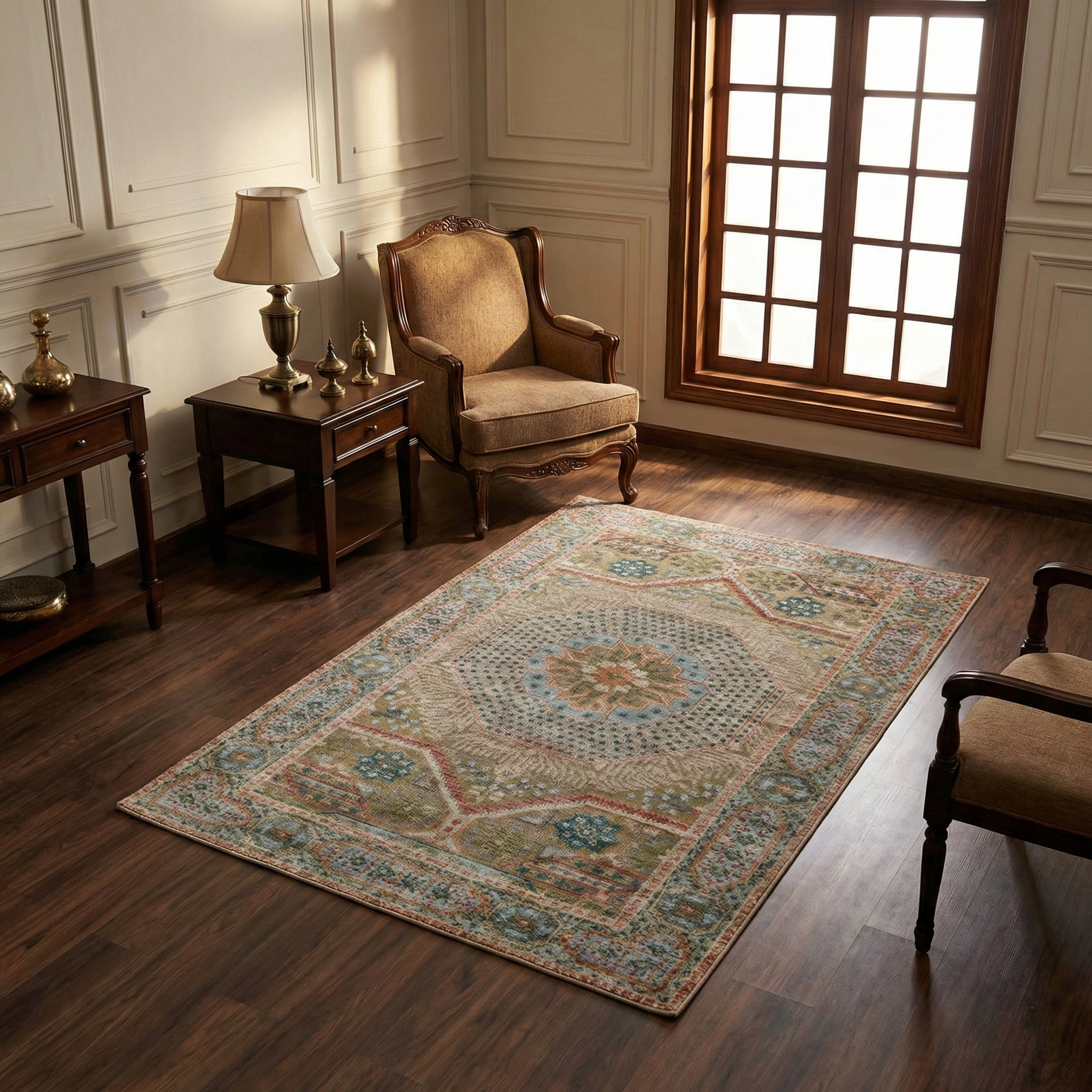
The designs of Mamluk style carpets are characterized by a complex pattern formed by a large central medallion surrounded by intersecting Islamic geometric motifs, forming a fractal figure. Mamluk are also distinguished by their fine weave, lustrous wool and limited palette dominated by soft hues of greens, yellows and reds. Transitional versions have more freedom when it comes to colors and material. For those who prefer an original take on the sultan designed rugs we can find sari silk and oxidized wool, overdyed, whitewashed or undyed Mamluks.
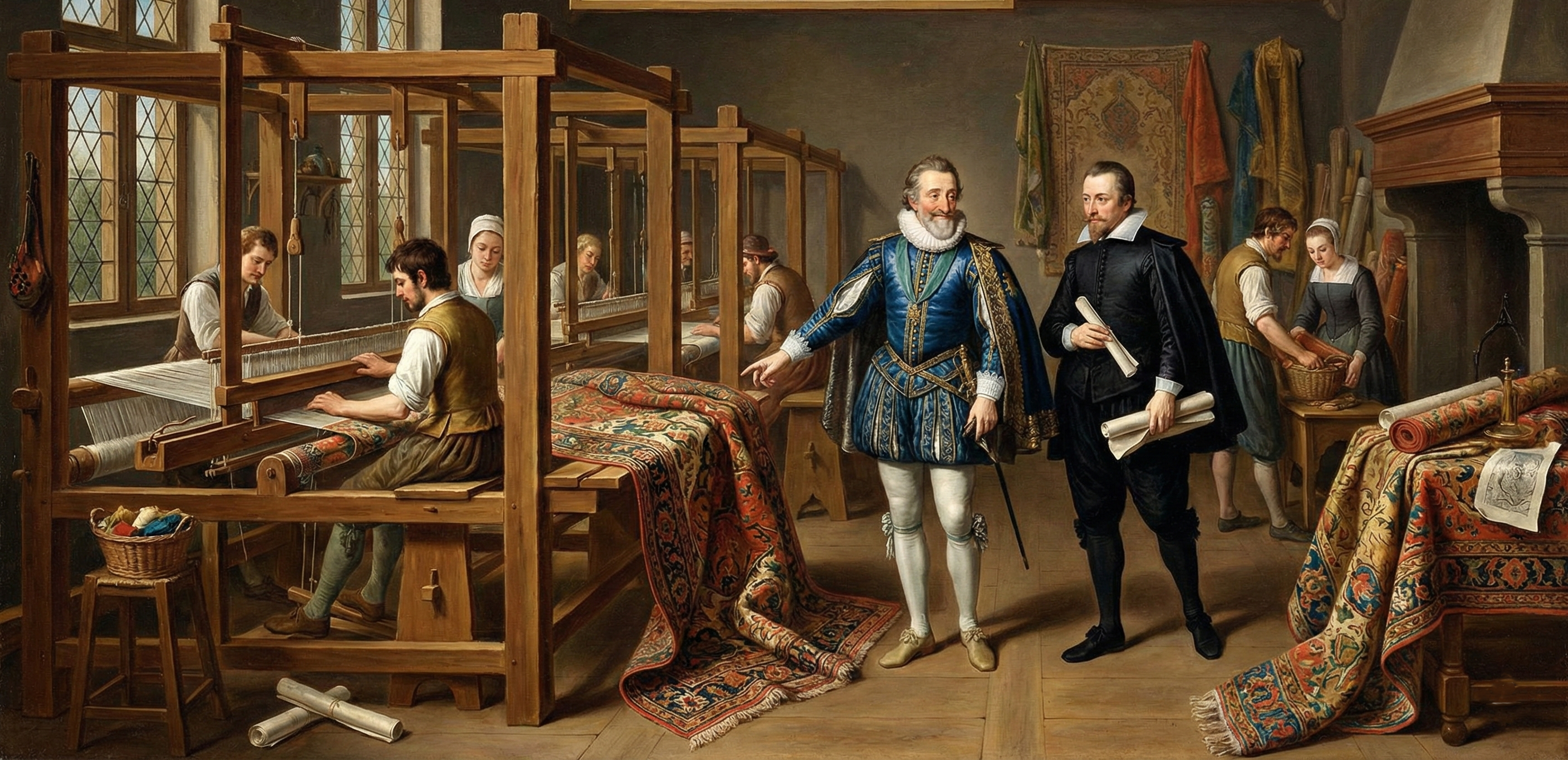
France was faced with a very modern problem in the early 17th century. A crippling trade deficit, partly due to luxury goods coming from Turkey and India, namely ortiental carpets. So King Henry IV (d.1610) and his finance minister Maximillian de Bethune decided to establish workshops for carpets ‘de Turquie et facon de levant’, meaning symmetrically piled rugs, to be woven in France.
Beginning in 1608 directly beneath the Grand Gallery in the Louvre, carpets were woven mainly for the Royal household, and as precious gifts, under the supervision of Monsieur Piere Dupont. In 1615, Henry’s widow, Marie de Medici, established another workshop at Chaillot, just outside Paris, in a former soap (French: savon) factory that at the time housed orphans and provided cheap labour for weaving rugs. This weaving workshop was run by another family of weavers, the Lourdets, resulting in a sometimes bitter rivalry between the two weaving concerns.
Marie’s son Louis XIII (r.1610-1643) gave his name to the style of first period Savonnerie carpets. It is characterised by an exuberance of flowers in baskets, in vases, flowing out of cornucopia, and in bouquets. They are all very naturalistic in their drawing, and are related to contemporary Dutch embroidered and tapestry woven table covers and other smaller domestic textiles, which were much in demand throughout Europe.
By the 1660s. the Savonnerie production had developed a very specific weaving structure that sets it apart from other/later French and European carpets with the symmetrical knot. Two wefts shoots, one sinuous one taut, keep two warps, of which is one fully depressed, apart. The back of a real Savonnerie is therefore strongly ribbed, unlike a later Beauvais rug which shows a flat surface on the reverse. The other distinct feature is the coloured warps in the otherwise natural coloured foundation. Every tenth warp is dyed (brown, blue or green) to help the weaver to follow the cartoon more exactly. Hemp is used for the foundation (some later examples have wool wefts) and the pile is nearly always wool.
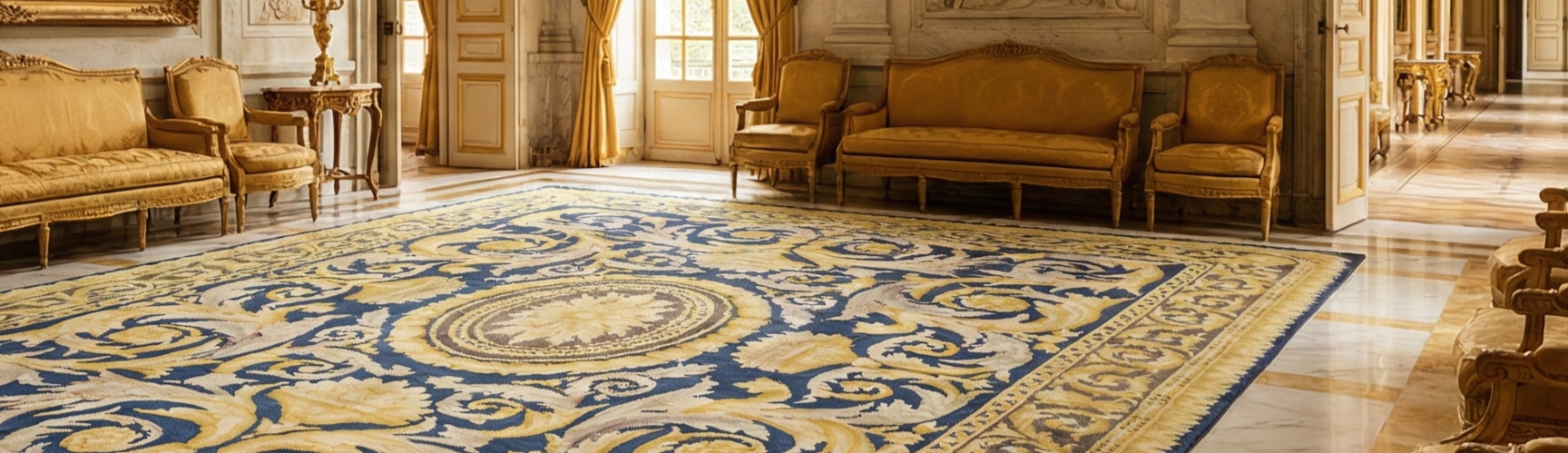
Under Louis XIV (r.1643-1715) the style shows a significant change towards the baroque. Louis XIV and his minister Colbert renovated the Louvre, and their modernisation included carpets for all state rooms, which was previously unheard of. What immediately springs to mind when seeing the carpets are baroque ceiling decorations: their general layout, the borders, scrolls, acanthus leaves and even the ‘pictures’ within the carpets. From the second half of the 16th century onwards all Savonnerie carpets were designed by painters, prominent among them Charles le Brun, first painter to the King.
Producing such a significant number of huge carpets proved difficult to achieve in a short period. To speed up production, several of the Louvre carpets were woven on short warps, meaning the rug was woven horizontally, at right angles to the design in the manner of French and Flemish tapestry weaving, which allowed more weavers to work simultaneously on one piece. Production began in 1665 and during the next twenty years almost one hundred carpets in sizes up to 9 metres long and 5 metres wide were woven. Not all were installed in the Louvre, however, as Louis XIV had abandoned the ‘old’ palace for the even newer Versailles.
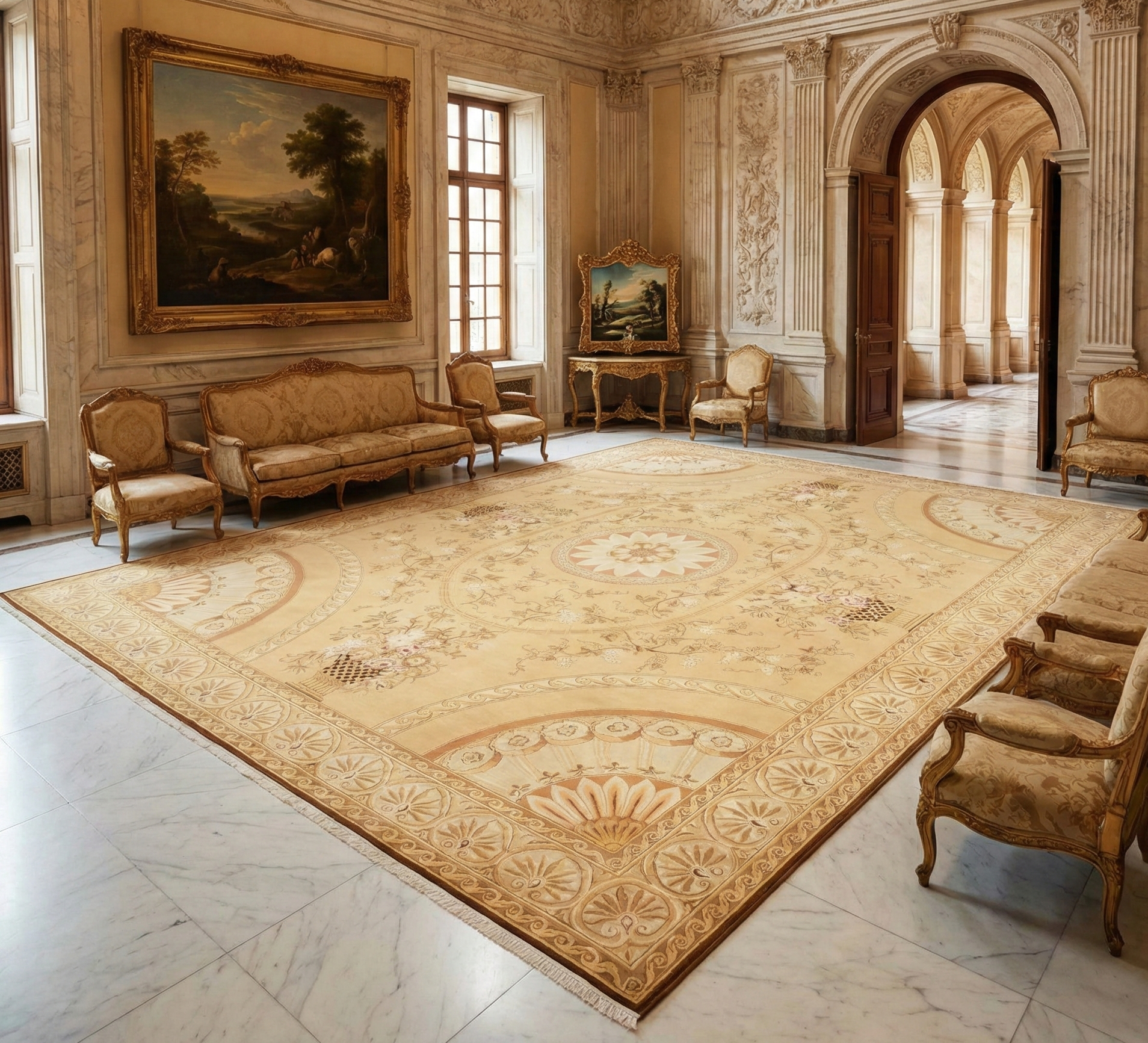
In the 18th century under Louis XV, carpet designs took a more playful turn, less stately, more domestic, late baroque in transition to towards early rococo. They are still relatable to stucco ceilings of the same period. The most prominent designer of the time was Pierre-Joseph Perrot. Neoclassical designs start to appear in the second half of the 18th century with carpets designed by Francois-Joseph Belanger, whose work was continued by Michel -Bruno Bellengé, Louis XVI’s principal designer and ‘Peintre du Roi’. First in the Louvre but later directly in the Savonnerie workshop he designed, among many others, a carpet for Marie Antoinette’s palace in Fontainebleau. His carpets were copied in Beauvais.
The French Revolution bought a brief interruption at the Savonnerie workshops, but under Napoleon Neoclassical designs turned into a fully developed imperial, ‘Empire’, style. The most important designer was Jacques-Louis de La Hamayde de Saint-Ange-Desmaisons, known as Saint-Ange. He continued to design carpets, as well as porcelain and tapestries, well into the Bourbon restoration. Pile carpet production was moved to the Gobelins manufacturory in 1826, and the use of coloured warp pairs was discontinued.
Other European carpets are often erroneously called Savonnerie, but only those ones with the structural characteristics mentioned above can be called real Savonneries.
Persian rugs come from Iran. They can be divided into three main groups: Farsh rugs, greater than 6×4 ft., Qalicheh rugs, smaller than 6×4 ft. and nomadic area rugs, or Kilim, made from rough wool. Iran’s Persian rugs are the country’s third largest export and more than five million people work in the industry.
Tehran is the capital of Iran. With almost 8.5 million people, it is the 21st largest city in the world. It is also one of the oldest. Settlements in the area date back more than 8000 years. Unfortunately, during the intra-war period, the Shah, Reza Shah Pahlavi, decided that the city’s oldest buildings should not be part of a modern city. They were razed to create new municipal buildings and wide straight avenues. The Iran-Iraq war saw more destruction of the old city and in its place were Soviet style apartment buildings. Despite their lack of a cohesive architecture, Iran retains much identity in their culture, especially their hand knotted rugs.
This is where you should go if you really want authentic Persian rugs. Or you can call or visit online www.1800GetARug.com. They have as wide of a selection of hand knotted rugs as you’ll be able to find anywhere.