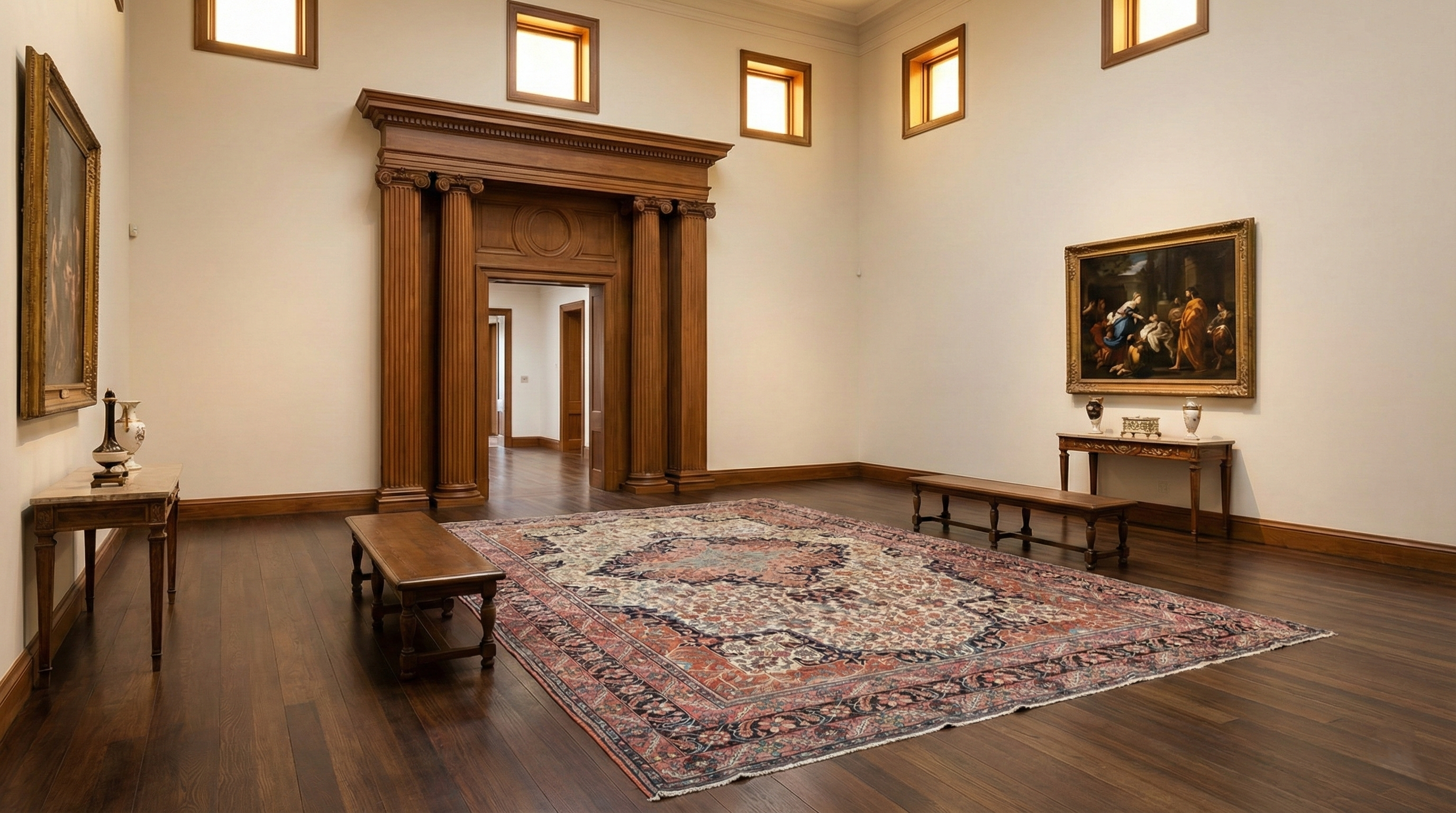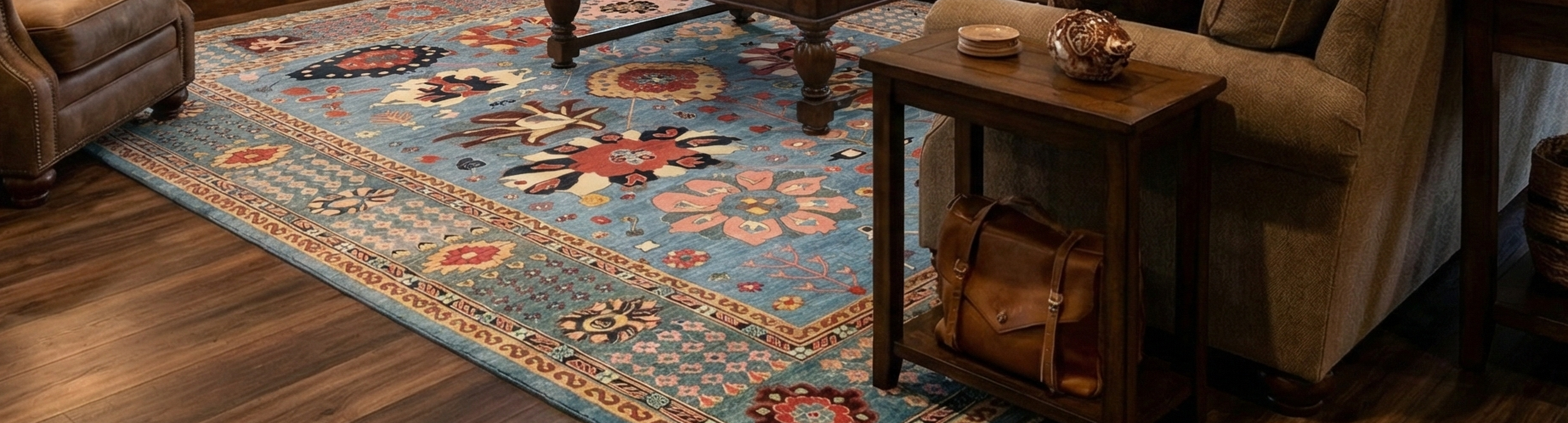
What are Peshawar Hand-Woven rugs?


Looking into our rugs is sometimes like looking into the depths of history. The Peshawar rugs take us to one of the greatest depths. One of the epicenters of the great Silk Roads, the city of Peshawar was, quite literally on the map since the 5th century B.C. From the ancient Persians and the Hellenistic descendants of Alexander the Great, to the medieval Mongols and finally the Muslim empires. Peshawar commanded authority throughout the region, housing millions of citizens and invariably creating and absorbing culture for centuries. Some may argue the Mughal era of rule over the region was one of the most successful in last few centuries and has inspired some of the most fascinating and impressive works of art.
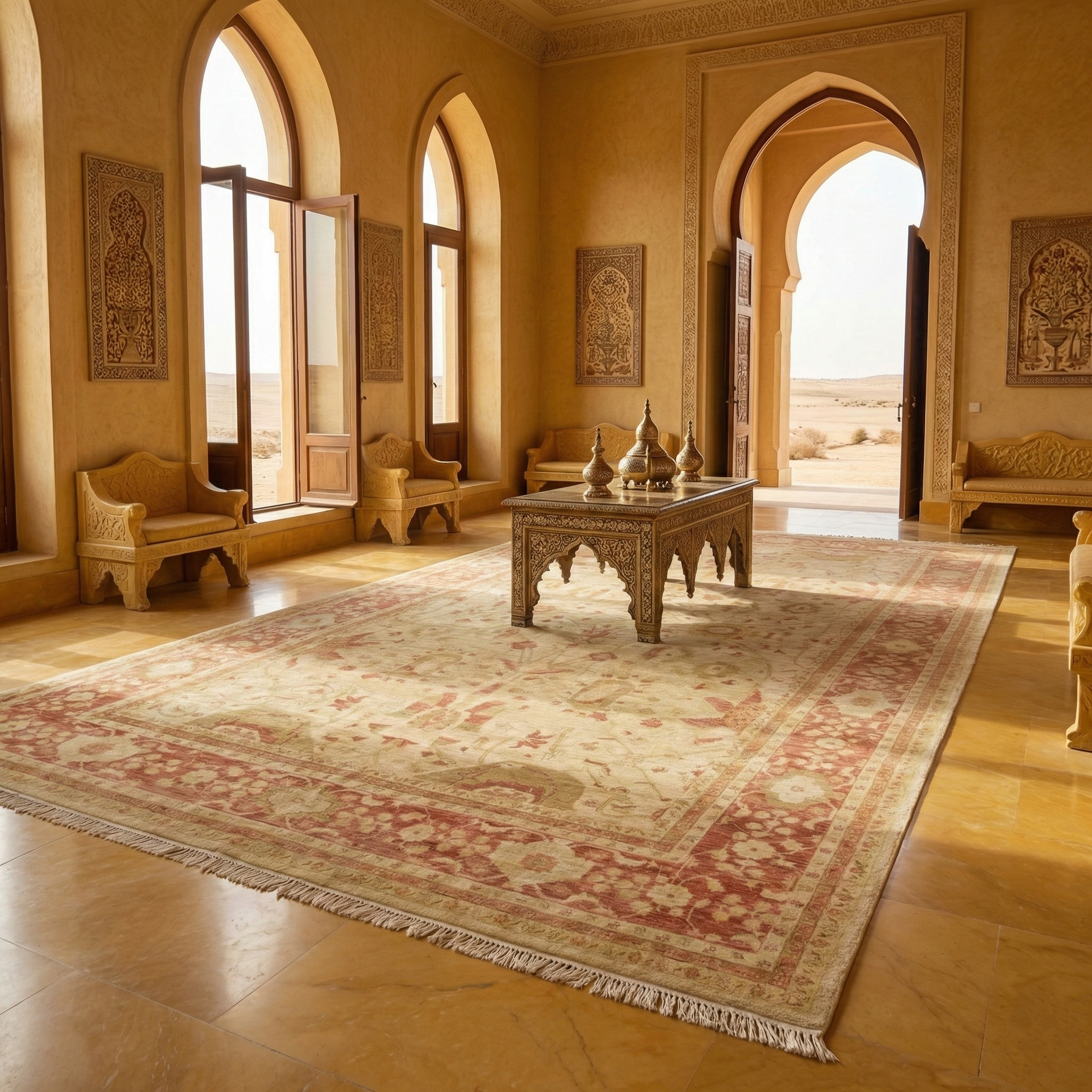
Beige, Afghan Peshawar with All Over Mahal Design, Clean, Full Pile, Long and Narrow, 100% Wool, Hand Knotted, Oriental Rug
This handcrafted Afghan Peshawar is an authentic Wool oriental rug. ©1800getarug.com


Perhaps the best time capsule of this Mughal artistry is the hand-woven Peshawar rug, whose designs evolved through the centuries but with mastery that never dwindled. In the 16th century, emperor Akbar had ordered the construction of rug weaving workshops and fostered the knowledge exchange with the Persian artisans to reinforce the local style. In the 20th, after the crumbling of British colonialism the existing industry simply needed a push from the newly independent government to survive and to flourish.
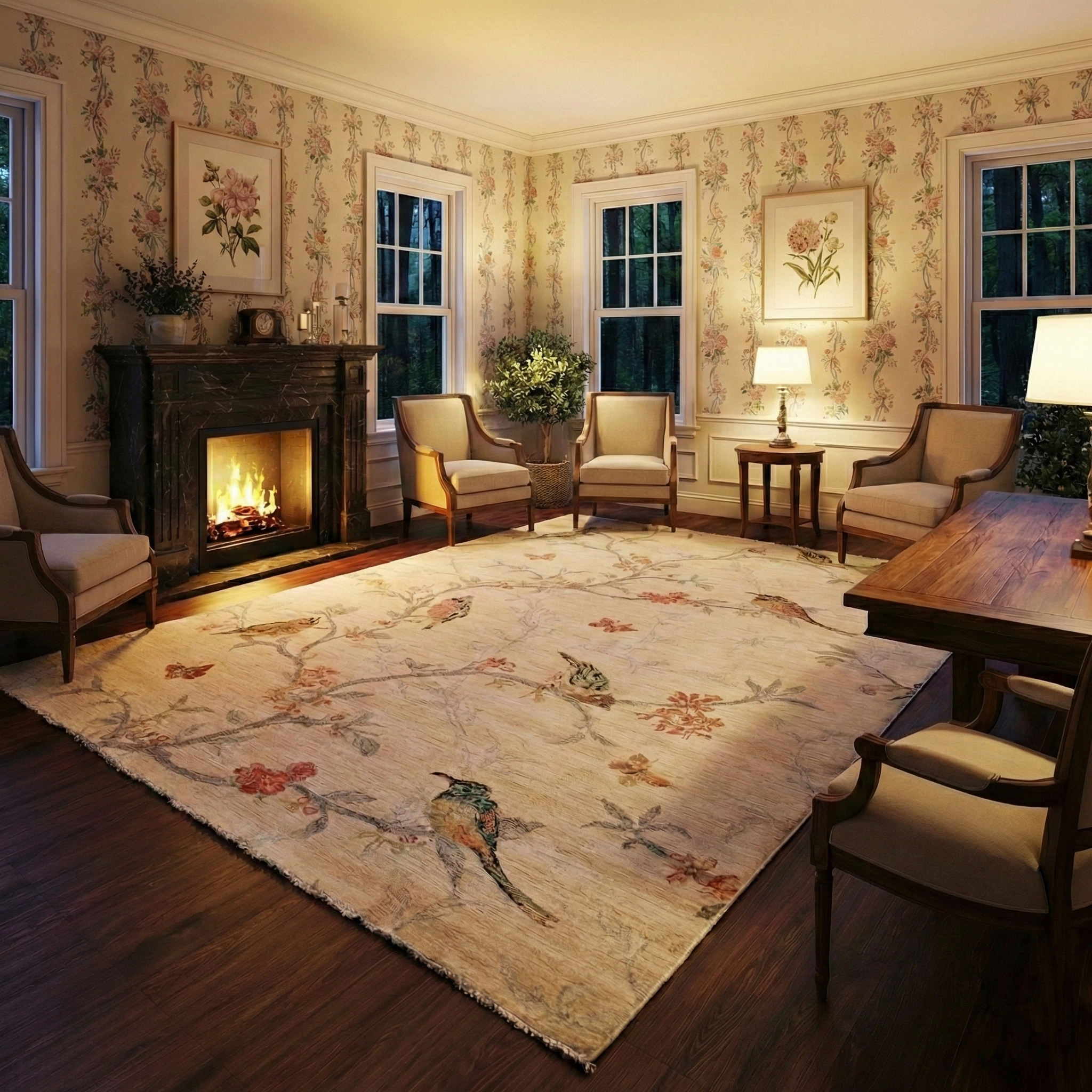
Chiffon White, Sparrows on the Tree, Peshawar, High Mountain Wool, Hand Knotted, Soft to the Touch, Densely Woven, Oriental Rug
Chiffon White, Sparrows on the Tree, Peshawar, High Mountain Wool, Hand Knotted, Soft to the Touch, Densely Woven, Oriental Rug  ©1800getarug.com


Traditional Peshawar rugs are always hand-woven, and feature a pure high mountain hand-spun wool pile, although sometimes, in select rugs, fine merino wool is blended in – that makes the rugs look slicker. Occasionally silk is woven in as well, especially if the artist wants to highlight a motif. The weft and warp are cotton, for the strongest support. The resulting rugs are durable and reliable, but are luxurious and extremely soft to the touch.
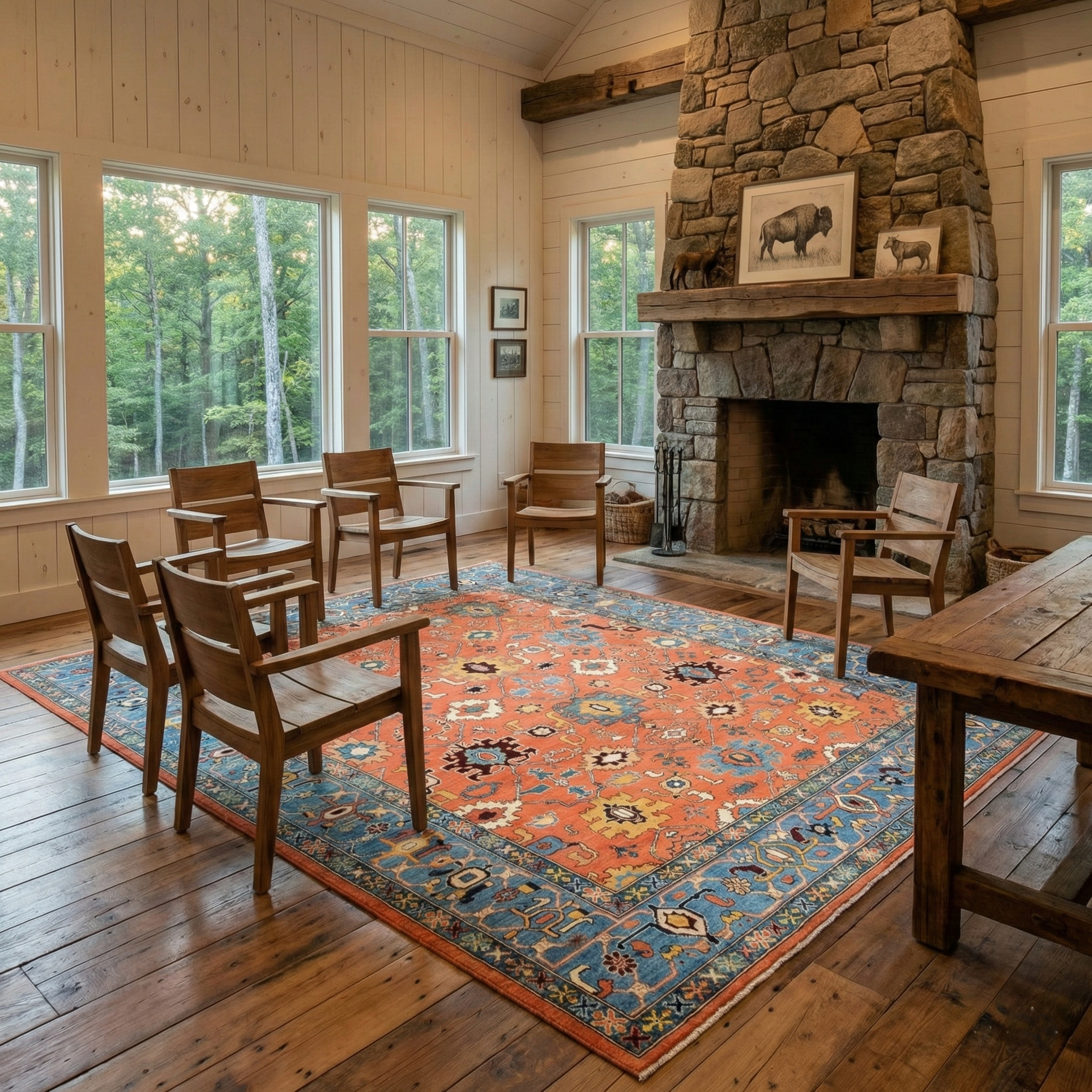
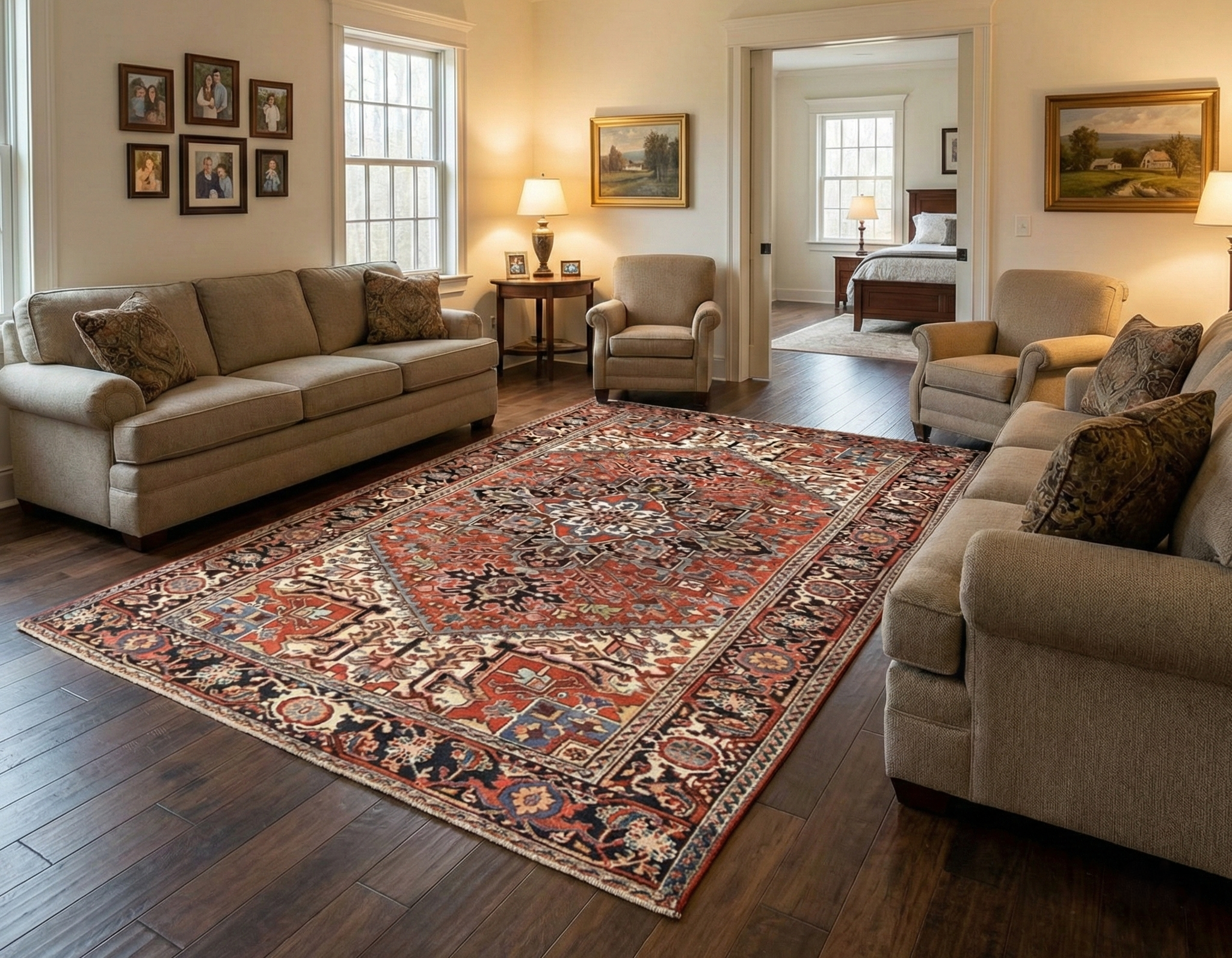
Rust Orange, Afghan Peshawar with Heriz All Over Design, Hand Knotted, Soft 100% Wool, Densely Woven, Oriental Rug
This handcrafted Heriz All Over Design is an original Pure Wool oriental rug. ©1800getarug.com


The design of the rugs, as chronicled in history, is heavily influenced by ancient Persian rug motifs. The colors, usually light and earthy and derived from sun-dried vegetable dyes, give the rugs its characteristic antique and washed-out look. But whether they are stonewashed and have their piles cut shorter, or the modernist take will have the colors pop, you are sure to be mesmerized by the deep richness and artistry that are the Peshawar rugs.

Maya Blue, Afghan Peshawar with Heriz All Over Design, Hand Knotted, 100% Wool, Densely Woven, Oriental Rug
This handcrafted Heriz All Over Design is an original Pure Wool oriental rug. © 1800getarug.com


The Value of Antique Persian Carpets

Trying to explain or understand what makes certain antique carpets more valuable than others is an elaborate and difficult task. One must try to strike a balance between quantifiable measures such as market precedent, market trends, condition and rarity and less objective values such as personal taste, provenance and aesthetic and chromatic quality.


In the field of antique Persian carpets, before we make any judgement about rarity and aesthetic quality, it is important to have a brief understanding of how material quality can inform and affect judgements on value. This in turn means that we must have some idea about how carpets have been made in Iran historically as material quality is relative to the area in which it was made.

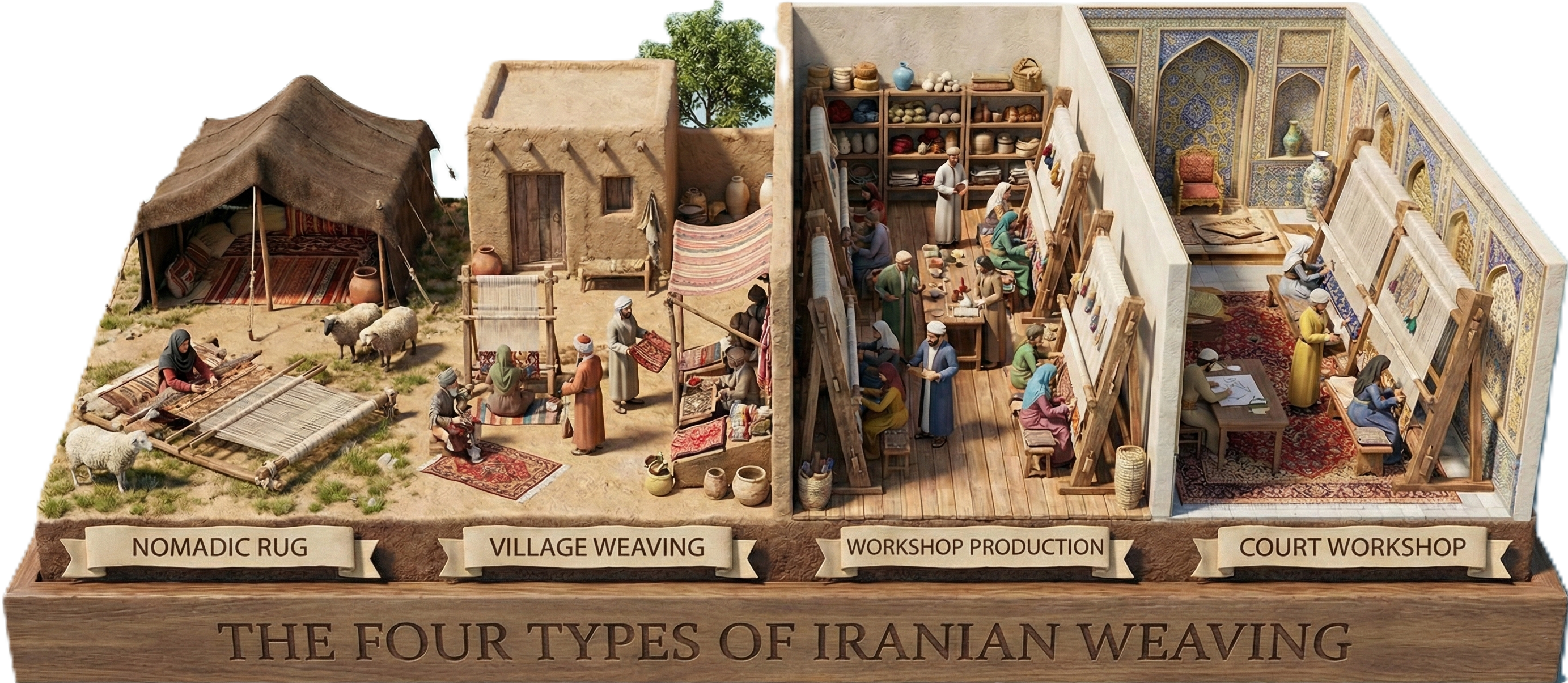
The four types of Iranian weaving
The four types of Iranian weaving. © 1800getarug.com

There are four types of weavings made in Iran: the first is a nomadic rug made by tribal people for their own consumption or use; the second is a village weaving made for local use but also sold at the bazar as a source of additional income; the third is organised workshop production where designs and materials are given to a weaver to create under supervision; and the last is the court atelier or workshop with exclusive access to the best dyes, materials, designers and weavers.

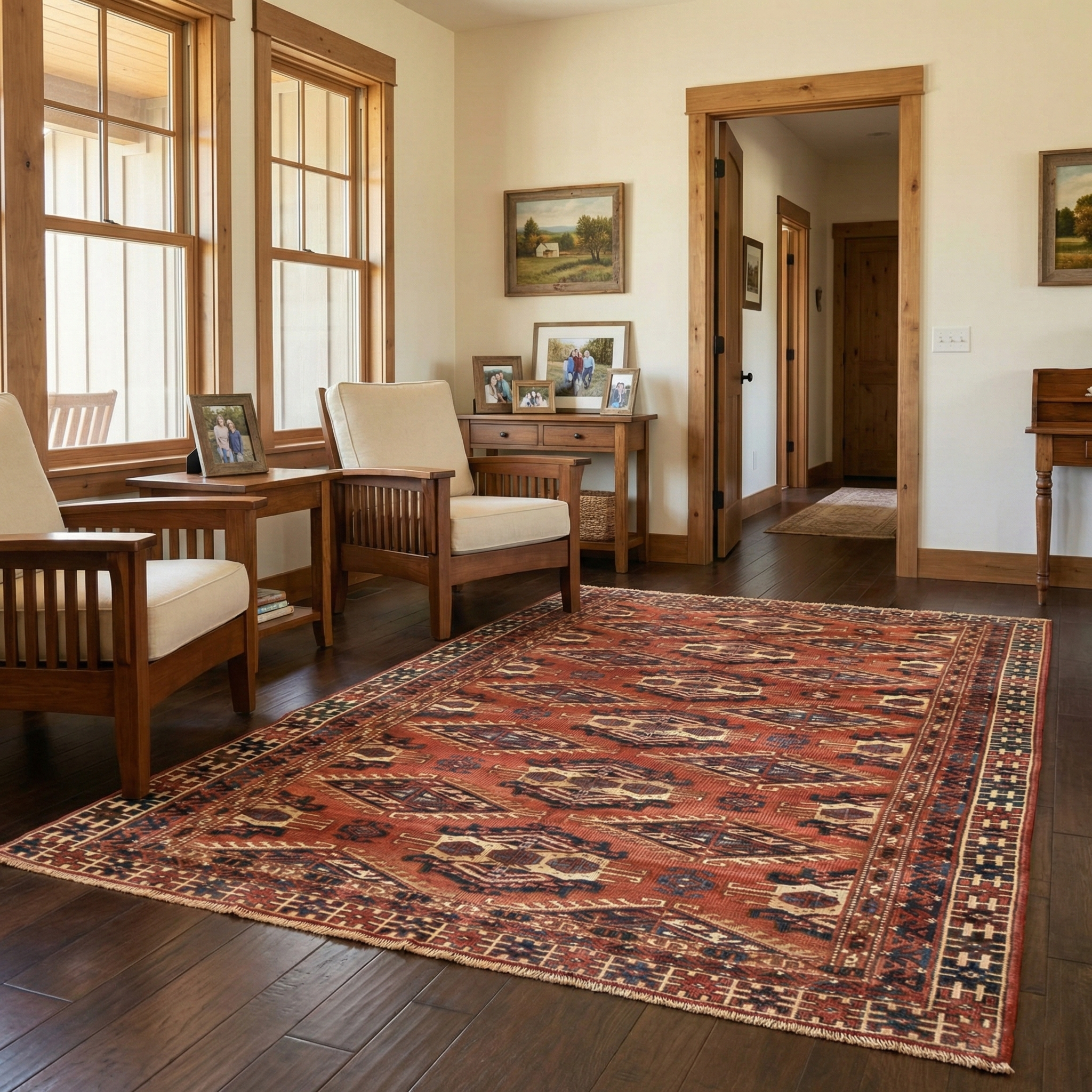
Blush Red, Antique Tekke Tourkaman Bokara, Geometric Pattern, Pure Wool, Even Wear, Clean, Hand Knotted, Oriental Rug
This handcrafted Antique Tekke Tourkeman Bokara is an original Pure Wool oriental rug. © 1800getarug.com


The first two create rugs that reflect the women weavers own color and design preferences, and may well be individual in character and express the unfiltered artistic vision of the weaver. The third type of rug has a more formal aesthetic and reflects precise and well-articulated design and color preferences. While the workshop represents skilled craftspeople making items for sale, there are obviously different levels within this category ranging from loosely woven rugs made in villages out of wool through to important workshops with named designers using silk, the finest and most expensive wool as well as very high knot densities. It is important to note that while fineness of weave can affect the value of a rug, that is not to say that all fine rugs are necessarily valuable.

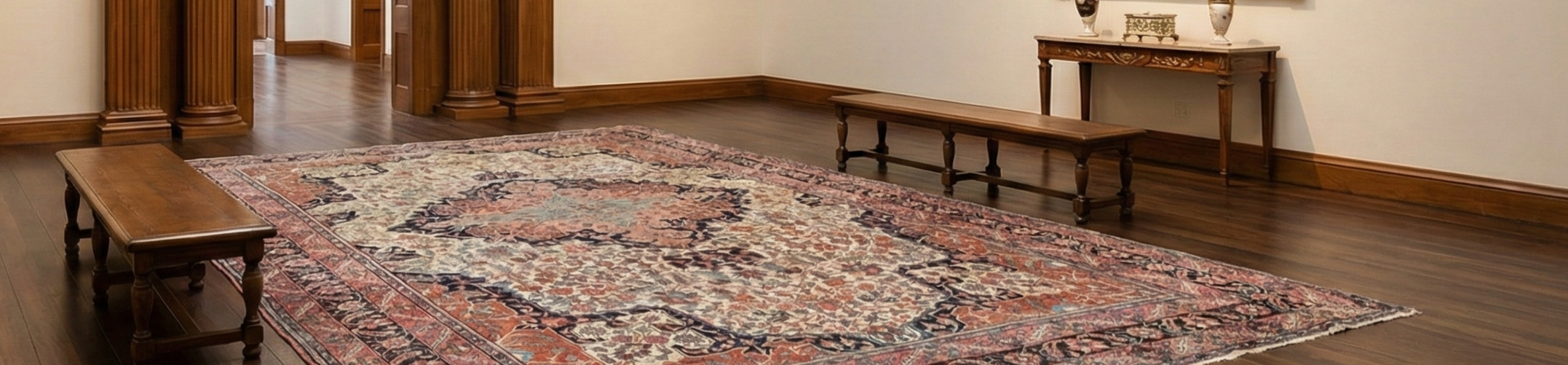
Savvy Red, Antique Persian Heriz, Good Condition, Clean, Hand Knotted, 100% Wool, Rare Size, Sides and Ends Professionally Secured, Oriental Rug
This handcrafted Antique Persian Heriz is an original Pure Wool oriental rug. © 1800getarug.com


The final category of court workshop represents an exclusive class of weavings that are extremely rare and sought after since they only came into existence during the reign of the Safavid dynasty in Iran (1501-1736). Workshops were set up within the court weaving exclusively for the Shah, setting standards for colour and quality and using designs created by the greatest artists of the day. In the late 17th century, the court dissolved these in-house ateliers and began to buy from a selection of private workshops, which were commissioned rather than directly employed by the Shah. While court carpets from the 16th and 17th century are bought by museum and collectors, the practice of court and royal patronage, both nationally and regionally, remained a significant factor in terms of quality and innovation in the Persian carpet industry until the 20th century.

Chiffon White, Antique Persian Sarouk Fereghan, Intricate Small Flower and Serrated Leaf Center Medallion Design, Good Condition and Clean, 100% Wool, Hand Knotted, Oriental Rug
This special item has been knotted for several weeks in the centuries-old traditional weaving craftsmanship techniques by expert artisans. © 1800getarug.com


While the quality of wool, weave, natural or chemical dyes are all important indicators of value within each of these levels of production, it is difficult to draw direct comparisons across the categories. How can you meaningfully compare the material quality of a long-pile tribal rug made to protect against cold with very minimal design and colours with a silk rug made in a city workshop for use at a wedding ceremony with a design of a tree of life? Critical judgement and any realistic assessment of value for antique Persian carpets is therefore relative to the type of rug, and recognising how it was made before values associated with material quality can be allied.


The Rug Knot Breakdown: Part I

Persian rugs, oriental rugs, hand knotted rugs, Persian carpets, symmetrical Turkish knot, asymmetrical Persian knot, Ghiordes knot, Turkish knots,

If it’s not our Persian rugs, it’s our oriental rugs that we love—or both. Nothing, and I mean, nothing, ties a room together better than a Persian or oriental rug. The intricate motifs, designs and patterns of hand knotted rugs are practically a map of the long history of Persian rugs, dating as far back as the 16th century. The craft of Persian carpets and oriental rugs has such a deep-rooted history that each weave, loop and rug knot is carefully tended down to the last thread.

There are two basic knots that are used in most Persian or oriental rugs: the symmetrical Turkish knot and the asymmetrical Persian knot. This week, we’ll be discussing the symmetrical Turkish knot.

The origin of the symmetrical Turkish knot dates from 1895-1900 and is also known as the Ghiordes knot that is used in Turkey, East Turkmenistan, the Caucasus, and some Turkish and Kurdish areas of Iran. Turkish knots are made when yarn is passed between two adjacent warps, returned back under one, wrapped around both forming a collar, and then finally pulled through the center so that both ends emerge between the warps producing an uneven pile effect. Here’s a handy diagram that might make it easier to understand this knotting process.

The Origins of Persian Rugs

Persian rugs origins have been around for a long time, nearly 2500 years. The oldest surviving carpet in the world is from the 5th century BC and is called the Pazyryk Carpet (above). Found in the grave of a Scythian prince from the Achaemenid period,  this carpet is a phenomenal example of Persian rugs, and it is especially interesting that it has withstood time so well since silk and wool  decay eventually.

The Achaemenid period was a time of magnificent carpet weaving. Cyrus the Great was the ruler of the court and Persia was allianced with Alexander the Great. The empire was the largest of Ancient times and is noted in history for being the foe of the Greeks; for freeing the Jews from slavery in Babylon; for having official languages throughout their territories; and for having magnificent hand knotted rugs.

The empire fell, but the making of hand knotted rugs never stopped. In the 6th century, the Persian carpets were globally famed for being the best. A carpet in the imperial hall of Khorsow I was 450 feet long and 90 feet wide. It depicted a formal garden. A hundred years later, the Sasanian capital Tuspawn (modern Iraq) fell and the Arab invaders cut the rug into fragmented rugs for booty.