The Three Periods of Persian Rugs

Persian Rugs are so much more than a comfy piece of furniture to rub your toes in. It is a vital part of the Persian culture and known more as an art piece than as a bit of furniture. Their history, which some interpret dates back to 500 B.C.E, can be divided into three periods of Persian rugs over the course of time.

The Zoroasterian Period

Found in a grace of a Scythian prince, the Pazyryk carpet was discovered during an archaeological excavation in the Pazyryk Valley of Siberia in 1949. This is the earliest known example of Persian rugs, although most archaeological discovereies from this era are usually no more than a few remaining worn out bits of fabric.

The Islamic Period

Starting in the 8th century C.E., the Azarbaijan Province in Iran became the most powerful carpet weaving area in the world. During the reigns of the Seljuq and Iilkhanate dynasties, carpet weaving expanded and flourished to such a poresitigious degree that a mosque in northwestern Iran even chose to have itself covered in Persian rugs.

The Modern Period

Today, modern Persian carpet production has been mostly mechanized, although hand woven carpets are still produced and available from all around the world. In fact, Iran exported over $500 million worth of hand woven carpets annually since 2002 (although many other countries produce replicas available for cheaper costs).
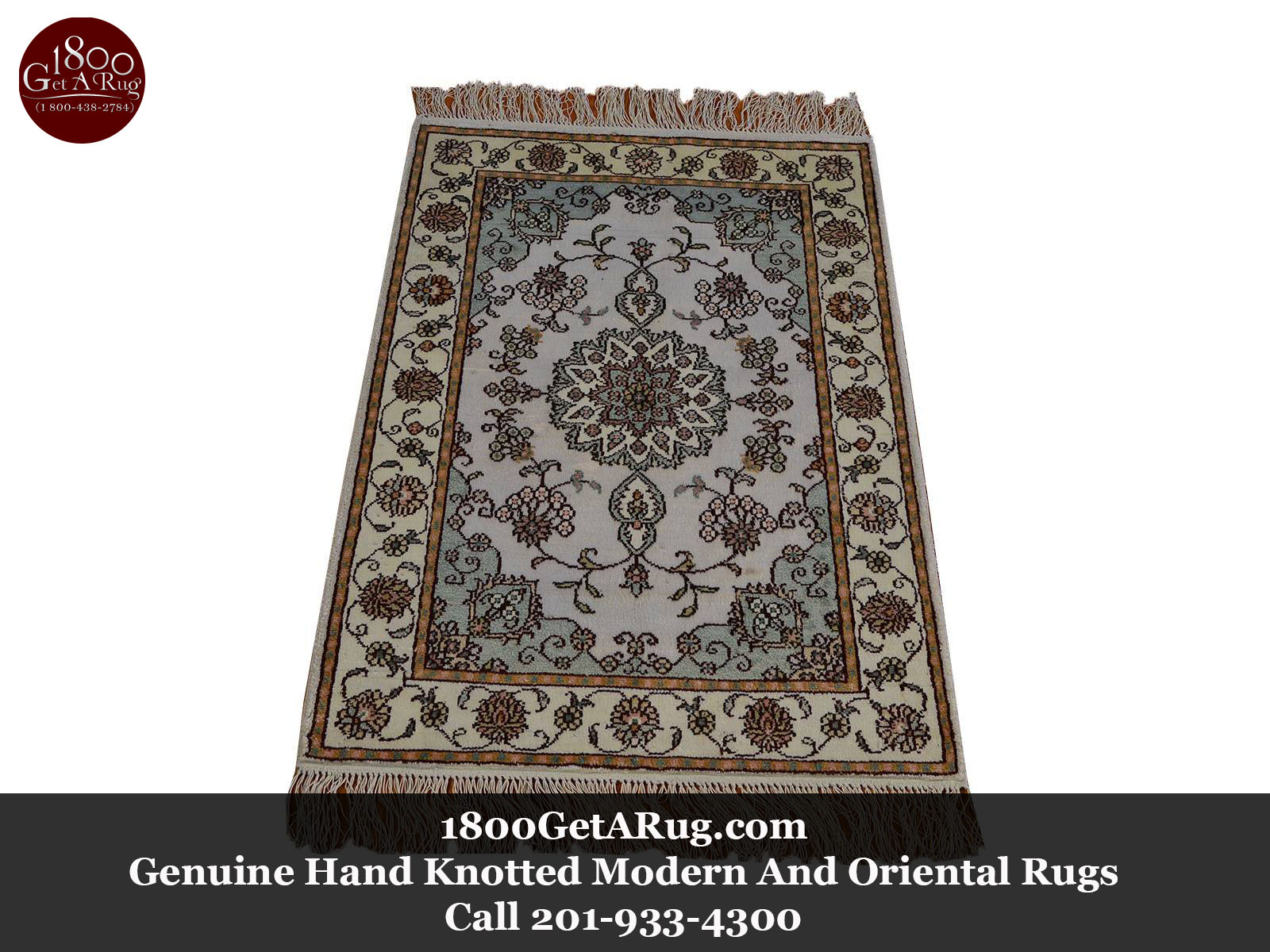
The Origins of Persian Rugs

Persian rugs origins have been around for a long time, nearly 2500 years. The oldest surviving carpet in the world is from the 5th century BC and is called the Pazyryk Carpet (above). Found in the grave of a Scythian prince from the Achaemenid period,  this carpet is a phenomenal example of Persian rugs, and it is especially interesting that it has withstood time so well since silk and wool  decay eventually.

The Achaemenid period was a time of magnificent carpet weaving. Cyrus the Great was the ruler of the court and Persia was allianced with Alexander the Great. The empire was the largest of Ancient times and is noted in history for being the foe of the Greeks; for freeing the Jews from slavery in Babylon; for having official languages throughout their territories; and for having magnificent hand knotted rugs.

The empire fell, but the making of hand knotted rugs never stopped. In the 6th century, the Persian carpets were globally famed for being the best. A carpet in the imperial hall of Khorsow I was 450 feet long and 90 feet wide. It depicted a formal garden. A hundred years later, the Sasanian capital Tuspawn (modern Iraq) fell and the Arab invaders cut the rug into fragmented rugs for booty.

A Brief History of Persian Rugs: The Pazyryk Carpet

Persian rugs have been around for hundreds of years. One of the oldest on record, the Pazyryk Carpet of Iran, is roughly 2500 years old, dating back to 500 B.C. Archaeologists are rarely able to garner any useful information from pieces of Persian rugs they’ve found, as over time the fibers (usually wool, silk and cotton) decay, rendering them void of any real news. The Pazyryk Carpet is considered the oldest and one of the best-preserved Persian rugs found, and, as you can see below, even it is in withering condition.

The Pazyryk Carpet was discovered in 1949 in the Siberian Altai Mountains, specifically in the grave of a Scythian prince. Extensive research on the rug suggests that by the time it was made the rug-making process had already undergone a long and elegant evolution. There is some debate about which time period the rug actually belongs to; some believe it is not a nomadic product as first assumed, but one of the Achaemenid period. Its timeline matches that of Cyrus the Great at Pasargade, whose court is said to have been decorated with luxurious rugs and carpeting. It’s plausible that citizens of an opposing country could have stolen the rugs from the court, in effect scattering them across the continent.

Persian Rugs and the Achaemenid Empire

Persia, also known as Iran, was once the political center of the world. The Achaemenid Empire (550-33 B.C.E) held a huge expanse of land, stretching from the Indus Valley to Thrace and Macedon in the north, all the way to present day Liberia in the east. It was the Persian Empire that freed the Jewish people from Babylon, that warred with the Greek city states and that instituted an official language (Aramaic).

Eventually, the empire weakened when the king delegated power to local governors, undermining his own status and causing difficulty in the quelling of local rebellions. This eventually led to Alexander the Great’s reign over the empire. Alexander greatly respected Cyrus the Great, and adopted the Persian technique of proskynesis, or lying prostrate before royalty, into Macedonian culture. Cyrus the Great had huge area rugs, which are said to have dazzled Alexander.

During these peaceful times, the arts flourished, and stone-cutting and carpet weaving became important aspects of Persian cultural heritage. This is when the Pazyryk carpet and others of the world’s oldest area rugs were created. These hand knotted rugs evolved to become world renowned throughout the Ancient and Modern Eras. Today, Persian rugs are still widely known to be the best.