Decoding Esfahan Rugs- The Flavor of ‘Enchanted City’

An Esfahan Rug is not just something that covers your floor, it is in fact a work of art.


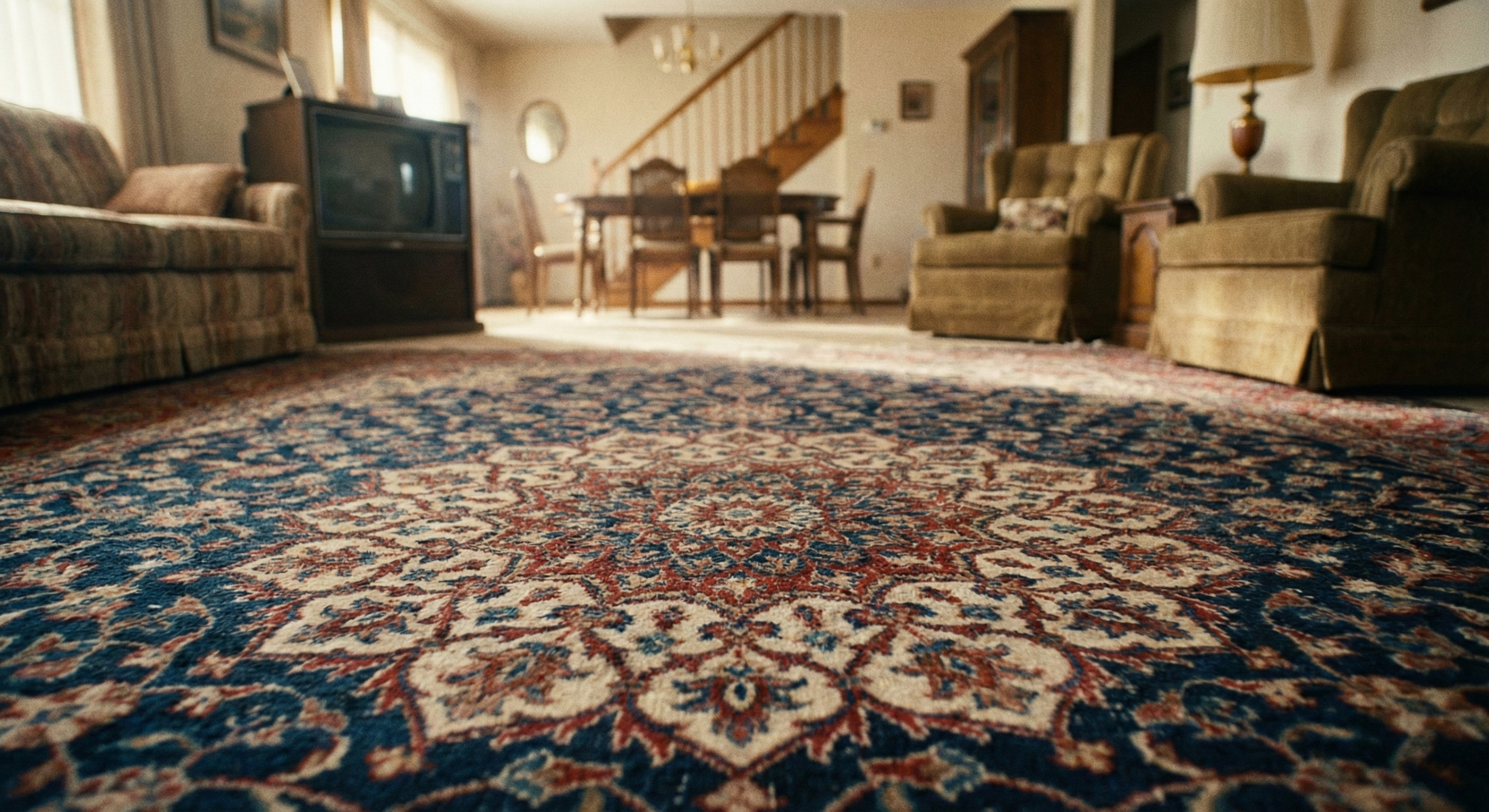
My quest for these marvelous pieces began when I got the keys to my first apartment as buying the perfect rug for my floor was amongst the most important things that I needed to decorate my home. Now, the reason for my ardent inclination towards Esfahan Rugs can be traced back to my childhood, when I would visit my grandparents: their house always full of friends, family and relatives and the floor always adorned with beautiful Persian rugs. Thinking about an authentic oriental, Persian rug conjures memories of our extended family gathered together, having those cozy meals, sometimes on the floor with a soft, warm rug providing unmatched comfort. This is the kind of atmosphere that I wanted for my new apartment, a home that welcomes all and flooring that becomes the point of conversation.

Esfahan Rugs remember


It is amazing how I distinctly remember the bold circular central medallion set against a background of floral motifs and an intricately tinkling vine palmette of my grandfather’s rug. This quintessential central medallion is inspired from the famous mosque of Shah Lutf Allah in Isfahan, I am told. It was beyond doubt that I needed an Esfahan rug for my floor as these rugs are at the pinnacle of the Persian rug industry. Given my persistent encounters with some of the finest rugs since childhood, I had some basic insights into the world of these hand knotted beauties. However to buy the perfect Esfahan Rug I still needed a lot of research and groundwork. My father used to tell me that grandpa was so particular about the rug he was buying that he would scratch the back of the rug before making the purchase as handmade rugs have many secrets hidden at the back- right from the intricacy of the weaving to the knot count per square meter. As I dug deeper into the world of Esfahan rugs I got to know about the city that produces these wonderful rugs, rendering them their enchanted flavor.


Understanding the Enchanted City

The city of Isfahan lies in the middle of Iran with Zagros Mountains to the left and the desert to the right. An important industrial center today, Isfahan has been recognized as one of the finest cities of the Islamic world architecturally. The old bridge, great Imam square and the parks render the city its oriental essence, which is in turn reflected in all the offerings from Isfahan, including the rugs. If you own an Isfahan, you own a truly oriental rug with a mystic and ever mesmerizing aura. Keeping this in mind, I explored the city to find the best place to buy Esfahan Rugs and came across names such as Seirafian, Haghighi, Enteshar and Davari, having earned a good reputation as rug specialists. My quest involved lengthy conversations with these makers to understand the rug better, thereby gaining insight into what an ‘Isfahan’ is all about and here is what I found out.
Understanding the Enchanted City
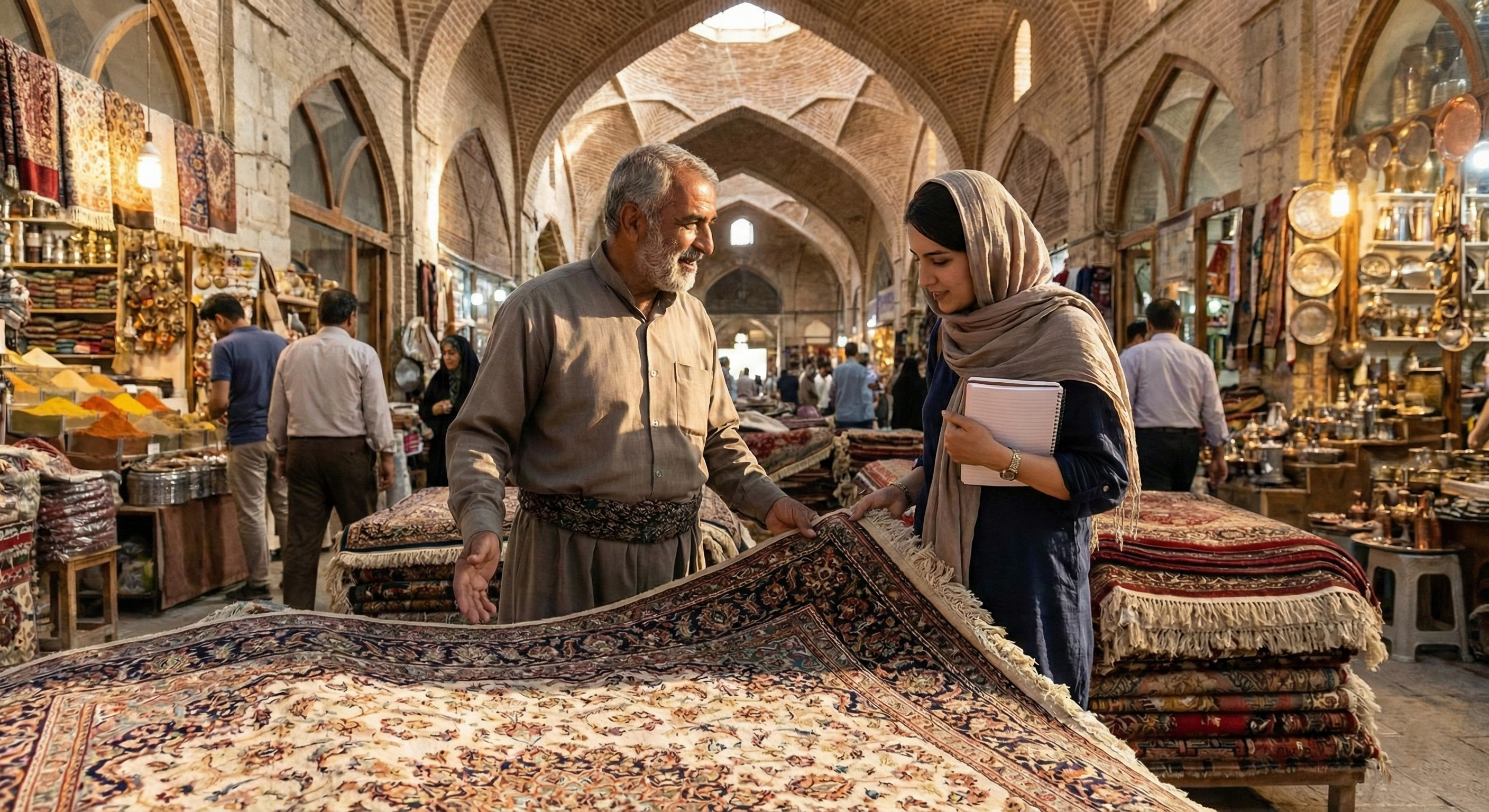
Illustration of a bazaar in Isfahan © 1800getarug.com


Entwined in an ‘Esfahan’

Carpets from the city of Isfahan have their own distinction when it comes to the composition of designs, materials and patterns. The highest quality wool, often Kurk wool or silk, is used for making the pile. These rugs are characterized by high knot density, the knots being asymmetrical and most times made on a silk warp. A high knot count of around 120 KPSI up to 842 KPSI is achieved by using premium wool sheared from the chest and shoulders of lambs. Detailed accents with metallic and silk fibers have become hallmarks of carpets from Isfahan. When buying an Esfahan, you will come across pictorial scenes, medallions and curvilinear arabesques with spiraling vine-scrolls.
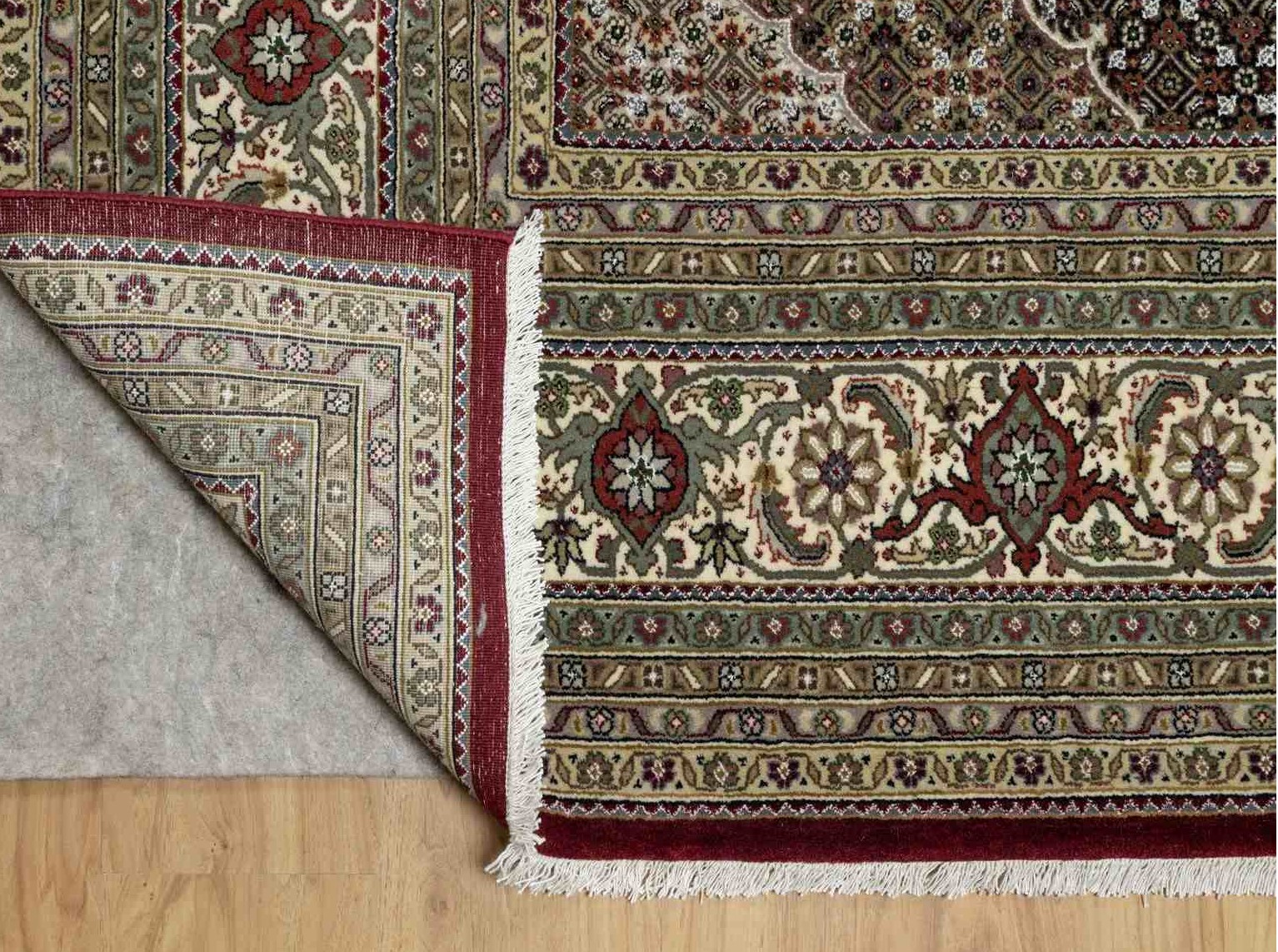
Wine Red, 250 KPSI, Hand Knotted, Super Mahi with Large Medallion, Wool and Silk, Oriental Rug
This handcrafted Super Mahi, 250 KPSI ,is an original Pure Wool oriental rug. © 1800getarug.com


Timeless elegance that will stay with you for generations

Handmade Esfahan rugs have some imperfections, but that is where all the charm lies. Any handmade thing is bound to be asymmetric, with some inadequacies if you like, but this is precisely what makes each handmade rug unique. Characterized by rich colors, Isfahan rugs are most commonly found in ivory backgrounds with rose, blue and indigo motifs. An Esfahan rug is not just an option to cover the floor, but an investment with great resale value. So, to avoid blowing a fortune on an “authentic” Esfahan rug that is essentially a replica, find a reputable dealer who does not sell rugs but understands them, loves them. One small tip that I can pass on from my personal experience — keep away from the person who tries to ‘sell’ you a rug.
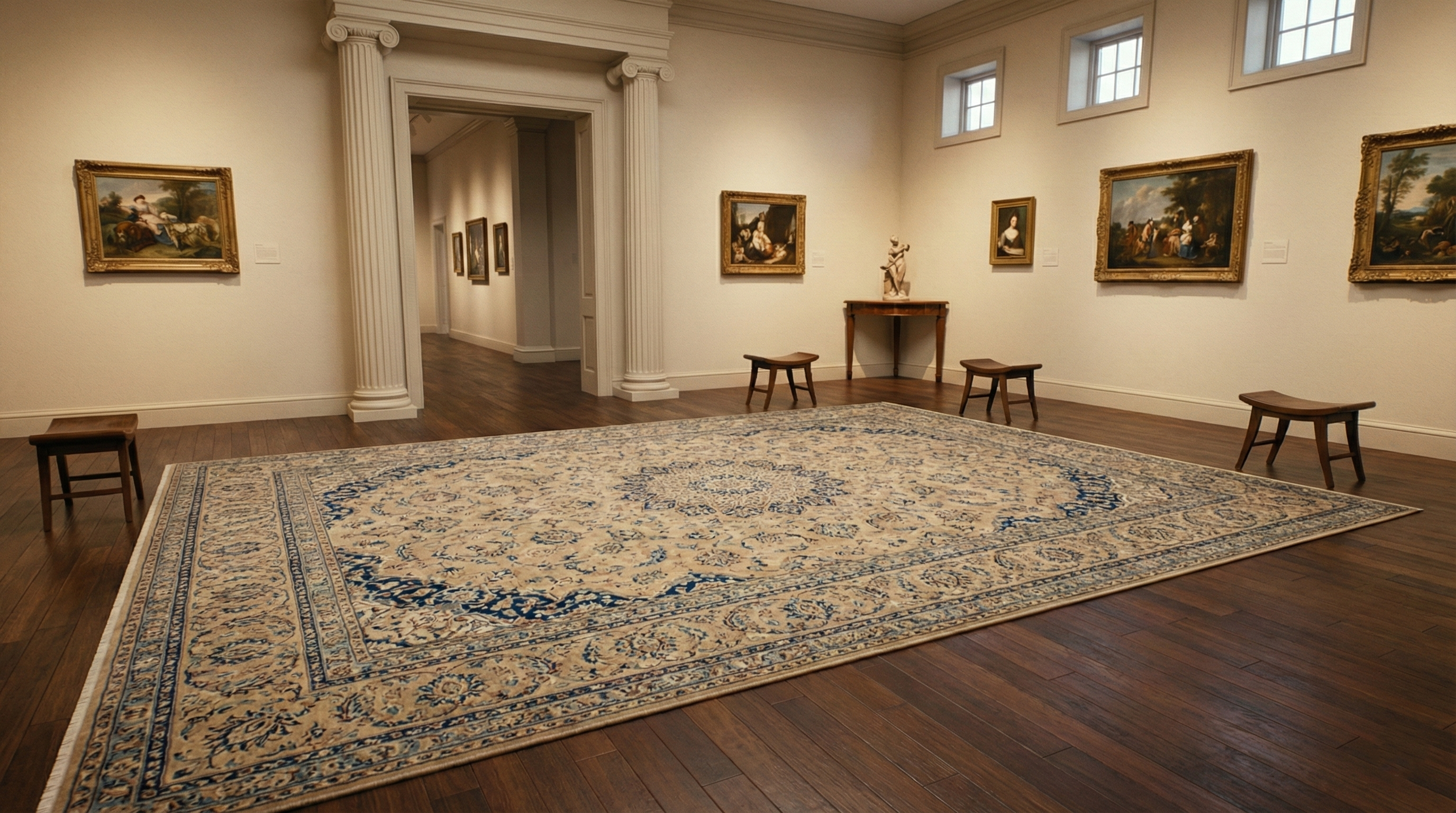
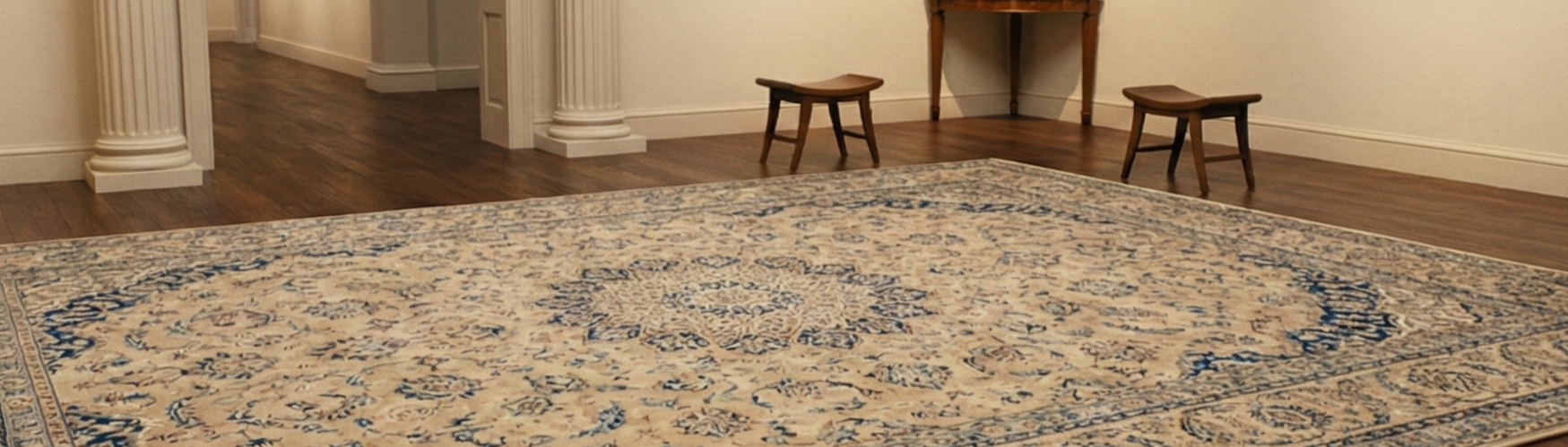
Parchment Ivory, Vintage Persian Esfahan, 400 KPSI, Good Condition, Clean, Soft and Pliable, Hand Knotted, Wool and Silk on Silk Oriental Rug
This handcrafted Antique Persian Esfahan is an authentic Wool oriental rug. © 1800getarug.com

The legacy of Esfahan Rugs endures still, as master weavers continue to create timeless heirloom rugs. Setting out to find the right rug is a journey that should not be rushed as this is something that will adorn your floors for not years but generations. These masterpieces are not meant to be hidden away in vaults, but lavishly displayed in your heaven for everybody to admire and appreciate.



What’s the deal with antique Persian carpets?

With everything that’s been going on in Iran lately, we tend to forget that the Middle Eastern country is known as the original home of the oriental carpet. Iran (Persia) is the oldest and once the most powerful empire in the Middle East. Many of the finest antique Persian carpets have originated from Iran over the last hundred years or longer.


Persia stood at the crossroads of Eastern and Western civilizations. Under the Safavid dynasty, Iran attained its artistic height. Court weaving, together with the art of calligraphy, miniature painting, and tile work, flourished to exceptional heights during this dynasty. It is during this dynasty that many of the fine antique Persian carpets from today were made.

Midnight Black, Vintage Persian Nehevand, Cropped Thin, 100% Wool, Hand Knotted, Zero Pile, Sides and Ends Professionally Secured, Mat, Oriental Rug
This handcrafted Vintage Persian Nehevand is an authentic Pure Wool oriental rug. © 1800getarug.com


The brilliant era witnessed the development of highly qualified carpet factories in cities including Kerman, Isfahan, Kashan, Tabriz, and Herat (now a part of Afghanistan). Iran is the genesis of most motifs, patterns, and traditional coloration, that are produced in rugs throughout the world today. Over the centuries, antique Persian carpets have become treasured heirlooms, passed on from one generation to the next. It is a true testament to the people who made the carpet originally that they are able to hold up over the course of time and still be in a condition that would be acceptable for use year after year.

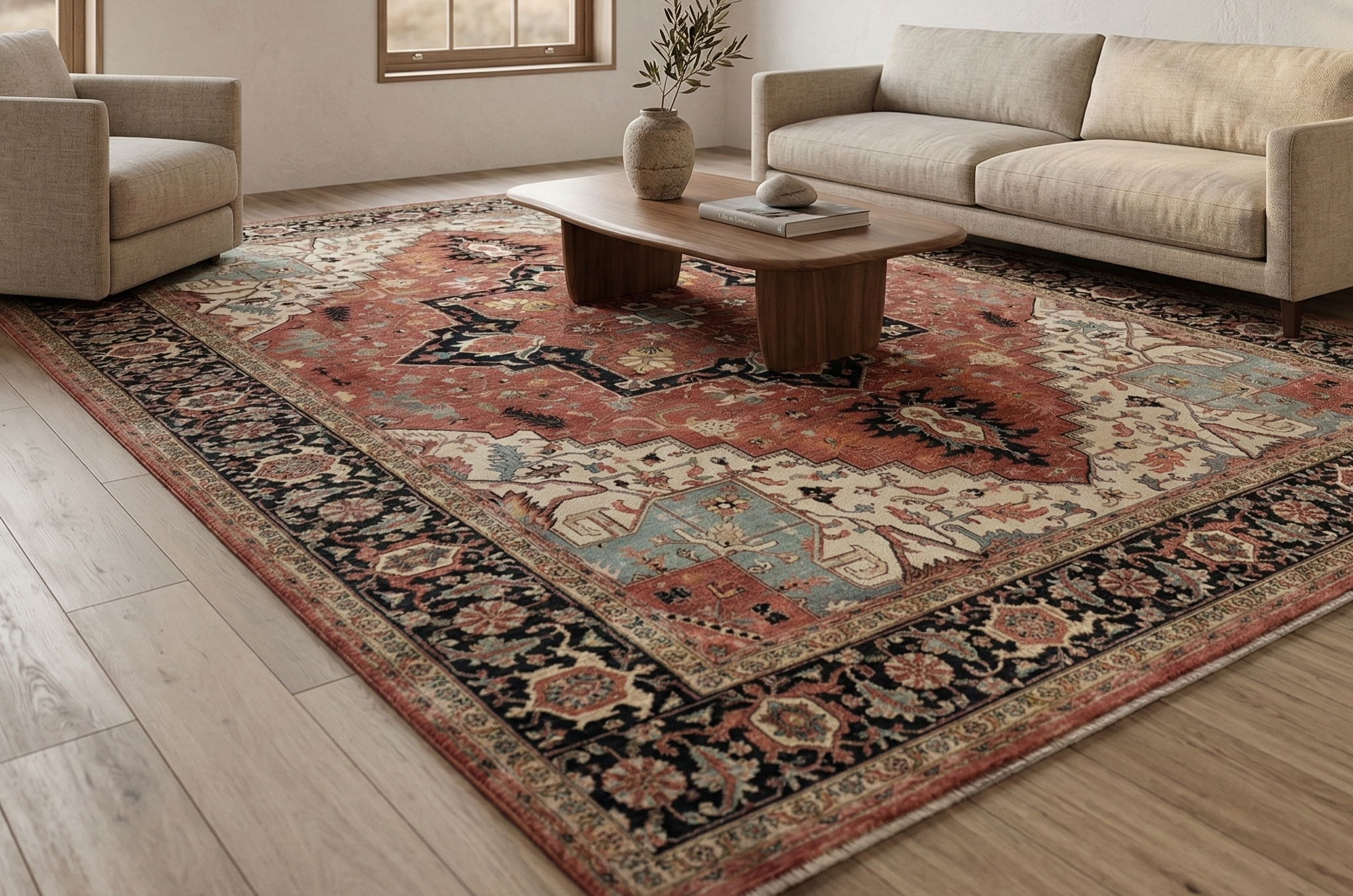
Auburn Red, Hand Spun New Zealand Wool, Hand Knotted, Antiqued Fine Heriz Re-Creation with Geometric Medallion, Vegetable Dyes, Denser Weave, Oriental Rug
This handcrafted Antiqued Fine Heriz Re-Creation is an original Pure Wool oriental rug. © 1800getarug.com


So whether you’re looking for a Persian Antique Carpet or Semi-Antique, Fine New Oriental Rugs, 19th century European designs or modern area rugs, log on to www.1800getarug.com where you will find a unique collection of beautiful hand-knotted rugs which is always up to date with new colors and designs. Our showroom is open Monday through Saturday for you to view our vast selection of fine Persian rugs, and for you to find that special rug that you can pass on in your family for generations to come! Please stop by today or visit our website to find the rug for you.

Beaver Brown, Hand Knotted, Modern Variegated Design, Natural Undyed Wool, Piled Flat Weave, Tone on Tone, Textured, Oriental Rug
This handcrafted modern design is an authentic wool oriental rug. © 1800getarug.com


Rug Glossary I

Persian Rugs, Silk Rugs, Needlepoint Rugs, Vegetable Dyes Rugs, Antique rugs and the list goes on and on. How can you choose a rug if you don’t know the difference? So before you head on to the store, here is a Rug Dictionary or a Rug Glossary, weaved by the specialists of:


Aubusson is actually a town in the French region of Creuse. An Aubusson rug is a flat weave, pile less rug, mostly featuring a floral medallion with curvilinear floral borders and soft pastel colors. Aubusson rugs have been famous throughout the world since the 14th Century for their graceful and elegant designs. Our collection consists of the finest handwoven Aubussons, which are made with 100% highest quality lambs wool.


Silk Rugs: Silk fabric was first developed in ancient China and was originally reserved for the Kings for their own use and gifts to others. Today it’s accessible by all and in great demand because of its texture, luster and durability. A silk rug is the most intricate type of handknotted oriental carpet with very fine weave, copious detail and a rich color combination.


In our collection, you will find stunning examples of classic Persian Tabriz, Kashan, Qum, Isfahan and Turkish Hereke patterns at unbeatable prices: These rugs have been the most prestigious European style knotted-pile carpets since early 17th century (Louis XIII). They are made with wool and sometimes silk in the small details, knotted using the Ghiordes knot in purely French designs with the occasional addition of Rococo elements. Our collection consists of the most meticulously woven plush area rugs in all sizes at wholesale prices. So whether you’re looking for a Persian Antique or Semi-Antique, Fine New Oriental Rugs, 19th century European designs or modern area rugs, log on to www.1800getarug.com where you will find a unique collection of beautiful handknotted rugs which is always up to date with color and design.