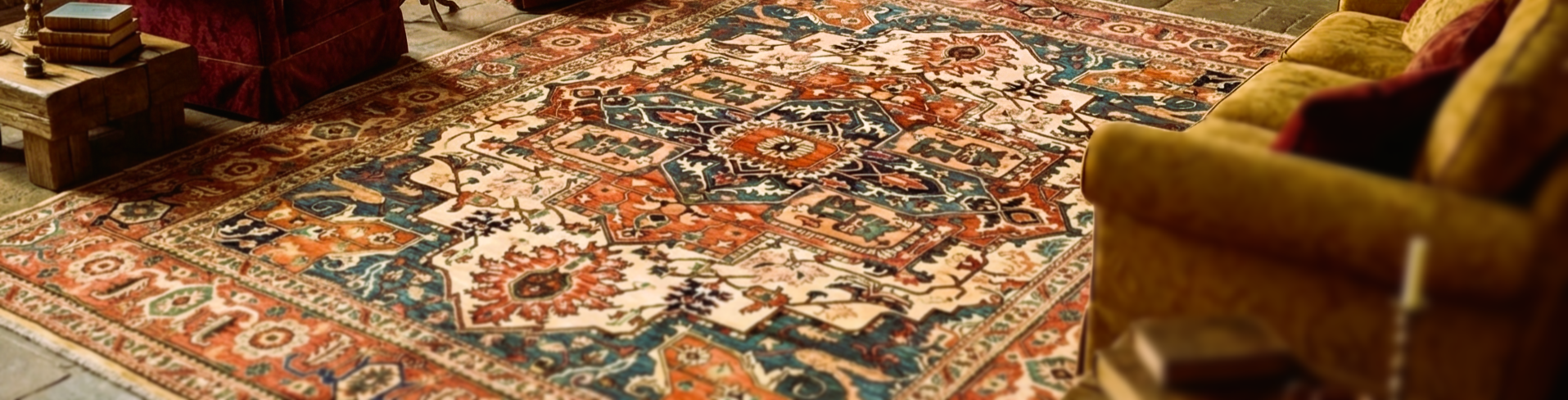
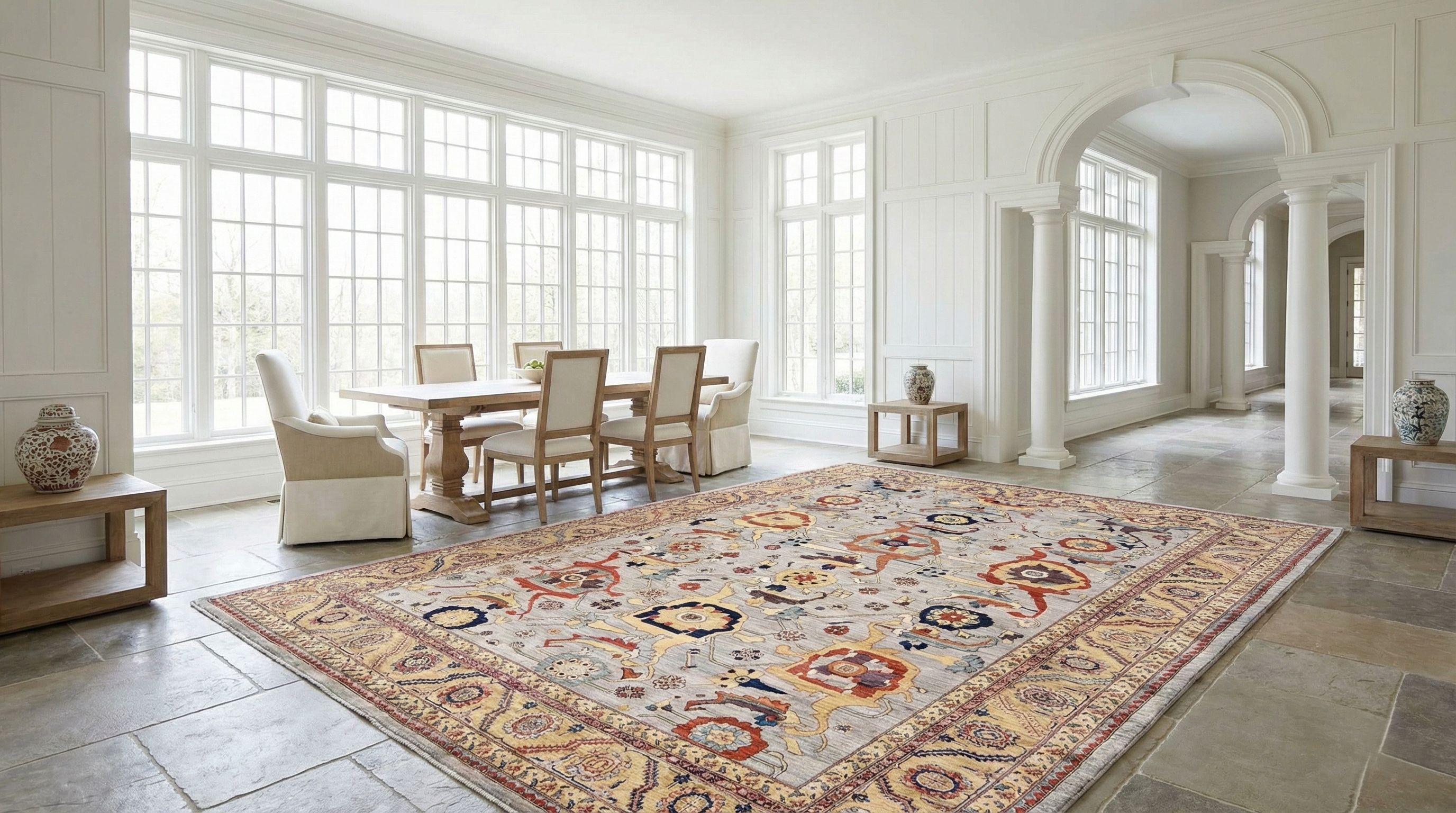
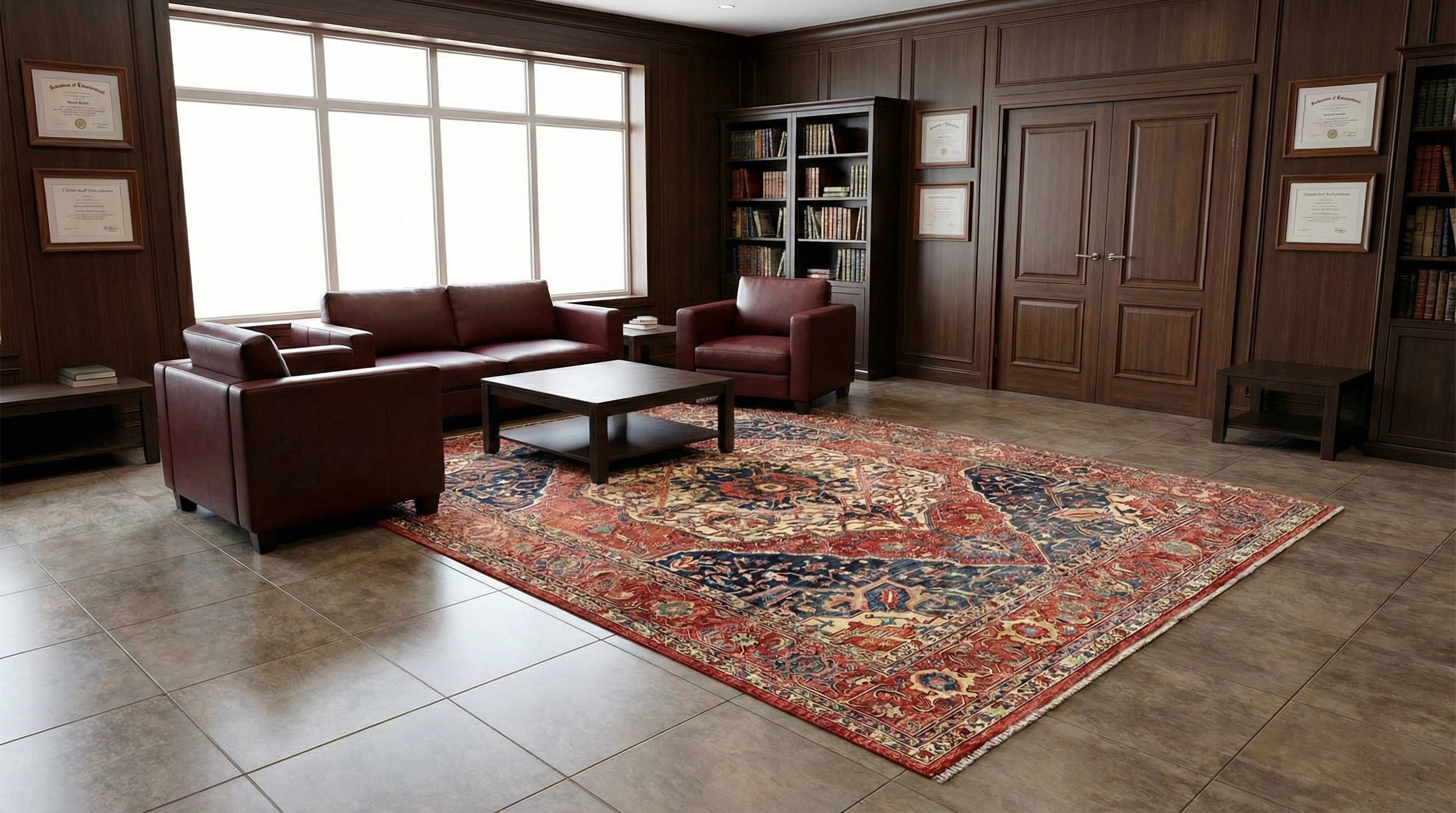
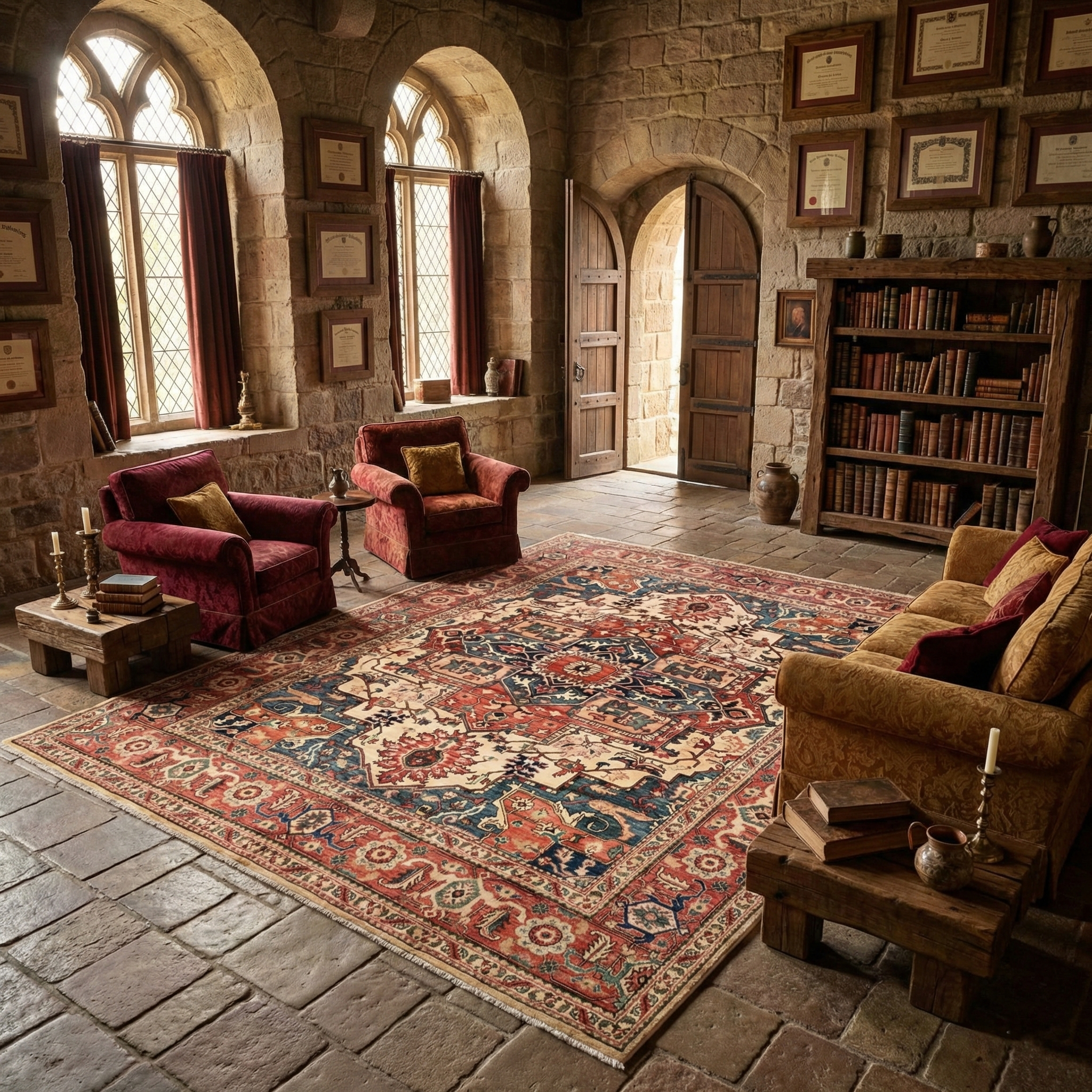
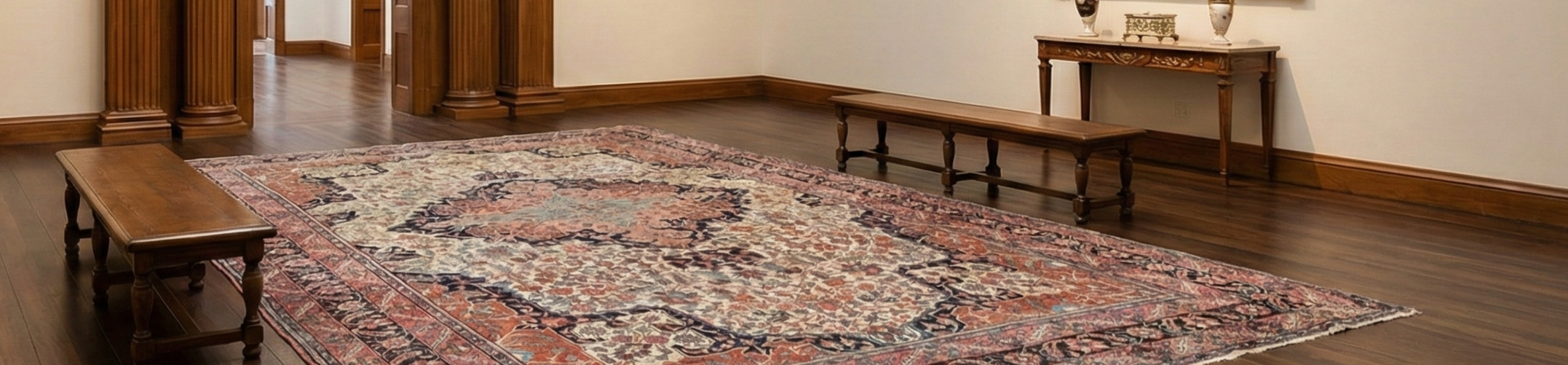
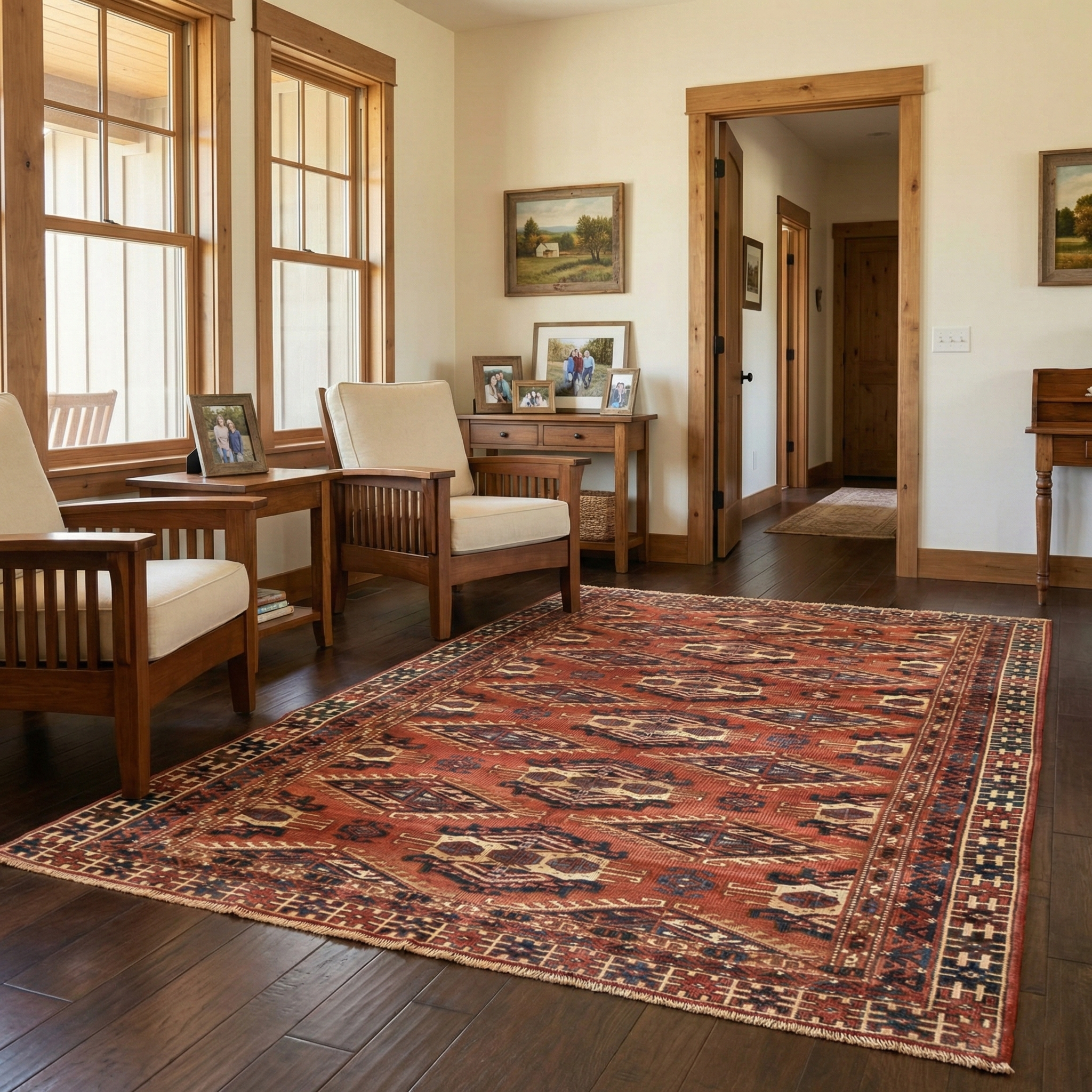
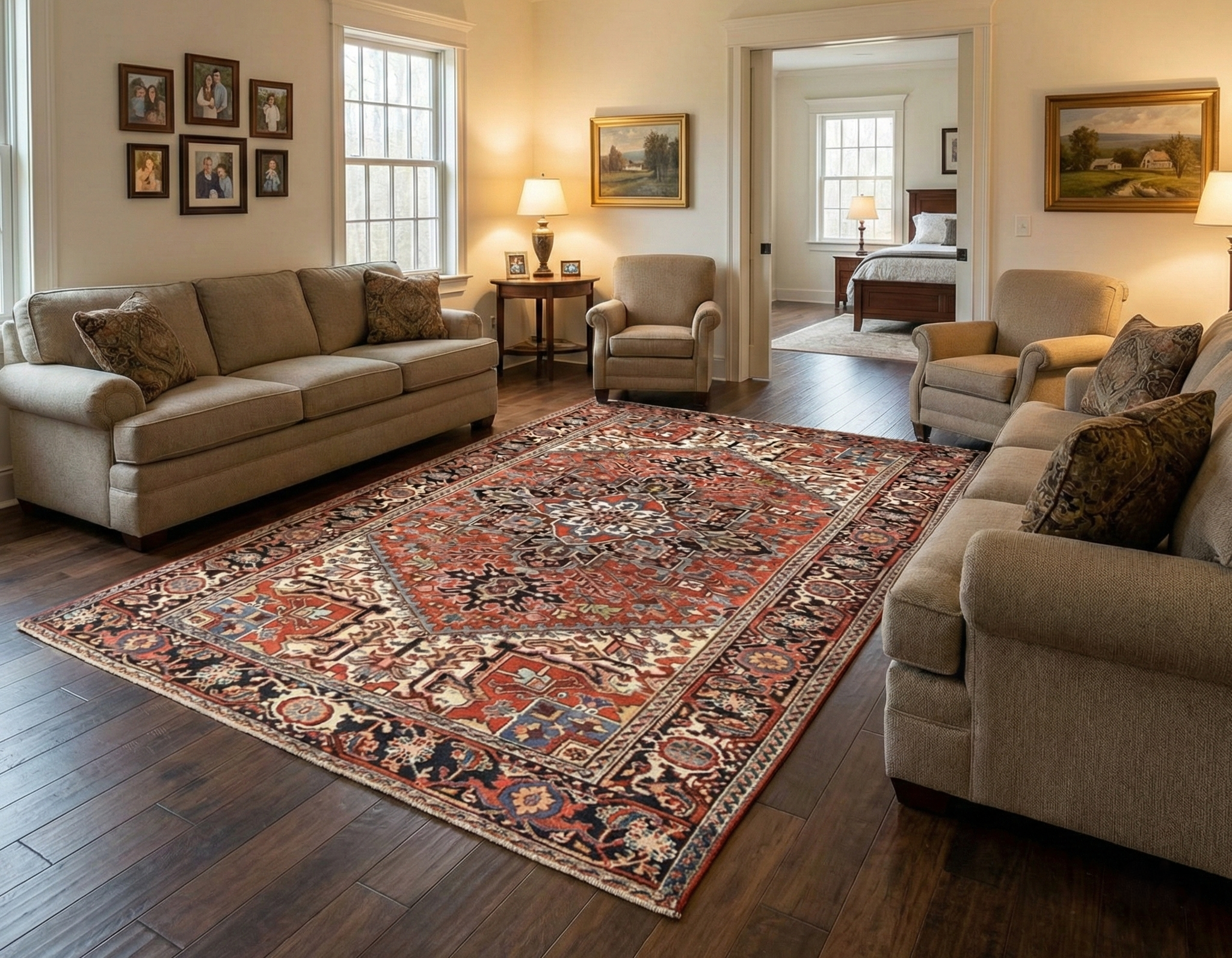
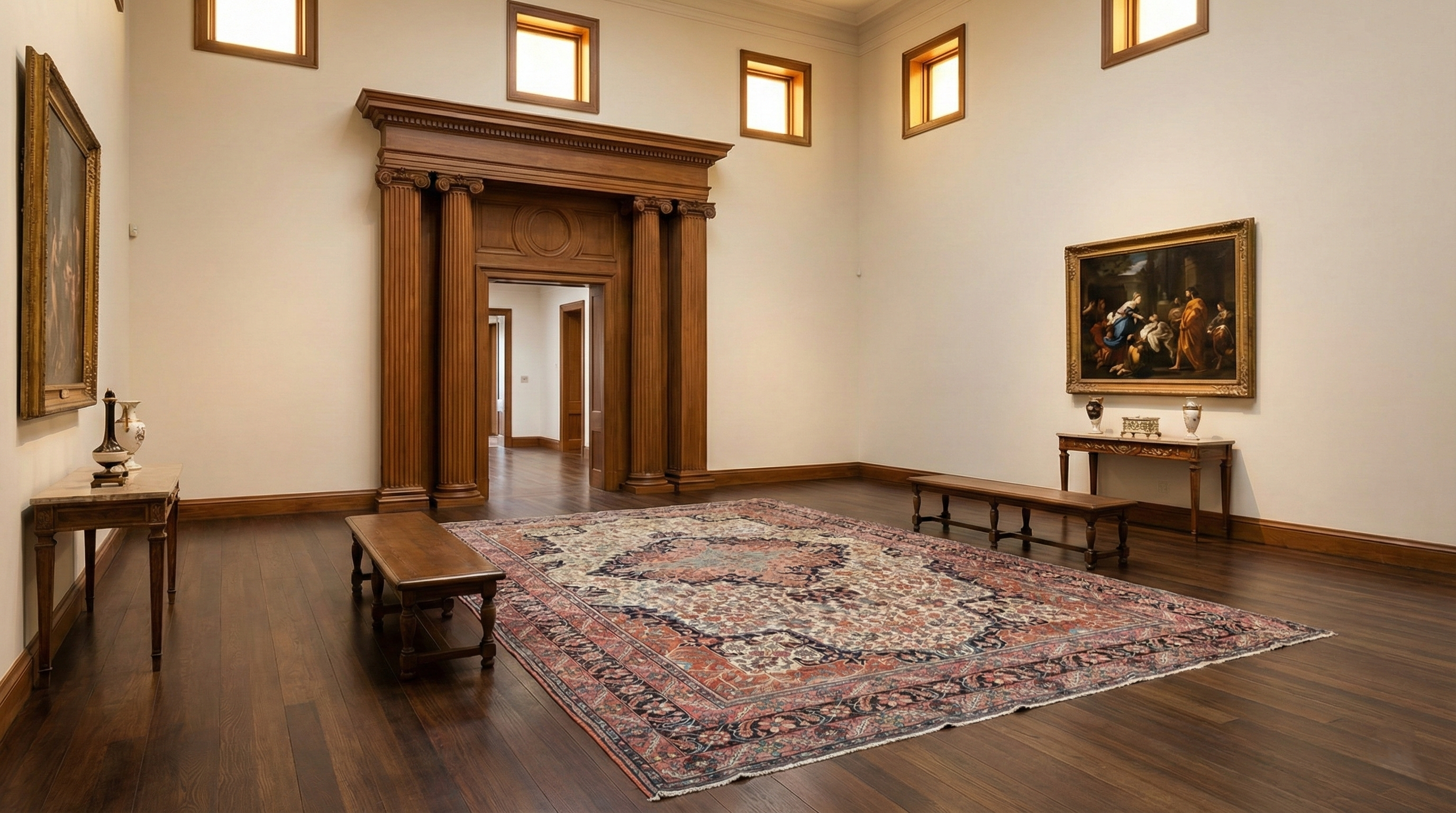
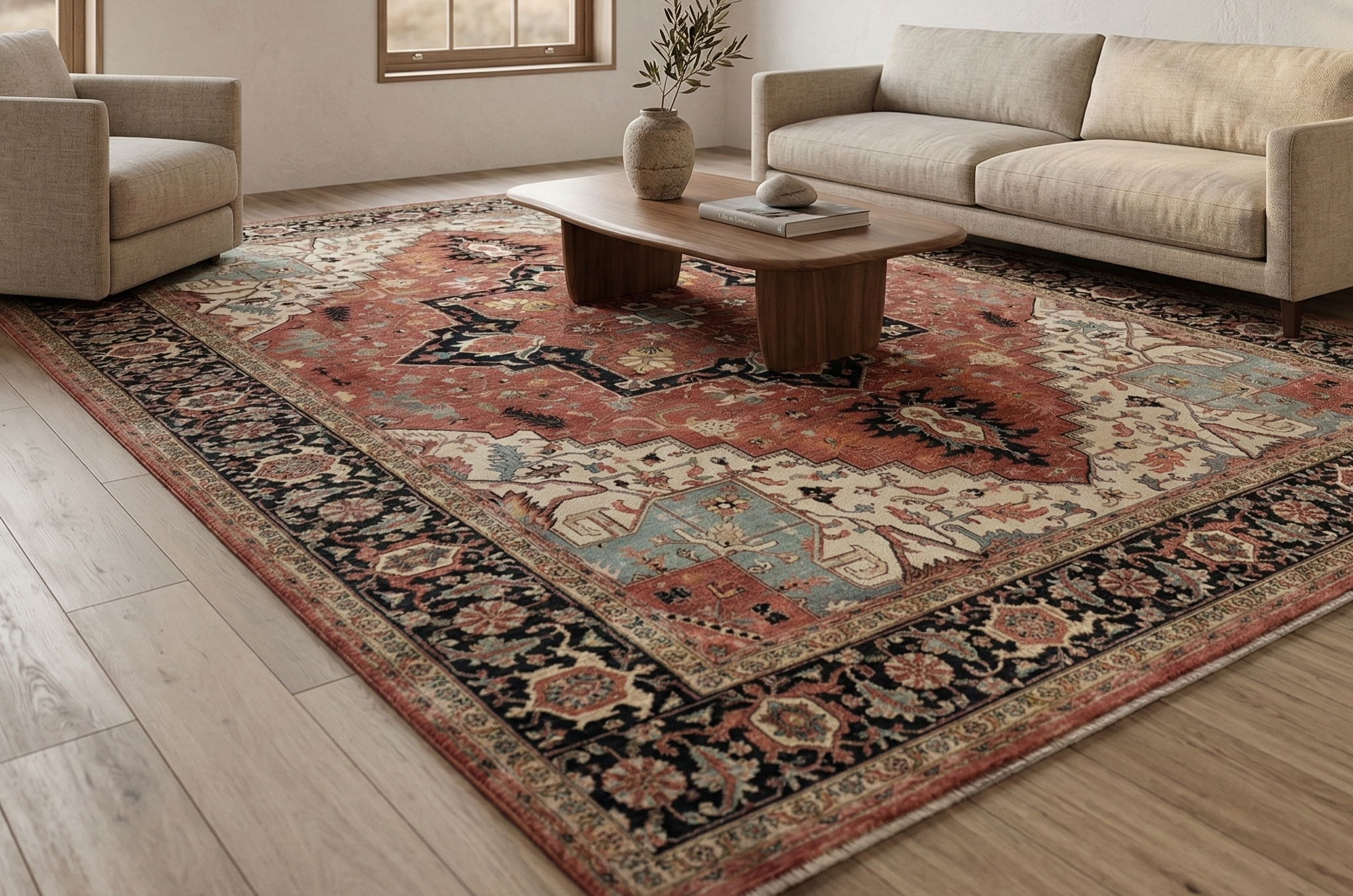
The beloved Serapi rug from the remote mountains of Northwest Persia, has a typical design from the Heriz region. The elements inherited from many traditions are combined into the majestic antique Serapi carpet; geometric designs maybe connected to tribal Caucasians rugs, while the Tabriz carpet has surely influenced the usage of the central medallion in the Serapi rugs.
The highly skilled female weavers work in groups during years, before completing a Serapi Persian rug. The spontaneity that characterizes these groups of women, is the result of amazing and tedious labor. Small workshops were known to deliver fine knotted carpets, while families created symbolic designs and a more rustic weave type. The women from the Heriz region also had knowledge of how to deep dye the local wool, achieving the desired “abrashed” or muted color. Large areas of the Heriz rug use pale wool colors, providing the perfect contrast that distinguish these carpets.
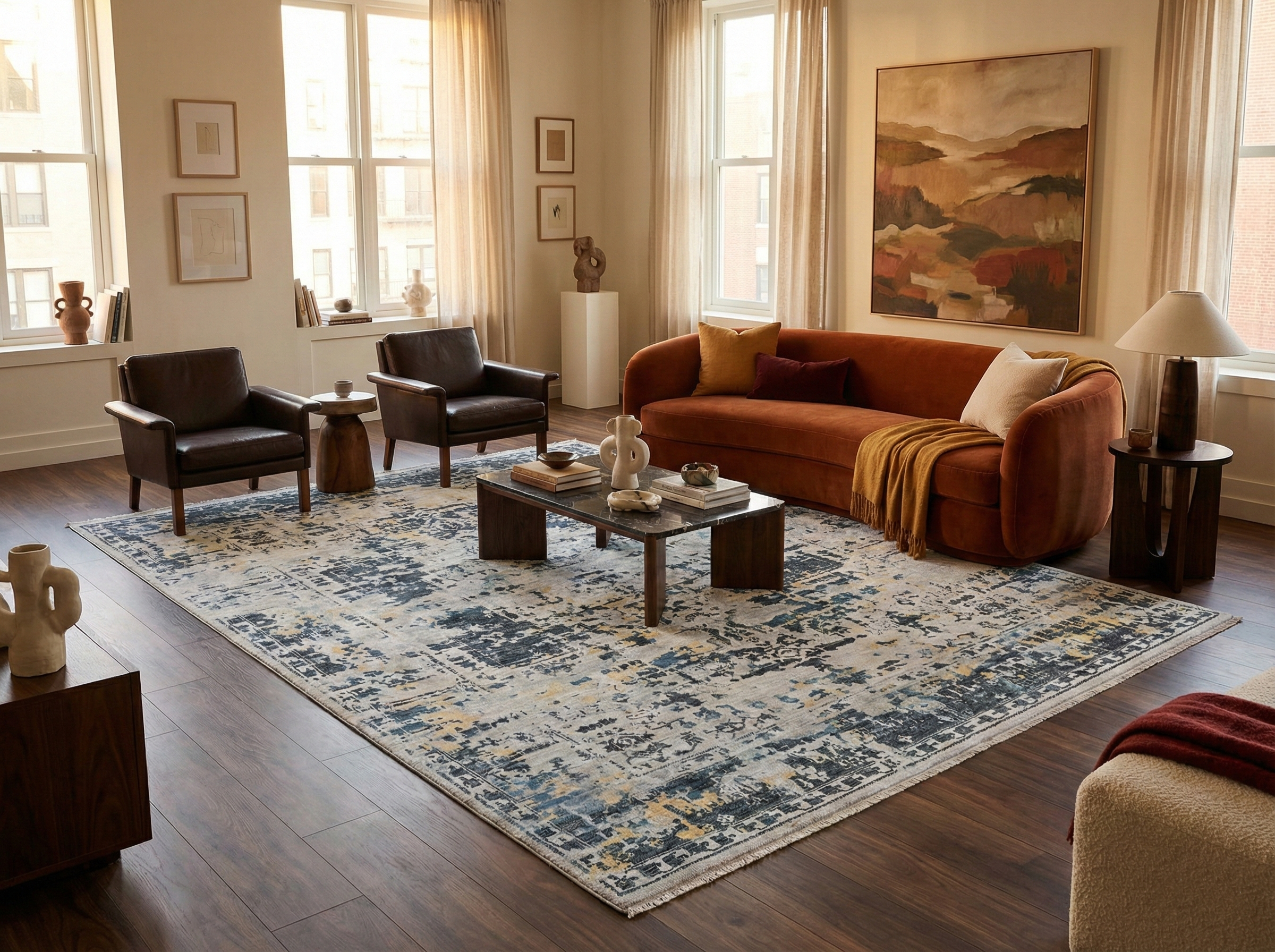
The 19th century Serapi carpets are known by a center quadrant medallion, inspired by a bird’s eye view of a persian garden. In many occasions, a large-scale all-over design pattern could also be used. Nowadays, the Serapi inspired hand-knotted rug can be found in many different colors, ranging from the traditional pink, red and navy blue. In the years 2015 to 2017, many rug designers have modified the look of The Heriz carpet, to the so called “Broken Design Rugs.” These new carpets are indeed very valuable as a new trend in the design industry and an original handmade piece can only be found from trusted rug shops.
In the first years of the 20th century, these rugs were woven in isolated areas, and then sold in the market of the Sarab city of Persia. This is where the name Serapi originated, from the word “Serab-i” which means “of Serab”. The whimsical charm of the antique Serapi carpet, it’s pure vegetable dyes, traditional designs, or modern broken motifs, make them a worthwhile furniture item. Many interior designers love to have this type of rug, as a home decor idea.
Trying to explain or understand what makes certain antique carpets more valuable than others is an elaborate and difficult task. One must try to strike a balance between quantifiable measures such as market precedent, market trends, condition and rarity and less objective values such as personal taste, provenance and aesthetic and chromatic quality.
In the field of antique Persian carpets, before we make any judgement about rarity and aesthetic quality, it is important to have a brief understanding of how material quality can inform and affect judgements on value. This in turn means that we must have some idea about how carpets have been made in Iran historically as material quality is relative to the area in which it was made.
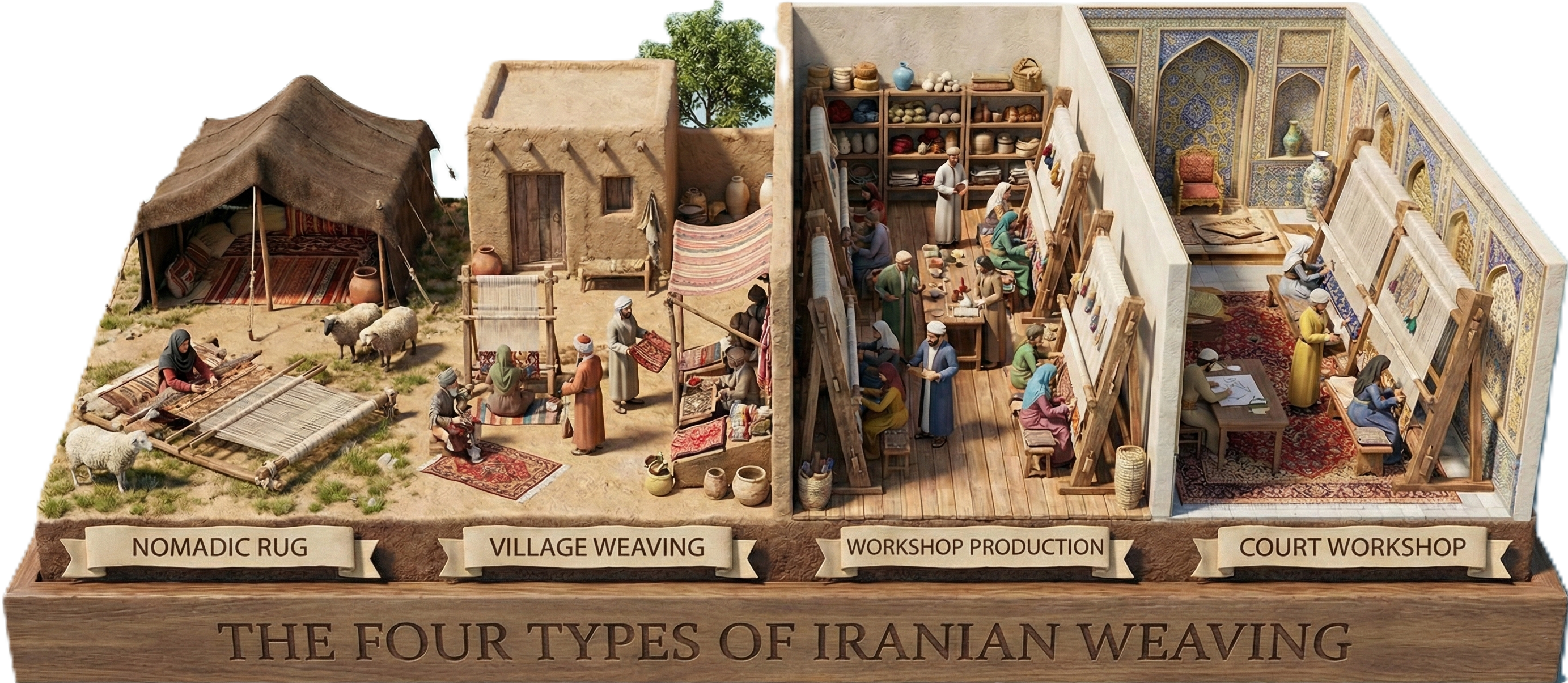
There are four types of weavings made in Iran: the first is a nomadic rug made by tribal people for their own consumption or use; the second is a village weaving made for local use but also sold at the bazar as a source of additional income; the third is organised workshop production where designs and materials are given to a weaver to create under supervision; and the last is the court atelier or workshop with exclusive access to the best dyes, materials, designers and weavers.
The first two create rugs that reflect the women weavers own color and design preferences, and may well be individual in character and express the unfiltered artistic vision of the weaver. The third type of rug has a more formal aesthetic and reflects precise and well-articulated design and color preferences. While the workshop represents skilled craftspeople making items for sale, there are obviously different levels within this category ranging from loosely woven rugs made in villages out of wool through to important workshops with named designers using silk, the finest and most expensive wool as well as very high knot densities. It is important to note that while fineness of weave can affect the value of a rug, that is not to say that all fine rugs are necessarily valuable.
The final category of court workshop represents an exclusive class of weavings that are extremely rare and sought after since they only came into existence during the reign of the Safavid dynasty in Iran (1501-1736). Workshops were set up within the court weaving exclusively for the Shah, setting standards for colour and quality and using designs created by the greatest artists of the day. In the late 17th century, the court dissolved these in-house ateliers and began to buy from a selection of private workshops, which were commissioned rather than directly employed by the Shah. While court carpets from the 16th and 17th century are bought by museum and collectors, the practice of court and royal patronage, both nationally and regionally, remained a significant factor in terms of quality and innovation in the Persian carpet industry until the 20th century.
While the quality of wool, weave, natural or chemical dyes are all important indicators of value within each of these levels of production, it is difficult to draw direct comparisons across the categories. How can you meaningfully compare the material quality of a long-pile tribal rug made to protect against cold with very minimal design and colours with a silk rug made in a city workshop for use at a wedding ceremony with a design of a tree of life? Critical judgement and any realistic assessment of value for antique Persian carpets is therefore relative to the type of rug, and recognising how it was made before values associated with material quality can be allied.
With everything that’s been going on in Iran lately, we tend to forget that the Middle Eastern country is known as the original home of the oriental carpet. Iran (Persia) is the oldest and once the most powerful empire in the Middle East. Many of the finest antique Persian carpets have originated from Iran over the last hundred years or longer.
Persia stood at the crossroads of Eastern and Western civilizations. Under the Safavid dynasty, Iran attained its artistic height. Court weaving, together with the art of calligraphy, miniature painting, and tile work, flourished to exceptional heights during this dynasty. It is during this dynasty that many of the fine antique Persian carpets from today were made.
The brilliant era witnessed the development of highly qualified carpet factories in cities including Kerman, Isfahan, Kashan, Tabriz, and Herat (now a part of Afghanistan). Iran is the genesis of most motifs, patterns, and traditional coloration, that are produced in rugs throughout the world today. Over the centuries, antique Persian carpets have become treasured heirlooms, passed on from one generation to the next. It is a true testament to the people who made the carpet originally that they are able to hold up over the course of time and still be in a condition that would be acceptable for use year after year.
So whether you’re looking for a Persian Antique Carpet or Semi-Antique, Fine New Oriental Rugs, 19th century European designs or modern area rugs, log on to www.1800getarug.com where you will find a unique collection of beautiful hand-knotted rugs which is always up to date with new colors and designs. Our showroom is open Monday through Saturday for you to view our vast selection of fine Persian rugs, and for you to find that special rug that you can pass on in your family for generations to come! Please stop by today or visit our website to find the rug for you.